
Blog
No Hot Water Panic: Fast & Same-Day Repair in Beaverton
No Hot Water in Beaverton? Here’s What to Do Right Now Emergency water heater repair in Beaverton, OR is something no homeowner wants to need — but when…
In brief
No Hot Water in Beaverton? Here’s What to Do Right Now Emergency water heater repair in Beaverton, OR is something no homeowner wants to need — but when…
By the Best Owner Direct team
Locally operated HVAC · Cornelius, OR · CCB# 199049

No Hot Water in Beaverton? Here’s What to Do Right Now
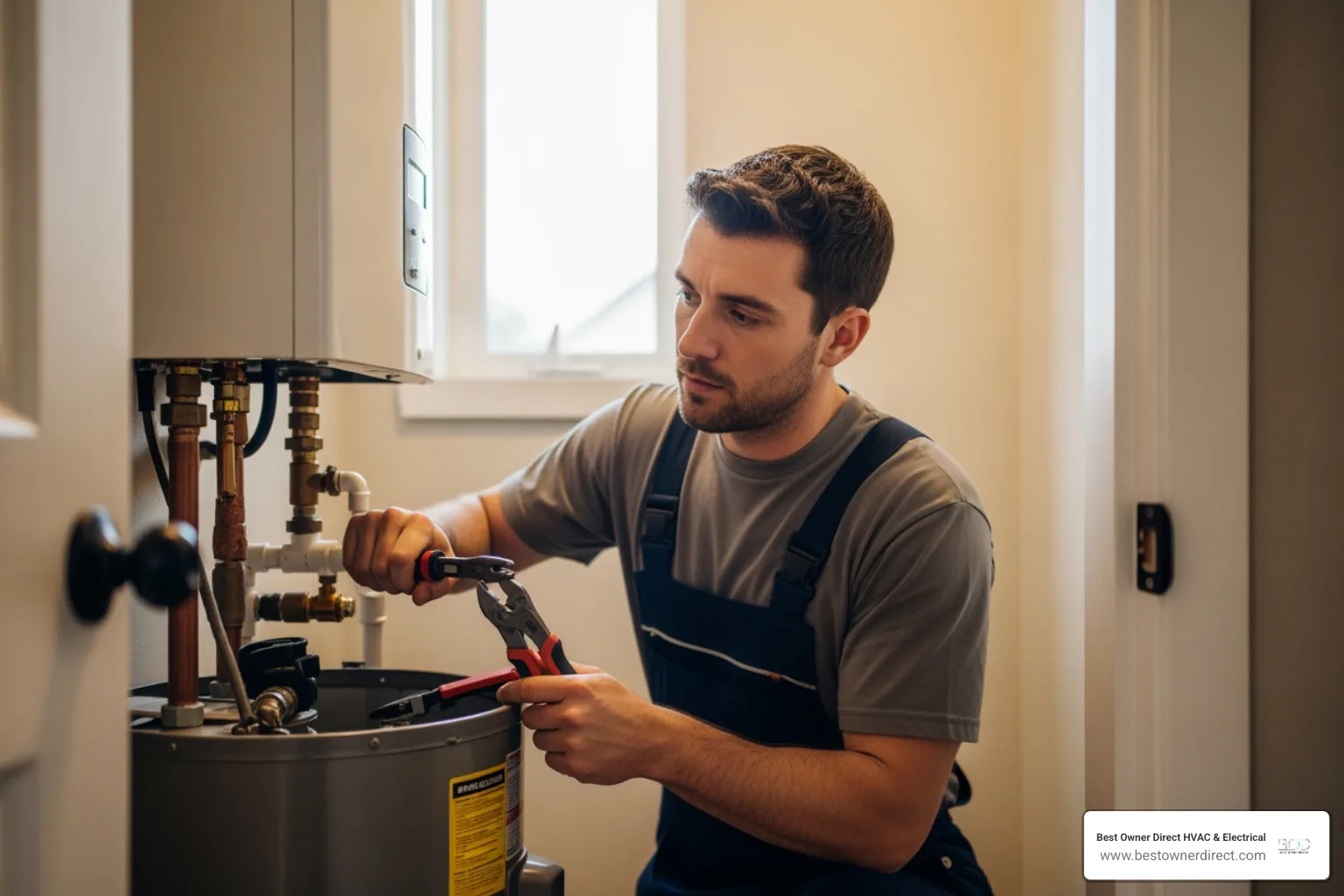
Emergency water heater repair in Beaverton, OR is something no homeowner wants to need — but when it happens, every minute counts. A leaking tank, no hot water, or strange noises from your water heater can signal a serious problem that puts your home’s safety and comfort at risk.
If you’re dealing with a water heater crisis right now, here’s a quick overview of what to do:
- Turn off the water supply to the heater immediately
- Cut power or gas to the unit (flip the breaker or turn the gas valve off)
- Do not touch standing water near an electric unit
- Call a licensed Beaverton plumber for same-day emergency service
- Document any visible damage for insurance purposes
Water heaters typically last 8 to 12 years. After that window, failures become more frequent and can escalate fast — from a slow drip to significant water damage or even a safety hazard. Beaverton’s older housing stock and local water quality can accelerate wear, making sudden breakdowns more common than most homeowners expect.
Whether you woke up to an ice-cold shower or spotted a puddle forming in your garage, the right response makes all the difference.
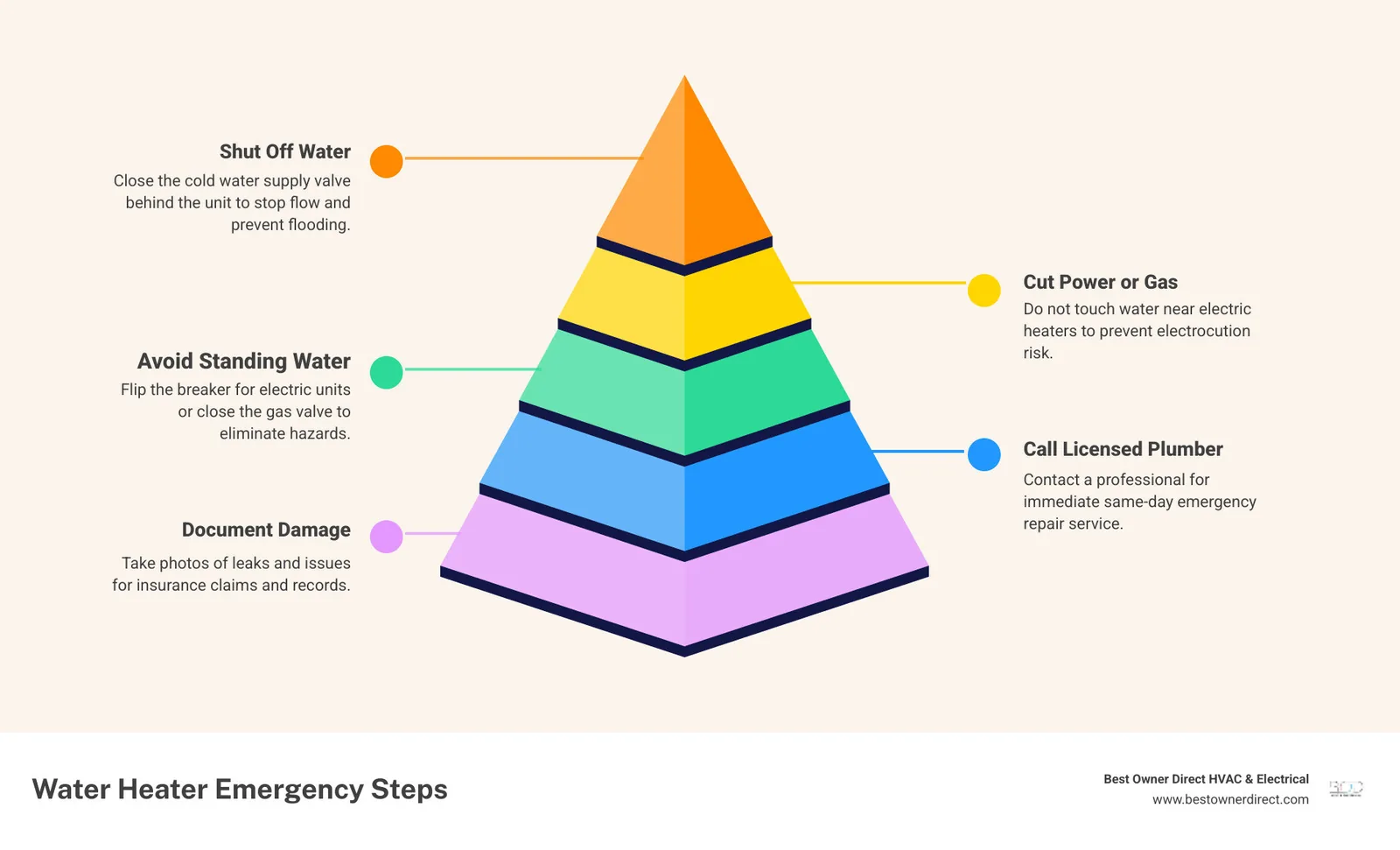 Infographic showing 5 immediate steps for water heater emergencies in Beaverton OR: step 1 shut off water supply valve behind unit, step 2 turn off power at breaker or close gas valve, step 3 avoid contact with standing water near electric heaters, step 4 call a licensed emergency plumber for same-day service, step 5 photograph damage for insurance documentation; includes icons for each step and a warning banner about gas smell evacuation - emergency water heater repair in beaverton, or infographic pyramid-hierarchy-5-steps
When to Call for Emergency Water Heater Repair in Beaverton, OR
We often take our water heaters for granted until that one morning when the shower stays stubbornly cold. In Beaverton, where our mornings can be quite chilly, a lack of hot water isn’t just an inconvenience; it’s a household crisis. But how do you know if your situation requires an immediate service call or if it can wait until Monday morning?
Knowing the signs of a struggling system can save you from a major “lake in the garage” scenario. If you notice any of the following, it’s time to look into professional Water Heater Repair before the situation escalates.
Identifying True Emergencies
Not every water heater issue is a “drop everything” moment, but several situations qualify as true emergencies that require same-day intervention.
- Gas Smells: If you smell “rotten eggs” near your gas water heater, this is a life-safety emergency. Evacuate the home and call for help immediately.
- Active Flooding: A tank that has “let go” can dump dozens of gallons of water into your home in minutes. This requires an immediate shut-off and rapid repair to prevent structural damage.
- Electrical Sparks or Smoking: For electric units, any sign of scorched wiring or sparks at the heating element cover is a fire hazard.
- No Hot Water at All: While not always a safety risk, a total lack of hot water in a busy household—especially during a Beaverton winter—is a functional emergency that we prioritize for same-day service.
- Unexplained Utility Spikes: If your bill doubles and you haven’t changed your habits, your heater might be running continuously due to a hidden leak or a failing thermostat.
If you are in a neighboring area and experiencing these issues, you might need Water Heater Repair Hillsboro OR to get your system back online safely.
Symptoms of Internal Tank Failure
Sometimes the signs are more subtle, but they point to the inevitable end of your tank’s life. Inside your water heater, a “sacrificial” anode rod works to prevent the tank from rusting. Once that rod is spent, the water begins to eat away at the steel tank itself.
- Rusty or Discolored Water: If your hot water looks like tea but the cold water is clear, the inside of your tank is likely corroding.
- Metallic Taste or Odor: This often precedes visible rust and indicates that the tank’s lining is breaking down.
- Popping or Rumbling Sounds: This is often caused by sediment buildup at the bottom of the tank. As the water trapped under the sediment boils, it “pops” through the layer of minerals.
- Visible Corrosion on Connections: If the pipes entering or leaving the tank are covered in white or green crusty buildup, a breach is likely imminent.
When these symptoms appear in an older unit, Water Heater Replacement Beaverton OR is often the most cost-effective path forward, rather than pouring money into a failing tank.
Immediate Safety Steps and Critical Intervention
When you spot a puddle or hear a strange hissing sound, your first instinct might be to panic. Don’t! Taking swift, logical steps can prevent thousands of dollars in water damage.
Step-by-Step Emergency Shutdown
- Shut Off the Water: Locate the cold water inlet pipe (usually at the top of the unit) and turn the valve clockwise. If the valve is stuck or the leak is massive, you may need to turn off the main water valve for the whole house.
- Disconnect the Power:
- Electric: Find your circuit breaker panel and flip the switch labeled “Water Heater.”
- Gas: Turn the dial on the water heater’s thermostat to the “Off” or “Pilot” position. Then, close the gas shut-off valve on the supply line.
- Contain the Mess: If it’s a slow leak, use buckets or towels to prevent the water from reaching drywall or carpet.
Restoring Comfort with Emergency Water Heater Repair in Beaverton, OR
Once the immediate danger is contained, our goal is to get your life back to normal. Emergency water heater repair in Beaverton, OR involves more than just “fixing a leak.” It’s a methodical process:
- Professional Diagnostics: We don’t just guess. We check the T&P (Temperature and Pressure) valve, the heating elements, the thermostat, and the tank integrity.
- Component Replacement: Often, a “broken” heater just needs a new thermocouple or a fresh heating element.
- System Restoration: We ensure the unit is safely vented (for gas) and properly grounded (for electric) before we leave.
Avoiding Damage with Emergency Water Heater Repair in Beaverton, OR
Delaying a repair can lead to a cascade of problems. Water doesn’t just sit there; it seeps into baseboards, wicks up into drywall, and creates a breeding ground for mold. In the Pacific Northwest, where humidity is already a factor, a water heater leak can lead to mold growth in as little as 24 to 48 hours.
Prompt repair also ensures insurance compliance. Many homeowners’ insurance policies require you to take “reasonable steps” to mitigate damage. By calling for emergency service immediately, you demonstrate that you’ve done your part to protect the property. For those south of the highway, getting Water Heater Repair Tigard OR quickly can be the difference between a simple repair and a full-scale basement renovation.
Local Regulations and Common System Types
Beaverton has specific plumbing codes and permit requirements designed to keep you safe. You might wonder, “Do I really need a permit just to fix or replace a water heater?” The answer is usually yes, especially if the unit is being replaced.
Common Water Heaters in Beaverton
In our local area, we see a wide variety of technologies. Each has its own set of common emergency issues:
- Gas Units: Very common in older Beaverton homes. They rely on a pilot light and proper venting. Common emergencies include gas leaks or failing thermocouples.
- Electric Models: Often found in apartments or homes without gas lines. They use two heating elements. If one fails, you get lukewarm water; if both fail, you’re in for a cold surprise.
- Tankless Water Heaters: These are gaining massive popularity in the Northwest because they provide “endless” hot water and can reduce energy use by up to 60%. If you’re looking for an upgrade, Tankless Water Heaters Cornelius OR are a great option for high-demand households.
- Heat Pump Technology: These units pull heat from the surrounding air. They are incredibly efficient but require more space and specific air-flow conditions.
- Hybrid Systems: These combine the best of tank storage and heat pump efficiency.
Why Permits Matter for Repairs
Oregon plumbing codes are updated periodically to include new safety measures, such as earthquake strapping and proper expansion tanks.
- Safety Verification: An inspector checks that the gas lines don’t leak and the exhaust fumes are venting safely out of your home.
- Property Value: When you go to sell your home, a “permitted” water heater installation shows the buyer that the work was done to professional standards.
- Insurance Protection: If an unpermitted water heater causes a fire or flood, your insurance company may have grounds to deny the claim.
Maintenance and Prevention Strategies
The best way to handle a water heater emergency is to prevent it from happening in the first place. Think of your water heater like your car—it needs a “tune-up” to keep running smoothly.
| Maintenance Task | Frequency | Benefit |
|---|---|---|
| Tank Flushing | Annually | Removes sediment that causes popping noises and lowers efficiency. |
| Anode Rod Check | Every 2-3 Years | Prevents the tank from rusting from the inside out. |
| T&P Valve Test | Annually | Ensures the safety valve will open if pressure gets too high. |
| Temperature Check | Ongoing | Keeping it at 120°F prevents scalding and saves energy. |
| Pipe Insulation | Once | Prevents heat loss and protects pipes from freezing in winter. |
Extending System Lifespan
Sediment is the number one enemy of water heaters in Oregon. Our water, while generally high quality, still carries minerals that settle at the bottom of the tank. Over time, this sediment creates an insulating layer between the burner and the water, forcing the unit to work harder and eventually causing the metal to overheat and crack.
Regularly testing your pressure relief valve is also vital. This valve is the only thing preventing your water heater from becoming a “rocket” if the thermostat fails and the water continues to boil. If you haven’t had your unit checked recently, Water Heater Repair North Plains OR can provide a comprehensive inspection to catch these issues early.
Proactive Upgrades to Avoid Crisis
If your unit is over 10 years old, you are living on borrowed time. Rather than waiting for a 2:00 AM flood, many Beaverton residents choose to upgrade proactively.
Modern high-efficiency models, especially those with ENERGY STAR certification, can pay for themselves over time through lower utility bills. Smart controls are another great addition—some systems can now alert your smartphone the moment a leak is detected, allowing you to shut it off before a single drop hits your floorboards. If you’re ready to make the switch, consider Water Heater Replacement Hillsboro OR for a more reliable, energy-efficient future.
Frequently Asked Questions
What should I do if my water heater is leaking from the bottom?
This is almost always a sign that the internal tank has corroded through. You should immediately shut off the water supply and the power/gas to the unit. Do not attempt to “patch” a tank leak; it is a structural failure. Contact a professional immediately, and if the unit is electric, avoid stepping in the water until you are 100% sure the power is off at the breaker.
How long does an emergency water heater repair typically take?
Most standard repairs—like replacing a heating element, a thermocouple, or a valve—can be completed in 1 to 3 hours once the technician arrives. If the entire unit needs to be replaced, the process usually takes 3 to 5 hours. We strive for same-day service for all Beaverton emergencies to ensure you aren’t without hot water for more than a few hours.
Why is my water heater making a loud popping noise?
That sound is likely “kettling.” It happens when minerals and sediment build up at the bottom of the tank. Steam bubbles get trapped under this layer of sediment; as they heat up, they eventually “pop” through the debris, hitting the side of the tank. This is a clear sign that your tank needs to be flushed and inspected for damage.
Conclusion
A water heater failure doesn’t have to be a disaster. By knowing the signs of trouble and taking immediate safety steps, you can protect your home and your family’s comfort. At Best Owner Direct HVAC & Electrical, we are committed to providing Beaverton homeowners with the highest level of service, focusing on quality workmanship and customer care.
Whether it’s a simple repair or a full system upgrade, we ensure your home remains a sanctuary of comfort and safety. Don’t let a cold shower ruin your week—reach out for Emergency Water Heater Repair in Beaverton, OR and let us handle the heavy lifting. We’re here to make sure the only thing “chilly” in your home is the ice in your glass, not the water in your shower.
Talk it through with our team
Have a question this article didn't answer for your home?
No call center, no pressure — our own technicians give the advice and stand behind the work.
Recent Posts
- Why Blocked Air Vents Cause Heating Problems During Fall Startup
- How Often Should You Schedule Professional Mini Split Service?
- Why Checking Air Vents for Your House is the Most Crucial Fall Maintenance Step
- Mini Split vs Central Ductwork: A Quick Start Guide
- The Real Reason Your Heat Pump Blows Cooler Air Than a Gas Furnace
Talk to Our Team
Family-owned · Licensed & insured · After-hours emergency on-call across the Tualatin Valley & Portland metro.
(503) 442-5964 Schedule ServiceOne call does it
Educated homeowners make our favorite customers.
Call Best Owner Direct or book online — honest, straightforward service across the Tualatin Valley & Portland metro.
Locally operated · Licensed CCB# 199049 · 1-Year Workmanship Warranty