
Blog
How to Prevent Rain Damage to Your Outdoor Mini Split Unit Fast by Using a Cover
Learn how moisture and rain affect your outdoor mini split unit and protect it from damage with proper covers, drainage, and seasonal maintenance tips.
In brief
Learn how moisture and rain affect your outdoor mini split unit and protect it from damage with proper covers, drainage, and seasonal maintenance tips.
By the Best Owner Direct team
Locally operated HVAC · Cornelius, OR · CCB# 199049

Understanding How Moisture and Rain Affect Your Outdoor Mini Split Unit
Many homeowners in our Pacific Northwest communities wonder whether wet weather will harm their heating and cooling systems. Understanding how moisture and rain affect your outdoor mini split unit starts with recognizing how these systems are built to interact with the natural elements.
The Weatherproof Design of Modern Heat Pumps
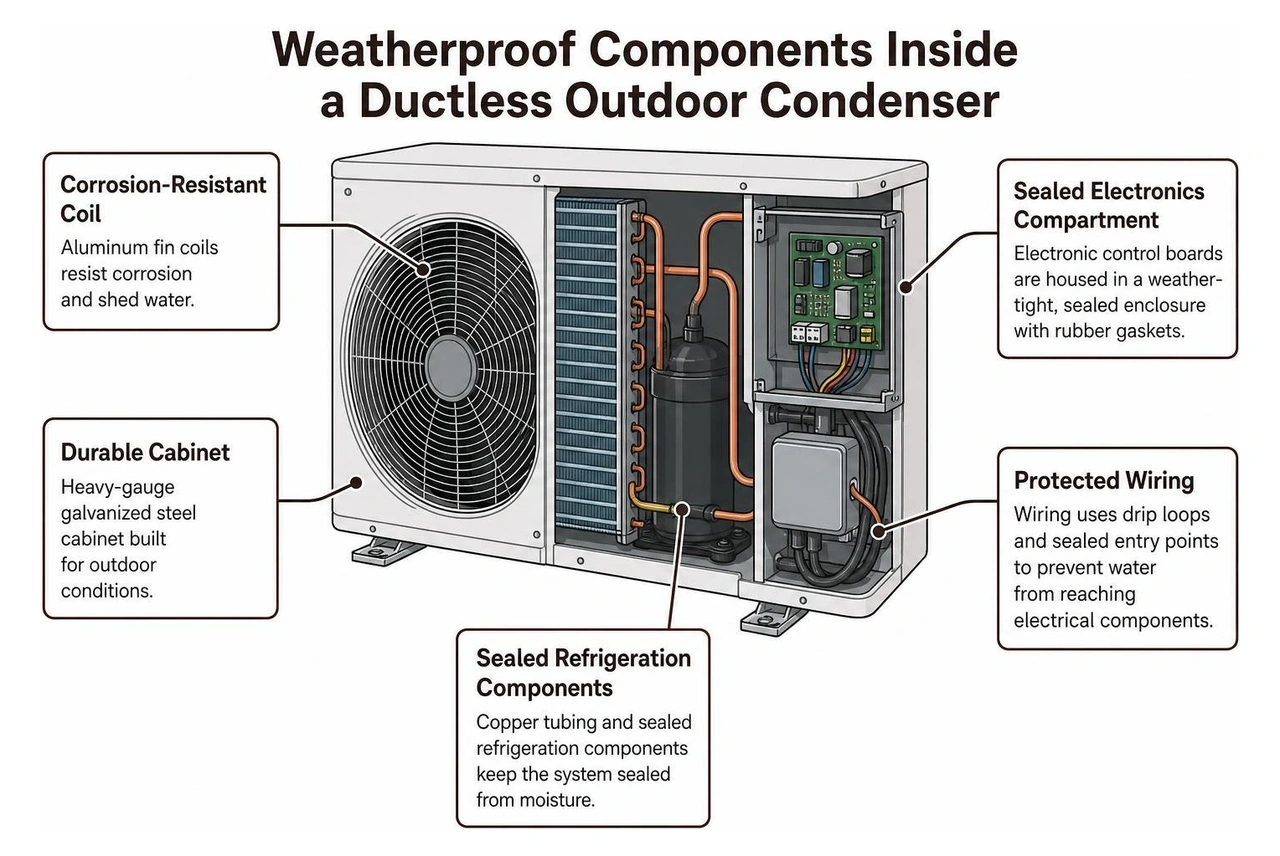
Outdoor ductless condensers are specifically engineered to live outside year-round. Manufacturers build these cabinets using heavy-gauge galvanized steel, corrosion-resistant aluminum fin coils, and sealed copper tubing. The internal electronic control boards (inverters) are housed in weather-tight, sealed electrical compartments protected by rubber gaskets and drip loops. As ductless mini split systems explained show, these systems are fully prepared to endure standard rainfall without water getting into delicate internal circuits.
Natural Impacts: How Moisture and Rain Affect Your Outdoor Mini Split Unit Performance
Believe it or not, normal rainfall can provide slight thermodynamic perks during warmer weather. When light rain strikes the condenser coil, it creates an evaporative cooling effect that temporarily lowers the ambient temperature immediately surrounding the unit. This helps the system discharge heat more easily.
Rain also provides a natural coil rinse, washing away loose pollen, dust, and light surface dirt that builds up during dry spells. As long as airflow remains unrestricted, learning how a heat pump works for heating and cooling reveals that rain on the outdoor coil does not interfere with the internal sealed refrigeration cycle.
Severe Weather: How Moisture and Rain Affect Your Outdoor Mini Split Unit and Defrost Cycles
During cold, wet Pacific Northwest winter storms, outdoor moisture behaves differently. When ambient temperatures hover between 32°F and 42°F with high relative humidity, the outdoor coil naturally runs several degrees colder than the outside air. Moisture in the air condenses onto the metal fins and quickly turns to frost.
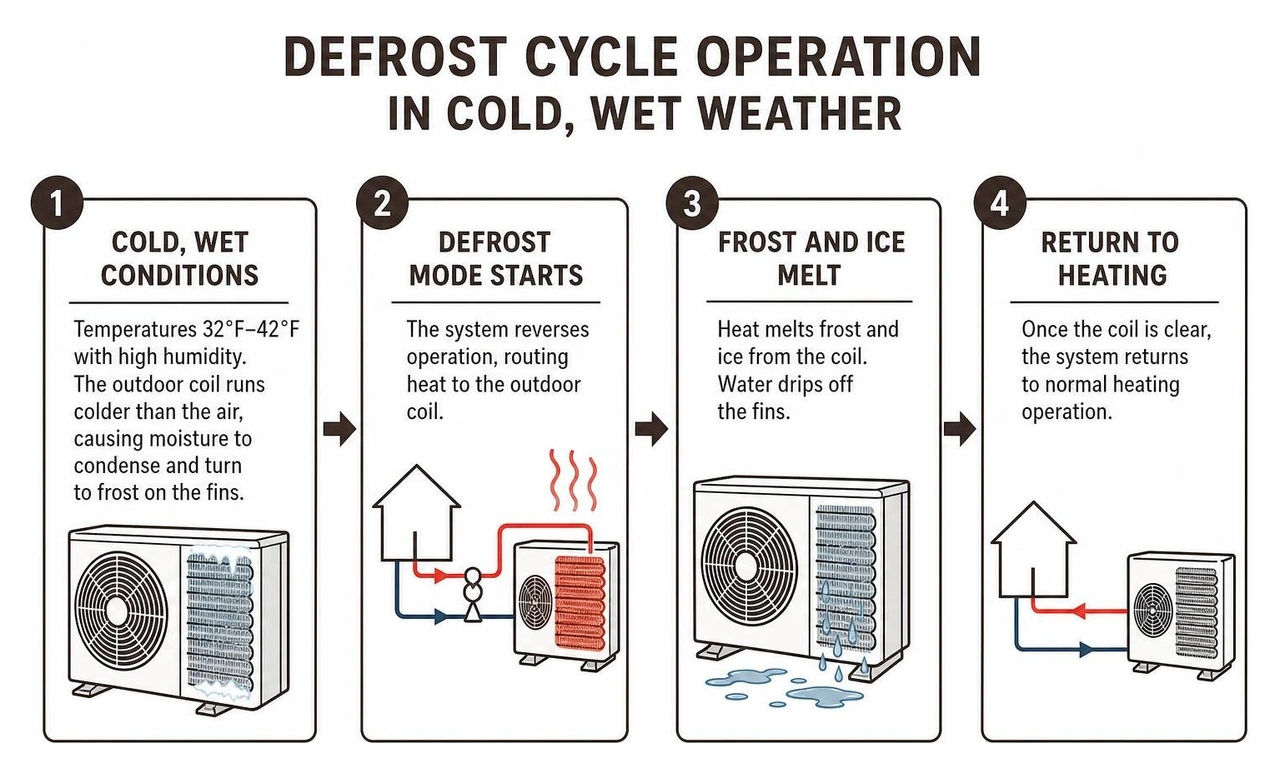
To keep operating, your system periodically enters a reverse-cycle defrost mode. During this cycle, heat is routed to the outdoor coil to melt frost and ice buildup. A mini split in defrost mode can dump up to a quart of water in a single cycle. Understanding how a heat pump heats your home in Pacific Northwest winters helps explain why seeing steam and water runoff under the outdoor unit during a cold rainstorm is a sign of healthy operation.
Should You Cover Your Outdoor Mini Split? Proper Sheltering vs. Damaging Tarps
When heavy downpours begin, your first instinct might be to toss a waterproof tarp over the exterior condenser. However, using improper covers is one of the most common ways homeowners accidentally damage their equipment.
The Dangers of Tight Plastic Wraps and Tarps
Wrapping an outdoor unit tightly with a non-breathable plastic tarp or waterproof grill cover causes immediate problems:
- Trapped Condensation: Moisture evaporating from the ground and internal components becomes trapped beneath the plastic, creating a high-humidity greenhouse effect that accelerates corrosion on copper lines and aluminum fins.
- Airflow Blockage: If the unit turns on while wrapped, airflow is choked off instantly, causing the compressor to overheat and trigger high-pressure emergency shutdowns.
- Pest Havens: Dark, damp, covered spaces attract rodents, spiders, and insects seeking shelter from the rain, leading to chewed electrical wiring.
- Biological Growth: Trapped moisture fosters algae and mold inside the fan housing and louvers.
Before thinking about blocking the weather, read about whether should you shade your outdoor air conditioning unit to see how airflow needs to be preserved.
Engineered Covers and Overhead Snow/Rain Canopies
If you want to protect your system from severe rain, falling icicles, or heavy tree debris, you should only use engineered HVAC solutions. Rigid overhead weather shields or specialized breathable canopies keep large debris and direct roof runoff off the unit while leaving the sides and exhaust grilles open.
| Feature | Improper Plastic Tarp / Wrap | Engineered HVAC Overhead Canopy |
|---|---|---|
| Airflow Restriction | Severe (Traps air, overheats compressor) | None (Maintains complete 360-degree clearance) |
| Moisture Management | Traps ground vapor and rusts coils | Allows natural evaporation and rapid drying |
| Debris Protection | Good, but damages system if run | Excellent protection against falling branches and ice |
| Operating Safety | Unsafe to operate while covered | Fully safe for 24/7 continuous operation |
| Pest Deterrence | Attracts nesting rodents | Leaves equipment exposed to open air, deterring pests |
Discovering how to protect your HVAC system from winter elements properly ensures your equipment remains safeguarded through every season.
How to Protect Your Outdoor Unit from Heavy Rain, Flooding, and Storm Debris
While rain falling directly on the unit is harmless, standing water and falling debris are serious risks.
Elevating the Condenser and Managing Water Runoff
To protect an outdoor heat pump from pooling water and roof runoff:
- Mount on Wall Brackets or Snow Risers: Elevating the unit 6 to 12 inches off the ground on heavy-duty wall brackets or composite riser feet keeps the base pan well above standing water, mud splashes, and deep snow.
- Avoid Roof Valley Drip Lines: Never place an outdoor condenser directly beneath an un-guttered roof valley where torrents of water plunge onto the fan grille.
- Install Gravel Drainage Pads: Placing a crushed gravel drainage bed underneath ground-mounted units helps water seep naturally into the soil instead of pooling around the base.
Understanding how a mini split installation works step by step helps ensure the site is properly evaluated for water runoff right from the start.
Standing Water Triage and Emergency Shutdown Procedures
If severe local storms cause puddles to rise past the bottom frame of your outdoor unit:
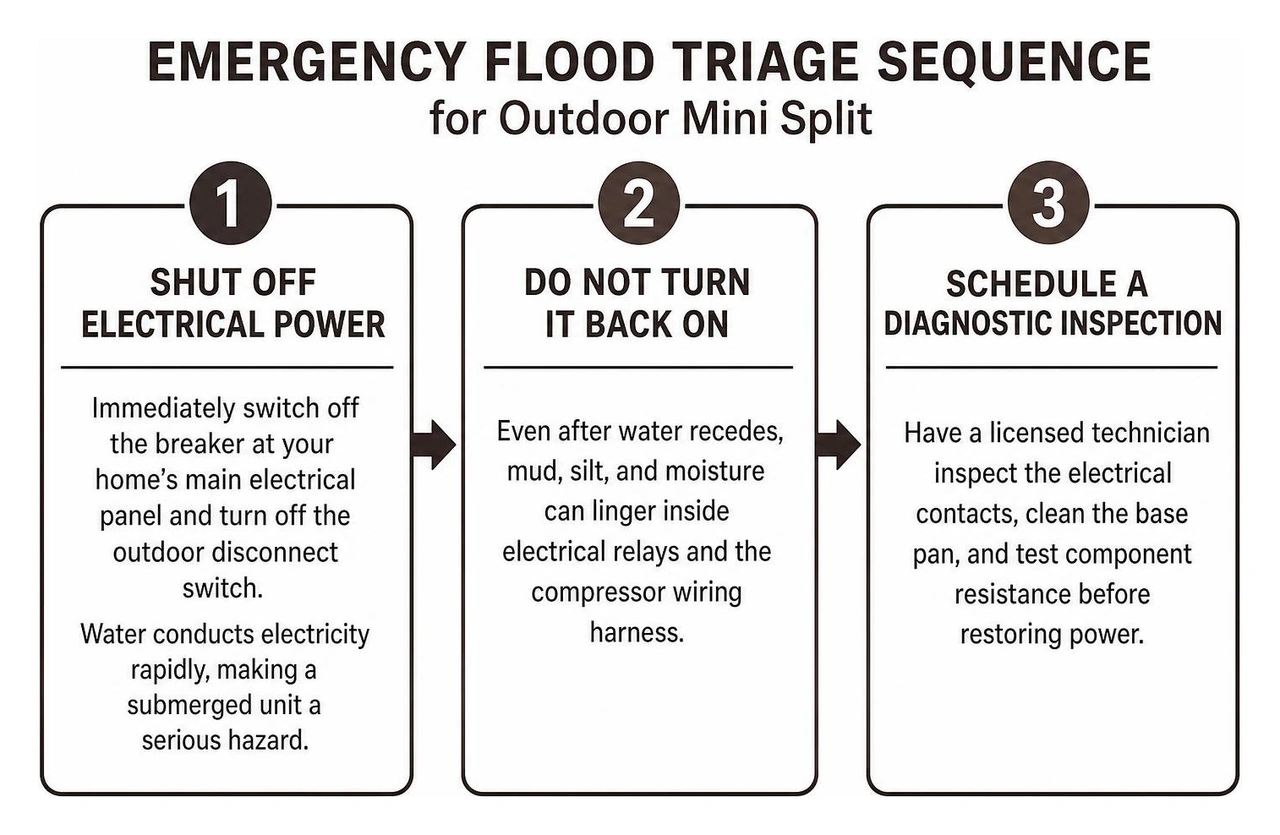
- Step 1: Shut Off Electrical Power: Immediately switch off the breaker at your home's main electrical panel and turn off the outdoor disconnect switch. Water conducts electricity rapidly, making a submerged unit a serious hazard.
- Step 2: Do Not Turn It Back On: Even after water recedes, mud, silt, and moisture can linger inside electrical relays and the compressor wiring harness.
- Step 3: Schedule a Diagnostic Inspection: Have a licensed technician inspect the electrical contacts, clean the base pan, and test component resistance before restoring power.
Ignoring standing water damage can produce severe issues; learn the key warning signs your heat pump needs repair or replacement before turning flooded equipment back on.
Managing Condensation and High Indoor Humidity During Rainy Seasons
Rainy weather brings high outdoor relative humidity, which naturally works its way into your living spaces. Modern ductless units are powerful dehumidifiers, but they must be operated correctly during wet weather.
Normal Water Drainage vs. Problematic Exterior Leaks
On a humid day, a mini split can produce several gallons of water through indoor dehumidification. During cooling mode, the indoor evaporator coil pulls moisture from the air, channeling it outside through a dedicated drain line.
- Normal Drainage: Water steadily dripping from the dedicated exterior PVC or vinyl drain line indicates the system is pulling moisture out of your indoor air.
- Sweating Refrigerant Lines: Cool suction copper pipes may sweat if their exterior insulation wrap is torn, cracked, or missing.
- Abnormal Leaks: Water pooling inside your home on the drywall beneath the indoor air handler usually points to a clogged condensate drain line or unlevel unit.
If you notice moisture pooling where it shouldn't, review why is water dripping from my heat pump to pinpoint the exact source.
Using Dry Mode to Regulate Moisture Without Overcooling
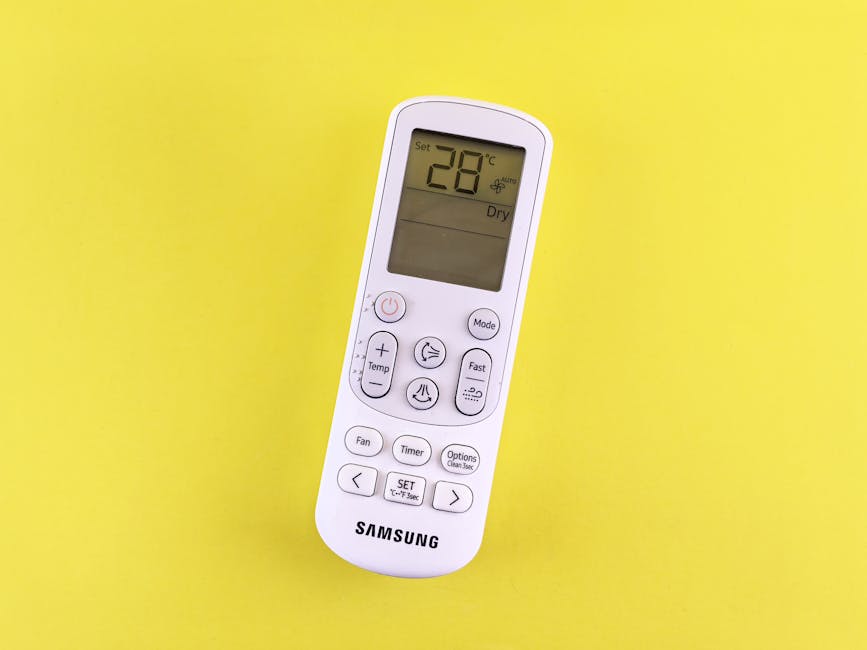
During mild rainy days when outdoor temperatures sit around 60°F to 68°F, running standard cooling mode can make your home feel chilly and clammy.
Using your remote's Dry Mode (often represented by a water drop icon) runs the indoor fan at lower speeds while modulating the compressor to prioritize moisture removal over rapid temperature drops. This pulls moisture out of your air, keeping indoor relative humidity in the ideal 35% to 50% comfort range without overcooling the room. For homeowners using ductless heating and cooling for Pacific Northwest homes, Dry Mode is an effective tool for damp spring and fall weather.
Step-by-Step Seasonal Maintenance for Rainy PNW Weather
A regular maintenance routine keeps your ductless mini split running reliably through rainy seasons.
Pre-Rain and Post-Storm Inspection Checklist
Keep your system running smoothly with this straightforward seasonal checklist:
- Maintain a 24-Inch Clearance: Clear tall grass, weeds, and overhanging shrubs around the outdoor unit to promote steady airflow.
- Clear the Base Pan: Remove wet leaves, pine needles, and mud from the base pan drainage holes so defrost water can escape freely.
- Inspect the Drain Hose Outlet: Check the outdoor condensate drain exit to ensure mud daubers, dirt, or garden mulch are not blocking the opening.
- Check Line Set Insulation: Inspect the foam insulation covering the outdoor copper line sets; replace any damaged sections to prevent pipe sweating.
- Rinse Coil Fins Gently: Use a garden hose with light spray pressure to rinse loose garden soil off the coil fins, avoiding high-pressure nozzles that can bend delicate metal.
Learning how to clean outdoor AC units along with DIY heat pump maintenance you can do between visits will help keep your unit clear between professional checkups.
Professional Tune-Ups and Electrical Seal Verification
Professional maintenance ensures sensitive components remain sealed against wet weather. During a mini split maintenance tune up, our licensed technicians:
- Test electrical access panel gaskets for watertight seals.
- Verify inverter control board moisture protection and wiring integrity.
- Clear and chemically treat condensate drain lines to prevent biological sludge blockages.
- Check refrigerant operating pressures to ensure effective defrost cycles and dehumidification performance.
Frequently Asked Questions About Mini Splits and Rain
Can I run my mini split during a heavy rainstorm?
Yes. Outdoor mini split units are built with sealed components designed to run safely during downpours. As long as the unit is not sitting in rising floodwater and power remains steady, you can run your heating, cooling, or dry modes normally.
Why is water pooling around my outdoor unit after it rains?
In heating mode, the outdoor unit discharges water melted from the coil during its defrost cycle, which can dump up to a quart of water per cycle. In cooling mode, the indoor unit's condensate drain hose routes extracted indoor humidity outside, producing multiple gallons on humid days.
How do I protect line sets and wall penetrations from rainwater leaks?
The hole where the copper lines and electrical cables pass through your exterior wall should be sealed with specialized HVAC exterior wall sleeves, silicone flashing, and durable exterior wall caps. Understanding how line sets are run through your walls ensures that driven rain cannot run along the line set and enter your home's wall cavity.
Conclusion
Outdoor mini split units are durable, weather-resistant systems built to handle rain and high humidity. By skipping tight plastic tarps, keeping the base clear of leaves and standing water, and scheduling regular professional tune-ups, you can ensure reliable year-round comfort across your home.
Best Owner Direct HVAC & Electrical is a family-owned HVAC, electrical, and water-heater services company based in Cornelius, OR, serving homeowners and businesses throughout the Portland metro and surrounding Oregon communities, including Hillsboro, Beaverton, Forest Grove, Tigard, and Lake Oswego. Whether you need a seasonal checkup or want to optimize your system for wet Pacific Northwest weather, our licensed technicians deliver reliable same-day and emergency care. Explore our comprehensive mini split installation and service options today to keep your home comfortable in every season.
Talk it through with our team
Have a question this article didn't answer for your home?
No call center, no pressure — our own technicians give the advice and stand behind the work.
Recent Posts
- Why Blocked Air Vents Cause Heating Problems During Fall Startup
- How Often Should You Schedule Professional Mini Split Service?
- Why Checking Air Vents for Your House is the Most Crucial Fall Maintenance Step
- Mini Split vs Central Ductwork: A Quick Start Guide
- The Real Reason Your Heat Pump Blows Cooler Air Than a Gas Furnace
Talk to Our Team
Family-owned · Licensed & insured · After-hours emergency on-call across the Tualatin Valley & Portland metro.
(503) 442-5964 Schedule ServiceContinue reading
Related from the Blog
Blog
Why Blocked Air Vents Cause Heating Problems During Fall Startup
Read articleBlog
How Often Should You Schedule Professional Mini Split Service?
Schedule professional mini split service annually, or twice yearly in Oregon for year-round comfort, efficiency, and warranty protection.
Read articleBlog
Why Checking Air Vents for Your House is the Most Crucial Fall Maintenance Step
Read articleOne call does it
Educated homeowners make our favorite customers.
Call Best Owner Direct or book online — honest, straightforward service across the Tualatin Valley & Portland metro.
Locally operated · Licensed CCB# 199049 · 1-Year Workmanship Warranty