Blog
5 Common Questions About What Shortens Your AC Lifespan Even With Light Use
Discover what shortens your AC lifespan even with light seasonal use in Oregon and how to prevent early failure with expert maintenance tips.
In brief
Discover what shortens your AC lifespan even with light seasonal use in Oregon and how to prevent early failure with expert maintenance tips.
By the Best Owner Direct team
Locally operated HVAC · Cornelius, OR · CCB# 199049

What Shortens Your AC Lifespan Even With Light Seasonal Use?
what shortens your ac lifespan even with light seasonal use is often poor installation, wrong system sizing, restricted airflow, skipped maintenance, frequent short cycling, outdoor debris, and small repairs left too long. A cooling system can sit unused for much of the year and still develop corrosion, clogged coils, weak electrical parts, refrigerant problems, or pest damage. For homeowners needing AC maintenance in Cornelius, OR, and across the Portland metro, light use does not always mean light wear.
Explore air conditioning services or schedule AC maintenance.
Best Owner Direct HVAC & Electrical is a family-owned HVAC company based in Cornelius, OR, serving homeowners and businesses throughout the Portland metro and surrounding Oregon communities. The five questions below explain the hidden problems that can shorten equipment life long before an AC has logged heavy cooling hours.
I’m Chandrine Stepisnik, and I’ll help you spot the early warning signs worth addressing before they become a major AC failure.
Schedule professional AC maintenance to help protect your system through every cooling season.
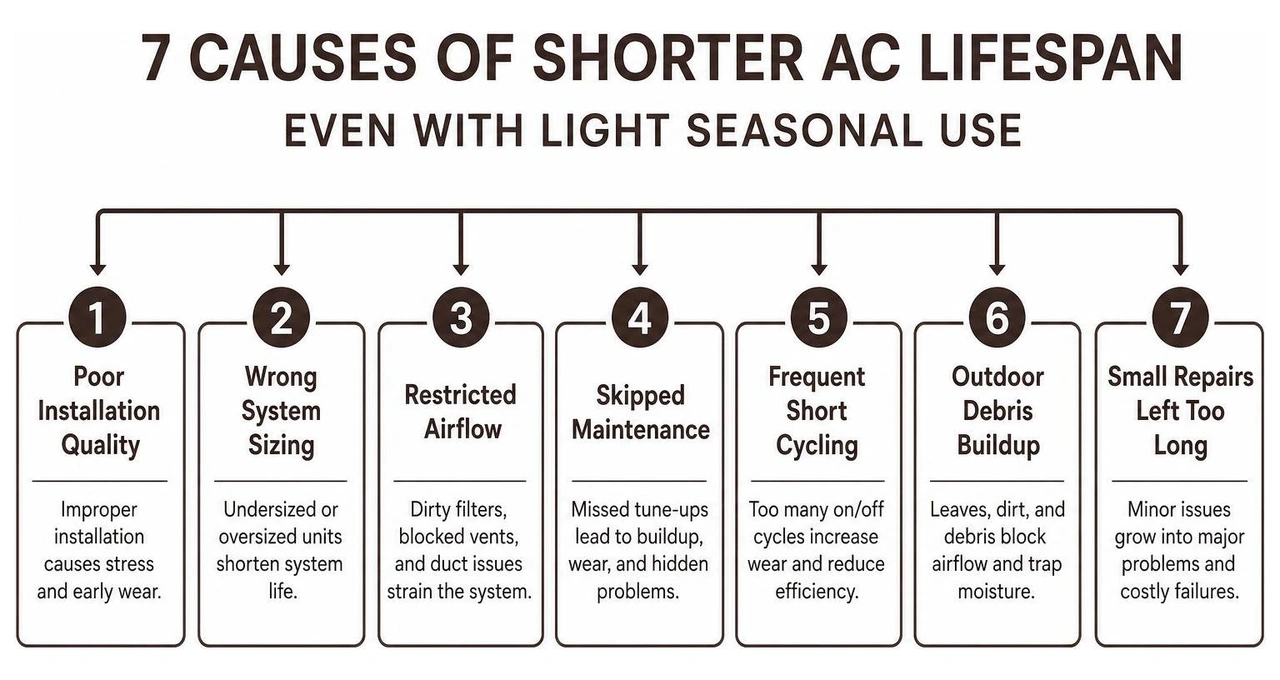
What shortens your ac lifespan even with light seasonal use terms explained:
1. How Does Bad Installation Quality and Improper Sizing Damage Lightly Used Systems?
Many homeowners believe that if an air conditioner is only turned on for a few heatwaves in July and August, it should naturally last for decades. However, the foundational build and sizing of your system dictate its longevity far more than total operating hours. When an air conditioner is installed incorrectly or improperly sized for the home, structural and electrical stress begin the moment power is applied.
If a system suffers from poor airflow design, incorrect refrigerant charges, or undersized ductwork from day one, those design flaws degrade internal components year-round. Understanding How Bad AC Installation Causes Problems for Years highlights why initial craftsmanship is the single largest indicator of equipment lifespan.
How Incorrect System Sizing Causes Short Cycling
System sizing in the HVAC industry is calculated in tons of cooling capacity, directly matched to your home's square footage, window exposure, insulation levels, and local heat load. An oversized air conditioner cools indoor air too quickly without running long enough to remove ambient humidity. This causes rapid cycling—turning on and off continuously every few minutes.
On the other hand, an undersized system runs continuously during peak summer afternoon hours, struggling to reach the thermostat setpoint and overworking its mechanical components.
This mechanical wear directly affects the heart of your cooling system. Continuous start-and-stop sequences deliver a rush of inrush electrical current to the compressor and fan motor capacitors. Over time, short cycling degrades electrical contacts, strains compressor bearings, and significantly shortens equipment life despite very low seasonal hours.
How Faulty Installation Practices Harm Your Unit
Beyond sizing, precise field installation practices are essential. During installation, technicians must pull a deep vacuum—typically down to at least 500 microns—to eliminate non-condensable gases and moisture inside the copper line set before introducing refrigerant.
If moisture remains trapped inside the sealed refrigerant loop, it reacts with the synthetic oil in the compressor to form harmful acid. This acidic sludge eats away at internal copper windings and valve seals from the inside out, even while the unit sits idle all winter long.
Leaky ductwork and improper line sizing also create chronic static pressure imbalances. High static pressure forces the furnace blower motor to pull excessive electrical current to move air, accelerating mechanical fatigue. Choosing proper craftsmanship upfront is explained further in our guide on How Proper AC Installation Affects Long-Term Performance.
2. What Shortens Your AC Lifespan Even With Light Seasonal Use Regarding Airflow and Filters?
Airflow is the lifeblood of any central cooling system. An air conditioner does not actually create cold air; it absorbs thermal energy from inside your home and transfers it outdoors via refrigerant. When airflow is blocked or restricted, this heat transfer process breaks down instantly, causing severe mechanical stress.
Nine out of ten compressor failures stem directly from secondary issues like poor airflow rather than manufacturing defects. Understanding what shortens your ac lifespan even with light seasonal use requires looking closely at how air moves through your furnace or air handler. Discover practical steps in our resource on How to Extend the Life of Your A/C.
How Restricted Airflow Overworks Blower Motors
When air filters remain unchanged or indoor supply registers are closed off in unused rooms, static pressure inside the duct system rises dramatically. Blower motors must work significantly harder against this artificial resistance.
- High static pressure forces electron flow to spike, raising motor operating temperatures.
- Restricted return air starves the indoor evaporator coil of warm air necessary to evaporate liquid refrigerant.
- Frozen evaporator coils form solid blocks of ice, trapping moisture and causing water damage when thawed.
- Liquid refrigerant flows backward into the compressor (known as liquid slugging), destroying internal pistons and scroll sets.
Homeowners sometimes install high-efficiency HEPA filters without realizing their system's blower was never designed for high static resistance. Unless explicitly engineered for dense filtration, restrictive media reduces airflow and accelerates component wear.
Why Dirty Air Filters Accelerate What Shortens Your AC Lifespan Even With Light Seasonal Use
Air filters protect indoor air quality while preventing dust and pet dander from coating the delicate aluminum fins of the indoor evaporator coil. Once dust mats onto a damp evaporator coil, it creates an insulating blanket that blocks thermal absorption.
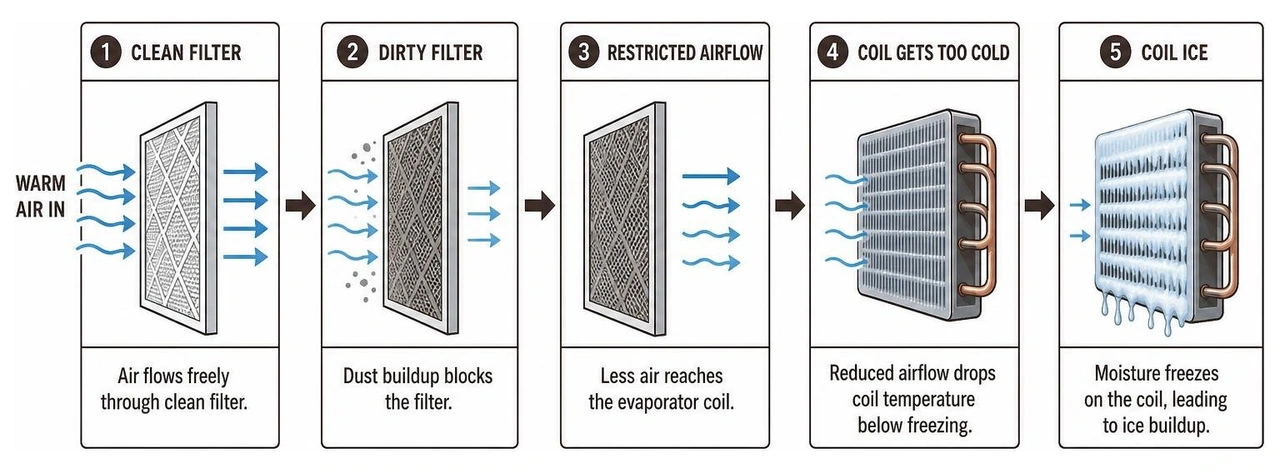
Standard 1-to-3 inch pleated filters should be inspected monthly and replaced every 1 to 2 months during active seasons. Homes with pets should replace filters every 60 days, while households with multiple pets or allergy sufferers require fresh filters every 30 to 45 days. Even in lightly used properties, filters accumulate dust over time and should be replaced at least once every 6 to 12 months.
3. Why Does Off-Season Neglect and Infrequent Maintenance Cause Early AC Failure?
It seems logical that an air conditioner sitting turned off during mild spring and autumn months remains completely safe from harm. In reality, long periods of inactivity invite subtle mechanical and chemical deterioration.
| System Aspect | Regularly Maintained Idle Unit | Neglected Idle Unit |
|---|---|---|
| Compressor Lubrication | Protective oil coating preserved on bearings | Oil settles; dry mechanical starts on initial spring startup |
| Electrical Components | Inspected, clean contactors free of corrosion or bugs | Pitted contacts, spider nests, loose wiring terminals |
| Condensate Line | Flushed clean; clear of organic sludge or algae | Trapped water forms mold, standing algae, and drain clogs |
| Outdoor Condenser Coil | Clean aluminum fins free of acidic debris | Organic damp debris causes galvanic metal corrosion |
Skipping annual maintenance because you rarely run the system allows these silent deterioration factors to worsen unmonitored. Learn more about local service intervals in How Often Should You Schedule an AC Tune-Up in the Northwest.
The Impact of Stagnant Refrigerant and Oil Separation
Inside your air conditioner, specialized synthetic lubricant (such as POE oil) circulates alongside the chemical refrigerant to keep the compressor lubricated. When a system sits idle for six to nine months straight:
- Refrigerant oil settles at the lowest points of the system and separates from gaseous refrigerant.
- Compressor bearings and internal valves lose their protective oil film.
- Upon the first warm spring afternoon, the unit experiences a dry startup, causing metal-on-metal friction before oil recirculates.
- Rubber O-rings and stem seals dry out without circulating oil, leading to microscopic refrigerant leaks.
Routine professional servicing ensures system pressure and oil distribution remain stable. Book a comprehensive AC Maintenance Tune-Up before the summer heat arrives.
How Moisture and Pests Exploit What Shortens Your AC Lifespan Even With Light Seasonal Use
Outdoor condenser units sitting quietly in Pacific Northwest yards during damp winters make attractive shelters for rodents and insects. Mice and squirrels frequently chew through thermostat control wiring and electrical insulation. Field mice nesting near high-voltage contactors cause short circuits the instant power is restored in summer.
Furthermore, lingering moisture, pine needles, and wet fallen leaves trapped around the outdoor cabinet form acidic compost. This moisture accelerates cabinet rust and corrodes vulnerable copper tubing.
4. How Do Thermostat Habits and Environmental Factors Cause Hidden AC Wear?
How you operate your thermostat during those few weeks of warm weather directly influences overall system longevity. Daily habits and outdoor positioning play major roles in preventing sudden breakdowns.
Review our practical AC Tune-Up Guide for Oregon Homeowners to optimize your thermostat settings and seasonal routine.
Short Cycling and Temperature Swings
Adjusting the thermostat back and forth throughout the day causes frequent cycling that strains internal parts. Setting the temperature extra low in an attempt to cool a hot home faster does not cool the air any quicker—it simply forces the compressor to run longer without stopping.
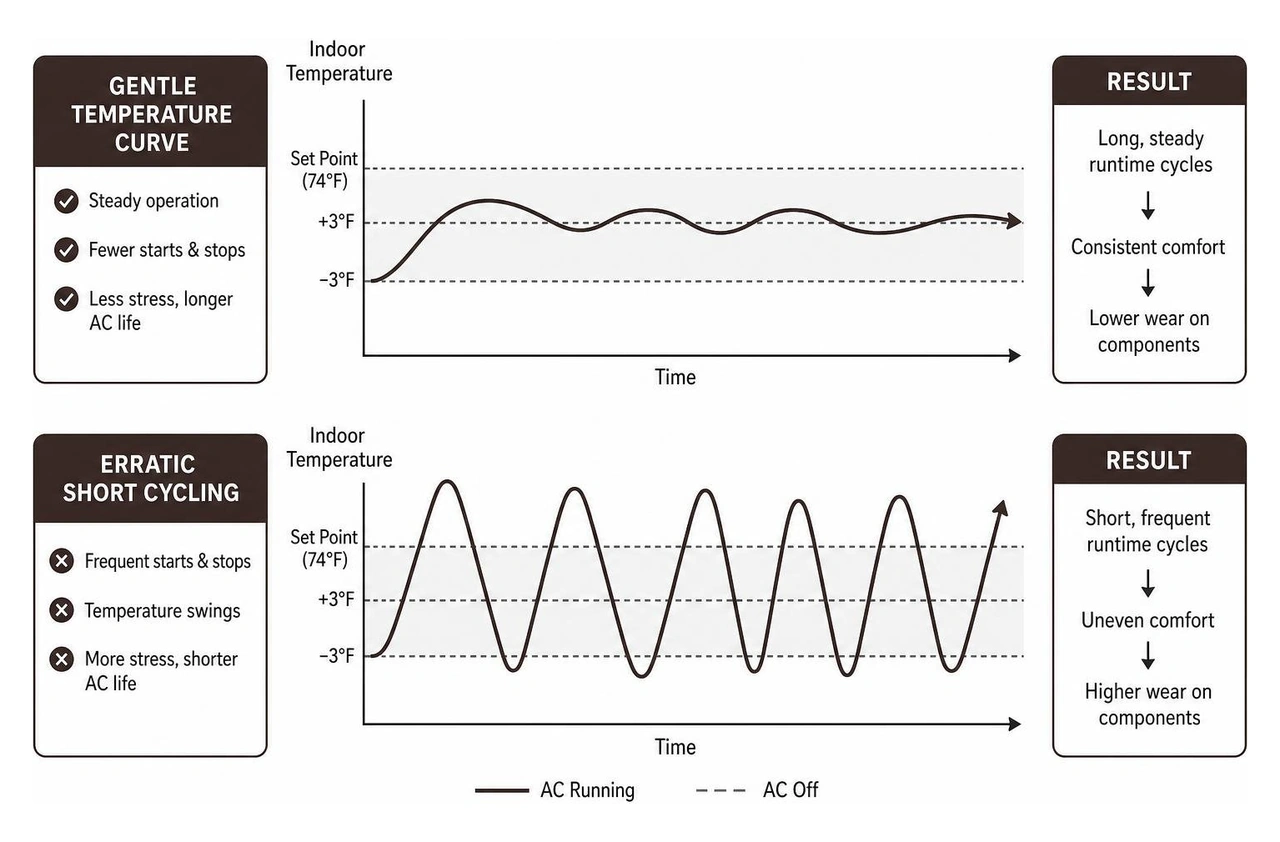
To minimize operational stress:
- Avoid drastic manual thermostat adjustments greater than 3 to 4 degrees at a time.
- Use a programmable or smart thermostat to implement gradual, scheduled temperature shifts.
- Leave internal supply vents open across all rooms to preserve balanced air pressure.
Outdoor Condenser Clearance and Off-Season Debris
The outdoor condenser coil releases absorbed indoor heat into the surrounding air. If lawnmower clippings, encroaching bushes, or falling autumn leaves block the cabinet, heat becomes trapped inside the unit.
Maintain at least two feet of clear space around the outdoor condenser on all sides. When rinsing dust or pollen off condenser fins, use a gentle garden hose stream—never a high-pressure power washer, which bends delicate aluminum fins and restricts air passage. Detailed steps are covered in How to Clean Outdoor AC Units.
5. Why Do Unaddressed Minor Repairs Lead to Sudden AC Failure?
Ignoring minor warning signs—such as a faint squeal, a subtle clicking sound, or slightly reduced airflow—allows minor component degradation to damage major parts like the compressor.
Before scheduling a service call, check basic settings using our guide on AC Troubleshooting Tips Before Calling a Professional.
How Small Electrical Strain Damages the Compressor
A run capacitor provides essential electrical support to get the compressor and fan motor operating smoothly. Capacitors degrade over time due to age and outdoor ambient heat.
Catching minor electrical issues early protects major components. Learn to spot warning indicators with these AC Repair Signs.
Condensate Drain Lines and Humidity Accumulation
During operation, your cooling system extracts moisture from indoor air, draining water outside through a PVC condensate line. When a system sits idle for extended periods:
- Algae and bacteria dry inside the drain pipe, forming solid blockages.
- The next time the cooling turns on, condensate overflows the primary drain pan.
- Standing water damages ceiling drywall, triggers safety switches, and causes internal mold growth.
Pouring a cup of plain white vinegar down the condensate drain access line periodically helps prevent organic buildup. Preventive maintenance also helps protect your manufacturer's warranty coverage—read more about How to Protect Your AC Warranty.
Frequently Asked Questions About Seasonal AC Lifespan
How often should a lightly used AC be serviced in Oregon?
Even if your air conditioner only operates for a few weeks each summer, it should receive professional maintenance once a year, ideally in spring. Annual maintenance ensures electrical contacts are secure, refrigerant levels are exact, drain lines are clear, and pest damage is caught before warm weather arrives.
Does turning off the AC during winter damage the system?
Turning off power to the outdoor unit via the disconnect switch during winter is safe and prevents accidental operation on cold days. However, do not wrap the outdoor unit in airtight plastic covers. Watertight wraps trap interior condensation, promoting rapid cabinet rust, electrical corrosion, and rodent nesting. Use breathable covers designed specifically for outdoor condenser protection.
How long should an air conditioner last with light seasonal use in the Pacific Northwest?
In the Pacific Northwest climate, a properly installed and regularly maintained central air conditioning system typically lasts 10 to 15 years. Light seasonal use can help maximize longevity, but only if the system is protected against airflow restrictions, off-season corrosion, pest entry, and unaddressed minor electrical wear.
Protect Your AC Lifespan with Professional Care in Oregon
Light seasonal operation does not automatically protect an air conditioner from wear and tear. Airflow restrictions, off-season moisture, pest intrusion, and electrical aging can shorten your system's operational lifespan long before its time.
Best Owner Direct HVAC & Electrical is a family-owned HVAC, electrical, and water-heater services company based in Cornelius, OR, serving homeowners and businesses throughout the Portland metro and surrounding Oregon communities. Our licensed technicians provide thorough tune-ups, precise installations, and reliable repair services to keep your cooling equipment running efficiently year after year.
Keep your home comfortable and protect your investment. Explore our complete range of Pacific Northwest Air Conditioning Solutions or contact our friendly team today to schedule your annual system tune-up.
Talk it through with our team
Have a question this article didn't answer for your home?
No call center, no pressure — our own technicians give the advice and stand behind the work.
Recent Posts
- Why Blocked Air Vents Cause Heating Problems During Fall Startup
- How Often Should You Schedule Professional Mini Split Service?
- Why Checking Air Vents for Your House is the Most Crucial Fall Maintenance Step
- Mini Split vs Central Ductwork: A Quick Start Guide
- The Real Reason Your Heat Pump Blows Cooler Air Than a Gas Furnace
Talk to Our Team
Family-owned · Licensed & insured · After-hours emergency on-call across the Tualatin Valley & Portland metro.
(503) 442-5964 Schedule ServiceContinue reading
Related from the Blog
Blog
Why Blocked Air Vents Cause Heating Problems During Fall Startup
Read articleBlog
How Often Should You Schedule Professional Mini Split Service?
Schedule professional mini split service annually, or twice yearly in Oregon for year-round comfort, efficiency, and warranty protection.
Read articleBlog
Why Checking Air Vents for Your House is the Most Crucial Fall Maintenance Step
Read articleOne call does it
Educated homeowners make our favorite customers.
Call Best Owner Direct or book online — honest, straightforward service across the Tualatin Valley & Portland metro.
Locally operated · Licensed CCB# 199049 · 1-Year Workmanship Warranty