Menu


Your Guide to Heat Pump Repair in Cornelius
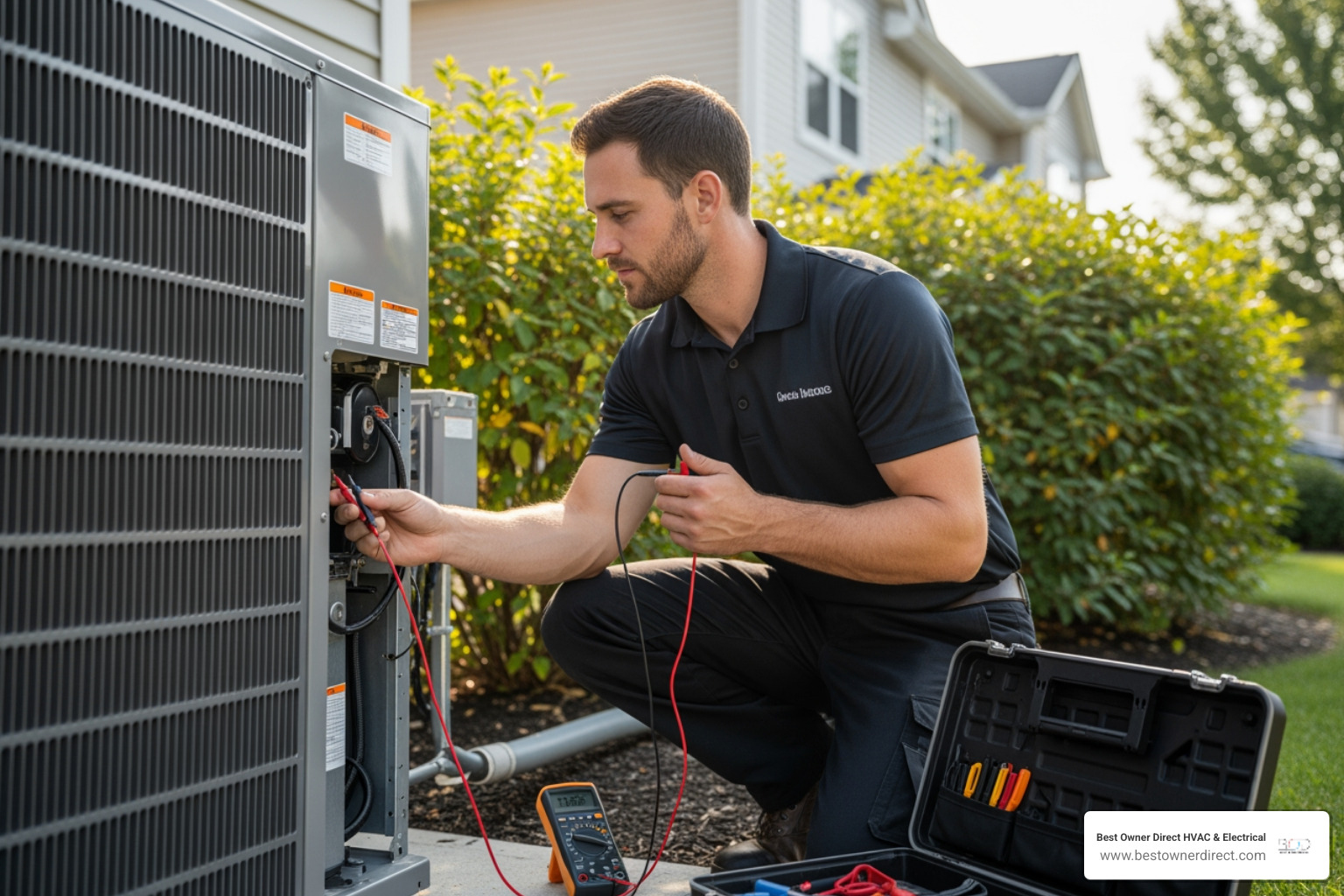
Affordable heat pump repair in cornelius, or is easier to find than you might think when you know what to look for. Your heat pump works hard year-round to keep your home comfortable through Oregon’s wet winters and warm summers. When it starts struggling, you need quick, reliable service that won’t empty your wallet.
Quick Answer: Finding Budget-Friendly Heat Pump Repair
• Check for local licensed contractors with positive customer reviews and transparent pricing
• Ask about maintenance plans that include discounts on parts and priority service
• Get multiple quotes from certified technicians familiar with your heat pump model
• Look for companies offering financing options or seasonal promotions
• Verify credentials including proper licensing, bonding, and insurance coverage
For comprehensive HVAC services in the Portland Metro area, explore our heating and cooling solutions, or schedule a heat pump repair appointment with our certified team today.
Heat pumps are complex systems that move heat rather than generate it, making them efficient but sensitive to maintenance issues. Regular tune-ups can prevent up to 30% of energy waste and catch small problems before they become expensive repairs. Whether your system is making strange noises, struggling to maintain temperature, or running constantly, getting help quickly saves money in the long run.
This guide walks you through recognizing common heat pump problems, understanding when professional help is needed, and finding qualified technicians who deliver quality service at fair prices. You’ll learn simple checks you can do yourself and how to make smart decisions about repair versus replacement.
Common Signs Your Heat Pump Needs a Professional Inspection
Your heat pump is a vital component of your home’s comfort system, working tirelessly to provide both heating and cooling. Like any hardworking appliance, it will eventually show signs of wear and tear, signaling that it might be time for a professional repair. Recognizing these common indicators early can prevent minor issues from escalating into major, more costly problems.
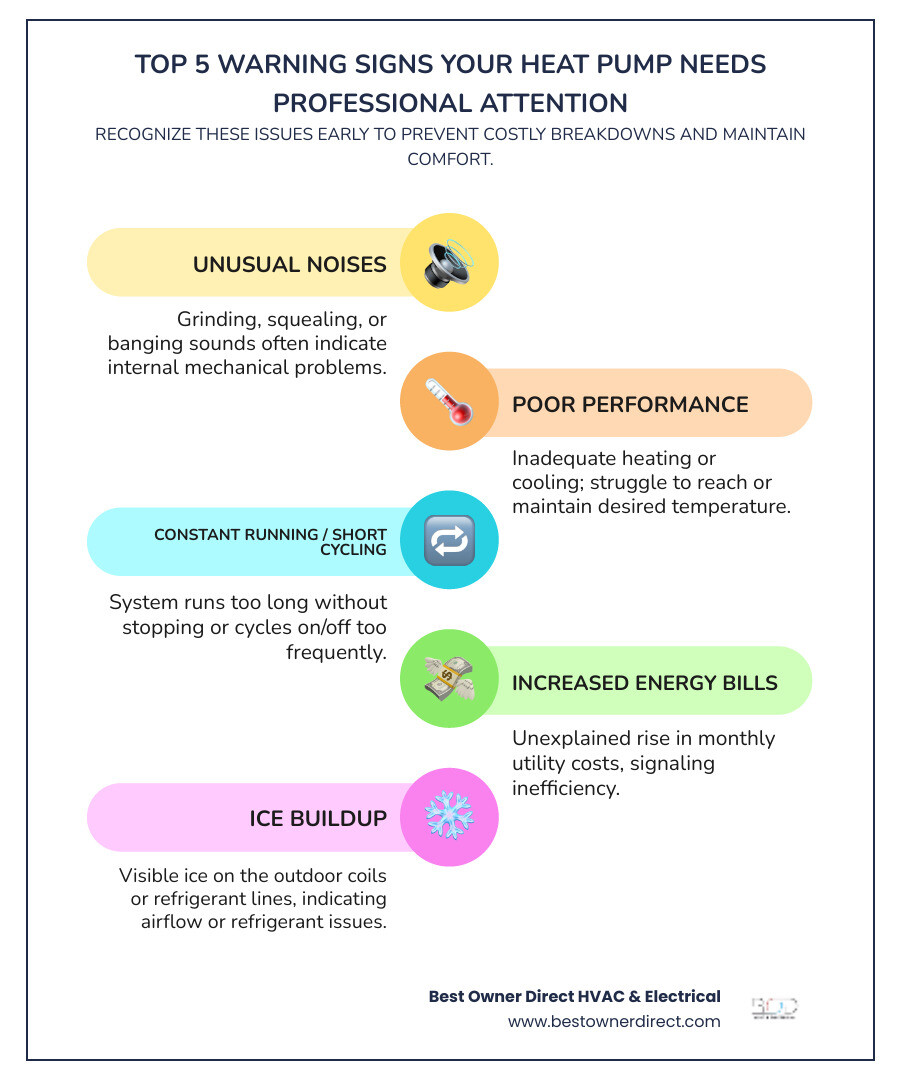
One of the most noticeable signs that your heat pump needs attention is a decline in its performance. If you find your home is no longer reaching the desired temperature—either struggling to heat sufficiently in the colder months or failing to cool effectively when it’s warm—your heat pump might be underperforming. This could manifest as inadequate heating or poor cooling, leaving certain rooms feeling too hot or too cold, or the system struggling to maintain a consistent temperature throughout your Cornelius home.
Another clear indicator is unusual noises emanating from your unit. While some operational sounds are normal, grinding, squealing, hissing, or banging sounds are red flags. These auditory clues often point to mechanical issues that require immediate professional diagnosis. We’ll dig deeper into these sounds shortly.
Short cycling is another common symptom. This occurs when your heat pump turns on and off frequently without completing a full heating or cooling cycle. Not only is this inefficient, but it also places undue stress on the system’s components, potentially shortening its lifespan and driving up energy consumption.
Speaking of energy consumption, a sudden or gradual increase in your energy bills without a corresponding change in usage patterns is a strong signal that your heat pump is working harder than it should to achieve the same results. This inefficiency often indicates a problem that needs to be addressed, such as a refrigerant leak, a clogged filter, or a failing component.
Finally, ice buildup on the outdoor unit’s coils is a common issue, particularly in the cooler, damp climate of Cornelius, OR. While some frost is normal during defrost cycles, excessive ice that doesn’t melt away can indicate a problem with the defrost mechanism, low refrigerant levels, or airflow restrictions. Ignoring this can lead to serious damage to the compressor.
Addressing these signs promptly can often mean the difference between a minor repair, which might involve fixing a thermostat problem or a refrigerant leak, and a major overhaul like a compressor or fan motor replacement. Early intervention helps maintain your system’s efficiency and helps you avoid unexpected discomfort.
Understanding Heat Pump Noises
Your heat pump has a lot to say, and if you listen closely, it might be telling you it needs help! While the gentle hum of a properly functioning heat pump is reassuring, unusual sounds can be a clear cry for attention.
• Rattling: This often suggests loose parts within the unit, such as panels, fan blades, or even internal components. It’s like a car rattling – something isn’t secure and could lead to bigger problems if not tightened.
• Hissing: A distinct hissing sound, especially when the unit is running, can be a tell-tale sign of a refrigerant leak. Refrigerant is the lifeblood of your heat pump, and a leak can severely impair its ability to heat or cool, leading to reduced efficiency and potential damage to the compressor.
• Clicking: While a clicking sound at startup or shutdown can be normal (often the relay switching on or off), continuous or rapid clicking during operation can indicate an electrical issue, such as a faulty capacitor or a problem with the control board.
• Banging: A loud banging noise is rarely good news. This might point to a loose fan blade hitting the housing, a problem with the compressor, or even a foreign object inside the unit. This type of sound usually warrants immediate professional attention to prevent further mechanical damage.
• Squealing or Grinding: These sounds often originate from motor bearings that are wearing out or have lost lubrication. If left unaddressed, a failing motor can seize up, leading to a complete system breakdown and a more expensive repair.
When you hear any of these unusual sounds, it’s a good idea to contact a professional for a diagnostic check. A technician can pinpoint the source of the noise and recommend the necessary repairs before the issue escalates.
Why Is My Heat Pump Running Constantly?
A heat pump that runs almost non-stop, or cycles on and off too frequently (short cycling), is not only inefficient but also a sign of an underlying problem. This constant operation can lead to increased wear and tear, higher energy bills, and ultimately, a shorter lifespan for your system.
Several factors can cause your heat pump to run constantly:
• Thermostat Issues: Sometimes, the problem isn’t with the heat pump itself but with its brain—the thermostat. A miscalibrated thermostat, incorrect settings, or a faulty sensor can cause your system to believe the temperature isn’t being met, leading to continuous operation.
• Clogged Air Filters: A dirty or clogged air filter restricts airflow, forcing your heat pump to work harder to pull air through. This reduced airflow can make the system struggle to heat or cool your home effectively, causing it to run for longer periods.
• Undersized Unit: If your heat pump is too small for the size of your home, it will constantly struggle to meet the heating or cooling demand, especially during extreme temperatures. This can happen if the system was improperly sized during installation or if modifications to your home have increased its heating/cooling load.
• Refrigerant Charge Issues: Low refrigerant levels, often due to a leak, can severely impact your heat pump’s efficiency. With insufficient refrigerant, the system cannot effectively transfer heat, leading it to run continuously in an attempt to reach the set temperature.
• Airflow Obstruction: Beyond clogged filters, other airflow issues can cause problems. Blocked return air vents, closed supply registers, or even furniture obstructing airflow can prevent proper air circulation, forcing your heat pump to work harder and longer.
• Leaky Ducts: If your ductwork has leaks, especially in unconditioned spaces like attics or crawl spaces, conditioned air can escape before reaching your living areas. This means your heat pump has to run longer to compensate for the lost air, leading to higher energy bills and reduced comfort.
If your heat pump is running constantly, it’s crucial to get a professional assessment. We can diagnose the root cause and recommend the most effective solution to restore your system’s efficiency and comfort.
The Importance of Regular Maintenance for System Longevity
Just like your car needs regular oil changes, your heat pump thrives on consistent maintenance. In the diverse climate of Cornelius, OR, where your heat pump works year-round for both heating and cooling, regular check-ups aren’t just a good idea—they’re essential.
Preventive care is the cornerstone of a long-lasting, efficient heat pump. Think of it as a proactive approach to keeping your system healthy. During a routine maintenance visit, our technicians carefully inspect, clean, and tune up your unit. This often includes checking refrigerant levels, cleaning coils, lubricating moving parts, and inspecting electrical connections. This process helps identify potential issues before they become serious breakdowns.
One of the most significant benefits of regular maintenance is improved energy efficiency. A well-maintained heat pump doesn’t have to work as hard to achieve the desired temperature. According to the U.S. Department of Energy (DOE), professional HVAC maintenance can help avoid up to 30% of energy costs. This means noticeable savings on your monthly utility bills, which can certainly help with affordable heat pump repair in cornelius, or by reducing the need for them in the first place!
Regular maintenance also directly contributes to your heat pump’s system lifespan. Heat pumps typically last 15-20 years, but this longevity is heavily dependent on how well they are cared for. Neglecting maintenance can lead to premature wear and tear, forcing you into an expensive replacement much sooner than anticipated.
Furthermore, many manufacturers require documented annual maintenance to keep your warranty protection valid. If a major component fails and you haven’t kept up with maintenance, your warranty claim might be denied, leaving you to cover the full cost of a costly repair.
Consistent maintenance translates to fewer breakdowns. Imagine the peace of mind knowing your heat pump is less likely to fail on the coldest winter night or the hottest summer day. While it doesn’t eliminate the possibility of repairs entirely, it significantly reduces the frequency and severity of issues.
In the Pacific Northwest climate, with its cool, damp winters and increasingly warm summers, heat pumps face unique challenges. Humidity can affect coil performance, and temperature swings demand consistent, efficient operation. Regular maintenance ensures your system is equipped to handle these conditions, providing reliable comfort year-round.
How to Find Reliable and Affordable Heat Pump Repair in Cornelius, OR
When your heat pump calls it quits, finding reliable and affordable heat pump repair in cornelius, or becomes a top priority. It’s not just about getting the system fixed; it’s about ensuring quality workmanship that lasts, without breaking the bank. Here’s how we recommend you steer the search for the best repair services in our community.
First and foremost, look for companies with local expertise. A local HVAC company will be familiar with the specific climate challenges in Cornelius, OR, and the types of heat pump issues that are more common here, such as ice buildup on coils during our damp winters. Their technicians will also understand local building codes and regulations, ensuring any repairs are compliant and safe.
Always prioritize licensed and insured professionals. This isn’t just a suggestion; it’s a necessity. Licensing ensures that technicians have met specific training and competency standards, while insurance protects you from liability in case of accidents or damage during the repair process. We ensure all our technicians are fully licensed, bonded, and insured for your peace of mind.
Positive customer reviews are invaluable. Take the time to read testimonials and online reviews to gauge a company’s reputation for quality service, professionalism, and affordability. Look for patterns in feedback, noting praise for prompt service, transparent communication, and effective repairs. A company with a strong community reputation is often a reliable choice.
Ask about satisfaction guarantees. A reputable HVAC provider will stand behind their work. A satisfaction guarantee provides assurance that if you’re not happy with the repair, they will work to make it right.
Finally, consider a company’s commitment to prompt service. When your heat pump is down, you need a quick response. Companies that offer timely scheduling and efficient service can minimize your discomfort and prevent further damage to your system.
What to Look For in a Qualified Technician for Affordable Heat Pump Repair in Cornelius, OR
Choosing the right technician is as important as choosing the right company. A qualified HVAC technician is your frontline defense against heat pump woes, ensuring the job is done correctly and efficiently.
Here’s what we believe you should look for:
• Certified Technicians: Look for technicians who hold relevant certifications, such as EPA Section 608 refrigerant handling certification. These certifications demonstrate a high level of knowledge and skill in HVAC systems, including heat pumps.
• Experience with All Models: Heat pumps come in various makes and models. A truly qualified technician should have extensive experience working on a wide range of systems. This ensures they can diagnose and repair your specific unit, regardless of its brand or complexity.
• Transparent Communication: A good technician will clearly explain the problem, the proposed solution, and the estimated timeframe for repair. They should be able to answer your questions in an understandable way, avoiding overly technical jargon. We believe in educating our customers so they can make informed decisions.
• Professionalism: This includes arriving on time, being courteous, and presenting themselves in a clean and professional manner. A professional technician will also respect your home, using shoe covers and drop cloths as needed.
• Punctuality: Your time is valuable. A reliable technician will arrive within the agreed-upon timeframe or communicate any unavoidable delays.
• Respect for Your Home: We understand that inviting someone into your home requires trust. A qualified technician will treat your property with care, leaving the work area clean and tidy upon completion of the repair.
The Benefits of Choosing a Local Pro for Affordable Heat Pump Repair in Cornelius, OR
When it comes to something as crucial as your home’s comfort system, opting for a local HVAC company for your heat pump repair in Cornelius, OR, offers distinct advantages. We pride ourselves on being part of the community and offering custom service that larger, non-local chains simply cannot match.
• Familiarity with Cornelius Climate: Our team understands the unique environmental factors that impact heat pumps in our area. From the seasonal temperature fluctuations to the humidity levels, we know how these conditions can affect your system’s performance and longevity. This local knowledge allows us to diagnose problems more accurately and recommend solutions that are truly effective for your home. This includes addressing common issues like ice buildup on outdoor units during our colder, wetter months.
• Faster Response Times: When your heat pump breaks down, you don’t want to wait days for service. As a local company, we can often provide faster response times for emergency repairs and scheduled appointments. Our proximity means less travel time and a quicker resolution to your comfort crisis.
• Supporting Local Business: Choosing a local professional means you’re investing directly back into the Cornelius economy. You’re supporting jobs within our community and contributing to the local tax base, which helps fund local services. It’s a win-win for everyone.
• Personalized Service: We’re not just another service provider; we’re your neighbors. We strive to build long-term relationships with our customers, offering personalized service that considers your specific needs and preferences. You’re not just a number to us; you’re a valued member of our community.
• Accountability: Local companies often have a stronger incentive to provide excellent service because their reputation is directly tied to the community they serve. We rely on positive word-of-mouth and repeat business, which drives us to deliver top-notch service every time.
By choosing a local expert for your affordable heat pump repair in cornelius, or, you benefit from specialized knowledge, quicker service, and a commitment to quality that stems from being an integral part of the community.
Simple DIY Checks Before You Call for Service
Before you pick up the phone to call for professional heat pump repair, there are several simple troubleshooting steps you can take yourself. These DIY checks can often resolve minor issues, saving you both time and the cost of a service call. Even if they don’t fix the problem, they can provide valuable information to our technicians, helping us diagnose the issue more quickly.
Here’s a list of quick checks you can perform:
• Check Thermostat Settings: This might seem obvious, but it’s a common culprit! Ensure your thermostat is set to the correct mode (heat or cool) and that the temperature setting is appropriate. Also, check if the fan is set to “auto” rather than “on,” as continuous fan operation can sometimes make it seem like the system is running constantly without conditioning the air. Make sure the batteries are fresh, too.
• Replace Air Filter: A dirty or clogged air filter is one of the most frequent causes of heat pump inefficiency and breakdowns. A blocked filter restricts airflow, forcing your heat pump to work harder, leading to reduced performance and higher energy bills. We recommend checking your filter monthly and replacing it every 1-3 months, or more frequently if you have pets or allergies.
• Clear Debris from Outdoor Unit: Your outdoor heat pump unit needs clear space around it to operate efficiently. Remove any leaves, grass clippings, dirt, or other debris that may have accumulated on or around the unit. Ensure there’s at least two feet of clearance on all sides to allow for proper airflow.
• Check Circuit Breakers: Go to your home’s electrical panel and look for any tripped circuit breakers labeled “HVAC,” “Furnace,” or “Heat Pump.” If a breaker is tripped, simply flip it back to the “on” position. If it immediately trips again, do not continue to reset it, as this indicates an electrical problem that requires professional attention.
• Ensure Vents Are Open and Unblocked: Walk through your home and make sure all supply and return air vents are open and not blocked by furniture, curtains, or rugs. Restricted airflow can cause uneven heating or cooling and make your heat pump work harder than necessary.
Performing these simple checks can often resolve common heat pump issues or at least help us narrow down the problem when you do call for service. Safety first: always turn off power to your unit at the thermostat and the circuit breaker before attempting any hands-on checks.
Repair vs. Replace: Making the Smart Choice for Your Heat Pump
Deciding between repairing your existing heat pump and replacing it with a new system comes down to age, reliability, comfort, and efficiency. A thoughtful evaluation helps you protect your budget and ensure dependable year-round comfort in Cornelius, OR.
Here are the key factors to weigh:
• System age — Lean Repair: Under 10–12 years and otherwise well maintained — Lean Replacement: Around 15+ years or approaching end of expected lifespan
• Frequency of issues — Lean Repair: First-time or infrequent, minor issues — Lean Replacement: Recurring problems or major component failures
• Comfort & performance — Lean Repair: Holds set temperatures after routine service — Lean Replacement: Persistent hot/cold spots, short cycling, or poor airflow even after service
• Energy use — Lean Repair: Utility usage aligns with seasons; bills are stable — Lean Replacement: Energy use rising without lifestyle changes; modern SEER2/HSPF2 gains available
• Warranty — Lean Repair: Active parts/labor coverage — Lean Replacement: Warranty expired or limited on big-ticket components
• Home changes — Lean Repair: No recent load changes — Lean Replacement: Remodels/additions created sizing mismatch
• Refrigerant & parts availability — Lean Repair: Uses readily available components — Lean Replacement: Older components or refrigerants that are harder to service
If your system is newer, has a solid maintenance record, and the issue is isolated, repair often makes sense. If your unit is older, has recurring breakdowns, or cannot keep up with comfort even after maintenance, replacement can deliver better reliability and efficiency.
Benefits of a well-planned replacement include:
• Improved efficiency for year-round savings in Cornelius’s cool, damp winters and warm summers
• Quieter operation and more consistent comfort with variable-speed technology
• Improved humidity control and indoor air quality options
• Smart thermostat compatibility and advanced system diagnostics
• Potential eligibility for Energy Trust of Oregon and local utility incentives
Not sure which direction to go? A professional assessment that reviews your system’s age, condition, maintenance history, and comfort concerns will clarify whether a targeted repair or a right-sized replacement is the smarter long-term choice.


Sealing Leaky Ductwork Before the Winter Cold Sets InYour furnace is only as effective as the ducts delivering its warmth. If you're tired of drafty rooms, securing your system's thermal envelope is the first step to true winter comfort.
Read more
All About How a Mini Split Adds Value to Your HomeLearn how a mini split adds value to your home with energy savings, zoned comfort, and increased property valuation.
Read more
How Blocked Return Vents Suffocate Your Heating SystemMany homeowners accidentally cover large return grilles when rearranging furniture for the fall. Find out how this simple mistake starves your furnace of airflow and causes it to overheat.
Read more