Menu

When Hot Water Becomes a Cold Emergency
An emergency tankless water heater in beaverton, or situation can disrupt your entire household in minutes. When your on-demand system fails, you're not just facing cold showers—you're dealing with potential property damage, safety hazards, and the urgent need for professional help.
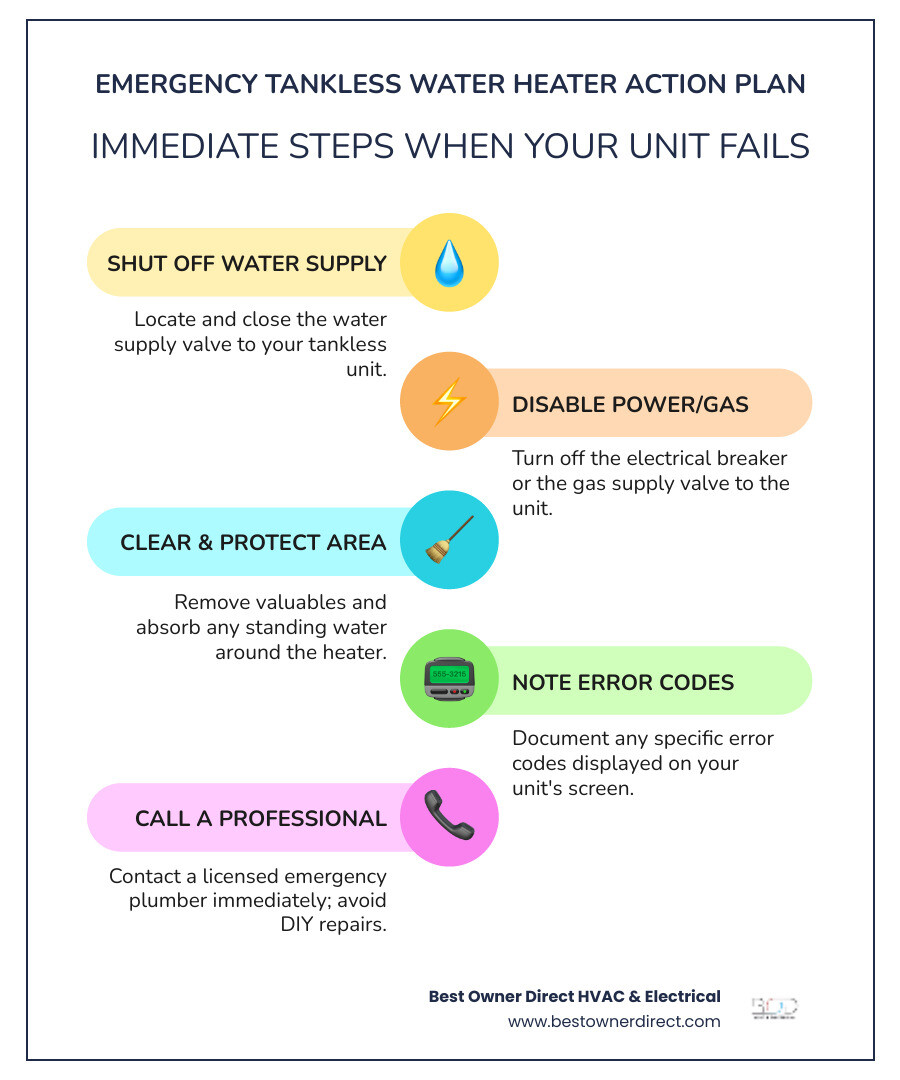
If you need immediate assistance, here's what to do:
- Shut off the water supply to your tankless unit
- Turn off power at the breaker (electric units) or gas valve (gas units)
- Clear the area around the unit to prevent damage
- Call a licensed professional for same-day emergency service
- Document error codes displayed on your unit's screen
For comprehensive water heater services, visit our water heater service page, or if you need urgent repairs right now, contact our emergency team.
Tankless water heaters are designed to last up to 25 years with proper care, but when something goes wrong, it often happens without warning. A system that was working perfectly yesterday can suddenly display error codes, leak water, or shut down completely. In Beaverton's climate, where cold mornings are common and hot water isn't a luxury but a necessity, a failed water heater becomes an immediate priority.
The good news is that most emergency situations can be resolved quickly when you know what to look for and take the right steps. Understanding the warning signs helps you act fast and minimize damage to your home. This guide walks you through exactly what to do when your tankless water heater needs immediate attention, from the first moment you notice a problem to getting your system safely back online.
Recognizing a Tankless Water Heater Emergency
Imagine waking up on a chilly Beaverton morning, ready for that invigorating hot shower, only to be greeted by an icy blast. This nightmare scenario recently became a reality for one of our valued customers. While an unexpected cold shower is certainly inconvenient, it can also be a clear indicator of a more serious issue that demands immediate attention for your tankless water heater. For us, a plumbing emergency specifically related to tankless water heaters isn't just about comfort; it's about safeguarding your home and your family.
A tankless water heater emergency can manifest in various ways, from subtle warnings to outright system failures. Recognizing these signs early can save you from extensive water damage risks and potential safety hazards within your Beaverton home. Many homeowners often take their water heaters for granted until they fail, leading to immediate inconvenience and urgent calls for professional diagnosis. Our team is well-versed in all water heater technologies, including the nuances of tankless systems, and we know that prompt action is key.
Critical Signs You Need an Emergency Tankless Water Heater in Beaverton, OR Service
When your tankless water heater starts acting up, it’s crucial to distinguish between a minor glitch and a full-blown emergency. Here are the critical signs that tell us your emergency tankless water heater in beaverton, or needs immediate professional service:
- Complete Loss of Hot Water: This is often the most obvious and frustrating sign. If your unit is running but producing no hot water, or only lukewarm water, it signals a significant internal problem. While tankless units are known for unlimited hot water, a sudden lack of it points to a malfunction that needs quick diagnosis.
- Visible Leaks from the Unit: Any water leaking from or around your tankless water heater is a serious concern. Unlike traditional tank models, tankless units don't store water, so a leak indicates a problem with internal components, connections, or pipes. Even a small leak can quickly lead to significant water damage, especially if it's near electrical components.
- Loud Rumbling or Banging Noises: While tankless units are generally quieter than their tank-based counterparts, unusual, loud noises like rumbling, banging, or hissing can indicate mineral scale buildup inside the heat exchanger. This buildup can reduce efficiency and, if left unaddressed, can damage the unit’s components, leading to a breakdown.
- Gas Smell Near the Unit (for Gas Models): This is perhaps the most dangerous sign and requires immediate action. If you detect a distinct smell of rotten eggs or gas near your tankless unit, evacuate your home immediately, do not operate any electrical switches, and call the gas company and emergency services from a safe location. This indicates a potential gas leak, which is a severe safety hazard.
- Frequent System Shutdowns or Error Codes: Modern tankless water heaters often come equipped with diagnostic displays that show error codes. If your unit is constantly shutting down or displaying persistent error codes, it's trying to tell you something is wrong. These codes can point to specific issues like ignition failure, sensor malfunctions, or blocked vents, requiring expert interpretation and repair.
- Low Water Pressure when Demanding Hot Water: While low water pressure can stem from various plumbing issues, if it specifically occurs only when demanding hot water from your tankless unit, it might indicate a blockage within the unit itself, possibly due to sediment buildup.
The Dangers of Delaying Professional Repair
Ignoring these critical signs can transform a manageable issue into a much larger and more costly problem. We understand that life gets busy, but delaying professional repair for an emergency tankless water heater in beaverton, or can have severe consequences:
- Accelerated Property Damage: A persistent leak, no matter how small, can cause significant damage to your floors, walls, and subflooring over time. This can lead to costly structural integrity issues and necessitate extensive repairs far beyond the water heater itself.
- Mold Growth: Water damage inevitably leads to mold and mildew growth in damp, hidden areas. Mold not only poses health risks to your family but can also be incredibly expensive and challenging to remediate once it takes hold.
- Electrical Hazards: If water comes into contact with electrical components, it creates a serious risk of electrical shorts, fires, or electrocution. This is why we always advise homeowners to turn off the power supply immediately if they suspect a leak.
- Carbon Monoxide Risk (for Gas Units): A malfunctioning gas tankless water heater, especially one with a blocked vent or ignition issues, can produce carbon monoxide—a colorless, odorless, and highly toxic gas. This silent killer can have devastating health impacts, making gas appliance safety paramount.
- Escalating Repair Needs: What might start as a simple component replacement can quickly escalate to a complete system overhaul or even replacement if left untreated. For instance, mineral buildup that could have been flushed out during routine maintenance might eventually cause irreparable damage to the heat exchanger, forcing a much more expensive solution. Addressing issues promptly, such as those we handle through our comprehensive water heater repair services in Beaverton, is always the most cost-effective approach.
Your Immediate Action Plan for a Water Heater Crisis
When an emergency tankless water heater in beaverton, or strikes, panic can set in, but a clear, calm approach is your best defense. Our primary concern is always homeowner safety and damage mitigation. Having a step-by-step guide ready can make all the difference in minimizing stress and preventing further harm to your home. Taking these immediate actions not only protects your property but also helps us provide faster, more efficient service when we arrive.
Step 1: Secure Your Home and Prevent Further Damage
Your first priority in any water heater emergency is to secure your home and prevent additional damage. These steps are crucial:
- Shut Off Water Supply: Locate the cold water shut-off valve leading into your tankless water heater. It's usually a small handle or lever on the cold water inlet pipe. Turn it clockwise until the water flow stops. This will prevent any further water from entering the unit and leaking into your home. If you cannot find the unit's shut-off valve, locate your home's main water shut-off valve, typically near your water meter or where the main water line enters your house, and turn it off.
- Turn Off Power at Breaker (Electric Units) or Gas Supply Valve (Gas Units):
- For Electric Tankless Water Heaters: Go to your home's electrical service panel (breaker box) and locate the breaker labeled for your water heater. Flip it to the "OFF" position. This cuts power to the unit and eliminates any electrical hazards if water is present.
- For Gas Tankless Water Heaters: Locate the gas shut-off valve on the gas line leading to your tankless unit. It's typically a yellow handle. Turn it perpendicular to the gas pipe to shut off the gas supply. If you smell gas, remember to evacuate immediately and contact emergency services.
- Clear the Surrounding Area: Remove any valuables, electronics, or furniture from the immediate vicinity of the water heater. Place towels or buckets to contain any existing leaks and protect your floors from water.
- Protect Floors from Water: If there's standing water, use towels, mops, or a wet/dry vacuum to remove it. This helps prevent damage to flooring and reduces the risk of mold growth.
Step 2: Information to Gather Before Calling for Service
Once your home is secured, gathering key information about your tankless water heater will significantly help our technicians diagnose the problem quickly and efficiently. Think of yourself as a detective, providing us with the crucial clues:
- Unit Make and Model: This information is usually found on a label or sticker on the side of your tankless unit. Knowing the manufacturer (e.g., Rinnai, Noritz, Navien) and model number helps us understand its specific design and potential issues.
- Age of the Unit: Knowing how old your tankless water heater is can provide insight into its expected lifespan and common issues for units of that age. While tankless units can last up to 25 years with proper maintenance, older units might face different challenges.
- Specific Error Codes: If your unit has a digital display, note down any error codes it's showing. These codes are invaluable as they often correspond to specific malfunctions described in the manufacturer's manual.
- Detailed Description of Symptoms: Provide a clear and concise description of what happened. When did the problem start? What exactly did you observe (e.g., "no hot water," "loud banging noise," "water dripping from the bottom")? Were there any unusual smells? The more details, the better.
- Unit's Location in the Home: Let us know where your tankless water heater is located (e.g., utility closet, garage, exterior wall). This helps our team prepare for access and any specific installation considerations.
Having this information ready when you call for emergency tankless water heater in beaverton, or service allows us to bring the right tools and parts, potentially speeding up your repair and restoring your hot water sooner.
Common Causes and Prevention of an Emergency Tankless Water Heater in Beaverton, OR
Tankless water heaters are marvels of modern engineering, providing endless hot water and impressive energy efficiency. However, like any sophisticated appliance, they are susceptible to certain issues that can lead to emergency situations. Understanding these common causes, and more importantly, how to prevent them, is key to ensuring your system's longevity and consistent performance in your Beaverton home. Proactive care not only extends the life of your unit but also preserves its energy efficiency, saving you money in the long run.
Common Causes of an Emergency Tankless Water Heater in Beaverton, OR
While tankless water heaters are robust, several factors can lead to unexpected breakdowns requiring emergency tankless water heater in beaverton, or service:
- Mineral Scale Buildup: This is arguably the most common culprit, especially in areas with hard water like parts of Beaverton. Minerals (calcium and magnesium) in the water can accumulate inside the heat exchanger, forming a scale. This buildup restricts water flow, reduces heating efficiency, and can cause the unit to overheat, make loud noises, or shut down entirely. This is why regular descaling is so vital.
- Ignition Failure (Gas Models): For gas tankless units, problems with the igniter or flame sensor can prevent the burner from lighting, resulting in no hot water. Issues can range from a faulty igniter to dirty components or even a temporary gas supply interruption.
- Blocked Air Intake or Exhaust Vent: Tankless water heaters require proper ventilation to operate safely and efficiently. A blocked air intake can starve the unit of oxygen, while a blocked exhaust vent can lead to dangerous carbon monoxide buildup. Common blockages include leaves, debris, bird nests, or even snow during extreme weather.
- Flow Sensor Issues: The flow sensor detects when hot water is being demanded and tells the unit to activate. If this sensor malfunctions, the unit might not turn on when you open a hot water tap, or it might cycle on and off inconsistently.
- Overloaded System Capacity: While tankless units offer "unlimited" hot water, they have a flow rate capacity. If too many hot water fixtures are running simultaneously (e.g., two showers and a dishwasher), the unit might struggle to keep up, leading to lukewarm water or a temporary shutdown. This might not be an emergency in itself but can indicate improper sizing or a need for adjustment.
- Thermostat Malfunction: The thermostat regulates the water temperature. A faulty thermostat can lead to inconsistent water temperatures, where the water is either too hot or not hot enough, or causes the unit to short cycle.
- Leaking Components: Although tankless units don't have a large tank to burst, internal components like heat exchangers, connections, or pressure relief valves can develop leaks due to corrosion, wear and tear, or improper installation.
Proactive Care: How Regular Maintenance Prevents Breakdowns
The best defense against an emergency tankless water heater in beaverton, or is a good offense: regular, professional maintenance. With proper care, tankless water heaters can last up to 25 years, far exceeding the 6-10 year lifespan of traditional tank models. Our approach to maintenance is designed to keep your system running optimally and extend its life:
- Annual Descaling Service: This is the most crucial maintenance task for tankless units, especially in areas like Beaverton where hard water is common. Our technicians use a specialized solution to flush out mineral deposits from the heat exchanger, restoring efficiency and preventing damaging buildup. This helps prevent the loud noises and reduced performance caused by scale.
- Filter Cleaning: Many tankless units have water filters that prevent sediment from entering the system. We'll inspect and clean these filters to ensure unrestricted water flow.
- Vent Inspection: For gas models, we carefully inspect the air intake and exhaust vents for any blockages, ensuring safe and efficient operation and preventing carbon monoxide hazards.
- Professional System Check: Our comprehensive check includes inspecting all gas and water connections, electrical components, igniters, flame sensors, and the overall operation of the unit. We look for early signs of wear and tear, corrosion, or potential issues that could lead to a future breakdown.
- Software Updates: Like any modern appliance, some tankless units benefit from occasional software updates to improve performance and address known issues.
- Extending Lifespan: Regular maintenance isn't just about preventing emergencies; it's about maximizing your investment. With our diligent care, your tankless water heater can truly reach its full potential, providing reliable hot water for decades.
For more information on maximizing the life and efficiency of your tankless system, explore our detailed services for tankless water heaters in Beaverton.
Navigating Special Situations in the Pacific Northwest
Life in Beaverton means we're no strangers to diverse weather conditions, from crisp, cold winters to occasional heavy rains. These environmental factors can sometimes add an extra layer of complexity to a tankless water heater emergency. While tankless units are generally robust, extreme weather can introduce unique challenges, making preparedness even more critical. Our aim is to ensure you have reliable hot water, no matter what the Pacific Northwest weather throws our way. For all your general water heater needs, our water heater services are always available.
What to Do if Your Heater Fails During Extreme Weather
When your tankless water heater faces issues during a cold snap, heavy storm, or even a power outage, specific considerations come into play:
- Insulate Exterior Pipes: If your tankless unit or its water lines are exposed to the elements, especially during freezing temperatures, ensure they are adequately insulated. While this is a preventative measure, checking existing insulation during an emergency can reveal if it's failed or been compromised, leading to frozen pipes.
- Check for Frozen Lines: During extreme cold, the pipes leading to or from your tankless water heater can freeze. If you suspect a frozen pipe, you might notice a complete lack of water flow or ice visible on exposed pipes. Never try to thaw frozen pipes with an open flame; gentle heat from a hairdryer can sometimes help, but it's best to call a professional to prevent pipes from bursting.
- Power Surge Protection: In Beaverton, winter storms can sometimes bring power fluctuations. If your electric tankless unit fails after a storm, a power surge might be the culprit. Ensure your unit is connected to a surge protector if possible, and check your circuit breaker.
- Prioritize Safety: During any extreme weather event, your safety is paramount. If a gas leak is suspected during a storm or power outage, follow immediate evacuation procedures. Do not attempt to operate electrical appliances if there's standing water or flood risk.
- Calling for Professional Help: Even during challenging weather, our team is committed to providing emergency tankless water heater in beaverton, or service. Be prepared to provide details about road conditions or any access challenges if the weather is severe. We understand the urgency of restoring hot water, especially when temperatures drop.
Restoring Your Home's Comfort and Safety
Experiencing an emergency tankless water heater in beaverton, or can be a jarring experience, but by following these immediate steps and understanding the underlying causes, you can steer the situation with confidence. We've walked through recognizing the critical signs, taking immediate action to secure your home, and understanding common causes and the immense value of preventative maintenance.
Our goal is always to restore your home's comfort and safety as quickly and efficiently as possible. We pride ourselves on providing comprehensive solutions, from swift emergency repairs to expert installations and proactive maintenance plans. We know that when a plumbing emergency strikes, you need prompt and dependable help, and our team is ready to deliver fast, reliable service to get your hot water flowing again.
Choosing Best Owner Direct HVAC & Electrical means relying on a team dedicated to quality workmanship and customer care. We believe in transparent communication and comprehensive solutions for your home's comfort and safety. Don't let a faulty water heater disrupt your daily routine or compromise your peace of mind. For expert service and installation of tankless water heaters in Beaverton, contact our team today. We're here to ensure your hot water is always on-demand, just as it should be.



Why We Always Check the Evaporator Coil Before Switching to HeatThat harsh burning smell when you first turn on your furnace isn't always harmless dust. Learn how summer grime left on your AC coil becomes a hidden heating hazard.
Read more

Step-by-Step Guide to Mini Split Benefits for Garages & Bonus RoomsDiscover the mini split benefits for additions garages and bonus rooms with our step-by-step guide on zoned comfort, energy savings, and installation.
Read more
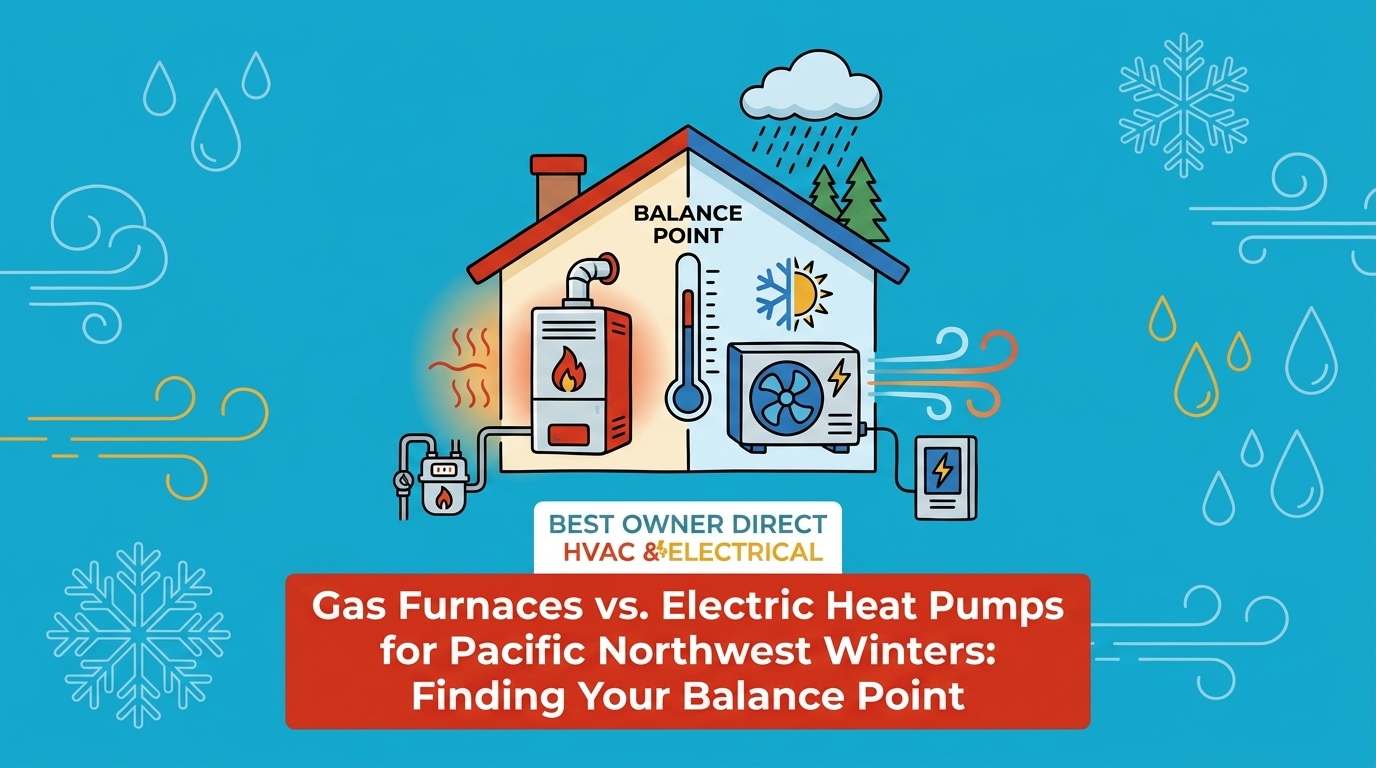
Gas Furnaces vs. Electric Heat Pumps for Pacific Northwest WintersBefore the cold sets in, deciding between a standard heat pump and a dual-fuel system is crucial. Explore how wet, near-freezing climates impact your heating choices.
Read more