Menu


Why Dryer Vent Cleaning Matters for Your Home, Safety, and Energy Bills
Dryer vent cleaning why it matters for your home comes down to three things: fire safety, energy efficiency, and appliance longevity. Here's a quick look at why it deserves a spot on your home maintenance list:
- Fire prevention - Lint is highly flammable. Clogged vents are the leading cause of dryer fires in the U.S., with an estimated 2,900 residential dryer fires reported each year.
- Lower energy bills - A blocked vent forces your dryer to work harder and run longer, which drives up your utility costs.
- Longer dryer life - Restricted airflow puts strain on your dryer's motor and heating elements, leading to early wear and costly repairs.
- Better indoor air quality - Blocked vents can push moisture, mold spores, and even carbon monoxide (in gas dryers) back into your living space.
- Faster drying times - A clean vent allows hot, moist air to escape efficiently, so your clothes dry in one cycle instead of two or three.
Most homes need a full dryer vent cleaning at least once a year. Households with heavy laundry use, pets, or long vent runs may need it more often — every six months is a reasonable target.
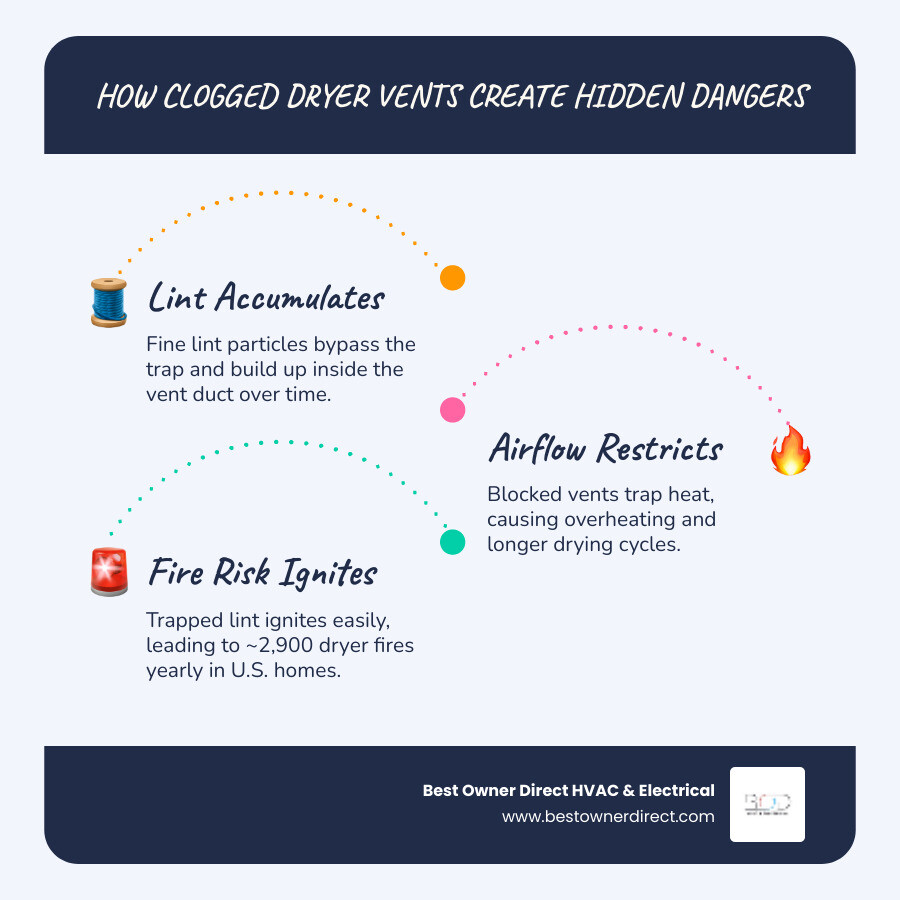
It's easy to assume that cleaning the lint trap after every load is enough. It isn't. Fine lint particles pass right through the trap and gradually build up deep inside the vent duct, where they restrict airflow and create a hidden fire hazard that grows over time.
The good news is that regular cleaning solves all of these problems at once — and it's one of the simplest, most overlooked ways to protect your home.
The Critical Link Between Dryer Vent Cleaning and Home Safety
When we think about home maintenance in places like Hillsboro or Beaverton, we often focus on the roof or the HVAC system. However, the humble dryer vent is one of the most significant hidden hazards in any modern household. The National Fire Protection Association (NFPA) and the U.S. Fire Administration (USFA) have shared staggering statistics that every homeowner should know. Between 2014 and 2018, U.S. fire departments responded to an average of 13,820 home structure fires per year involving clothes dryers.
The primary culprit? A failure to clean the equipment. Lint is essentially tiny, dried-out bits of fabric—highly flammable and ready to ignite at the slightest spark or excessive heat. When a vent is clogged, the heat that should be escaping outdoors stays trapped inside the dryer’s cabinet. This creates a "perfect storm" for a fire.
For those living in the Cornelius area, ensuring your vent is clear isn't just a chore; it’s a vital safety measure. You can find more info about dryer vent cleaning services to see how professional care keeps these risks at bay.
Dryer vent cleaning why it matters for your home and fire prevention
The ignition factor in most dryer fires is simple: restricted airflow. When the hot air cannot move through the duct, the temperature inside the dryer rises beyond its design limits. Statistics from 2018 to 2020 show that an estimated 2,900 domestic dryer fires were reported each year specifically resulting from uncleaned vents.
In many Oregon homes—especially those in multi-story houses in Lake Oswego or Tigard—the dryer vent doesn't just go through a single wall. It might travel 20 or 30 feet through the floor and ceiling before reaching the outside. Every inch of that duct is a place where lint can settle, pack down, and eventually become fuel for a fire. Regular cleaning removes this fuel source, ensuring that your laundry day remains productive rather than dangerous.
Dryer Vent Cleaning: Why It Matters for Your Home and Efficiency
Have you noticed your utility bills creeping up lately? While energy prices fluctuate, a clogged dryer vent is a guaranteed way to waste money. When airflow is restricted, your dryer has to run for much longer to remove the moisture from your clothes. This doesn't just waste electricity or gas; it increases your home's carbon footprint.
| Feature | Clean Vent | Clogged Vent |
|---|---|---|
| Drying Time | 30–45 Minutes | 60–90+ Minutes |
| Energy Usage | Standard | 30% to 50% Higher |
| Wear & Tear | Minimal | High (Overheating) |
| Fire Risk | Low | High |
By keeping the airway clear, you allow the machine to breathe. This simple act of maintenance can save a typical household between $50 and $100 per year on energy costs. In cities like Portland and Tualatin, where we value both our budgets and the environment, this is a win-win scenario.
Dryer vent cleaning why it matters for your home and appliance performance
Your dryer is a workhorse, but even the strongest motor has its limits. When the vent is blocked, the motor has to work against backpressure, and the heating element stays on for much longer than intended. This leads to premature component failure. If you find yourself needing to run the dryer for two or three cycles just to get a load of towels dry, the machine isn't necessarily "old"—it's likely just "choking."
Regular cleaning ensures faster drying times and prevents the heating element from burning out. By investing in routine maintenance, you extend the life of your appliance by years, avoiding the high cost of a total replacement.
Recognizing the Warning Signs of a Clogged Dryer Vent
Your dryer will usually try to tell you when it’s struggling. Modern units sometimes have a "check vent" light, but older models require a bit of detective work.
Watch for these warning signs:
- Longer Drying Times: If a load that used to take 40 minutes now takes 80, there is a blockage.
- Excessive Heat: If the top of the dryer is hot to the touch or your clothes come out feeling "scorched," the heat isn't escaping.
- Burning Odors: A musty or burning smell is a red flag that lint is overheating.
- Stuck Vent Flaps: Walk outside while the dryer is running. If the exterior vent flap isn't opening or you don't feel a strong breeze, the line is blocked.
- Humid Laundry Room: If your laundry room feels like a sauna every time you dry clothes, moisture is backing up into the house.
Dryer vent cleaning why it matters for your home and indoor air quality
Beyond fire and efficiency, there is the matter of the air you breathe. A clogged vent traps moisture inside the ductwork. Over time, this damp lint can become a breeding ground for mold and mildew. These spores can then be pushed back into your laundry room, affecting the air quality throughout your home.
Furthermore, for homes in areas like Oregon City or West Linn that use gas dryers, a blocked vent is a major health hazard. Gas dryers produce carbon monoxide (CO) as a byproduct of combustion. Normally, this is safely vented outside. If the vent is clogged, that odorless, colorless, and deadly gas can back up into your living space. Regular cleaning ensures that these toxic fumes stay where they belong—outside.
DIY vs. Professional Dryer Vent Cleaning: What You Need to Know
Many homeowners wonder if they can handle this task themselves. For a very short, straight vent that goes directly through an exterior wall, a DIY approach can work.
DIY Steps for Basic Cleaning:
- Unplug the dryer: Safety first! Turn off the gas valve as well if applicable.
- Pull it out: Carefully move the dryer away from the wall to access the flexible hose.
- Vacuum the back: Use a vacuum attachment to clear lint from the back of the dryer and the beginning of the wall duct.
- Use a brush kit: You can buy a flexible rod and brush kit to scrub the inside of the pipe.
- Check the exterior: Clear any debris or bird nests from the outside vent hood.
However, DIY kits have limitations. They can sometimes get stuck in tight turns or fail to reach the entire length of the duct. If you have a complex system, professional help is the way to go.
Professional maintenance for complex vent systems
At Best Owner Direct HVAC & Electrical, we see a variety of vent configurations across the Willamette Valley. Many homes in newer developments in Sherwood or Wilsonville have vents that exit through the roof or travel through several floors. These are nearly impossible to clean thoroughly with a store-bought kit.
Professional technicians use high-powered vacuums, rotating brushes, and compressed air tools that reach every nook and cranny. We also use video inspection cameras to confirm the blockage is 100% gone and to check for disconnected joints or crushed pipes hidden behind your walls. This level of expertise is essential for ensuring your home is truly safe.
Frequently Asked Questions about Dryer Vent Maintenance
How often should you clean your dryer vent?
For the average household of four, an annual cleaning is the standard recommendation. However, if you have several pets that shed or if you do laundry every single day, you should consider cleaning it every six months. Long vent runs (over 15 feet) also tend to accumulate lint faster and should be checked more frequently.
Is cleaning the lint trap enough to prevent fires?
Unfortunately, no. While cleaning the lint trap after every load is crucial, it only catches about 70-80% of the lint. The remaining fine fibers pass through the screen and settle in the internal dryer housing and the vent line. Over months and years, this "bypass" lint creates the clogs that cause fires.
Can a clogged dryer vent cause carbon monoxide poisoning?
Yes. If you have a gas dryer, the vent is responsible for carrying exhaust gases out of the home. A significant blockage can cause these gases, including carbon monoxide, to leak into your home. This is why regular inspections are a non-negotiable safety task for gas dryer owners.
Conclusion
Taking care of your home means looking at the things you can’t see, and the dryer vent is one of the most important hidden systems in your house. From preventing devastating fires to saving money on your monthly energy bills, the benefits are clear.
Whether you are in Cornelius, Forest Grove, or any of our surrounding communities like Gladstone or Milwaukie, we are here to help. At Best Owner Direct HVAC & Electrical, our focus is on your comfort and safety. Don't wait for a "check vent" light or a burning smell to take action.
Protect your family and your investment. Schedule your professional dryer vent cleaning in Cornelius, OR today and breathe easier knowing your home is safe and efficient.



Navigating Fall HVAC Tune-Ups in Cornelius Before the Rain StartsThe Pacific Northwest's sudden shift to autumn rain creates a narrow window for outdoor maintenance. Booking your heating tune-up in September prevents dangerous delays once the storms hit.
Read more

How Pacific Northwest Heat Domes Made Heat Pumps a NecessityDiscover how Pacific Northwest heat domes changed the need for heat pumps for year-round resilience, cooling, and safety across Cascadia.
Read more
Understanding How Heat Pumps Defrost During Early Oregon FrostsWaking up to steam billowing from your outdoor unit is alarming, but it rarely means fire. Discover how this normal defrost cycle protects your equipment during the first fall freeze.
Read more