Menu


Why Heat Pump Benefits for Pacific Northwest Homeowners Are Hard to Ignore
Heat pump benefits for pacific northwest homeowners are significant — and if you want the short version, here it is:
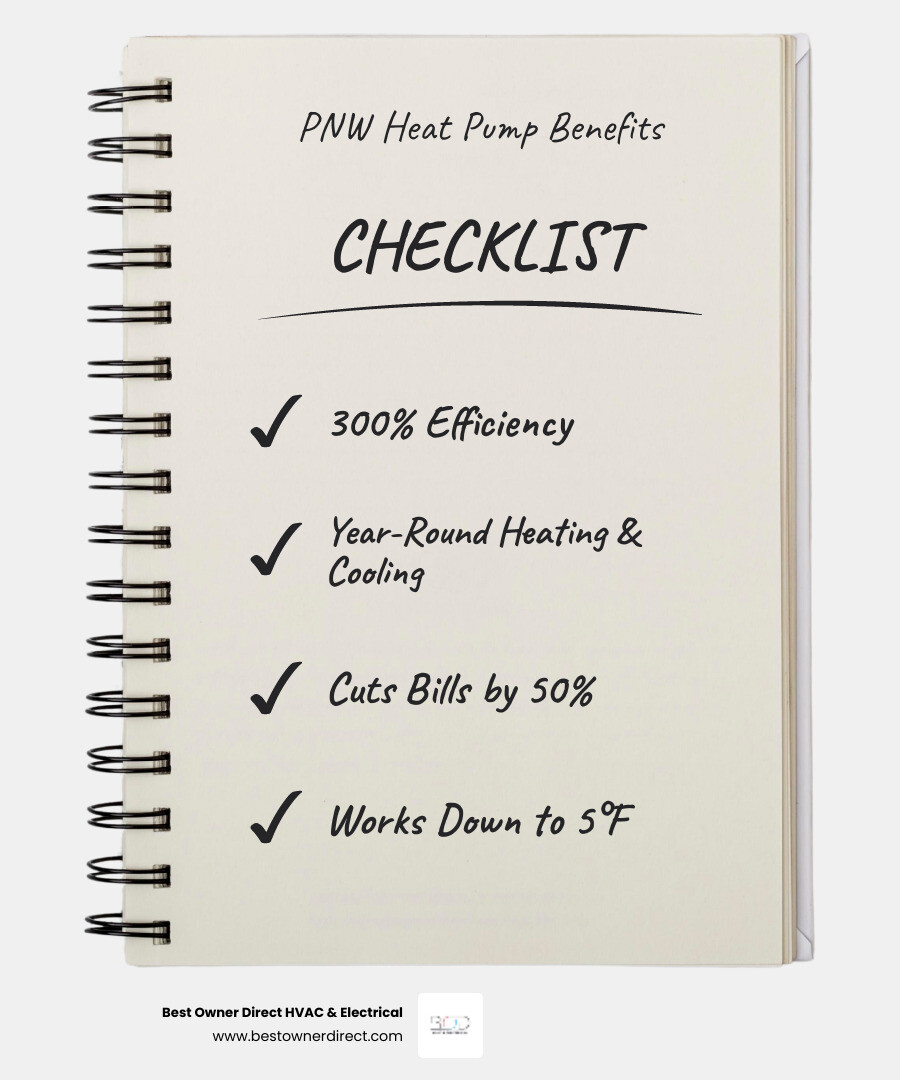
- Energy efficiency: Heat pumps deliver 2–4 units of heat for every unit of electricity used, making them up to 300% more efficient than fossil fuel systems
- Year-round comfort: One system handles both heating and cooling — critical as PNW summers get hotter
- Lower energy bills: Switching from electric resistance heating (like baseboards) can cut heating electricity use by up to 50%
- Works in cold snaps: Modern cold-climate models maintain efficiency down to 5°F and can deliver some heat well below that
- Cleaner home air: No combustion means no fumes, plus built-in air filtration
- Financial incentives: Federal tax credits, utility rebates, and state programs can significantly offset installation costs
- Eco-friendly: Heat pumps run on electricity, not fossil fuels, helping reduce your home's carbon footprint
The Pacific Northwest has a climate that most of the country doesn't fully appreciate. Winters here are mild and wet — not the bone-dry, single-digit cold of the Midwest or Northeast. Summers, though, are getting hotter. Extreme heat events that once felt rare are becoming more common across Oregon and Washington.
That combination creates a real problem for homeowners stuck with an old furnace and no air conditioning. You're paying to heat a home through long, damp winters, then sweating through summers with no good cooling option.
Heat pumps solve both problems with one system. And in a climate like ours — where outdoor air rarely drops to the extremes that challenge heat pump performance — they do it with remarkable efficiency. It's no surprise that heat pumps are already installed in more than a quarter of Pacific Northwest homes, and that number is growing fast.
This guide walks you through everything you need to know: how heat pumps actually work in our specific climate, which type fits your home, what the cold-weather limits really are, and how to take advantage of the financial incentives available right now in 2026.
Why are heat pump benefits for pacific northwest homeowners so significant in our damp climate?
The Pacific Northwest is practically the "Goldilocks zone" for heat pump technology. Because our winters are generally mild and our air is dense with moisture, there is a wealth of ambient heat available for a heat pump to harvest. Unlike a furnace, which has to create heat by burning gas or using high-resistance electric coils, a heat pump simply moves existing heat from the outside to the inside.
This process relies on a refrigeration cycle—the same technology that keeps your milk cold, just reversed. Even when the air feels chilly to us, it still contains thermal energy. By using specialized refrigerants and compressors, the system captures that energy and brings it indoors. This is why air-source heat pumps are up to 300 percent more efficient than fossil fuel-powered counterparts. In fact, for every unit of electricity you pay for, a heat pump can deliver two to four units of actual heat.
Beyond just the temperature, our region is famous for its humidity. Why Should I Install a Heat Pump For My Home is a question often answered by looking at indoor air quality. Heat pumps are excellent at regulating humidity. During the cooling months, they pull moisture out of the air, preventing that "clammy" feeling. In the winter, they provide a gentler, more consistent warmth that doesn't dry out your skin and sinuses the way a scorching gas furnace might.
Furthermore, choosing this path supports regional environmental goals. Buildings account for about one-fifth of Washington state’s greenhouse gas emissions. By moving toward fossil fuel independence and relying on our relatively clean electric grid, we can significantly reduce our home's carbon footprint while enjoying superior comfort.
I’m looking to upgrade my home's heating. How do different heat pump types perform in Hillsboro and Beaverton?
When we talk to neighbors in Hillsboro and Beaverton, the first question is usually: "Will it fit my house?" The beauty of 2026 technology is that there is a solution for almost every architectural style, from mid-century ranch homes to brand-new builds.
Central Ducted Systems
If your home already has a network of ducts and a traditional furnace, a ducted heat pump is often the most straightforward swap. We simply replace the outdoor AC unit (or add one) and the indoor furnace with a heat pump coil and air handler. This allows for whole-home comfort using your existing vents. Our Home Heat Pump Installation Guide Hillsboro OR details how these systems are sized to ensure every room stays cozy.
Ductless Mini-Splits
For homes without existing ductwork—or for those looking to stop heating and cooling rooms they aren't using—ductless mini-splits are a game changer. These involve an outdoor compressor connected to one or more indoor "heads" mounted on the wall or ceiling. Many homeowners ask, Should You Get a Ductless Heat Pump? If you have an older home with baseboard heaters or a recent addition that stays too hot in the summer, the answer is almost always yes.
Geothermal Options
While air-source systems are the most common, some homeowners look toward the ground. Geothermal heat pumps use the stable temperature of the earth rather than the air. But Do Geothermal Heat Pumps Work in Cold Climates? Absolutely. They are incredibly efficient, though they require a larger upfront investment for the ground loops.
Variable-Speed Technology
The secret sauce in modern units is the variable-speed compressor. Older systems were either "on" or "off," which led to temperature swings. Modern units can ramp up or down like a dimmer switch, maintaining a steady temperature while using the absolute minimum amount of energy required.
Understanding the heat pump benefits for pacific northwest homeowners with ductless systems
Ductless systems offer "zoned comfort," which is a fancy way of saying you can keep your bedroom at 68 degrees while the living room stays at 72. This is one of the primary Understanding Ductless Mini Split Systems and Heat Pumps takeaways: efficiency comes from only conditioning the air where you actually are.
These systems are particularly well-suited for older home retrofits in our area. They require only a small three-inch hole in the wall for the conduit, avoiding the massive expense and mess of tearing open ceilings to install ducts. Plus, they are whisper-quiet. You’ll likely forget the unit is even running until you notice how comfortable the room feels.
Can a heat pump handle the freezing cold snaps we occasionally see in Oregon and Washington?
It’s a common myth that heat pumps "stop working" when it freezes. While it’s true that older models struggled when the mercury dipped, 2026 cold-climate technology has changed the game. Modern cold-climate heat pumps can maintain 100% heating capacity at 5°F and continue to provide warmth even when temperatures drop into the negatives.
When we look at the Top 3 Deciding Factors in Selecting a Heat Pump or Furnace, reliability during a cold snap is always at the top of the list.
| Heating Method | Efficiency at 30°F | Performance at 5°F |
|---|---|---|
| Standard Heat Pump | ~250% | May struggle/need backup |
| Cold-Climate Heat Pump | ~300% | Maintains full capacity |
| Electric Resistance | 100% | Constant high energy use |
| Gas Furnace | 80-95% | Unaffected by temp, but burns fuel |
During these rare single-digit events, the system may enter a "defrost cycle" to melt any ice buildup on the outdoor coils. This is a normal part of operation. For peace of mind, many systems include auxiliary electric resistance heat strips that kick in only when the outdoor temperature hits a specific threshold (usually around 30°F or lower), ensuring your home stays warm no matter what.
Maximizing heat pump benefits for pacific northwest homeowners during winter weather
To get the most out of your system, your home needs to be a good partner to the equipment. A heat pump is a precision instrument, and it works best in a well-insulated "thermal envelope."
Before we perform a Heat Pump Installation Cornelius OR, we often recommend looking at the basics:
- Air Sealing: Are your windows and doors drafty?
- Insulation: Is your attic and crawlspace properly insulated?
- Ductwork Integrity: In the Northwest, a typical home can lose 30% to 60% of its heated air through leaky ducts. Sealing these leaks is essential.
An energy audit can help identify where your home is "bleeding" heat, allowing us to size your new heat pump perfectly. If a home is well-insulated, the heat pump doesn't have to work nearly as hard, extending the life of the unit and lowering your bills even further.
What financial incentives and tax credits are available for my energy-efficient upgrade in 2026?
One of the biggest heat pump benefits for pacific northwest homeowners is the sheer amount of help available to pay for the upgrade. Between federal programs and local utility support, the "sticker price" of a new system is often much lower than people expect.
- Inflation Reduction Act (25C Tax Credit): This federal credit allows you to claim 30% of the project cost, up to $2,000 annually, specifically for heat pumps. This is a direct reduction of the taxes you owe.
- Home Electrification and Appliance Rebates: Depending on your household income, you could receive significant rebates. Low-income households may even qualify for up to 100% of the project costs (up to $14,000) through state-administered programs.
- Energy Trust of Oregon: For our customers in Oregon, the Energy Trust offers cash-back incentives that can range from a few hundred to several thousand dollars depending on the efficiency of the unit you choose.
- Utility Rebates: Local providers often have their own "deals" or seasonal bill credits. For example, some programs offer credits if you use a smart thermostat to help manage the grid during peak times.
Navigating these can be tricky, which is why we've put together the Best Heat Pump Installation Guide Hillsboro OR to help you stack these incentives for maximum savings.
How do I ensure my new system lasts and keeps my indoor air quality high?
A heat pump is an investment in your home’s future. To ensure it reaches its expected lifespan of 15 to 20 years, maintenance isn't just a suggestion—it’s a requirement for your warranty.
Because heat pumps run year-round (heating in winter, cooling in summer), they do double the work of a standard furnace. We recommend Heat Pump Maintenance Beaverton OR at least once a year. During these visits, we clean the coils, check refrigerant levels, and ensure the condensate drains are clear. This prevents the most common "wet climate" issues, like biological growth in the drain lines due to our high humidity.
Understanding Resolving Common Heat Pump Issues starts with knowing your system. If you notice strange noises, a sudden spike in your bill, or ice that won't melt off the outdoor unit, it's time to call in the pros. Knowing How Long Does a Heat Pump Last When Should You Replace It is key to avoiding an emergency breakdown. Generally, if your system is over 15 years old and requires frequent repairs, these are clear Signs Your Heat Pump Needs to Be Replaced.
Frequently Asked Questions about PNW Heat Pumps
Do I need a backup furnace for my heat pump in the Pacific Northwest?
In most cases, no. Modern cold-climate heat pumps are designed to be the sole heat source. However, some homeowners prefer a "dual-fuel" or hybrid system where a gas furnace acts as the backup for the coldest days of the year. Others simply rely on the built-in electric resistance "heat strips" for peace of mind during rare snow events.
Are heat pumps noisy during operation?
Not anymore. While 1990s-era heat pumps had a bit of a "clatter," modern units use variable-speed fans and compressor blankets that make them extremely quiet. Most ductless indoor heads are quieter than a library whisper, and outdoor units are rarely louder than a modern dishwasher.
How often should I schedule professional maintenance?
We recommend a professional tune-up once a year. In between visits, your main job is to keep the outdoor unit clear of leaves and debris and to change your indoor air filters every 1–3 months. If you do run into trouble, our team is ready for Heat Pump Repair Hillsboro OR to get things back on track quickly.
Conclusion
At Best Owner Direct HVAC & Electrical, we live and work in the same damp, beautiful climate you do. We know the unique challenges of keeping a home comfortable in Portland, Hillsboro, and the surrounding areas. Switching to a heat pump isn't just about saving a few dollars on your utility bill—it’s about taking control of your home’s environment, improving your air quality, and moving toward a more sustainable, energy-independent lifestyle.
Whether you're looking to replace a dying AC unit, upgrade an old oil furnace, or finally get cooling in your upstairs bedrooms, we have the regional expertise to design the perfect system for you.
Ready to see how the heat pump benefits for pacific northwest homeowners apply to your specific house? Schedule your consultation for a new heat pump with our team today and step into a more comfortable, efficient future.



Direct-to-Owner HVAC Services vs. Large Franchises for AccountabilityWhen an AC breaks down in late summer, the technician's accountability is critical. See how an owner-operated business compares to a massive corporate dispatch fleet.
Read more
Why Capacitor Failure Is the Most Common AC Repair: Terms DemystifiedLearn why capacitor failure is the most common AC repair, how it happens, and how to prevent costly damage to your HVAC system.
Read more
Evaluating HVAC Companies Near Me: What Cornelius Residents Should AskA late-summer AC breakdown often forces rushed decisions. Asking the right questions over the phone ensures you hire an accountable, licensed professional instead of a sales-driven corporation.
Read more