Menu


The Hidden Threat Inside Your Water Heater Before Winter
With the September early fall transition officially underway here in Cornelius, our team at Best Owner Direct HVAC & Electrical knows there is one critical home maintenance task you cannot afford to skip: flushing your hot water heater before the winter demand spike. During the warm summer months, your plumbing system has it relatively easy. The incoming municipal water is naturally warmer, and your equipment doesn't have to work very hard to reach a comfortable temperature for your morning shower. Because the system isn't straining, we frequently see underlying issues go completely unnoticed until the weather turns.
However, a hidden threat is likely accumulating at the bottom of your tank right now. As the seasons change, sediment buildup and dropping incoming water temperatures combine to create a perfect storm of systemic strain and severe energy inefficiency. You are faced with a crucial decision: proactively clear the tank now, or risk losing reliable hot water right when the freezing weather sets in and you need it the most. To make sure your home is prepared for the shift, understanding the condition of your water heater systems is the first step toward a stress-free winter.
The Physics of Sediment Buildup and Heat Transfer
To understand why a fall flush is so important, we first need to look at what is actually happening inside your tank. In our years of servicing homes throughout the Cornelius OR area, we've seen firsthand how the local municipal water supply—which contains naturally occurring dissolved minerals like calcium and magnesium—affects plumbing equipment. When water is heated inside your tank, a chemical reaction occurs that causes these minerals to precipitate out of the water. Because these mineral particles are heavier than water, they slowly settle at the very bottom of the tank.
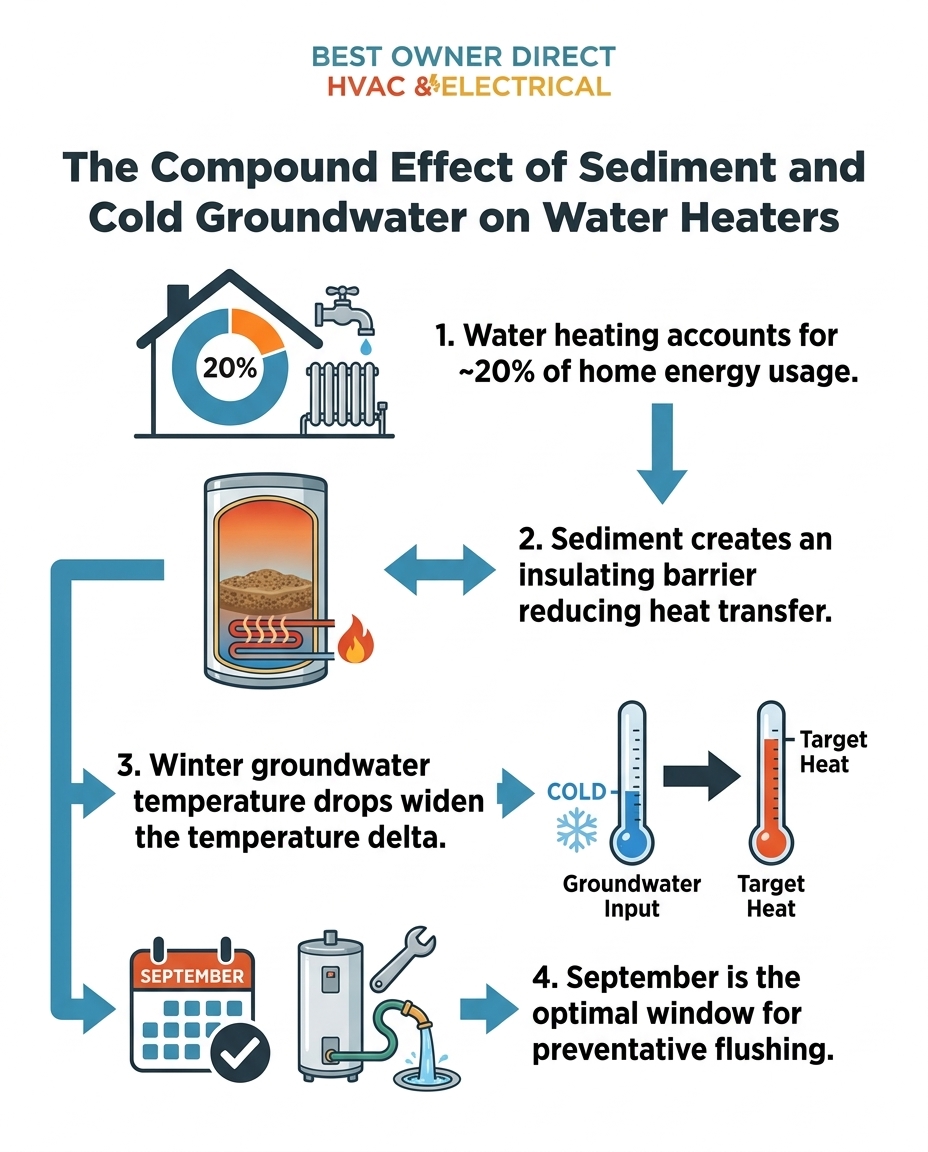
Over months and years, this loose mineral dust hardens into a dense, rock-like layer of scale. This sediment creates a thick physical barrier between your system's heat source and the water it is trying to heat. If you have a gas unit, the burner sits directly beneath the bottom of the tank; the sediment acts as an insulating blanket, blocking the heat from transferring into the water. If you have an electric unit, the sediment can completely encase the lower heating element, forcing it to bake itself inside a shell of hardened minerals.
Because of this barrier, your system is forced to run significantly longer to heat the exact same amount of water, wasting a massive amount of energy. According to the U.S. Department of Energy, water heating accounts for roughly 20% of a typical home's total energy usage. When sediment forces your system to work overtime, that inefficiency becomes a major, continuous drain on your household resources.
Identifying the Warning Signs of Sediment
On our service calls, we find that most homeowners don't realize their tank is suffocating until the symptoms become impossible to ignore. Because you cannot see inside the sealed steel cylinder, you have to rely on auditory and performance clues to gauge the health of your system. Here are the most common indicators our technicians look for that mean a heavy layer of sediment has formed:
• Popping or rumbling noises: This is the most recognizable symptom. As the burner heats the bottom of the tank, water gets trapped underneath the heavy sediment layer. When that trapped water turns to steam, it violently bubbles up through the mineral crust, creating a loud popping, knocking, or rumbling sound that echoes through your plumbing.
• Longer recovery times: If you find yourself waiting much longer for the water to get hot again after someone takes a shower or runs the dishwasher, sediment is likely blocking the heat transfer, slowing down the entire recovery process.
• Fluctuating water temperatures: If your shower suddenly goes lukewarm despite no changes being made to the thermostat dial, the sediment layer is likely confusing the internal temperature sensors, causing the burner to shut off prematurely.
• Gas Burner Transfer — Clean Tank Performance: Direct heat transfer through the steel bottom into the water. — Sediment-Heavy Tank Performance: Heat is blocked by mineral insulation, causing the steel bottom to overheat.
• Electric Element — Clean Tank Performance: Element sits directly in water, heating it efficiently and evenly. — Sediment-Heavy Tank Performance: Element is buried in scale, causing it to overheat, dry-fire, and eventually short out.
• Thermostat Accuracy — Clean Tank Performance: Accurately reads the ambient water temperature to cycle the system. — Sediment-Heavy Tank Performance: Reads the trapped heat in the sediment, causing short-cycling and lukewarm water.
The Impact of Plunging Pacific Northwest Groundwater Temperatures
The sediment problem is a year-round issue, but it transforms into a critical vulnerability during the winter. This is due to a vital factor that many homeowners overlook: municipal groundwater does not stay the same temperature year-round. The water that travels through the underground pipes to reach your home is deeply affected by the temperature of the soil around it.
As winter approaches, the ground freezes and incoming water gets significantly colder. Our technicians know firsthand that in the Cornelius OR area, municipal groundwater temperatures drop drastically in late fall. During the summer, the water entering your home might be relatively mild. But by December, that same water is frigid. This drastic temperature drop completely changes the workload your equipment is expected to handle on a daily basis.
The Concept of Temperature Delta
To understand the mechanical strain on your unit, we explain to our customers the concept of the "temperature delta." In simple terms, the temperature delta is the exact difference between the cold water entering your house and the target hot water temperature you want at your faucet (which is typically set to a safe and comfortable 120 degrees).
How the delta shifts:
• The Summer Workload: If the incoming water in August is 65 degrees, and your target is 120 degrees, your system only has to raise the temperature by 55 degrees. It can do this quickly and easily.
• The Winter Workload: If the incoming water in December drops to 40 degrees, the system now has to raise the temperature by 80 degrees. That is a massive increase in raw workload.
A wider delta forces the burner or heating element to stay on significantly longer just to achieve basic comfort. Now, imagine this increased winter workload happening inside a tank that is heavily insulated by sediment. The system needs maximum heat transfer to overcome the freezing incoming water, but the sediment acts as a roadblock. The unit runs endlessly, the metal is subjected to extreme thermal stress, and the risk of a total system failure skyrockets.
Why Proactive Maintenance Prevents Mid-Winter Breakdowns
Waiting for the dead of winter to address your plumbing performance is a reactive mistake that often leads to highly stressful emergency service calls. If there's one pattern we see every year, it's that when a system fails in January, it usually doesn't fail quietly; it fails when you have a house full of guests or right before you need to leave for work. The September early fall transition is the absolute best time to intervene, because you are catching the problem before the environmental strain hits its peak.
Flushing the tank clears the insulating sediment layer out of the system entirely. By removing this barrier now, you ensure that when the incoming water temperatures drop, your burner or heating element can transfer heat directly into the water without any obstruction. This restores the unit's original efficiency, speeds up your recovery times, and prevents those sudden, unpleasant cold showers.
Beyond immediate comfort, routine maintenance fundamentally extends the overall lifespan of the unit. When a tank is full of sediment and running constantly to overcome a wide temperature delta, the steel cylinder undergoes immense thermal stress. The bottom of a gas tank can develop localized "hot spots" where the heat cannot escape into the water. Over time, these hot spots cause the metal to expand and contract unevenly, which eventually cracks the protective glass lining inside the tank. Once that glass lining cracks, the steel rusts, and a catastrophic leak is inevitable. Staying enrolled in a preventative maintenance plan ensures these issues are caught and cleared out long before they cause permanent structural damage.
Professional Flushing vs. Unnecessary Tank Replacements
When homeowners hear their tank popping or rumbling, they often assume the unit is dying and immediately start planning for a massive replacement project. This is a common misconception, and unfortunately, it is a pattern we see franchise-style contractors exploit often. While flushing is highly effective, it is critical to understand that safely clearing a neglected tank requires professional expertise.
At Best Owner Direct HVAC & Electrical, we strongly advise against attempting a DIY flush. The water inside the tank is scalding hot, and the process requires strict adherence to safety protocols regarding pressure relief valves and electrical breakers or gas shutoffs. More importantly, older tanks often have brittle, plastic drain valves. If a homeowner attempts to force a stuck plastic valve open, it can easily snap off, resulting in a flooded garage or basement and turning a simple maintenance task into a genuine emergency.
A professional technician has the tools to safely extract heavy scale, clear blockages in the drain valve, and inspect the anode rod while the tank is empty. This is where choosing the right partner matters. Working with Best Owner Direct means you benefit from direct-to-owner accountability. We provide honest, straightforward advice about the actual health of your system. If your tank is simply dirty, we will tell you that a professional flush is all you need to restore its efficiency. We stand strictly against the aggressive upselling tactics common in the industry, where a simple rumble is used to pressure homeowners into buying a brand-new unit they don't actually need.
An honest professional assessment will thoroughly evaluate the age of the unit, the condition of the fittings, and the severity of the scale. This ensures you only pay to extend the life of your water heater when it is safe and viable to do so.
• Rumbling or popping noises during heating cycles — Likely Diagnosis: Heavy sediment buildup trapping steam — Recommended Action: Professional flush to clear the barrier
• Lukewarm water with slow recovery times — Likely Diagnosis: Sediment insulating the element or burner — Recommended Action: Professional flush and thermostat check
• Visible rust on the outside of the tank bottom — Likely Diagnosis: Internal glass lining has cracked and failed — Recommended Action: Full system replacement required
• Puddles of water forming securely under the tank — Likely Diagnosis: Structural tank failure or severe fitting leak — Recommended Action: Immediate professional assessment/replacement
Frequently Asked Questions About Winter Water Heater Performance
Why is my water heater running out of hot water in winter?
Your water heater runs out faster in winter because the incoming municipal groundwater is significantly colder. The system has to work much harder to raise the temperature from near-freezing up to your target of 120 degrees. If your tank is also filled with sediment, this heat transfer is blocked, making it nearly impossible for the unit to keep up with back-to-back showers.
What does sediment in a water heater do?
Sediment acts as a thick, physical layer of insulation between the heating source and your water. In gas units, it blocks the heat from the bottom burner; in electric units, it can completely bury the lower heating element. This forces the system to run longer, wastes significant energy, and causes the internal components to overheat and degrade prematurely.
What happens if you don't flush your water heater?
If you never flush your water heater, the mineral scale will continue to harden and multiply until it severely restricts the unit's capacity. The trapped heat at the bottom of the tank will cause localized hot spots, which expand the metal unevenly and eventually crack the protective glass lining. Once the lining is compromised, the steel will rust through, resulting in a major tank leak.
Does flushing a water heater make it hotter?
Flushing does not change the maximum temperature setting, but it dramatically improves the system's ability to reach and maintain that temperature. By removing the insulating barrier of scale, the heat transfers directly into the water again. This results in faster recovery times and a more consistent, reliable supply of hot water throughout your home.
How do I know if my water heater just needs a flush or a full replacement?
A flush is usually sufficient if the tank is less than ten years old, is making popping noises, but shows no signs of external rust or leaking. However, if the tank is over twelve years old, has visible rust around the base, or is actively leaking water from the cylinder itself, a full replacement is necessary. A professional assessment is the safest way to determine the true structural health of your unit.
Secure Your Winter Comfort with a Clean Water Heater
Don't wait until the first deep freeze to discover that your plumbing system can't keep up with the demands of the season. The September early fall transition is your best opportunity to clear out months of accumulated sediment, reset your system's efficiency, and prepare your home for the colder months ahead. A professional flush right now ensures that your equipment will run smoothly, safely, and reliably all winter long. Reach out to our team today to learn more about our professional water heater services and get an honest, accountable assessment of your system's health.


How a Heat Pump Protects Your Family During Extreme Heat in Portland, ORLearn how adding a heat pump protects your family during extreme heat in Portland, OR, with reliable cooling, air purification, and whole-home comfort.
Read more

How Much Clearance Does a House Air Vent Need for Safe Heating?Rearranging your living room for fall? Placing couches or rugs too close to floor registers creates fire hazards and strains your furnace. See the exact measurements for safe furniture placement.
Read more
How to Diagnose a Heat Pump Running But Not Heating or CoolingIs your heat pump running but not heating or cooling? Learn what it means and how to diagnose common causes like reversing valve failure or low refrigerant.
Read more