Menu


Decorating for Fall: Is Your Furniture Blocking Your Heat?
Are you currently rearranging your living room for the upcoming cold weather and wondering, how much clearance does a house air vent need for safe heating? You are not alone. As September heating season prep in Oregon gets underway, many homeowners face the exact same dilemma. You want to create a cozy, welcoming room layout with your couches, rugs, and drapes, but you also want to make sure your home remains safe when the furnace kicks on for the first time.
Here is the thing: placing furniture too close to your floor or wall registers does more than just block warm air from reaching you. It introduces two major risks to your home. First, it creates an immediate fire hazard by exposing combustible fabrics to continuous, concentrated heat. Second, it causes hidden mechanical strain on your equipment, forcing blower motors to work overtime against restricted airflow. To keep your home comfortable and safe, your heating systems need room to breathe.
The Exact Measurements: How Much Clearance Does a House Air Vent Need?
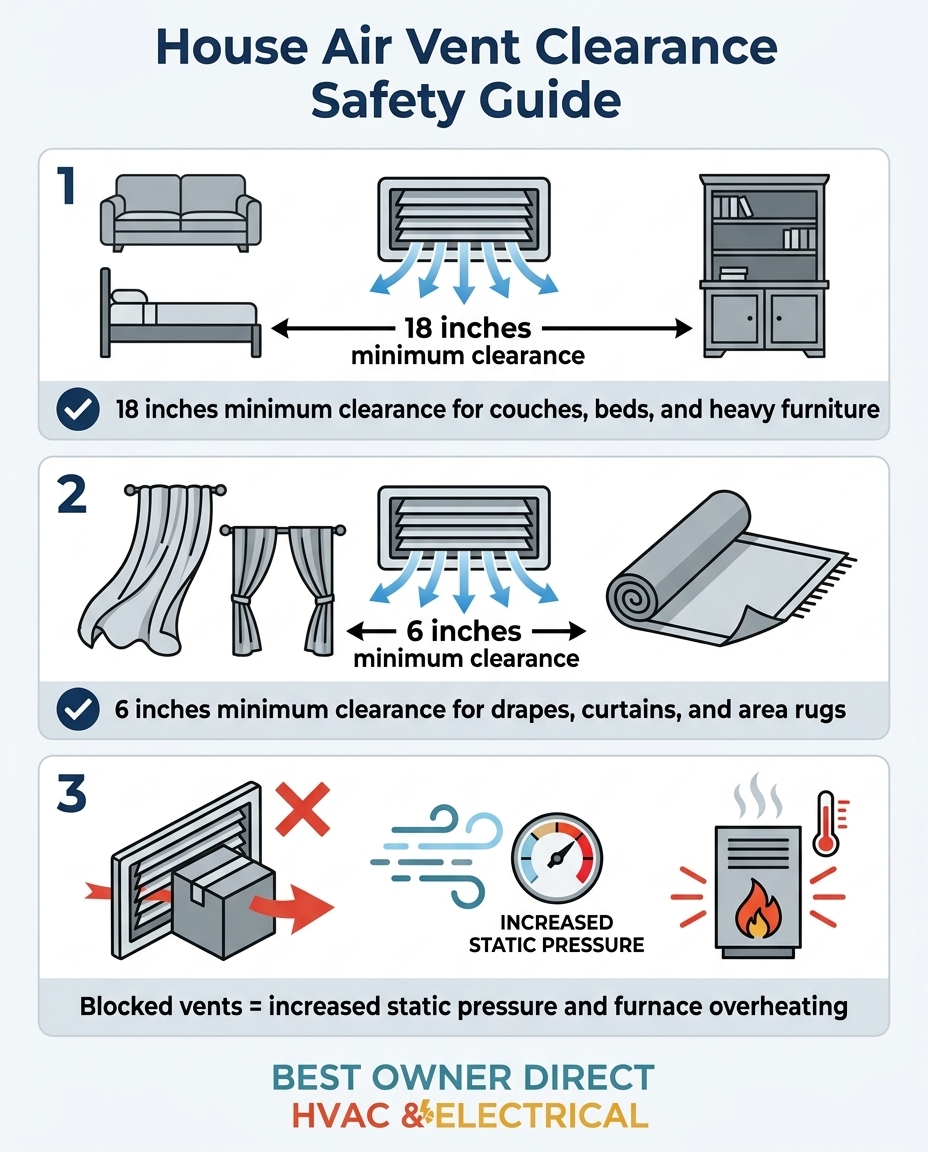
The short answer is: you must maintain at least 18 inches of clearance for heavy furniture like couches and beds, and a minimum of 6 inches of clearance for lighter combustibles like drapes, curtains, and area rugs. Following these exact measurements protects your home from safety hazards and keeps your HVAC system running smoothly.
As an owner-direct business, Best Owner Direct HVAC prioritizes giving honest, straightforward safety advice upfront. We want homeowners to have the knowledge to fix simple layout issues themselves without needing to call for help. When you know the rules, you can arrange your rooms safely.
The 18-Inch Rule for Heavy Furniture
Couches, beds, dressers, and large entertainment centers should never sit directly over or immediately adjacent to a vent. You need a solid 18 inches of clearance for furniture. This distance allows the warm air to disperse properly into the room rather than getting trapped beneath a heavy wooden frame or upholstered seat. When air gets trapped, it creates a pocket of intense heat that damages the furniture and chokes the HVAC system.
The 6-Inch Rule for Light Combustibles
Lighter fabrics require a minimum of 6 inches for drapes, curtains, and area rugs. While these items might not block as much air as a solid sofa, they are highly combustible. Drapes can easily blow over a vent when the air kicks on, completely sealing off the airflow. Maintaining a 6-inch perimeter ensures that even if a curtain sways, it will not cover the register.
These rules apply equally to both floor registers and wall vents. Whether the air is pushing up from the floorboards or blowing out from the baseboards, the physics of airflow and heat dispersion remain exactly the same.
The Fire Hazard Reality of Combustible Materials
Most homeowners do not realize just how hot the air coming out of a furnace can get. Modern heating systems produce high-temperature air designed to warm large spaces quickly. When that air continuously hits a piece of fabric sitting just inches away, it begins to dry out the fibers over time.
Placing synthetic rugs or long drapes too close to a vent creates a genuine fire hazard. According to standard heating equipment guidelines, combustible materials degrade when exposed to constant, low-grade heat. Synthetic fibers, which are essentially plastics, can melt or become brittle. Natural fibers like cotton or wool dry out, turning into the equivalent of tinder.
Direct Contact vs. Radiant Heat Buildup
There are two distinct ways blocked vents start fires:
• Direct Contact: This happens when a rug or curtain physically covers the metal grate. The fabric traps the heat immediately at the source, causing temperatures to spike rapidly.
• Radiant Heat Buildup: This occurs in enclosed spaces, such as the gap under a low-sitting couch. Even if the couch is not touching the vent, the trapped hot air bakes the dust, pet hair, and upholstery fabric underneath. Over weeks of winter heating, this enclosed space becomes dangerously hot.
Actionable advice: If you have floor-length drapes near a wall vent, use tie-backs or weights to secure the fabric. This guarantees that when the blower motor turns on, the rush of air will not blow the curtain directly across the hot metal grate.
The Hidden Mechanical Risk: Furnace Overheating and Short-Cycling
Blocked vents do not just start fires; they actively destroy furnaces by restricting airflow. Your HVAC system is designed to move a specific volume of air through the ductwork. When you block a vent with a couch or a rug, you increase the system's static pressure. This forces the furnace blower motor to work significantly harder to push the same amount of air.
In Cornelius, OR, early fall temperatures frequently drop into the 40s at night, meaning your furnace needs to run longer cycles to keep the house warm. Restricted airflow during these chilly nights leads to faster system overheating. The heat generated by the burners cannot escape into the house, so it backs up into the furnace itself.
What is Furnace Short-Cycling?
Short-cycling occurs when the furnace turns on, runs for a brief period, and shuts off rapidly before ever reaching the temperature you set on the thermostat.
Here is exactly how a blocked vent causes this process:
1. The thermostat calls for heat, and the furnace ignites.
2. The blower motor tries to push warm air into the rooms, but a couch or rug blocks the exit.
3. The hot air gets trapped inside the ductwork and the furnace cabinet.
4. The heat exchanger overheats rapidly.
5. The high-limit safety switch detects the dangerous temperature and immediately shuts the furnace down to prevent a fire or cracked heat exchanger.
6. The system cools off, turns back on, and the cycle repeats.
Repeated short-cycling leads to premature system failure, destroyed blower motors, and emergency repair calls. One local homeowner reached out to us this past spring when their furnace completely stopped working. Our technician arrived on time, quickly diagnosed that restricted airflow from blocked vents had repeatedly tripped the safety limits, and fixed the furnace. Before leaving, the technician provided helpful future adjustment advice about keeping floor registers clear to prevent the issue from returning.
While routine HVAC maintenance can catch airflow issues and reset safety switches, proper furniture placement is your first line of defense against mechanical breakdowns.
Return Vents vs. Supply Vents: Do Both Need Clearance?
A common misconception is that you only need to worry about the vents blowing hot air out. However, your home's heating system operates in a closed loop. It needs to pull in just as much air as it pushes out.
Supply vents blow warm air into your rooms. Return vents pull cold air from the rooms back to the furnace to be heated. Return vents are typically larger, often located on lower walls, high up near the ceiling, or in central hallways.
Blocking a return vent starves the furnace of air. If the system cannot pull in enough air, the heat exchanger will overheat just as quickly as if you had blocked a supply vent. You must maintain the 18 inches of clearance for furniture and 6 inches for drapes rule for both types of vents to maintain balanced system pressure.
• Supply Vent — Primary Function: Blows heated air into the room — Typical Location: Floors, lower walls, under windows — Risk if Blocked: Heat backs up, causing short-cycling and fire hazards
• Return Vent — Primary Function: Pulls cold air back to the furnace — Typical Location: Hallways, large wall grilles, ceilings — Risk if Blocked: Starves system of air, causing overheating and high energy bills
Room-by-Room Vent Clearance Checklist
As you tackle your September heating season prep in Oregon, take a walk through your house. Use this practical room-by-room checklist to ensure your seasonal decorating does not interfere with your home's airflow.
• Living Room: Position couches, sectionals, and heavy entertainment centers away from floor registers. If your sofa sits low to the ground, ensure it is at least 18 inches away from the vent. Remember that placing furniture over house vents impacts both heating and cooling performance year-round.
• Bedroom: Check your bed frame and bedding. Ensure that heavy comforters or long bed skirts do not drape over wall or floor vents. Keep heavy dressers and wardrobes on solid walls without baseboard registers.
• Home Office: Pay attention to area rugs. Rolling desk chairs often push rugs around over time. Make sure the edge of your office rug stays at least 6 inches away from the metal grate. Keep filing cabinets and solid desks from covering return air grilles on the lower walls.
• Dining Room: Verify that long tablecloths or holiday decorations do not hang down over floor vents near the edges of the room. Keep heavy buffets and china cabinets centered between vents, rather than directly over them.
Taking ten minutes to adjust your layout now prevents massive headaches when the winter weather arrives.
Are Vent Deflectors a Safe Workaround?
Many homeowners search for a shortcut, asking if they can just use plastic or magnetic vent deflectors to route air out from under a couch. While these devices are popular, they are not a perfect solution.
Vent deflectors are designed to redirect airflow horizontally rather than vertically. If you absolutely must place a piece of furniture near a vent, a deflector pushes the warm air out into the room instead of letting it bake the underside of your sofa.
However, deflectors still add resistance to your HVAC system. They force the air to make a sharp 90-degree turn, which increases static pressure and makes the blower motor work harder. Furthermore, deflectors do not eliminate the fire hazard if dust, pet hair, and debris accumulate beneath the furniture over the deflector hood.
The bottom line on deflectors: They should only be used as an absolute last resort for challenging room layouts. The 18-inch clearance rule is always the safer, more efficient choice for your equipment.
Frequently Asked Questions About House Air Vents and Heating Safety
How far should furniture be from a heating vent?
You should keep heavy furniture at least 18 inches away from a heating vent. This specific measurement ensures that warm air can disperse into the room without getting trapped under the frame. Trapped heat damages furniture and forces the furnace to overwork.
Can blocking a house vent cause a fire?
Yes, blocking a vent can cause a fire. When hot air continuously blows directly onto combustible materials like synthetic rugs or dry fabrics, those materials degrade and can eventually ignite. Maintaining 18 inches of clearance for furniture and 6 inches for drapes prevents this hazard.
Why does my furnace shut off early?
If your furnace shuts off early, it is likely short-cycling due to restricted airflow. Blocked vents trap heat inside the ductwork, causing the internal heat exchanger to overheat. The system's safety limit switch then shuts the furnace down to prevent mechanical damage.
What happens if you block a return air vent?
Blocking a return air vent starves your furnace of the air it needs to operate. Without enough incoming air to heat, the system loses pressure, overheats, and struggles to warm your home, leading to higher utility bills and premature part failure.
Do baseboard heaters require different clearance than floor registers?
Baseboard heaters require the exact same clearance rules as floor registers. Because they project heat outward into the room, you must keep heavy furniture 18 inches away and light fabrics like curtains at least 6 inches away to prevent overheating.
Can area rugs safely overlap the edge of a floor vent?
No, area rugs should never overlap any part of a floor vent. Even partially covering a vent restricts airflow and creates a fire hazard. Always maintain a minimum 6-inch perimeter between the edge of an area rug and the vent cover.
Keep Your System Running Safely All Season
As you finish your September heating season prep in Oregon, remember that a little distance goes a long way. Providing 18 inches of space for heavy furniture and 6 inches for drapes protects both your home from fire hazards and your furnace from unnecessary mechanical strain.
Take a few moments this weekend to do a quick walk-through of your living room, bedrooms, and hallways before the first major cold snap hits. If you have cleared all your vents but your furnace is still short-cycling or struggling to keep the house warm, do not ignore it. Reach out for professional HVAC services to inspect your system and ensure you have a safe, reliable winter.


How to Diagnose a Heat Pump Running But Not Heating or CoolingIs your heat pump running but not heating or cooling? Learn what it means and how to diagnose common causes like reversing valve failure or low refrigerant.
Read more
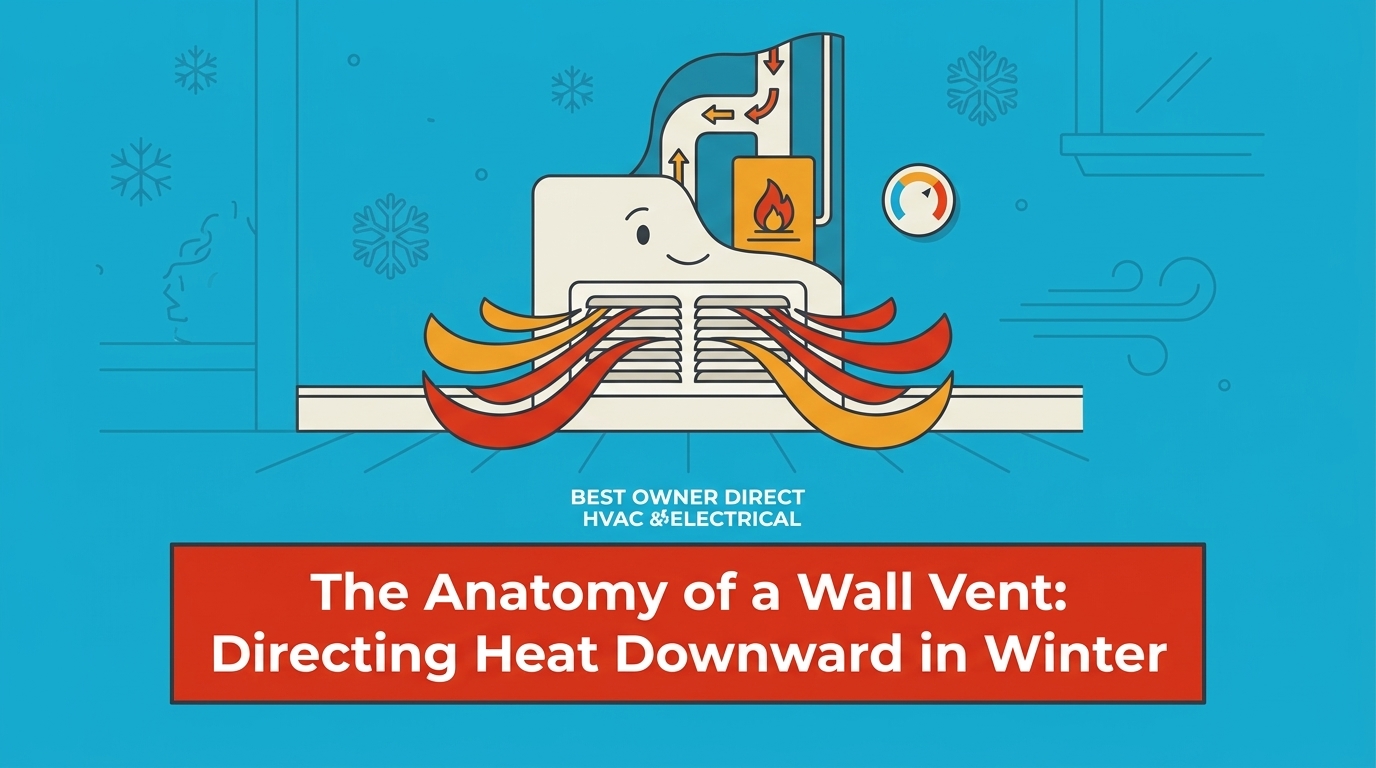
The Anatomy of a Wall Vent: Directing Heat Downward in WinterIf your furnace is running but your floors are freezing, the solution might be a simple 10-second vent adjustment. Pointing your wall vent louvers downward forces warm air into your living space.
Read more

Can Mini Split Installation Efficiently Cool an Older Oregon Home That Never Had Central AC?Learn about mini split benefits for homes that never had central cooling
Read more