Menu


Why the Heat Pump Water Heater vs Traditional Tank Comparison Matters for Your Energy Bill
The heat pump water heater vs traditional tank comparison is one of the most important decisions a homeowner can make when it comes to cutting energy costs — because your water heater is quietly responsible for roughly 18% of your home's total energy use.
Most people never think about their water heater until it stops working. But in April 2026, with tighter efficiency standards rolling out and federal incentives still on the table, the choice you make now can affect your utility bills for the next decade or more.
Here's a quick look at how the two systems stack up:
| Feature | Heat Pump Water Heater | Traditional Electric Tank |
|---|---|---|
| Energy Efficiency | 2-4x more efficient | Baseline (lowest efficiency) |
| Uniform Energy Factor (UEF) | Up to 3.88 | ~0.9 |
| Annual Energy Savings | Up to $330-$550/year | - |
| Upfront Cost | Higher | Lower |
| Lifespan | 12-15 years | 8-12 years |
| Space Required | More (needs airflow) | Standard |
| Federal Tax Credit | Yes (up to $2,000) | No |
| Works in Cold Climates | Best above 40°F | Any climate |
| Environmental Impact | Lower emissions | Higher emissions |
The bottom line: if your home has the right space and conditions, a heat pump water heater will almost always save you more money over time than a traditional electric tank. But there are real trade-offs worth understanding before you decide.
Let's break it all down so you can make the right call for your home.

How Modern Water Heaters Function in 2026
To understand the heat pump water heater vs traditional tank comparison, we first have to look at how these machines actually work. In the past, water heating was simple: you either burned gas or used a giant electric toaster element to heat a big tank of water. By April 2026, technology has moved toward "moving" heat rather than "creating" it.
A traditional electric tank heater uses electric resistance. Imagine a heating element submerged in the water; when you turn it on, it gets red hot and warms the water around it. It’s effective, but it’s an energy hog because it takes a lot of electricity to generate that raw heat.
A heat pump water heater (HPWH), often called a hybrid water heater, works like a refrigerator in reverse. While a fridge pulls heat out of a box and dumps it into your kitchen, a heat pump pulls heat out of the surrounding air and dumps it into your water tank. Because it is moving existing heat rather than creating new heat from scratch, it is incredibly efficient.
At Best Owner Direct HVAC & Electrical, we’ve seen how choosing the right Water Heater technology can transform a home's monthly budget, especially in our local Oregon climate.
The Mechanics of a Heat Pump Water Heater vs Traditional Tank Comparison
The magic of the heat pump happens through a refrigerant cycle. A fan pulls in ambient air, which passes over evaporator coils filled with refrigerant. This refrigerant absorbs the heat from the air (even if the air feels "cool" to you, there is still usable heat in it!). A compressor then squeezes that refrigerant, which causes its temperature to skyrocket. This intense heat is then transferred to the water stored in the tank.
Traditional tanks suffer significantly from "standby heat loss." This happens because the tank is constantly keeping 40 to 80 gallons of water hot, even when you aren't using it. It’s like keeping a pot of water boiling on the stove all day just in case you want tea at 3:00 PM. While modern insulation has improved, traditional tanks still lose energy through the walls of the tank. If your current unit is struggling, you might need Water Heater Repair Beaverton OR to ensure you aren't wasting even more energy due to sediment buildup or failing components.
Heat Pump Water Heater vs Traditional Tank Comparison: Efficiency and Savings
When we look at the numbers, the heat pump water heater vs traditional tank comparison becomes very one-sided in favor of the heat pump. Efficiency is measured by the Uniform Energy Factor (UEF). The higher the number, the more efficient the unit.
| System Type | Typical UEF Range | Efficiency Comparison |
|---|---|---|
| Traditional Electric Tank | 0.90 – 0.95 | Baseline |
| Gas Tankless | 0.81 – 0.97 | ~1.5x more efficient |
| Heat Pump Water Heater | 2.00 – 4.00 | 2x to 4x more efficient |
Because HPWHs are two to three times more energy efficient than conventional electric resistance models, the utility bill savings are substantial. On average, a household can save around $330 a year, though large families with high hot water demand can see savings up to $550 annually. If you are tired of high bills, considering a Water Heater Replacement Tigard OR is a smart move for your long-term finances.
Long-Term Value in a Heat Pump Water Heater vs Traditional Tank Comparison
The upfront cost of a heat pump unit is higher than a standard tank, but the "total cost of ownership" is where the heat pump shines. Thanks to the Inflation Reduction Act of 2022, homeowners can take advantage of significant federal tax credits. You can often claim 30% of the installation cost, up to $2,000, as a tax credit. This effectively slashes the initial investment and speeds up the "payback period."
Furthermore, many Energy Star-certified models qualify for additional local utility rebates. In the Pacific Northwest, our local energy providers often offer incentives to encourage the switch to high-efficiency electric appliances. By choosing a Water Heater Replacement North Plains OR, you’re not just getting a new appliance; you’re future-proofing your home against rising energy costs.
Installation and Climate Considerations for Oregon Homes
One of the most critical parts of the heat pump water heater vs traditional tank comparison is the installation environment. Unlike a traditional tank that can be tucked into a tiny closet, a heat pump water heater needs to breathe.
Because it extracts heat from the surrounding air, it requires about 1,000 cubic feet of air space (roughly the size of a 10x12 room). If you put it in a tiny, unventilated closet, it will quickly exhaust the available heat and have to switch to its "backup" electric resistance mode, which defeats the purpose of the high-efficiency tech.
Key installation requirements include:
- Temperature Range: The space should generally stay between 40°F and 90°F year-round.
- Condensate Drainage: Just like an air conditioner, a heat pump water heater pulls moisture out of the air. This "condensate" needs to be drained away via a floor drain or a small pump.
- Ceiling Height: These units are often slightly taller than traditional tanks because the heat pump assembly sits on top of the tank.
If you’re unsure if your garage or basement fits these criteria, a professional Water Heater Installation Cornelius OR assessment is the best way to avoid a costly mistake.
Performance in Pacific Northwest Climates
How do these units handle our Beaverton winters? While it’s true that heat pumps work most efficiently in warmer air, modern units are designed with a "hybrid" mode. When the ambient air temperature drops too low or when you have a house full of guests all taking showers at once, the unit can supplement the heat pump with standard electric heating elements.
In our region, placing the unit in a garage or a furnace room is often ideal. A furnace room is particularly clever because the water heater can "recycle" the waste heat given off by your furnace or boiler. If you are looking for even more space-saving options, we also specialize in Tankless Water Heaters Tigard OR, which offer a different set of benefits for compact homes.
Pros and Cons of Each System
Every home is different, and what works for a neighbor in Hillsboro might not be the best fit for your Gladstone bungalow.
Heat Pump Water Heater Pros:
- Massive Savings: Can save thousands of dollars over its 12–15 year lifespan.
- Dehumidification: It naturally dries out the air in your basement or garage, which can prevent mold and "musty" smells.
- Cooling Effect: In the summer, it provides a slight cooling effect to the room it's in.
- Safety: No gas lines, no risk of carbon monoxide leaks, and no open flames.
Heat Pump Water Heater Cons:
- Space Needs: Requires significant airflow and clearance.
- Noise: The fan and compressor make a humming sound similar to a dishwasher or a refrigerator.
- Slower Recovery: It takes longer to heat a full tank of water using only the heat pump mode compared to a high-powered gas burner.
Traditional Tank Pros:
- Simplicity: Fewer moving parts and lower initial purchase price.
- Size: Can fit into very tight spaces.
- Quiet: Silent operation.
Traditional Tank Cons:
- High Operating Cost: The most expensive way to heat water in 2026.
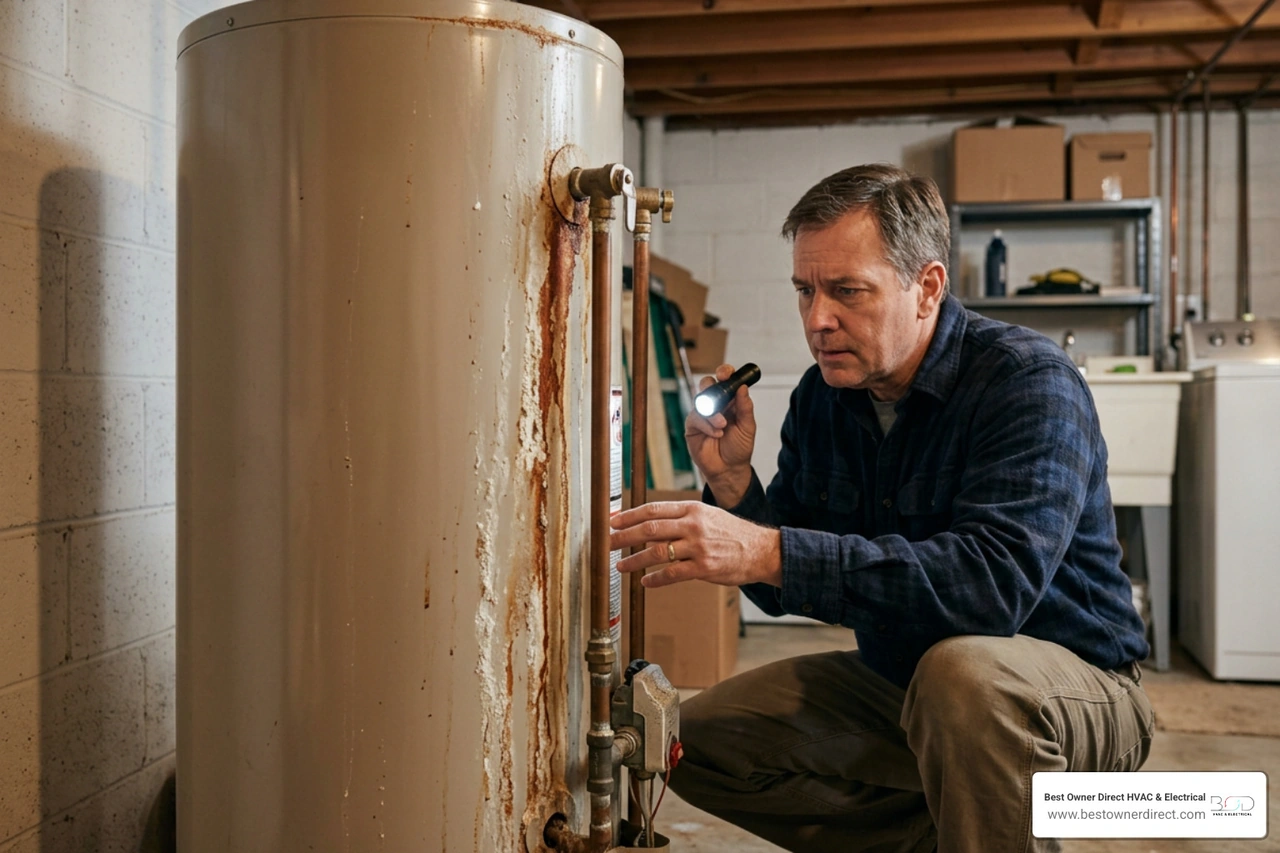
- Shorter Lifespan: Typically lasts only 8–12 years before corrosion or sediment takes a toll. If you're noticing rusty water or strange noises, it's time for Water Heater Repair Cornelius OR.
Frequently Asked Questions
How long do heat pump water heaters last?On average, they last between 12 and 15 years. This is slightly longer than traditional electric tanks, which usually start showing their age around the 10-year mark. Regular maintenance, like flushing the tank to remove sediment, can extend this life.
Do heat pump water heaters make noise?Yes, they have a fan and a compressor. Most homeowners find the noise negligible, especially if the unit is in a garage or basement. However, we wouldn't recommend installing one directly next to a bedroom wall without proper sound dampening. If you hear unusual grinding or loud rattling, you should call for Water Heater Repair North Plains OR immediately.
Can I replace my gas heater with a heat pump?Yes! This is a popular move for homeowners looking to "electrify" their homes. You will likely need a 240V electrical circuit installed if you don't already have one, but the long-term energy savings and safety benefits of removing gas from the home are significant.
Conclusion
The heat pump water heater vs traditional tank comparison clearly shows that for most Oregon homeowners, the heat pump is the future. It offers a rare combination of lower utility bills, increased safety, and environmental responsibility. While the installation requirements are more specific, the financial rewards—especially with 2026 tax credits—are too large to ignore.
At Best Owner Direct HVAC & Electrical, we pride ourselves on providing reliable, affordable, and energy-efficient solutions to our neighbors throughout the Portland metro area. Whether you are in Tualatin, Lake Oswego, or Forest Grove, our team focuses on quality workmanship and customer care. We can help you determine if your home is a good fit for a hybrid system and ensure the installation is done right the first time.
Don't wait for your old tank to burst and leave you with a flooded basement. Schedule your heat pump water heater replacement in Cornelius OR or your local area today and start saving on your next energy bill!



Why Forest Grove Basements Need Specific Ventilation Strategies in FallAs September rains raise local water tables, your subterranean spaces can quickly become damp and musty. Find out if your home needs dedicated HVAC return air.
Read more
How to Identify Water Conditions Harming Your Water Heater in 5 Simple StepsLearn how water conditions affect your water heater faster. Discover 5 simple steps to identify damage from hard water, acidity, and scale buildup.
Read more

Preparing Your Home's Electrical System for Space Heaters and Heavy Winter LoadsA standard 1500W space heater consumes nearly 80% of an older bedroom circuit's capacity instantly. Find out why resetting that tripped breaker is a hidden fire hazard.
Read more