Menu

How Water Conditions Can Damage Your Water Heater Faster
Poor water quality can make a water heater heat more slowly, waste energy, and fail years early. For homeowners seeking water heater services in Cornelius, OR, start by checking for white mineral crust on fixtures, popping or rumbling from the tank, rusty or blue-green water stains, and slower hot-water recovery. These clues can point to hard-water scale, sediment, or acidic water corrosion. Addressing the cause early with water testing, flushing, and the right treatment helps protect your hot water supply and equipment life.
Explore Water Heater Services | Schedule Water Heater Repair
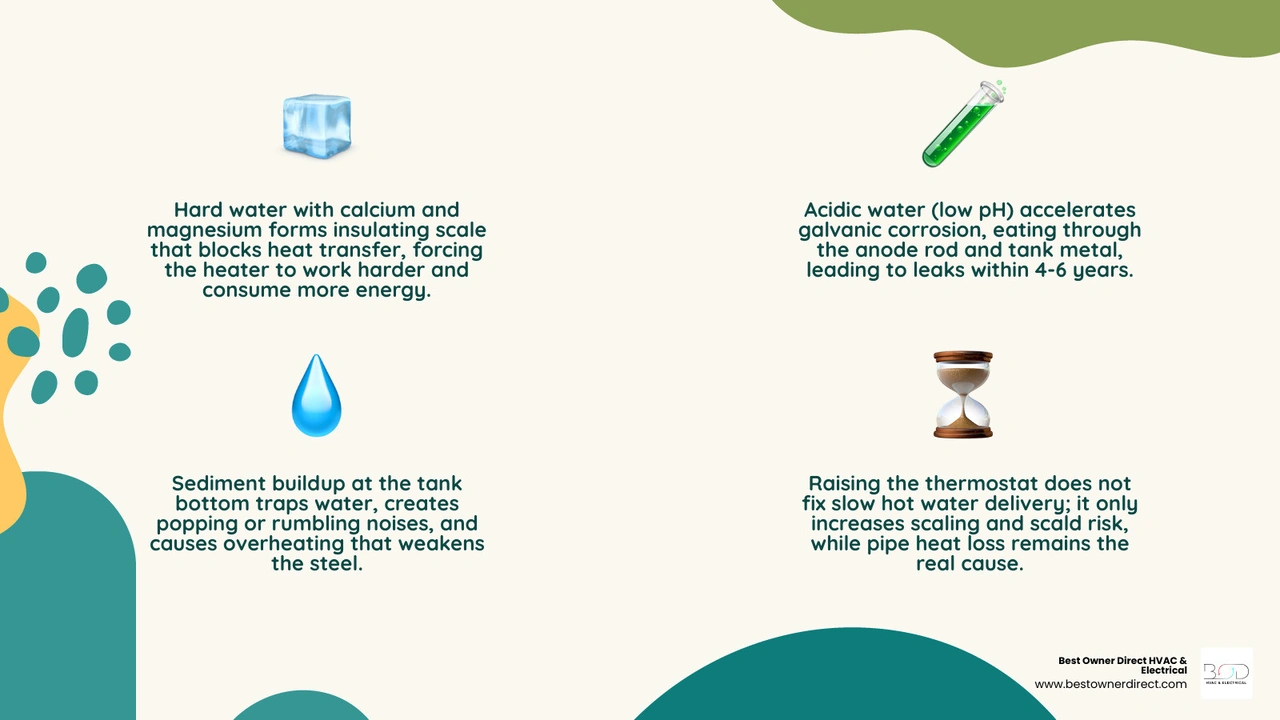
Hard water leaves calcium and magnesium deposits that block heat transfer. Acidic or highly corrosive water can wear down the anode rod and attack metal parts inside the tank. Sediment collects at the bottom, where it can trap heat, create noise, and strain heating components.
Turning up the thermostat will not fix a slow hot-water wait at a distant faucet, either. That delay is often caused by cooled water sitting in long pipes, especially during Oregon's colder months. Higher settings can increase scald risk and may speed up scale and corrosion.
If you notice these warning signs, a professional water-quality check and water heater inspection can help identify the right next step. Contact Best Owner Direct HVAC & Electrical for water heater service.
I'm Chandrine Stepisnik, and next we'll look at the science behind the water conditions that silently wear down a water heater.
Basic how water conditions affect your water heater faster terms:
The Science Behind How Water Conditions Affect Your Water Heater Faster
To understand why water heaters age ahead of schedule, we must examine the chemistry inside the tank. Water is a universal solvent carrying dissolved minerals, atmospheric gases, and suspended solids. When heated, these elements trigger chemical reactions that can quickly damage your system.
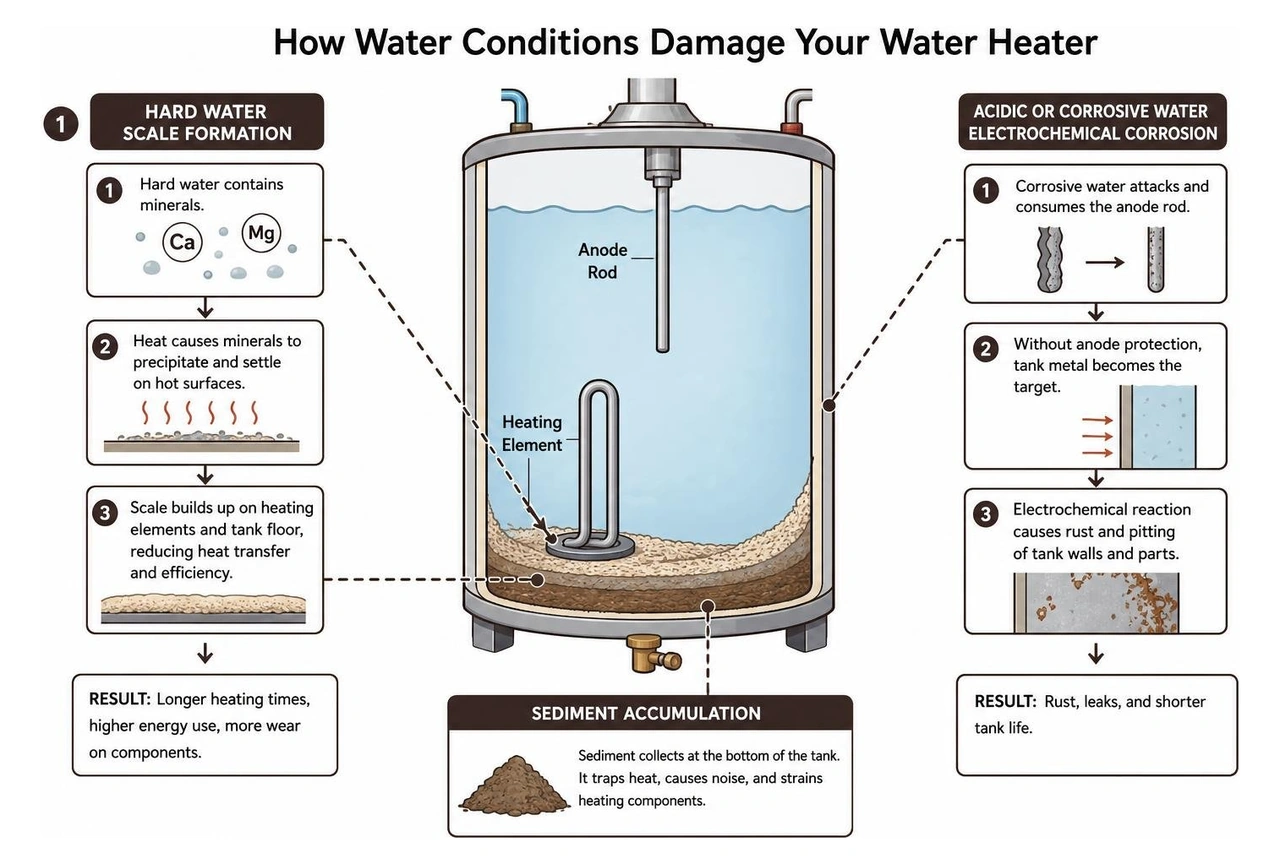
The primary driver of scale formation is inverse solubility. Most solids dissolve more easily as liquid temperatures rise. Calcium carbonate ($CaCO_3$) behaves in reverse: as water heats up, calcium carbonate precipitates out of the solution and crystallizes on the hottest available surfaces.
In a storage water heater, those surfaces are the electric heating elements or the bottom metal tank floor directly above the gas burner. Over time, this crystalline crust forms an insulating thermal barrier. Because just 1/4 inch of limescale buildup can cut heating efficiency by up to 40%, the system must run longer and burn more fuel to transfer heat through the crust to the water. Understanding how sediment buildup shortens your water heater life helps prevent this extra energy consumption and premature metal fatigue.
Hard Water and Mineral Scale Accumulation
Hard water contains elevated concentrations of dissolved calcium and magnesium ions, measured in parts per million (ppm) or grains per gallon (GPG). As water heats during everyday use, these minerals bond into hard limescale.
This accumulation brings several problems:
- Heating Element Burnout: In electric systems, limescale encases the resistance elements, trapping heat inside the element casing until it burns out.
- Tank Floor Hot Spots: In gas models, scale settles on the bottom head. Burner heat cannot pass efficiently into the water, causing the steel to overheat, warp, and weaken at the weld seams.
- Loss of Usable Capacity: Solid mineral volume displaces water, reducing the actual gallons of hot water the tank can store.
Acidic Water, Low pH, and Rapid Corrosion
While hard water clogs appliances with minerals, acidic water (water with a pH below 6.5) corrodes internal metal surfaces. In private wells or unbuffered municipal supplies, dissolved carbon dioxide forms weak carbonic acid ($H2CO3$), lowering the pH and accelerating electrochemical oxidation.
Water heating operates like a large battery. Dissolved salts act as an electrolyte, creating galvanic currents between dissimilar metals. Corrosive water attacks the protective glass lining, fittings, and steel walls. When corrosion eats through the steel casing, the damage is irreversible. If you are dealing with structural leaks, our guide on whether can a leaking hot water heater be repaired explains why internal tank ruptures mean the unit must be replaced.
5 Simple Steps to Identify Water Quality Threats in Your Home
You do not need a chemistry laboratory to spot water quality damage. Following these practical water heater life extension tips will help you catch issues early.
Step 1: Listen for Rumbling, Popping, and Kettling Sounds
A healthy water heater runs quietly. If you hear popping, rumbling, or bubbling sounds like a boiling tea kettle, sediment has formed a dense layer across the tank floor.
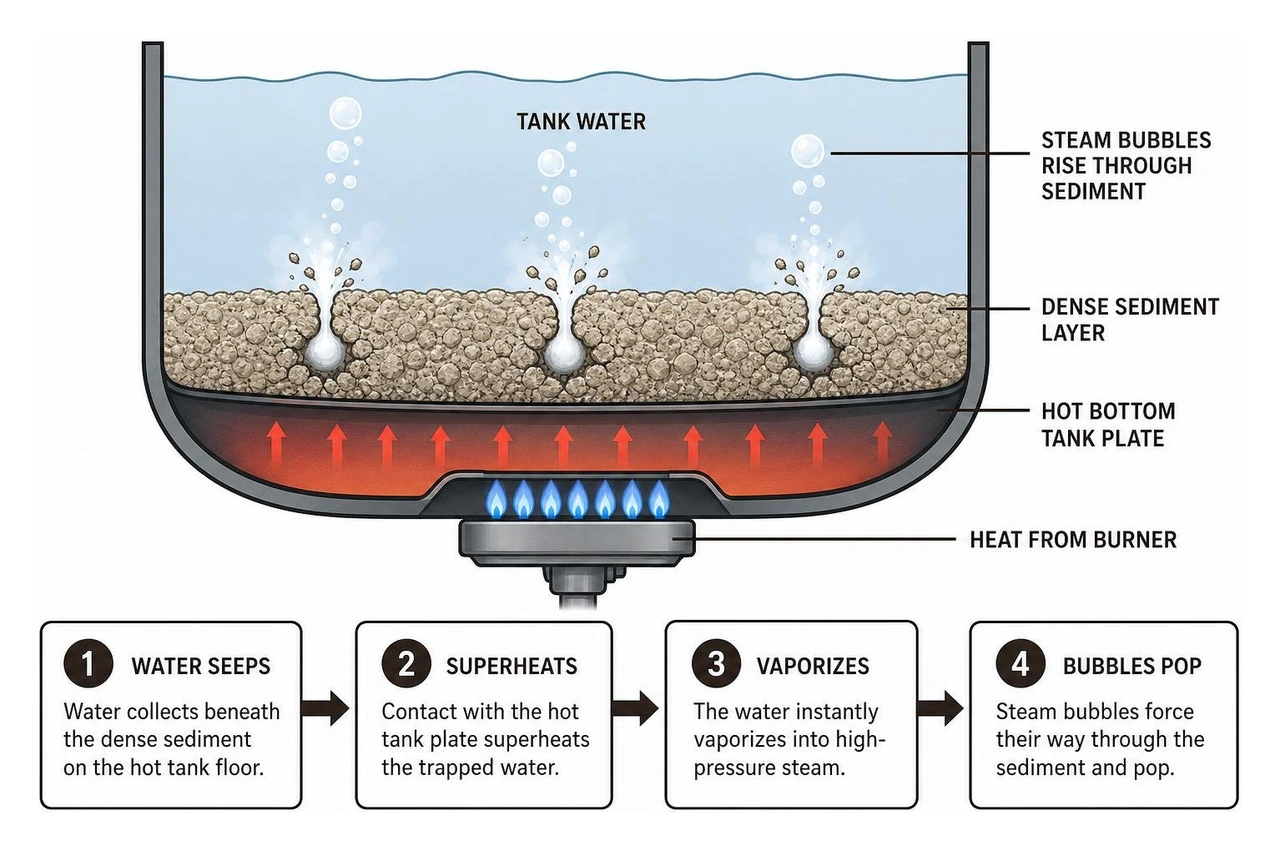
Water seeps beneath this calcified sediment and contacts the heated bottom tank plate. The trapped water superheats, vaporizes into high-pressure steam bubbles, and violently forces its way through the mineral crust. This "kettling" indicates severe thermal stress that can crack the glass lining and weaken the base of the tank.
Step 2: Inspect Anode Rod Wear and Discolored Water
Water heaters use a sacrificial anode rod made of magnesium or aluminum around a steel core wire. Through galvanic protection, this rod sacrifices its own metal to shield the tank walls from corrosion.
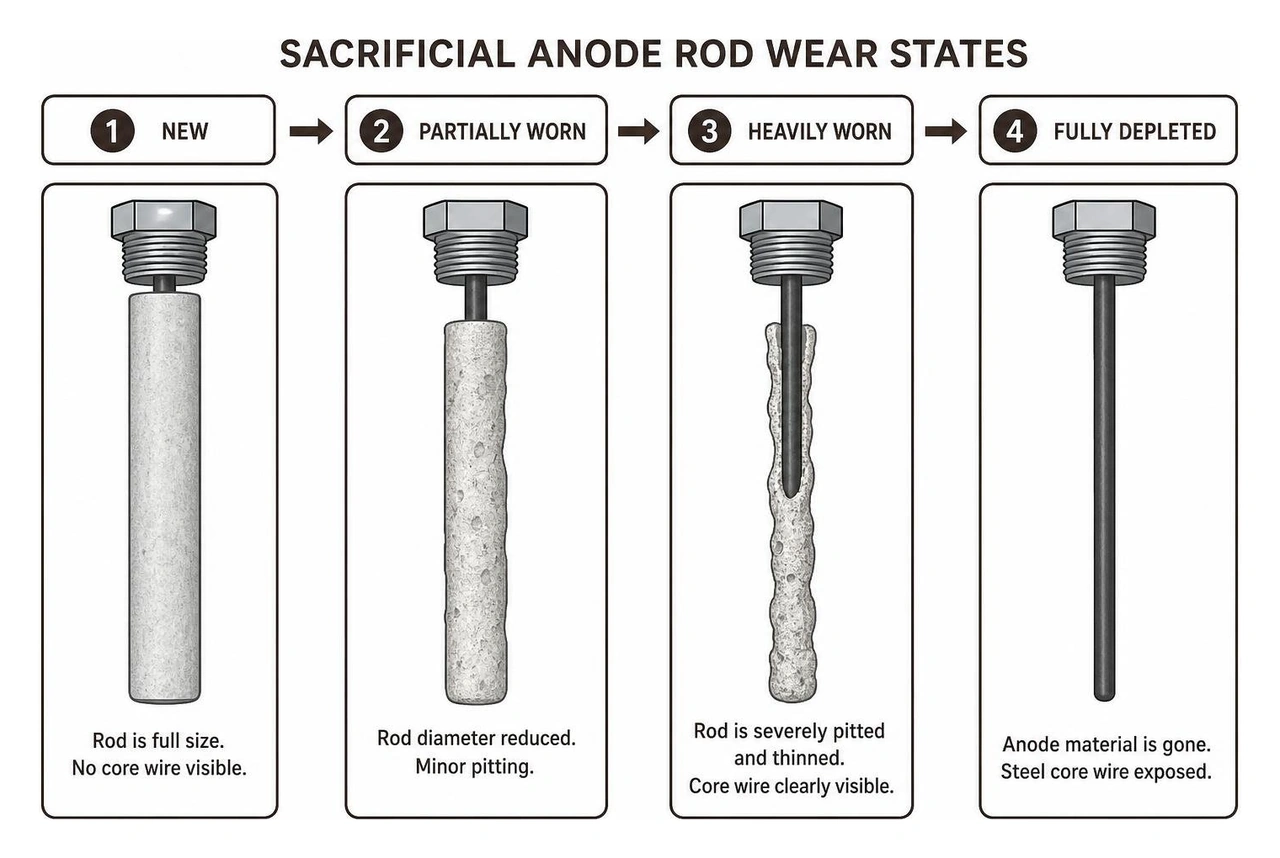
Aggressive, acidic, or highly conductive water can deplete an anode rod in 12 to 18 months instead of the normal 3 to 5 years. Inspect the rod periodically. If the core wire is visible or the rod is heavily pitted, replace it right away. If left unreplaced, the tank steel corrodes next, leading to rusty water and premature tank failure.
Step 3: Monitor Hot Water Delivery Lag and Recovery Times
If your showers turn lukewarm more quickly or the tank takes hours to recover, poor heat transfer is often the reason. Scale-coated elements struggle to warm incoming cold water, especially when winter drops inlet temperatures down near 40°F.
Delivery delays at distant fixtures, however, are usually caused by thermal loss through uninsulated supply pipes rather than the heater itself. Reviewing how gas water heaters heat faster than electric can clarify baseline recovery times for different system configurations.
Step 4: Examine Plumbing Fixtures for Scale and Blue-Green Staining
Your plumbing fixtures often show the first signs of water quality issues:
- White, Chalky Scale: Crusty build-up on faucet aerators and showerheads indicates mineral precipitation from hard water.
- Blue-Green Stains: Discoloration in sinks and tubs points to acidic water corroding internal copper pipes and brass fittings.
- Reduced Water Flow: Minerals clogging aerators can restrict water pressure throughout the home.
If you spot heavy fixture scaling or notice significant temperature drops, schedule a professional water heater repair service to protect your plumbing infrastructure.
Step 5: Test Water Hardness and pH Levels
Use an at-home testing kit or review your local municipal water report to check your water profile:
- Total Hardness: Readings above 7 GPG (120 ppm) indicate hard water that benefits from conditioning.
- pH Balance: Readings below 6.5 indicate acidic water requiring neutralization; readings above 8.5 can accelerate mineral scaling.
- Total Dissolved Solids (TDS): High mineral ion concentrations increase water conductivity, speeding up anode rod consumption.
Comparing Water Quality Vulnerabilities Across System Types
Different water heater designs respond to water chemistry in unique ways. Reviewing our tankless vs tank vs heat pump water heater comparison can help you weigh durability against efficiency for your local water conditions.
| Water Heater Type | Primary Water Quality Threat | Failure Mechanism | Typical Lifespan Impact |
|---|---|---|---|
| Gas Storage Tank | Hard scale & loose sediment | Bottom plate overheating, thermal fatigue, kettling leaks | Cuts lifespan from 10–12 years down to 4–6 years |
| Electric Storage Tank | Hard scale & high TDS | Mineral encrustation leading to dry-fire element burnout | Burns out elements rapidly; cuts tank life by 50% |
| Tankless (On-Demand) | Carbonate scale precipitation | Restricted copper heat exchanger passages, overheating error codes | Drops efficiency by 30–40%; risks voiding warranty |
| Hybrid Heat Pump | Scale build-up & soft water corrosion | Scale on lower backup elements; rapid anode rod depletion | Lowers COP efficiency; causes premature tank shell leaks |
How Water Conditions Affect Your Water Heater Faster Across Different Unit Types
Storage tanks collect sediment at the bottom of the vessel, whereas on-demand systems face different vulnerabilities. Choosing between a tankless vs tank water heater for your home requires understanding these mechanical trade-offs.
Tankless systems use compact, high-efficiency copper or stainless steel heat exchangers with narrow waterways. Hard water scaling as thin as 1/8 inch can restrict flow and trigger high-temperature limit errors. Many major manufacturers will deny warranty claims for heat exchanger failures caused by unmanaged limescale build-up.
Heat Pump Hybrid Water Heaters and Cold Climate Operations
Hybrid heat pump water heaters use ambient air to heat water efficiently. Evaluating a heat pump water heater vs traditional tank comparison shows they provide significant energy savings, but they still use glass-lined storage tanks and backup electric elements that need protection from aggressive water.
Homeowners considering if do heat pump water heaters work in garages should note that cold ambient air combined with low inlet water temperatures increases runtimes. When determining is a heat pump water heater worth it in Oregon, pairing high-efficiency heat pump equipment with proper water treatment helps safeguard your investment.
Proven Mitigation and Maintenance Strategies to Protect Your Equipment
Proactive water treatment and regular maintenance can prevent premature failure and keep your system running efficiently.
Temperature Settings and Accelerated Chemistry
Every 25°F increase in water temperature roughly doubles the rate of electrochemical corrosion and speeds up mineral precipitation.
Keep your thermostat set to 120°F. This temperature prevents Legionella bacteria growth while reducing scalding risks, slowing limescale accumulation, and lowering energy demand. To reduce standby heat loss without raising thermostat temperatures, consider how you can increase your water heaters efficiency with a blanket.
Water Conditioning: Ion-Exchange Softeners and Acid Neutralizers
Treating water before it enters the heater resolves water quality issues at the source:
- Calcite Acid Neutralizers: For well water with a low pH, an upstream calcite filter neutralizes acidity by dissolving small amounts of calcium carbonate. This raises the pH to a neutral, non-corrosive level (7.0–7.4).
- Ion-Exchange Water Softeners: Traditional softeners swap hard calcium and magnesium ions with sodium ions, preventing mineral scale entirely. Because calcite filters add 4 to 6 GPG of hardness during neutralization, softeners must be installed after the neutralizer.
- Template-Assisted Crystallization (TAC): Salt-free conditioners alter dissolved minerals so they remain suspended in the water without bonding to internal heating surfaces.
Evaluating the best water heater type for the Pacific Northwest will help you match your water quality to the ideal heating setup.
Routine Flushing, Descaling, and Professional Upgrades
Consistent maintenance helps keep sediment and mineral deposits from hardening inside your unit:
- Storage Tank Flushing: Flush your tank annually—or every six months in hard water areas—to wash out loose sediment before it calcifies. Check out our guide on how often to flush your water heater in Oregon for local recommendations.
- Tankless Descaling: Circulate a food-grade virgin white vinegar or approved descaling solution through the heat exchanger for 45 to 60 minutes once a year.
- Anode Rod Replacements: Check the sacrificial rod every 1 to 2 years. In soft or softened water, consider upgrading to a powered titanium anode rod, which provides cathodic protection without sacrificial depletion.
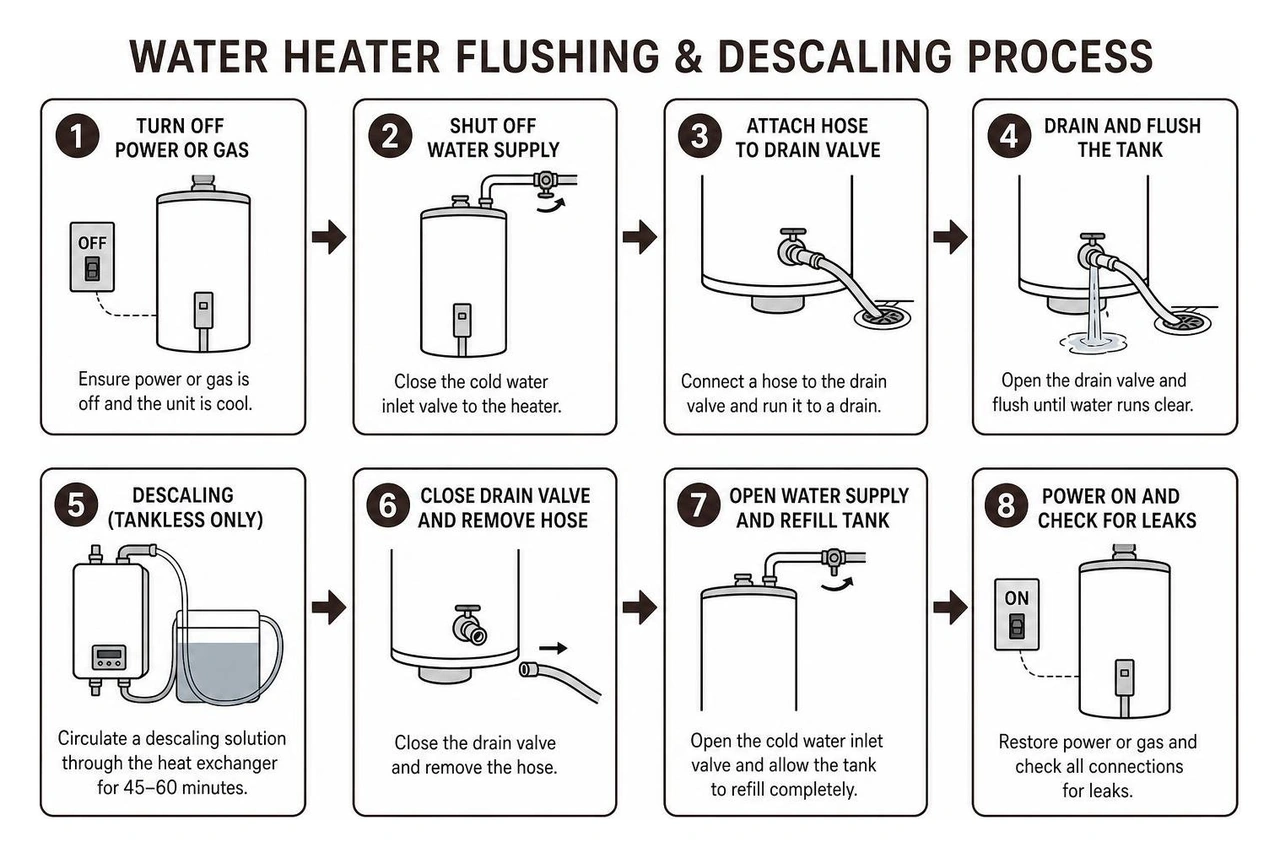
When an older unit has suffered extensive scale accumulation or corrosion, our licensed technicians provide fast, dependable replacements. Explore our local services:
- Water Heater Replacement Beaverton OR
- Water Heater Repair Hillsboro OR
- Water Heater Replacement North Plains OR
- Water Heater Repair North Plains OR
For a broader breakdown of system designs, check out our ultimate water heater guide 2026.
Frequently Asked Questions About Water Quality and Water Heaters
How quickly can poor water quality ruin a brand-new water heater?
Untreated acidic well water or severe hard water can cause irreversible tank failure in as few as 4 to 6 years, cutting the standard 10-to-12-year lifespan of a storage unit in half. Tankless units can experience scale-related flow errors in less than two years without proper water filtration and annual descaling.
Does hard water scale buildup void manufacturer warranties?
Yes. Most major equipment manufacturers include specific water quality requirements in their warranty terms. If a heat exchanger or tank fails from untreated mineral scale or corrosion without proof of routine maintenance, the warranty claim may be denied. Keep service records of all flushes and filter replacements.
Should I install an acid neutralizer or a water softener first?
An acid neutralizer must always be installed before a water softener. Acidic water can degrade the ion-exchange resin bed and control valves inside a softener. Additionally, calcite neutralizers add 4 to 6 grains per gallon of mineral hardness as they raise the pH, which the downstream softener then removes.
Protect Your Hot Water System Today
Water quality plays a major role in how long your water heater lasts, how efficiently it runs, and how reliable your daily hot water supply remains. From limescale buildup and acidic corrosion to sediment accumulation, managing your water conditions helps prevent sudden breakdowns and high utility bills.
Best Owner Direct HVAC & Electrical is a family-owned HVAC, electrical, and water-heater services company based in Cornelius, OR, serving homeowners and businesses throughout the Portland metro and surrounding Oregon communities. Our licensed technicians provide same-day diagnostics, routine maintenance, sediment flushes, and full system replacements to keep your home running comfortably.
Contact our team today to schedule an inspection and explore our complete Water Heater Services.


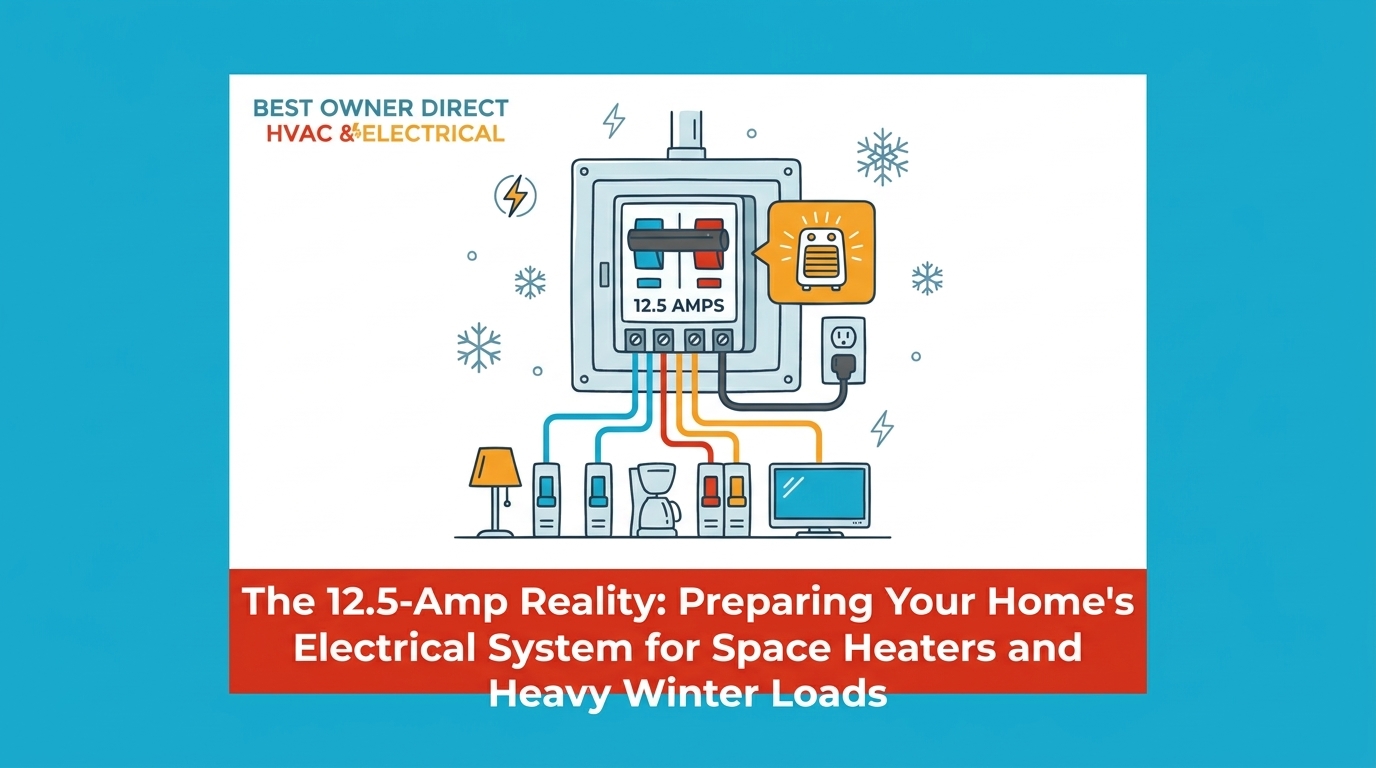
Preparing Your Home's Electrical System for Space Heaters and Heavy Winter LoadsA standard 1500W space heater consumes nearly 80% of an older bedroom circuit's capacity instantly. Find out why resetting that tripped breaker is a hidden fire hazard.
Read more
How a Heat Pump Provides Both Cooling and Heating in One SystemLearn how a heat pump provides both cooling and heating in one system for year-round comfort and energy efficiency.
Read more
Can I Use the Same Vent Covers for Heating and Cooling Seasons?Cold air sinks and warm air rises, meaning standard fixed-louver vent covers often force your system to work harder. Find out if you need to swap your registers for the season.
Read more