Menu


Furnace replacement quotes vary widely because you're not just buying a box — you're buying equipment tier, sizing work, venting and code updates, duct corrections, and the accountability of the company installing it. Understanding the six real cost drivers lets you compare bids on substance instead of sticker price.
Why do two quotes for "the same furnace" differ so much?
Because the furnace itself is often the smallest variable. Two bids can name the same brand and capacity while differing completely on what happens to your venting, gas line, electrical, ductwork, and permits. The cheaper bid is frequently the one that quietly leaves problems in place. Here's what actually moves the number.
1. Equipment tier and staging
Single-stage furnaces are the entry point; two-stage and variable-speed (modulating) furnaces cost more upfront and deliver steadier temperatures, quieter operation, and better efficiency — a meaningful difference in our long, cool heating season. Our guide to staging and blower types explains which tier pays off in which situation.
2. Sizing and the state of your ducts
A proper replacement re-checks the load rather than cloning the old furnace's size — homes get new windows and insulation, and the original unit may have been oversized on day one. If ducts are leaky or undersized, correcting them can matter more to comfort than the equipment tier. Bids that ignore ducts aren't cheaper; they just defer the cost into your utility bill.
3. Venting, gas, and electrical updates
High-efficiency condensing furnaces vent differently (PVC through a side wall, plus a condensate drain) than older 80% units (metal flue). Depending on what you're switching from and to, venting changes, gas line adjustments, and electrical circuit updates are real line items — and skipping required ones is a safety problem, not a savings.
4. Permits and code compliance
In Washington County and the surrounding jurisdictions, furnace replacement requires a permit and inspection. A licensed contractor (we're Oregon CCB# 199049) builds this in. A bid with no permit is a red flag that also jeopardizes insurance claims and resale disclosure later.
5. Should you switch to a heat pump instead?
Replacement time is exactly when to consider it, because incentives for heat pumps can offset the price gap and you replace two systems' worth of function (heating and cooling) at once. We lay out the honest comparison for our climate in gas furnace vs. heat pump in Oregon.
6. Who stands behind it
Warranty terms only matter if the installer registers the equipment, pulls the permit, and answers the phone after the check clears. As a family-owned company, the project manager who quoted your furnace replacement and the technicians who installed it both answer to the owners — and it's backed by our 1-year workmanship warranty.
How to compare bids fairly
Ask each bidder the same five questions: Did you do a load calculation? What happens to my venting and ducts? Is the permit included? What's the installed efficiency, not just the equipment rating? Who do I call if something's wrong in month five? If you'd like a number to compare against, request a replacement quote — we'll show our math. Payment flexibility is covered on our financing page.
What to read next
A fair bid is only half the decision — see the four ways homeowners actually pay for replacement before signing anything.
Quick answers
Questions we hear about this
Why is one furnace bid so much cheaper than another?+Usually because the cheaper bid leaves things out: no load calculation, no duct correction, no venting update, or no permit. Compare what each bid includes, not just the bottom line.
Do I need a permit to replace a furnace in Oregon?+Yes — furnace replacement requires a mechanical permit and inspection in Washington County and surrounding jurisdictions. A licensed contractor handles this for you; a bid without one is a red flag.
How long does a furnace replacement take?+A straightforward like-for-like swap is often a single day; venting changes, duct corrections, or electrical work can extend it to two. We'll give you a realistic timeline once we've seen the job, not a generic estimate.
How do I know if I need a new furnace or just a repair?+Age, repair history, and the size of the repair relative to replacement cost all factor in — an aging furnace facing a major component failure usually favors replacement, while a young furnace with an isolated issue usually favors repair. We'll give you that comparison honestly rather than defaulting to the bigger ticket.
What's the difference between an 80% and a 95% efficiency furnace?+The efficiency rating (AFUE) describes how much fuel becomes usable heat versus lost up the flue — a 95% furnace wastes far less fuel than an 80% unit, but also vents differently (PVC through a wall vs. a metal flue) and costs more upfront. Whether the higher tier pays back depends on your fuel costs and how long you'll own the home.


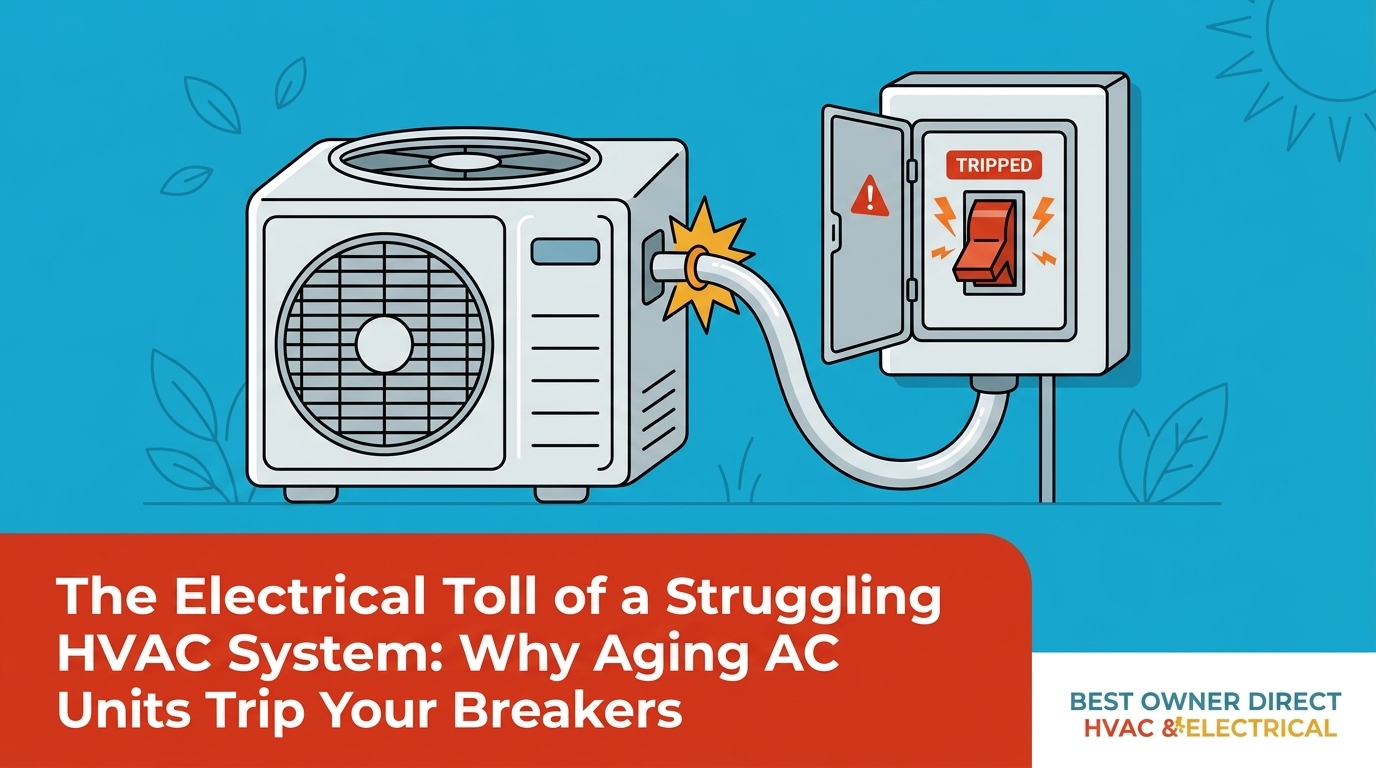
The Electrical Toll of a Struggling HVAC System on Your Home's BreakersAn aging air conditioner does not just lose cooling power; it actively stresses your electrical panel. A tripping breaker during late summer heat is a warning sign requiring professional diagnosis.
Read more
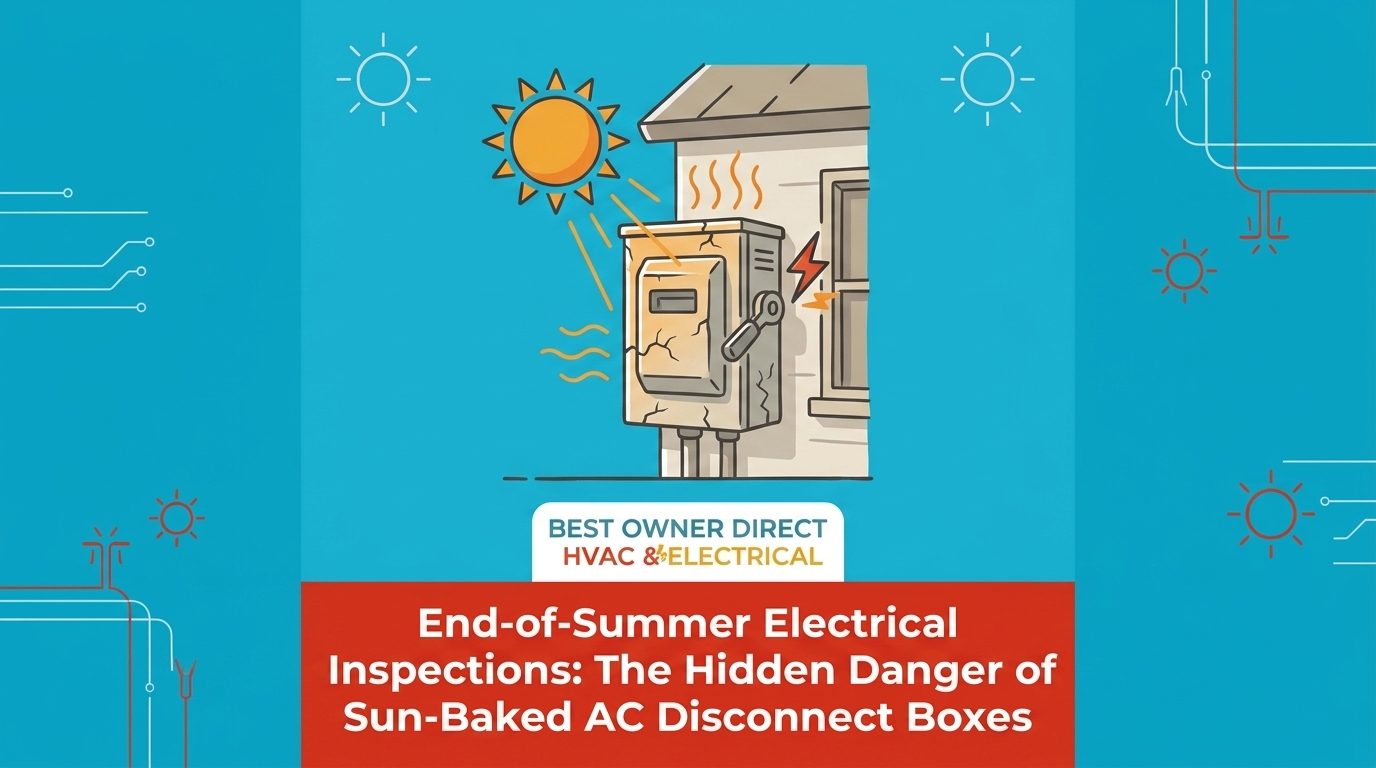
End-of-Summer Electrical Inspections: Checking Outdoor Disconnect BoxesAfter months of intense Pacific Northwest sun, your outdoor AC disconnect box can become brittle and unsafe. Learn the visual warning signs of UV degradation.
Read more
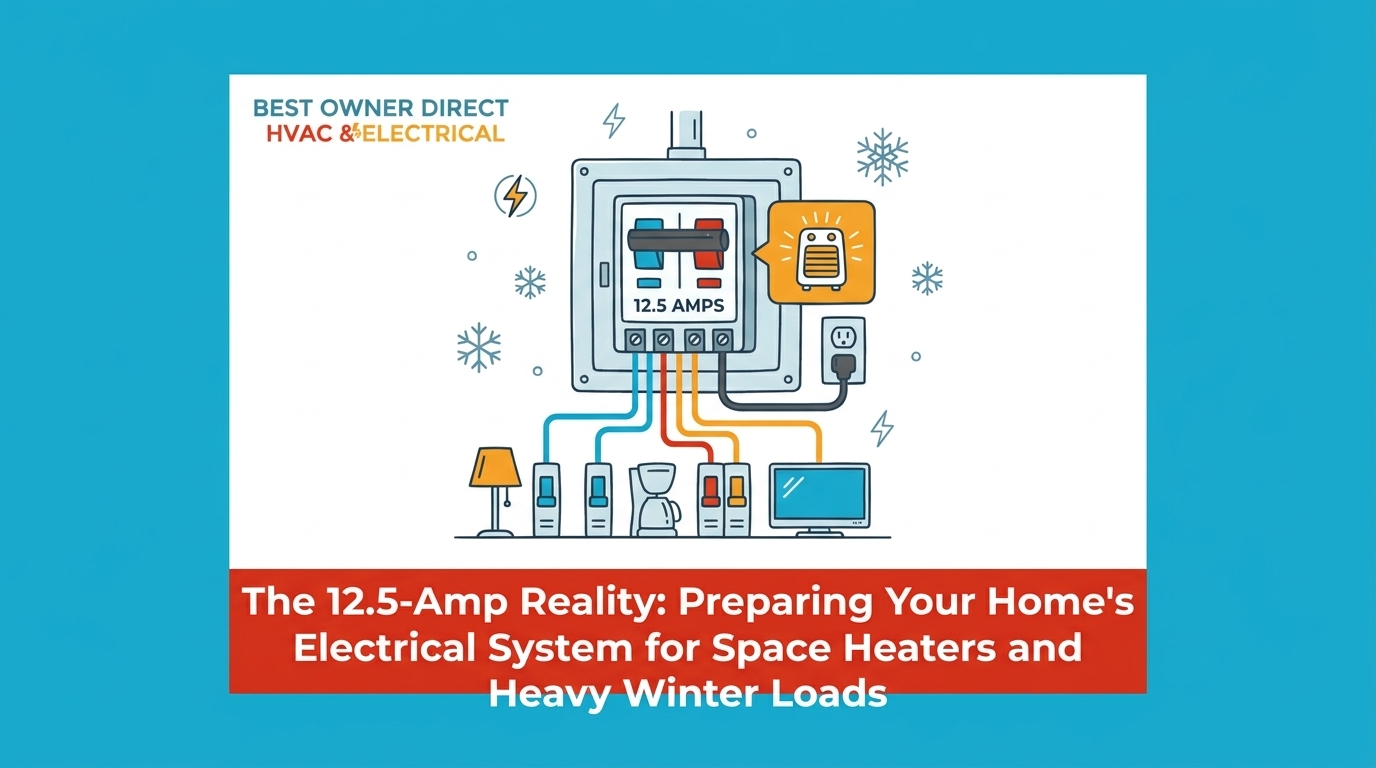
Preparing Your Home's Electrical System for Space Heaters and Heavy Winter LoadsA standard 1500W space heater consumes nearly 80% of an older bedroom circuit's capacity instantly. Find out why resetting that tripped breaker is a hidden fire hazard.
Read more