Menu


Why Your Space Heater Is Suddenly Overwhelming Your Home
Nearly 80% of a standard bedroom's safe electrical capacity is consumed the exact moment you turn on a single plug-in heater. If you are preparing your home's electrical system for space heaters and heavy winter loads this season, that hidden math is the difference between staying warm and sitting in the dark. As the September pre-heating season begins, our team at Best Owner Direct HVAC & Electrical sees many homeowners reach for supplemental heating to cut the early autumn chill. You plug in the unit, turn the dial to high, and instantly, the entire room loses power.
This frustrating sequence of events is incredibly common, but it forces a critical decision point. You must decide whether a tripping breaker is just a minor seasonal nuisance to be reset, or a glaring warning sign that your wiring is crying out for help. Ignoring the trips and simply flipping the breaker back on might seem like the easiest fix, but our electricians know it often masks a dangerous underlying overload happening behind your drywall.
Before temperatures drop further and your reliance on supplemental heat increases, evaluating the overall health of your electrical system is paramount for your family's safety. Modern high-draw appliances simply do not play nicely with outdated wiring configurations. By scheduling professional residential electrical services with our team for an honest assessment, you can ensure your home is actually equipped to handle the heavy demands of winter heating without putting your property at risk.
The Hidden Math: Why 1500 Watts Overloads Standard Circuits
The problem: Almost all standard space heaters sold today, regardless of their size or shape, draw 1500 watts of power on their highest setting. While they might look small and unassuming, these devices require massive amounts of electrical current to generate that localized heat.
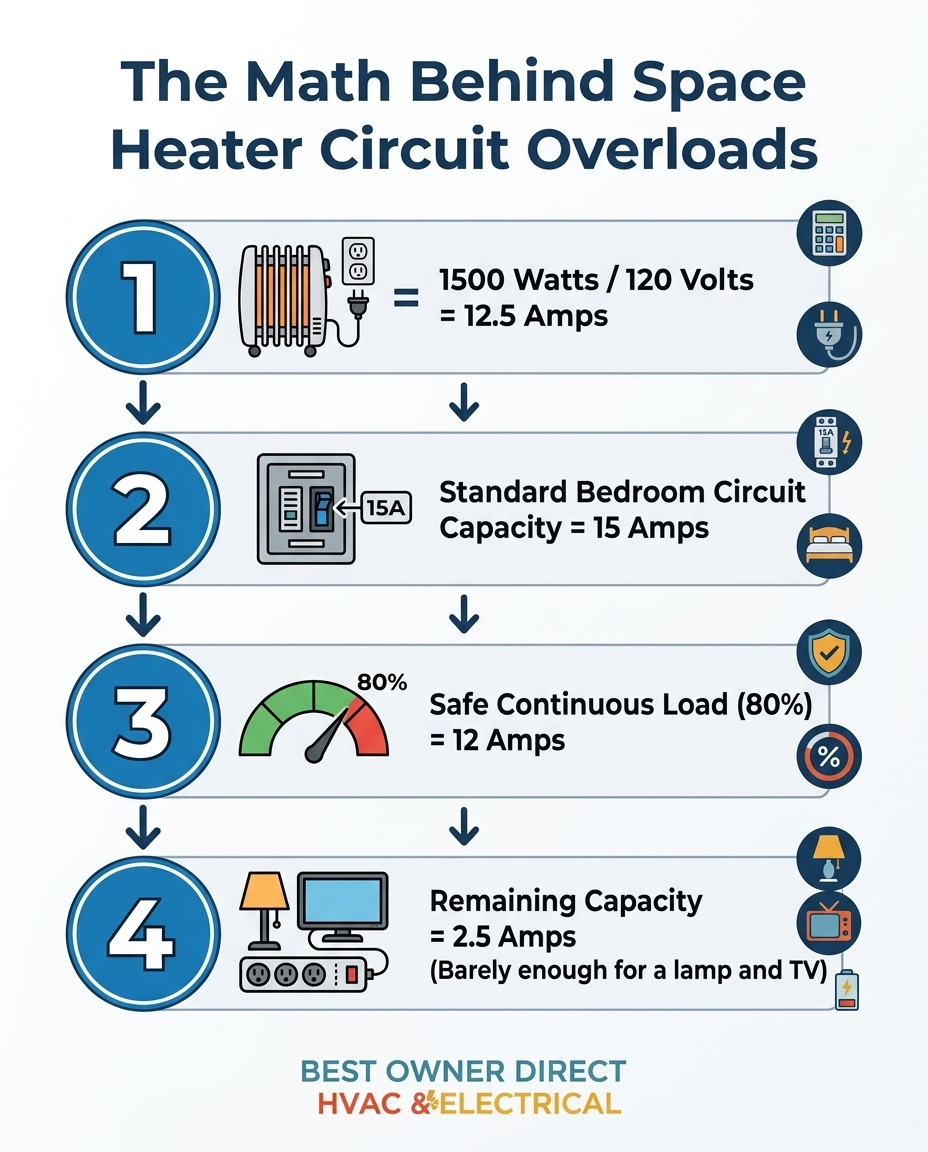
The cause: To understand why these units cause so many power failures, we have to look at the basic math governing your home's wiring. Electrical power is measured in watts, while the volume of electrical current flowing through the wires is measured in amps. The formula to find the amps is simple: divide the watts by the volts. In a standard North American home, outlets operate at 120 volts.
When you divide a 1500W heater by 120 volts, you get approximately 12.5 amps. The vast majority of standard bedroom and living room circuits are rated for a total maximum capacity of 15 amps. This leaves a razor-thin margin of just 2.5 amps for every other device sharing that same circuit.
• Television sets: Draw roughly 1 to 1.5 amps while running.
• Desktop computers: Can draw between 2 and 3 amps depending on the model.
• Lighting fixtures: Multiple lamps or overhead lights can easily consume 1 to 2 amps.
• Phone and laptop chargers: Small, but still pull 0.5 to 1 amp collectively.
As you can see, running a 1500W (approx 12.5 amps) on a 15-amp circuit alongside a television and a single lamp mathematically guarantees an overload. The breaker trips because the demand exceeds the physical capacity of the wire.
Understanding the 80% Continuous Load Rule
The math actually gets tighter when you factor in safety regulations. Electrical circuits are designed to safely handle 100% of their maximum capacity only for short, intermittent bursts. For continuous loads—defined as any device running for three hours or more—safety standards dictate that the circuit should only carry 80% of its maximum rating.
A space heater running throughout a chilly evening is the textbook definition of a continuous load. On a 15-amp circuit, 80% capacity is exactly 12 amps. Because that 1500W heater draws 12.5 amps, it inherently exceeds the safe continuous threshold of the circuit all by itself, even if absolutely nothing else is plugged in.
How Older Housing Stock Handles Modern Electrical Demands
The sudden power losses experienced during the September pre-heating season are heavily influenced by the architectural history of your neighborhood. With the damp, chilly Pacific Northwest early fall rolling in, residents quickly plug in space heaters to cut the chill before committing to turning on their central furnaces. In our years of servicing older homes in Cornelius OR, we frequently see how this sudden spike in electrical demand exposes the limitations of mid-century wiring designs.
Homes built decades ago were designed for a very different era of electrical consumption. Bedrooms typically only needed enough power for a clock radio and a bedside lamp. To save on wiring and breaker box space, we often find that electricians of that era frequently utilized shared circuits. A shared circuit means that a single 15-amp breaker in your electrical panel might supply power to the outlets and lights in two, or even three, adjacent bedrooms simultaneously.
1. The Baseline Draw: Bedroom A has a computer running, while Bedroom B has a television and overhead lights on, consuming roughly 4 amps total.
2. The First Heater: A family member in Bedroom A feels the autumn chill and plugs in a 1500W heater, adding 12.5 amps. The total draw hits 16.5 amps, tripping the 15-amp breaker immediately.
3. The Domino Effect: Even if Bedroom A turns off their computer, if a second family member in Bedroom B plugs in their own space heater, the combined draw hits 25 amps. The circuit is massively overloaded, plunging both rooms into darkness.
This shared architectural reality means that older housing stock simply cannot support modern, localized electric heating strategies without significant safety risks.
The Fire Hazard of Constantly Resetting a Tripped Breaker
A tripping breaker is not a design flaw; it is the primary safety mechanism protecting your home from catastrophic fire. When the electrical current exceeds the safe capacity of the wiring, the wires physically heat up. If the current flows unchecked, the copper wire will get hot enough to melt its protective plastic insulation, eventually igniting the wooden studs and drywall surrounding it. The breaker's job is to sense this excessive current and cut the power before the wires reach dangerous temperatures.
The severe danger arises when homeowners treat the breaker box like a simple reset switch. Repeatedly flipping the breaker back on without reducing the electrical load forces electricity back through wires that are already warm. Over time, this constant cycle of overheating and cooling degrades the insulation inside your walls, creating microscopic cracks where electrical arcing can occur. According to data from the National Fire Protection Association (NFPA), heating equipment is a leading cause of home fires, and overloaded electrical circuits play a massive role in those statistics.
If your breaker trips instantly upon resetting, or if the breaker switch itself feels warm to the touch, you must leave it off and seek a professional assessment immediately. At Best Owner Direct, we view these as severe warning signs your breaker panel needs attention before a hidden smolder turns into an active emergency.
Signs of Hidden Electrical Damage
Beyond the breaker box itself, there are localized warning signs that your space heater is causing dangerous degradation at the point of use. If you notice any of the following, discontinue using that outlet immediately:
• Discoloration or scorch marks: Brown, yellow, or black smudges on the plastic faceplate of the wall outlet indicate heat damage behind the wall.
• A faint burning plastic smell: If the air smells slightly chemical or smoky when the space heater is running, the outlet's internal components are melting.
• Unusually warm outlets: The wall plate and the plug itself should never feel hot to the touch. If they do, the connection is failing and creating dangerous electrical resistance.
Space Heaters vs. Central Heating: Bridging the Fall Gap
The heavy reliance on plug-in heaters is largely a seasonal phenomenon. During the September pre-heating season, the weather is often unpredictable—freezing in the morning, yet reasonably warm by the afternoon. Homeowners understandably want to avoid turning on the whole-house heating system just to take the chill out of a single bedroom or home office.
However, using localized electric heat as a stopgap measure comes with significant efficiency and safety trade-offs. While a space heater provides immediate comfort to a small area, running multiple units is incredibly expensive and taxes your home's infrastructure.
• Electrical Draw — 1500W Space Heaters: Massive localized draw (12.5 amps per unit), high risk of circuit overloads. — Central Heating Systems: Dedicated, hardwired circuits designed specifically for the system's exact load.
• Safety Profile — 1500W Space Heaters: High risk of tip-overs, combustible clearance issues, and melted outlets. — Central Heating Systems: Enclosed combustion or heat exchange safely away from living spaces.
• Efficiency — 1500W Space Heaters: Cost-effective for a single small room for short durations only. — Central Heating Systems: Highly efficient for maintaining even, consistent temperatures across the entire home.
• Best Use Case — 1500W Space Heaters: Temporary spot-heating while directly supervised by an adult. — Central Heating Systems: Primary, safe, unattended heating throughout the deep winter months.
Instead of relying on dangerous electrical overloads to stay comfortable, the smartest approach we recommend to our Cornelius customers is to schedule a pre-season system check for your primary furnace or heat pump. By ensuring your primary equipment is fully operational, you can confidently utilize modern central heating solutions when the deep winter cold arrives, keeping your home evenly warm without pushing your electrical panel to the brink of failure. Federal tax credits or local utility incentives may even apply to qualifying heat pump installations, so it is a great time to explore high-efficiency options.
Solving the Problem: Dedicated Circuits vs. Panel Upgrades
The problem: You need supplemental heat in a specific room, but the existing shared 15-amp circuit simply cannot handle the load safely.
The cause: The home's original wiring was never designed for continuous 1500-watt loads, and the breaker is doing its job by tripping to prevent a fire.
The solution: The safest, most permanent fix is the installation of a dedicated circuit. A dedicated circuit is a single breaker in your electrical panel that supplies power to one specific outlet, intended exclusively for heavy loads. Installing a dedicated 20-amp circuit for a primary bedroom or home office provides plenty of safe capacity for a space heater, leaving the original 15-amp circuit free to handle the lights, televisions, and chargers without interruption.
Unfortunately, many homeowners are told that any tripping breaker requires a massive, expensive overhaul of their entire electrical system. While there are certainly situations where a full breaker panel upgrade is genuinely necessary—such as when there is absolutely no physical space left in the box for new breakers, or if the panel is an obsolete, recalled brand—a simple dedicated circuit is often the perfect straightforward fix.
This is where finding a reliable contractor matters. One local homeowner recently called our Best Owner Direct team about an old AC system that another company deemed completely unfixable, aggressively pushing them toward a massive replacement. Instead, our technician tracked down a rare part and got the existing system running perfectly. We apply that exact same owner-direct accountability to electrical work. Homeowners deserve honest, straightforward advice on whether a simple dedicated circuit will solve their space heater problem safely, rather than dealing with franchise upselling tactics that push unnecessary whole-home rewires.
Frequently Asked Questions
Why does my space heater keep tripping the breaker?
Your space heater keeps tripping the breaker because it is drawing more electrical current than the circuit is designed to handle safely. Most plug-in heaters use about 12.5 amps of power, which easily overloads a standard 15-amp bedroom circuit if lights or televisions are also running. The breaker trips to cut the power and prevent the wires inside your walls from overheating and catching fire.
How many amps does a 1500 watt heater use?
A standard 1500-watt heater uses approximately 12.5 amps of electrical current when plugged into a standard 120-volt household outlet. Because circuits are only designed to carry 80% of their maximum load continuously, this 12.5-amp draw exceeds the safe continuous limit of a 15-amp circuit all by itself. This massive power draw is why these units so frequently cause power outages in older homes.
Can I plug a space heater into a regular outlet or power strip?
You should only plug a space heater directly into a wall outlet that is in good condition, and never into a power strip or extension cord. Power strips and standard extension cords are not rated to handle the intense, continuous current required by heating elements and will quickly melt or catch fire. If the wall plug feels loose or the outlet plate feels warm during use, discontinue use immediately.
Is it safe to leave a space heater on all night?
It is generally not safe to leave a plug-in heater running unattended overnight while you sleep. Beyond the risk of the unit tipping over or igniting nearby bedding, running the unit for eight continuous hours puts massive thermal strain on your home's wiring. If you need overnight warmth, it is much safer to rely on your home's central heating system.
What size breaker do I need for a 1500W space heater?
To safely operate a 1500W heater on a continuous basis, you should ideally use a dedicated 20-amp breaker and properly sized wiring. A 20-amp circuit has a safe continuous load rating of 16 amps, which comfortably accommodates the 12.5-amp draw of the heater without risking an overload. Upgrading to a dedicated circuit requires a licensed professional to run new wire from the panel to the specific outlet.
How do I know if my older home needs a dedicated circuit for heating?
If you experience nuisance tripping every time you turn on a plug-in heater, or if your lights dim noticeably when the unit powers up, your older home likely needs a dedicated circuit. Older properties often feature shared circuits that cover multiple rooms, making them highly vulnerable to overloads. A professional assessment can determine if a single dedicated line will solve the problem or if broader panel updates are required.
Don't let a tripping breaker leave you in the dark or put your property at risk this season. By addressing circuit overloads with a clear, safety-focused explanation and straightforward solutions, we ensure your home is ready for the cold. Schedule your electrical assessment with Best Owner Direct HVAC & Electrical before heavy winter hits to get the honest, reliable upgrades you need for total peace of mind.


How a Heat Pump Provides Both Cooling and Heating in One SystemLearn how a heat pump provides both cooling and heating in one system for year-round comfort and energy efficiency.
Read more
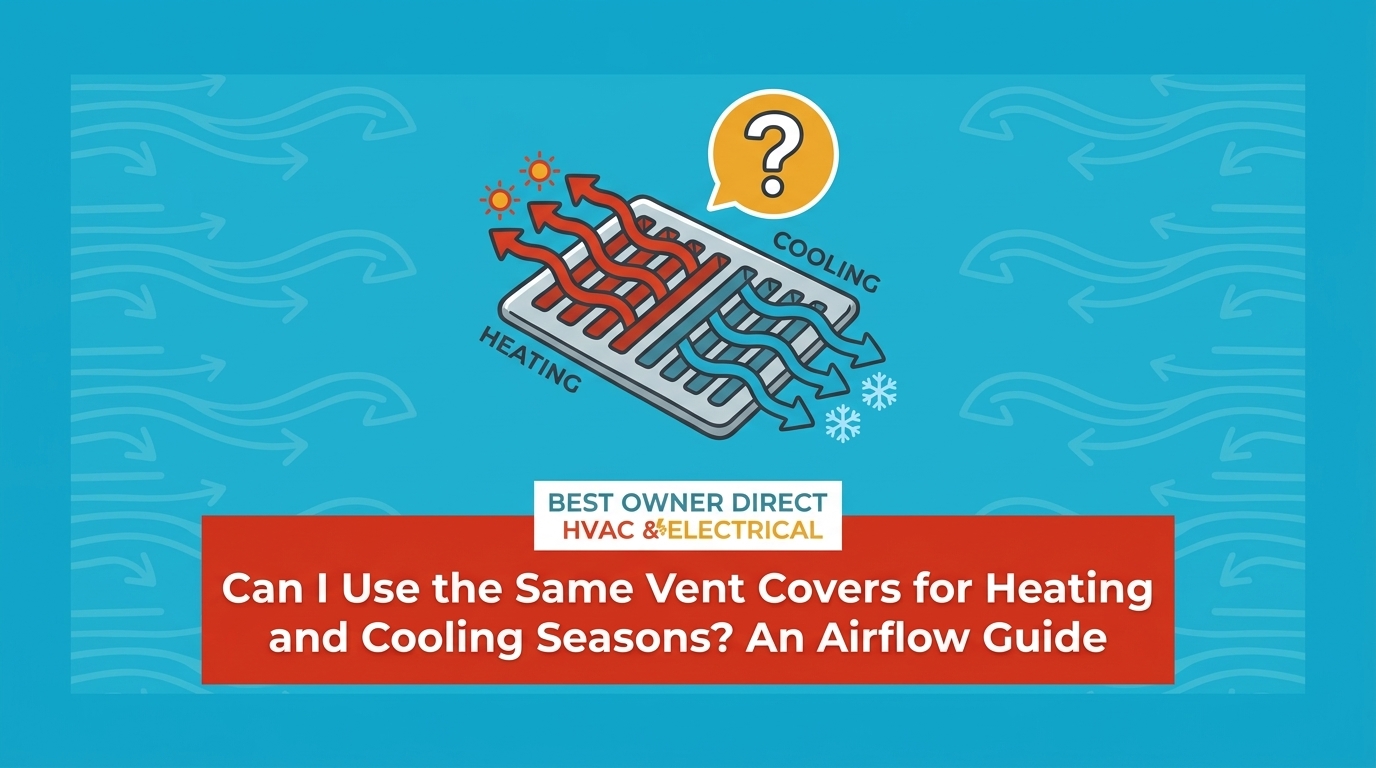
Can I Use the Same Vent Covers for Heating and Cooling Seasons?Cold air sinks and warm air rises, meaning standard fixed-louver vent covers often force your system to work harder. Find out if you need to swap your registers for the season.
Read more
How to Fix a Heat Pump Not Turning On FastLearn what to check first when your heat pump not turning on. Follow our DIY triage guide for fast troubleshooting and know when to call a pro.
Read more