Menu


Heat wave preparation in Washington County comes down to three layers: get your cooling equipment verified before the forecast turns (spring, not July), manage the house so the equipment isn't fighting avoidable heat gain, and have a written plan for what to do if cooling fails on the worst day. Homes here weren't historically built for extreme heat — many older ones have no cooling at all — which makes preparation matter more, not less.
Why do heat waves hit our homes so hard?
The Pacific Northwest built housing for a marine climate — good at shedding rain, historically indifferent to 100°F. Since the 2021 heat dome, extreme heat events have been a planning reality across the Portland metro, and the local housing stock is still catching up: modest insulation against heat, big west-facing windows, and a meaningful share of homes with no mechanical cooling. When the temperature spikes, undersized and unmaintained systems run flat-out for days — which is exactly when weak components fail.
What should you do before the season? (The equipment layer)
Run our pre-summer AC checklist — fresh filter, cleared outdoor unit, a real test-run on a warm day — and book a professional tune-up to verify refrigerant charge, capacitors, and motor health while repair schedules are still open. Capacitors are a classic heat wave casualty: marginal ones survive mild weather and die on the first 100°F afternoon, taking your cooling with them. If your home has no cooling at all, a ductless mini-split is a heat pump — it becomes efficient heating in winter too, which changes the value math for our climate (details in mini-split vs. ducted).
How do you manage the house during the event?
• Beat the sun to the windows. Close blinds and curtains on east and south exposures in the morning, west in the afternoon. Exterior shading beats interior when you have it.
• Flush cool air at night, seal up in the morning. Our overnight lows usually cooperate: ventilate hard when it's cool out, then close everything before the day warms.
• Don't chase the thermostat. Set a realistic target and hold it. Cranking the setpoint far down doesn't cool faster — it just guarantees the system never satisfies and runs at maximum through the hottest hours.
• Reduce internal gains. Oven, dryer, and dishwasher heat can wait for evening.
• Give the outdoor unit shade and space if you can — but never enclose it; it needs unobstructed airflow to shed heat.
What if the AC fails mid-heat-wave?
First check the simple things: thermostat set to cool, breaker not tripped, filter not choked, ice not visible on the lines (if iced, turn cooling off and run fan only — a frozen coil can't work and forcing it risks the compressor). Then call for repair — we run after-hours emergency service based on technician availability across Washington County and the Portland metro. While you wait: close off unused rooms, base yourself in the coolest part of the house, use fans to move air across skin, and take heat seriously — cooling centers exist for a reason, and checking on elderly neighbors is a Portland-metro heat wave tradition worth keeping.
The owner's honest take
Every heat wave, the calls we can't get to fast enough are from systems that hadn't been looked at in years. The cheapest insurance is boring: spring maintenance, a clean filter, and shade on the west windows. A maintenance plan makes the first part automatic — and plan customers get priority scheduling when the forecast turns ugly.
What to read next
If your home has no cooling at all, or you're weighing your options for adding it, compare mini-split vs. ducted heat pump to see which delivery method fits your house.
Sources
• Ready.gov — Extreme Heat preparedness
• AirNow — Wildfire Smoke Guide (smoke season overlaps heat season)
Quick answers
Questions we hear about this
Why does my AC struggle only during heat waves?+Extreme heat pushes a system to run at maximum for days, exposing marginal components — weak capacitors, low charge, dirty coils — that mild weather tolerates. A spring tune-up catches most of them before the forecast does.
What temperature should I set my AC to during a heat wave?+Set a realistic target the system can hold and leave it there. Cranking the setpoint way down doesn't cool the house faster — the system just runs flat-out longer without ever satisfying.
What should I do if my AC breaks during a heat wave?+Check the simple things first — thermostat set to cool, breaker not tripped, filter not choked, no visible ice on the lines — then call for repair; we run after-hours emergency service based on technician availability across Washington County and the Portland metro. While you wait, close off unused rooms and use fans to move air across skin.
Do older homes in Washington County have air conditioning?+A meaningful share don't — the region's housing stock was historically built for a mild, rainy climate rather than extreme heat. That's exactly why heat wave preparation matters more here than in climates built around cooling from the start.
Is a ductless mini-split a good option for a home with no central AC?+Often yes — a mini-split is a heat pump, so it adds efficient cooling now and efficient heating for winter, without the cost of adding ductwork to a home that never had it. See our mini-split vs. ducted comparison for the full picture.


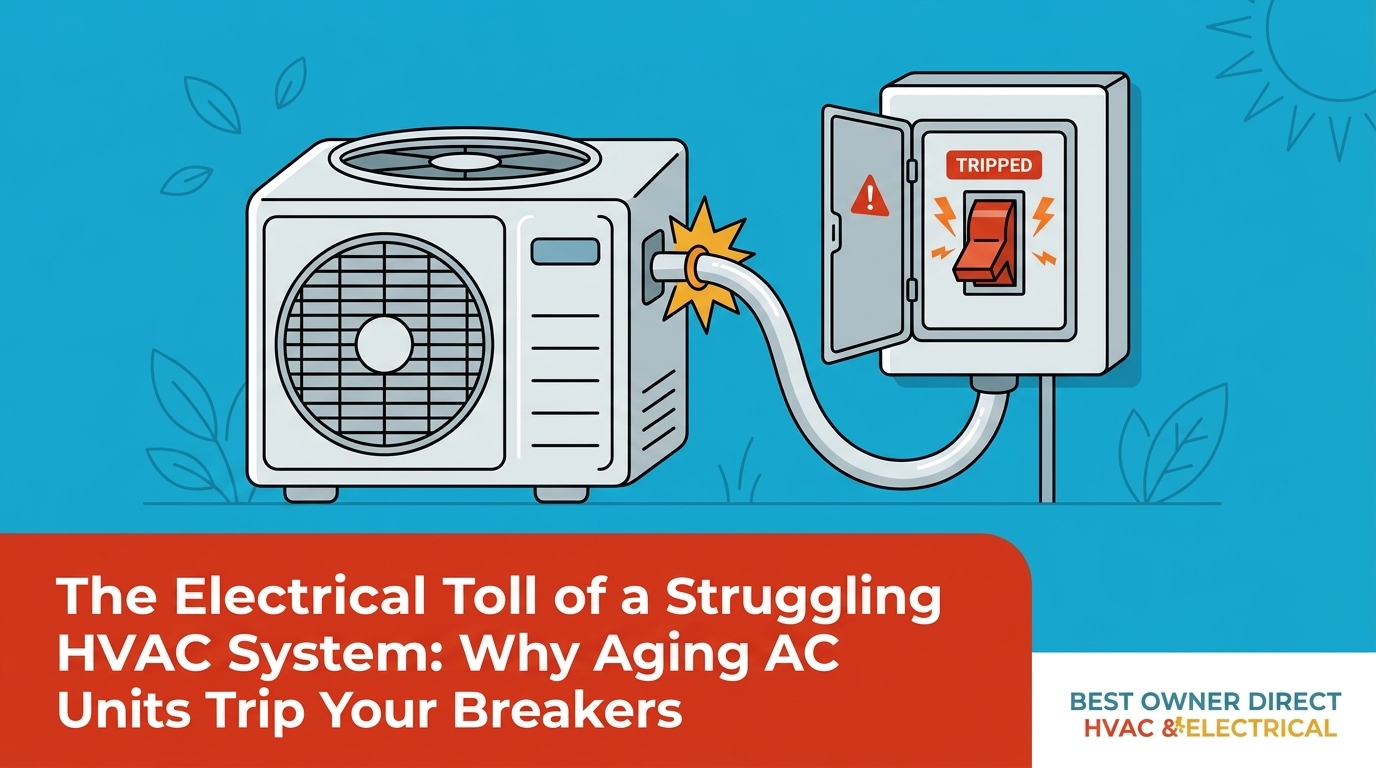
The Electrical Toll of a Struggling HVAC System on Your Home's BreakersAn aging air conditioner does not just lose cooling power; it actively stresses your electrical panel. A tripping breaker during late summer heat is a warning sign requiring professional diagnosis.
Read more
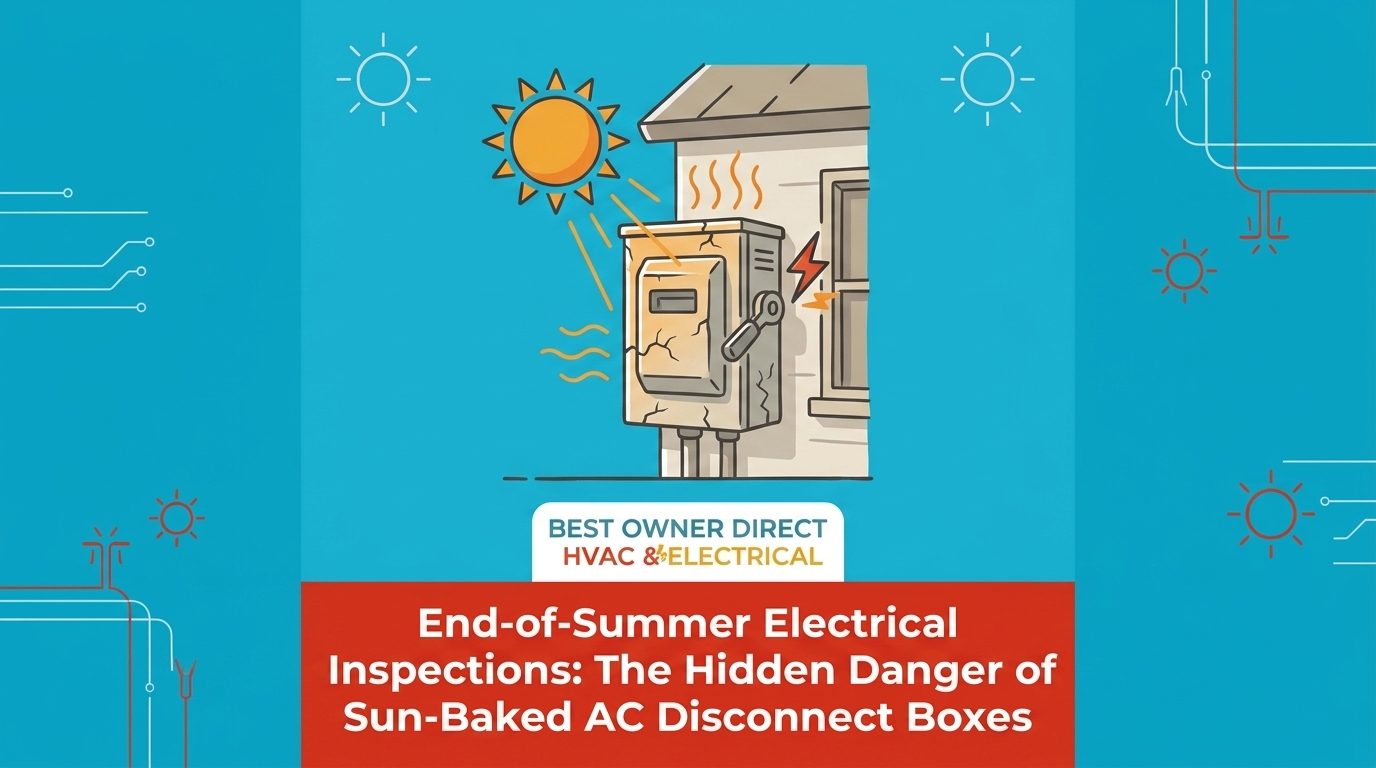
End-of-Summer Electrical Inspections: Checking Outdoor Disconnect BoxesAfter months of intense Pacific Northwest sun, your outdoor AC disconnect box can become brittle and unsafe. Learn the visual warning signs of UV degradation.
Read more
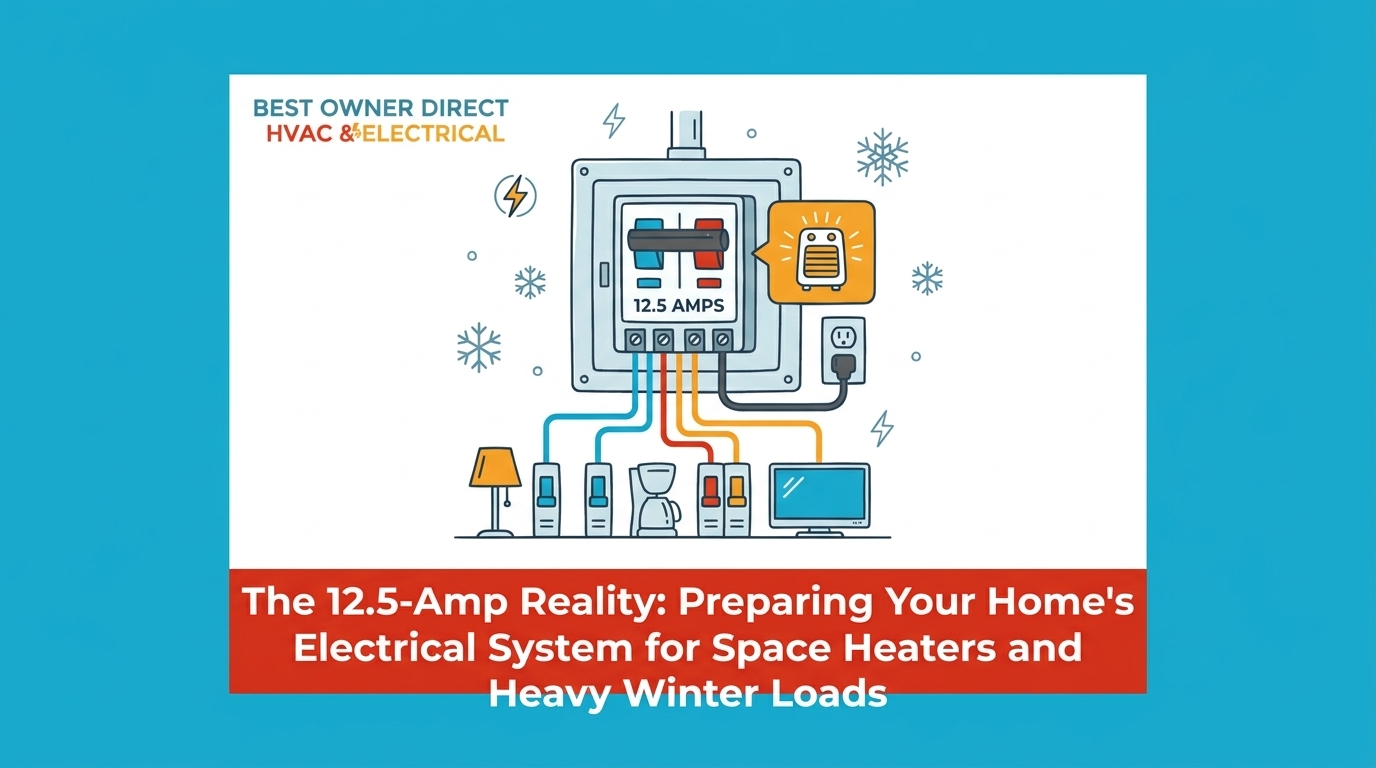
Preparing Your Home's Electrical System for Space Heaters and Heavy Winter LoadsA standard 1500W space heater consumes nearly 80% of an older bedroom circuit's capacity instantly. Find out why resetting that tripped breaker is a hidden fire hazard.
Read more