Menu


When Cooling Relief Turns Into a Power Outage
When the afternoon heat peaks and your cooling suddenly shuts down, you are likely witnessing the electrical toll of a struggling HVAC system on your home's breakers. You walk over to the thermostat, hoping for a quick fix, only to find the screen blank or the system completely unresponsive. The house starts warming up immediately. You check your electrical panel and see that the dedicated switch for your air conditioner has flipped to the "off" or "tripped" position. It is incredibly frustrating to lose power just when your home needs cooling the most.
If you are dealing with this exact situation, you need a comprehensive approach to your home's HVAC systems to find a lasting solution. At Best Owner Direct HVAC & Electrical, our team has helped countless Cornelius homeowners navigate this exact stressful scenario.
Many homeowners face this concrete problem: an aging compressor draws excessive amperage, overloading the circuit and tripping the breaker. This usually happens during periods of intense August late-summer cooling stress, when your equipment has been running nonstop for months. At this point, you face a critical decision. The temptation is to simply flip the breaker back on and hope the air conditioner starts up again. However, doing so ignores the root cause. A tripped breaker is not a random glitch; it is a symptom of a mechanical failure causing a severe electrical crisis. You must call a professional to diagnose why the system is pulling so much power before the situation becomes dangerous.
Understanding the Amperage Spike: RLA vs. LRA
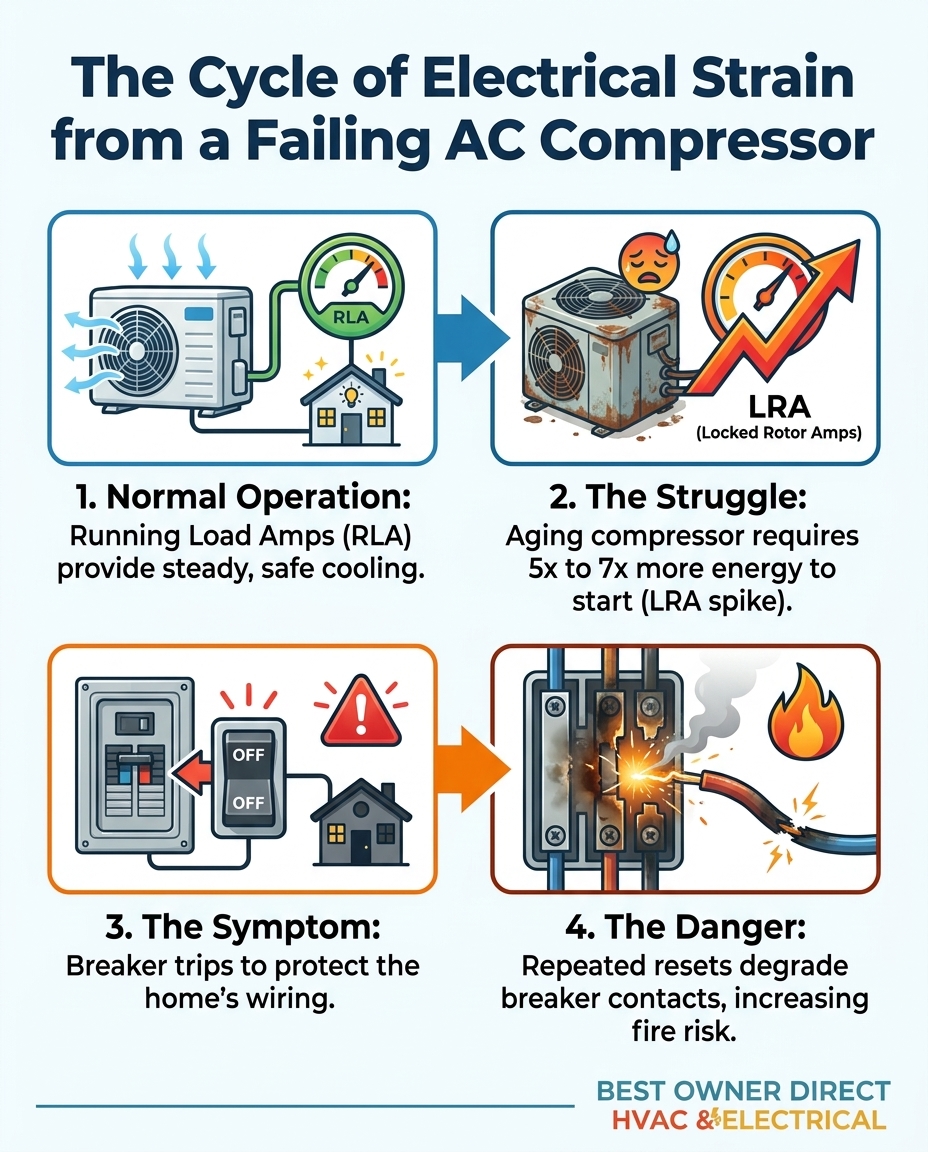
To understand why your breaker is tripping, you first need to understand how air conditioners consume electricity. Every central air conditioning system operates using two very different levels of electrical current. The first is Running Load Amps (RLA). This is the normal, safe electrical draw of a functioning air conditioner once it is up and running. When your system is humming along smoothly and blowing cold air, it is pulling its RLA. Your home's wiring and electrical panel are designed to handle this steady flow of electricity indefinitely.
The second measurement is where the danger lies. When a failing compressor requires massive energy to turn over and start the cooling cycle, it results in a severe spike in electrical demand. This is known as a Locked Rotor Amps (LRA) spike on startup. If the compressor's internal motors are struggling against high pressure or mechanical wear, the system pulls an enormous amount of electricity to force the motor to spin.
This sudden demand can easily be five to seven times higher than the unit's normal operating current. When this massive surge hits your electrical panel, the circuit breaker detects the overload. The breaker tripping is a safety mechanism doing exactly what it was designed to do in the face of this spike. It cuts the power to prevent the wires inside your walls from melting or catching fire. In our experience upgrading electrical systems throughout the area, understanding how older homes handle peak summer AC loads is crucial, as vintage electrical panels are especially sensitive to these aggressive power surges.
The Anatomy of a Hard Start
When an air conditioner pulls near its maximum LRA just to turn on, technicians call this a "hard start." You can often see and hear the signs of a hard start before the breaker finally trips.
• Dimming lights: You may notice the lights inside your house flicker or dim significantly the exact moment the air conditioner tries to turn on.
• Loud buzzing or groaning: Instead of a smooth hum, the outdoor unit might make a harsh, loud buzzing sound as the electrical current fights against a stuck motor.
• Delayed fan engagement: The compressor might struggle for several seconds before the outdoor fan finally starts spinning.
This happens because of mechanical resistance inside an aging compressor. Over time, the internal bearings wear down, the lubricating oil breaks down, and the metal components grind against each other. The motor needs more and more electricity to overcome this physical friction, pushing the electrical draw dangerously close to the breaker's absolute limit.
• Running Load Amps (RLA) — What It Means: Normal, steady operation while cooling — Typical Amperage Draw: Low to Moderate — Impact on Electrical Panel: Safe, easily handled by the breaker
• Locked Rotor Amps (LRA) — What It Means: Maximum power pulled during a struggling startup — Typical Amperage Draw: 5x to 7x higher than RLA — Impact on Electrical Panel: Dangerous, triggers the breaker to trip
Why Late Summer Pushes Aging Compressors Over the Edge
Air conditioners rarely fail on a mild spring day. They break down when they are pushed to their absolute limits. The cumulative wear and tear on an AC unit after running constantly through June and July leaves the equipment exhausted. With summer temperatures regularly driving intense heat waves across the region, the prolonged cooling season leaves older units highly vulnerable to heat-induced failure.
Sustained high temperatures degrade electrical components like capacitors, which are essential for starting the compressor. A capacitor acts like a battery that gives the compressor an extra jolt of electricity to get moving. When the August heat bakes the outdoor unit day after day, the fluid inside the capacitor dries up. Without that extra jolt, the compressor has to pull all its starting power directly from your home's electrical panel, resulting in a massive amperage spike.
Our technicians at Best Owner Direct see this problem frequently in older Cornelius OR residential homes, especially during the late-summer back-to-school transition when systems have been running hard for months. Many of these neighborhoods feature aging home electrical panels that already struggle under sustained peak usage. When you combine a degraded AC capacitor, a worn-out compressor, and an older electrical grid, breaker trips become inevitable.
Mechanical parts under prolonged stress will eventually give out, regardless of the season. We see this pattern frequently in our day-to-day service calls. For instance, our team recently helped a local customer who experienced a factory inducer motor failure in their system during the fall. Because we understand the urgency of mechanical breakdowns, our team returned immediately and replaced the faulty unit free of charge. While that was a heating component, the principle remains exactly the same for summer cooling: routine maintenance, like cleaning condensers and swapping failing parts early, can often revive an older system before it fails completely under peak seasonal stress.
The Hidden Danger of Repeatedly Resetting the Breaker
When the AC goes out, the immediate reaction is usually to march to the garage or basement and flip the breaker back on. If it trips again a few minutes or hours later, some homeowners will just keep resetting it. This is a critical mistake. Circuit breakers are mechanical safety devices that degrade every single time they are tripped under a heavy electrical load.
Inside the breaker, there are small metal contacts that snap open to stop the flow of electricity. When a massive surge of Locked Rotor Amps forces those contacts apart, it creates a tiny electrical arc—a literal spark. Repeatedly forcing a reset damages the internal contacts of the breaker. The metal becomes pitted, scorched, and covered in carbon buildup. This damage increases the electrical resistance inside the breaker itself.
How Resistance Leads to Fire Hazards
In the world of electricity, resistance equals heat. As the damaged breaker struggles to pass current through its scorched contacts, it begins to heat up. We always warn our customers that this increased resistance generates excessive heat, creating a severe fire hazard inside the electrical panel. Eventually, the breaker can melt, destroying the bus bar it connects to, and potentially starting an electrical fire within the walls of your home.
A tripped breaker should always be investigated immediately by a professional rather than treated as a nuisance to be reset. If your air conditioner trips the breaker even once, leave it off. Calling a professional for comprehensive electrical panel inspections is the only way to ensure the safety mechanisms in your home are still intact and functioning properly.
Common Mechanical Culprits Behind High Amperage Draws
High amperage draws do not happen for no reason. They are almost always the result of a specific mechanical or electrical failure within the air conditioning unit itself. Bridging the gap between the mechanical breakdown and the electrical symptom requires identifying exactly which part is forcing the system to overwork.
1. Failing Capacitors: As mentioned earlier, a weak or dead capacitor fails to deliver the necessary starting voltage. This forces the compressor to pull significantly more amps directly from the breaker to overcome the initial inertia of starting up.
2. Grounded Compressors: Inside the heavy steel shell of your compressor is an electric motor wrapped in copper wire. Over time, the insulation on this wire can break down due to acid buildup or extreme heat. When the bare wire touches the metal casing, it creates a short circuit. This is called a "grounded" compressor, and it will lead to an immediate, violent breaker trip the second the thermostat calls for cooling.
3. Dirty Air Filters and Coils: Restricted airflow causes the system to overheat and overwork. If the evaporator coil inside or the condenser coil outside is blanketed in dust and debris, the system cannot release heat. The compressor has to pump harder and longer against higher internal pressures, gradually increasing the electrical load until the breaker finally gives out.
4. Seized Bearings: If the outdoor fan motor or the compressor bearings lose their lubrication, the metal parts seize up. The electrical system will continue sending maximum power to try and turn a motor that physically cannot move, resulting in a massive amperage spike.
Sourcing parts for older, struggling systems requires dedicated professional effort to ensure compatibility and safety. Just this past late summer, a local Cornelius homeowner reached out to our team when their old AC system was struggling and assumed to be unfixable. Our technicians tracked down the necessary part and performed the air conditioning repair, restoring the system to great working condition. Getting the right mechanical components installed correctly is the first step to reducing the electrical strain on your home.
Bridging the Gap: Why You Need Dual-Trade Expertise
When an air conditioner trips a breaker, homeowners are often confused about who to call. Do you need an AC technician because the air is not cold, or do you need an electrician because the power is tripping? The reality is that resolving this specific problem requires knowledge of both HVAC mechanics and electrical panel safety.
If you hire someone to fix only the air conditioner, they might replace the worn-out capacitor and get the unit running again. However, this leaves a potentially heat-damaged, degraded breaker sitting in your electrical panel, waiting to fail or cause a fire later. Conversely, an electrician replacing the breaker without diagnosing the AC will just result in the brand-new breaker tripping the moment the failing compressor tries to start up again.
Working with Best Owner Direct HVAC & Electrical means you benefit from our dual-licensed status and local expertise. Our technicians can diagnose the mechanical AC failure and resolve the resulting electrical panel strain in a single visit. We emphasize the efficiency and safety of having a single professional who can test the compressor's amp draw and inspect the panel's integrity simultaneously. If a full system replacement is ultimately necessary, qualifying high-efficiency AC or heat pump installations may be eligible for Energy Trust of Oregon and local utility incentive programs; the federal Section 25C credit ended for installations completed after December 31, 2025. We always advise readers to verify current programs with their utility provider. By addressing both sides of the equation, comprehensive diagnostics prevent future emergencies and protect your home's entire infrastructure. You avoid the hassle of coordinating multiple contractors and gain the peace of mind that comes from a complete, safe electrical services and HVAC resolution.
Frequently Asked Questions About AC Electrical Issues
Why does my AC keep tripping the breaker?
Your AC keeps tripping the breaker because it is pulling more electrical current than the circuit can safely handle. This is usually caused by a failing compressor, a dead starting capacitor, or a short circuit within the outdoor unit. The breaker trips as a safety measure to prevent the wires from overheating and causing a fire. You need a professional to test the electrical draw and identify the failing component.
Is it safe to reset a tripped AC breaker?
It is generally safe to reset a tripped AC breaker exactly one time, as a temporary power fluctuation could be to blame. However, if the breaker trips a second time, it is absolutely not safe to reset it again. A repeatedly tripping breaker indicates a hard failure in the system that requires immediate professional diagnostics from a dual-licensed team like ours.
What happens if I keep resetting a tripped breaker?
If you keep resetting a tripped breaker, you will physically damage the internal metal contacts of the switch. This damage increases electrical resistance, which generates dangerous amounts of heat inside your electrical panel. Eventually, this can melt the breaker, destroy the panel's bus bar, or start a severe electrical fire.
How many amps does a struggling AC compressor draw?
A struggling AC compressor can draw anywhere from 50 to 150 amps during a hard start, depending on the size of the unit. This measurement, known as Locked Rotor Amps (LRA), is typically five to seven times higher than the unit's normal running amperage. This massive spike is what overwhelms the circuit and forces the breaker to trip.
Can a bad AC compressor cause electrical problems in the rest of the house?
Yes, a bad AC compressor can cause widespread electrical issues in your home. When a failing compressor pulls excessive amperage, it drains available power from the rest of the electrical panel, causing lights to dim or flicker. If the overload damages the main bus bar in the panel, it can compromise the electrical supply to other vital household circuits.
What does a hard start on an AC sound like?
A hard start on an AC usually sounds like a loud, aggressive buzzing or groaning noise coming from the outdoor unit. You might hear the system struggling for several seconds before the fan finally engages and the compressor turns over. This sound indicates that the internal motors are fighting severe mechanical resistance and pulling excessive electricity.
Protect Your Home's Electrical Integrity Today
An aging compressor pulling high amps is a serious issue that bridges two critical home systems: your comfort cooling and your electrical safety. When your air conditioner struggles against the late summer heat, it places an immense, invisible burden on your home's wiring. Continuously resetting a tripped breaker is incredibly dangerous and puts your property at risk of an electrical fire.
You do not have to guess whether the problem lies with your cooling equipment or your breaker box. Explore comprehensive diagnostic options with Best Owner Direct—a team that understands both sides of the equation. By addressing the mechanical failure and verifying the safety of your electrical panel in one visit, we ensure your home stays cool, safe, and fully protected as we transition out of the summer season.


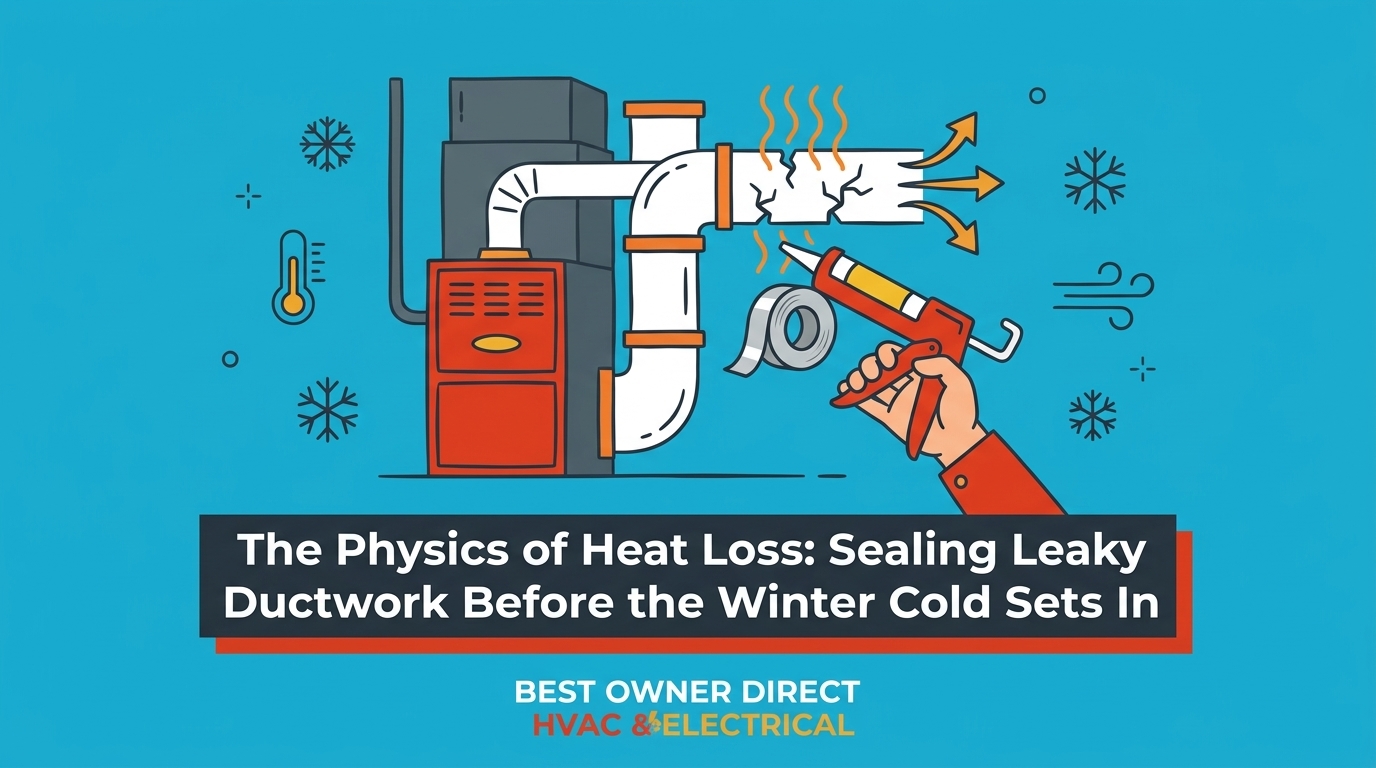
Sealing Leaky Ductwork Before the Winter Cold Sets InYour furnace is only as effective as the ducts delivering its warmth. If you're tired of drafty rooms, securing your system's thermal envelope is the first step to true winter comfort.
Read more
All About How a Mini Split Adds Value to Your HomeLearn how a mini split adds value to your home with energy savings, zoned comfort, and increased property valuation.
Read more
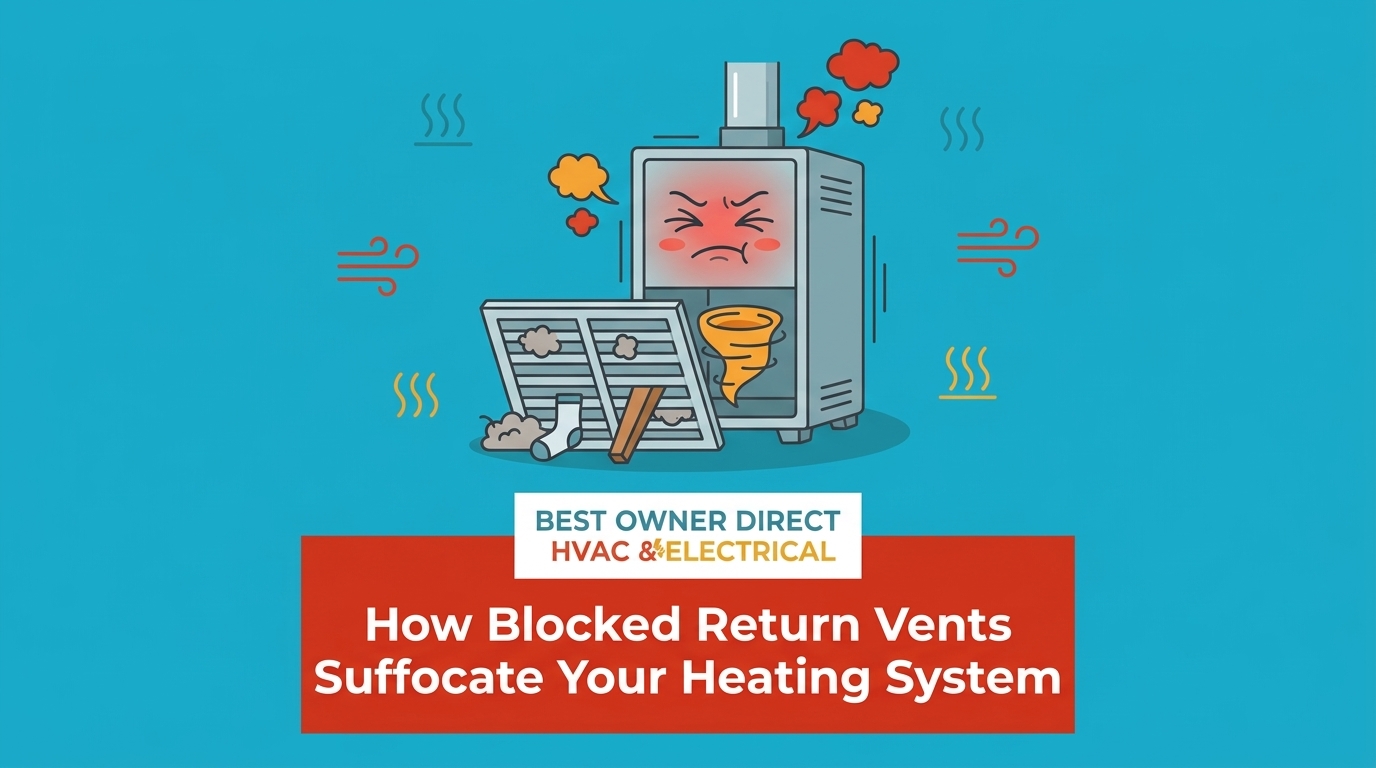
How Blocked Return Vents Suffocate Your Heating SystemMany homeowners accidentally cover large return grilles when rearranging furniture for the fall. Find out how this simple mistake starves your furnace of airflow and causes it to overheat.
Read more