Menu


The Hidden Electrical Toll of Late-Summer Heat
As August delivers its final stretch of intense heat right as the back-to-school transition begins, our team at Best Owner Direct HVAC & Electrical wants to highlight a critical safety task that most homeowners completely overlook: End-of-Summer Electrical Inspections: Checking Outdoor Disconnect Boxes. Having serviced countless systems throughout Cornelius, OR, a pattern we see often is that while your air conditioning system has been running for months, and while you have likely changed the indoor air filters and kept the vents clear, a silent hazard is developing right outside your home. Homeowners often focus entirely on the moving parts of their HVAC units, missing the severe wear occurring on exterior electrical components.
Months of direct sunlight, high temperatures, and intense UV rays compromise the structural integrity of outdoor electrical housings. That gray box mounted on your exterior wall isn't just a simple cover; it houses the high-voltage connection that powers your entire cooling system. Over the course of the season, August late-summer heat and UV exposure bake these materials, turning once-flexible plastics and weatherproof seals into brittle, fragile points of failure.
Recognizing the visual signs of exterior disconnect box wear before the cooling season ends is a critical safety step. A quick visual check can help you determine if the housing is still structurally sound or if it has succumbed to the elements. If you spot signs of severe degradation, you must determine if a licensed professional needs to replace these sun-baked components before the weather conditions change. Addressing these vulnerabilities early is a vital part of maintaining your electrical systems, ensuring your home remains safe and fully functional as the seasons shift.
Why Your AC System Requires a Dedicated Outdoor Disconnect Box
To understand why this component matters so much, we first need to define what an AC disconnect box actually does. This vital piece of equipment acts as the critical bridge between your home's main electrical panel and the outdoor condenser unit. It houses a physical switch or pull-out block that immediately cuts the electrical current flowing to the air conditioner.
The presence of this box is not optional. The National Electrical Code (NEC) Article 440.14 strictly mandates a shutoff mechanism located within sight of the AC unit. This regulation exists to uphold rigorous licensed electrician safety standards. Here is exactly why our electricians emphasize that this component is non-negotiable for your home:
1. Immediate Technician Safety: When a professional arrives to service your air conditioner, they must be absolutely certain the power is off. The line-of-sight requirement ensures nobody inside the house can accidentally flip the breaker back on while the technician has their hands inside the high-voltage condenser.
2. Surge Protection: The disconnect box often houses specialized fuses that act as a first line of defense. If a massive power spike travels toward your condenser, these fuses blow, stopping the surge before it destroys the expensive compressor motor.
3. Rapid Emergency Response: In the event of an electrical fire or a system shorting out, homeowners and emergency responders need a fast, accessible way to kill the power without navigating into a dark basement to find the main breaker panel.
Our dispatch team recently took a call from a Cornelius homeowner right before a major late-summer heat wave when their AC required urgent repair. Because their outdoor disconnect box was accessible and functioning perfectly, our licensed technician was able to secure the power, perform the repair on short notice, and get the system back online safely before the high temperatures hit.
However, it is crucial to emphasize that opening or servicing this box is strictly for licensed professionals. The voltage inside is lethal. If your visual check reveals damage, scheduling a professional electrical inspection is the only safe next step.
The Intersection of HVAC Performance and Electrical Stability
Your air conditioner and your home's electrical grid are deeply intertwined. A compromised disconnect box does not just pose a shock hazard; it actively degrades the performance of your cooling system. The electrical disconnect and the HVAC system rely on one another to function efficiently, and a failure in one quickly cascades into the other.
The Danger of Voltage Drops
When the internal components of a disconnect box begin to corrode or degrade from exposure, the electrical connection becomes unstable. This can lead to intermittent power loss or significant voltage drops to the condenser. An air conditioning unit requires a massive, steady draw of clean power to start up and run the compressor. When the unit struggles to draw that clean power through a degraded connection, it forces the compressor to work twice as hard to maintain the refrigerant cycle. This excessive strain drastically reduces the system's cooling efficiency and drives up your monthly energy usage.
Heat on Top of Heat
Electrical resistance is another major consequence of a failing disconnect box. If moisture or humidity has bypassed a warped exterior seal, the copper connections inside begin to corrode. Corroded connections resist the flow of electricity, and that resistance generates excess heat. When you combine the internal electrical heat with a box that is already baking in the August sun, the internal temperatures can soar high enough to melt wire insulation or trip the internal fuses.
Addressing these issues early prevents the premature failure of essential cooling components. If you ignore the warning signs, the strain will eventually travel back to your main panel. Understanding the electrical toll of a struggling HVAC system on your breakers is key to keeping your home comfortable and safe.
How UV Rays and Heat Degrade Exterior Electrical Housings
The physical degradation of an outdoor electrical box doesn't happen overnight. It is a slow, relentless process driven by prolonged sun exposure. In our years of maintaining HVAC systems across the region, we've seen firsthand how Cornelius OR residential exteriors take a heavy beating from the elements, and the specific angle of the late-summer sun in the Pacific Northwest intensely bakes south- and west-facing exterior walls.
Prolonged UV exposure actively attacks the polymers in PVC and plastic electrical housings. As the sun beats down day after day, it leaches out the chemical plasticizers that give the material its flexibility and strength. Without these plasticizers, the housing turns brittle, chalky, and highly susceptible to cracking under the slightest pressure.
Metal boxes face a different set of challenges. As temperatures rise during the day and fall at night, the metal undergoes constant thermal expansion and contraction. Over several seasons, this constant shifting can warp weatherproof seals, bend hinges out of alignment, and create gaps where water can easily enter.
Comparing Housing Degradation
• Plastic / PVC — Primary Environmental Threat: Ultraviolet (UV) Radiation — Visible Signs of Degradation: Chalky residue, fading color, spiderweb cracks — Structural Consequence: Loss of flexibility; shatters easily on impact.
• Metal / Steel — Primary Environmental Threat: Thermal Expansion & Moisture — Visible Signs of Degradation: Rust streaks, blistering paint, misaligned doors — Structural Consequence: Warped weather seals; allows internal corrosion.
• Wire Insulation — Primary Environmental Threat: Extreme Ambient Heat — Visible Signs of Degradation: Frayed edges, stiff or hardened casing — Structural Consequence: Micro-cracks expose live wires to moisture.
Furthermore, the heavy wire insulation leading into the box from the house can become baked and stiff. As the insulation loses its elasticity, micro-cracks form along the casing. This entire structural breakdown turns a reliable weatherproof safety device into a highly vulnerable point of failure, threatening your air conditioning equipment just when you need it most.
Visual Warning Signs of a Compromised Disconnect Box
Identifying a failing disconnect box does not require a multimeter or a toolbelt. In fact, you should never use tools on this component unless you are licensed to do so. A thorough, safe, visual-only inspection from a few feet away is all it takes to spot trouble.
At Best Owner Direct HVAC & Electrical, our "Owner Direct" transparency model is built on empowering homeowners. We believe in providing you with honest, exact visual warning signs so you can evaluate your property yourself. By knowing exactly what to look for, you can make informed decisions without ever facing high-pressure middleman sales tactics.
Your Visual Inspection Checklist
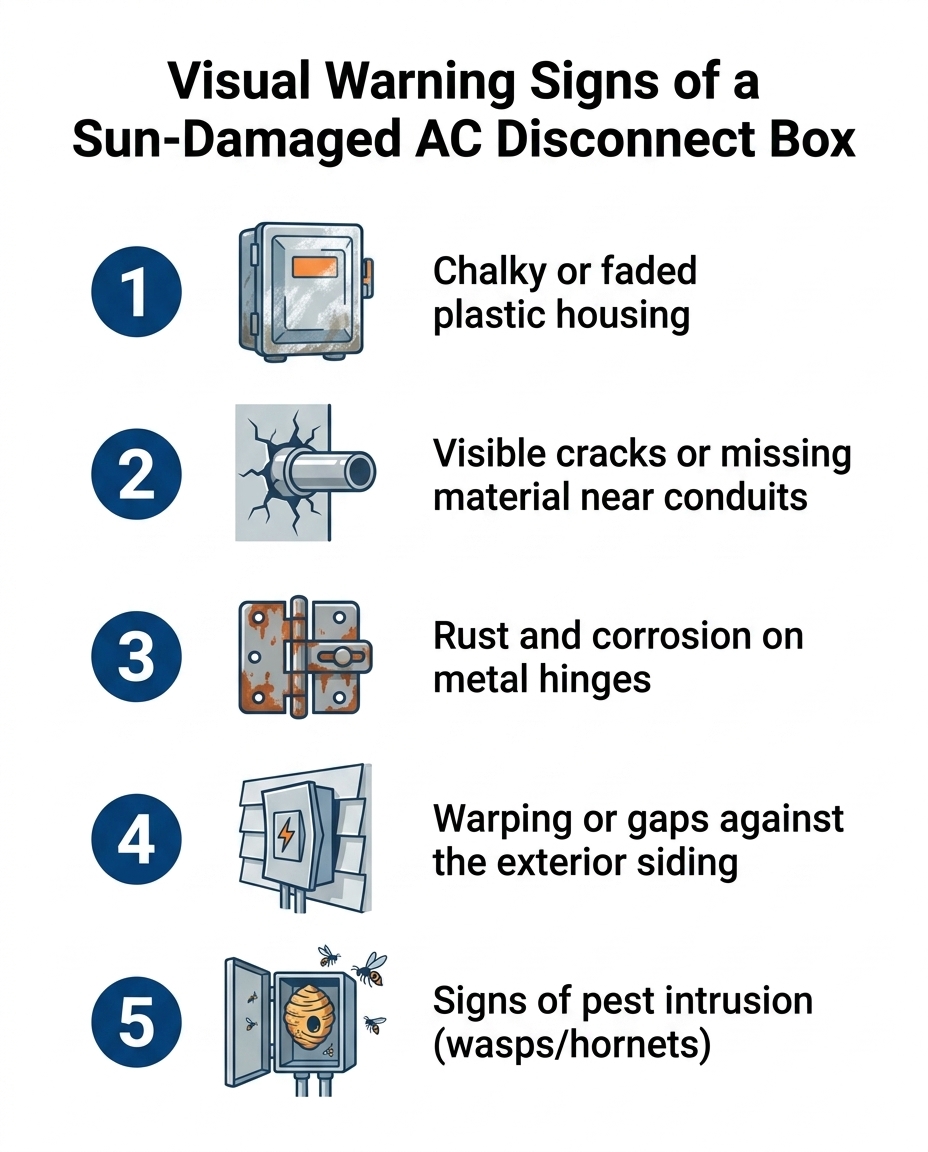
• Faded or chalky plastic: If you run a dry finger over a plastic housing and it leaves a white, chalky residue on your skin, the UV degradation is severe. The plastic is actively breaking down.
• Cracks near conduit connections: Look closely at the bottom or sides where the thick wires enter the box. Visible cracks, chipping, or missing chunks of material here mean water has a direct path inside.
• Rust and severe corrosion: On metal boxes, check the hinges, the latch, and the bottom seams. Heavy rust indicates that the protective coating has failed and moisture is already compromising the metal.
• Gaps against the siding: Inspect the perimeter where the box is mounted to your exterior wall. If you see gaps, it indicates failed caulking or a warped housing, which allows rain to slip behind the unit and rot your siding.
• Sagging or loose mounting: The box should sit perfectly flush and rigid. If it appears to lean or sag, the mounting screws have likely pulled loose from the wall.
The critical rule: Reiterate to yourself and your family that this is a visual inspection only. Never touch, open, or attempt to tape up a damaged high-voltage box.
The Unexpected Danger of Late-Summer Pest Intrusion
While weather and sun cause physical damage, another unique hazard peaks right at the end of the summer season. Wasps, yellow jackets, and hornets are incredibly active in August, and as the nights slowly begin to cool, they actively seek out warm, sheltered enclosures to build their late-season nests.
An electrical disconnect box is the perfect real estate for these pests. It is elevated, protected from the wind, and generates a slight amount of ambient heat from the electrical current. If your box has a cracked housing, a warped door, or a missing knockout plug, it provides the perfect, unobstructed entry point for a colony to move in.
When an AC system malfunctions and needs urgent diagnosis—like our technicians encountered just last week when a local customer's system required quick troubleshooting—we rely on the disconnect box to safely test circuits. In that specific case, our tech quickly diagnosed the problem and got the system running seamlessly. However, if a technician opens a disconnect box to perform these rapid diagnostics and finds an active wasp nest, all work must stop immediately.
Nests built over high-voltage electrical contacts can easily cause short circuits or dangerous arc faults. The organic material of the nest holds moisture, which bridges the gap between live electrical terminals. Furthermore, pest presence makes emergency shutoffs incredibly dangerous for homeowners. If you ever need to kill the power to your AC in an emergency, the last thing you want to encounter is an aggressive swarm of hornets defending their nest.
Why Weatherproofing is Critical Before Pacific Northwest Fall Rains
Timing is everything when it comes to exterior maintenance. A brittle, sun-baked electrical box may easily survive a dry summer without causing a catastrophic failure. Because there is no moisture in the air to exploit the cracks and failed seals, the system continues to run. However, it will fail the moment heavy moisture is introduced.
We must contrast the dry, warm Cornelius summers with our significantly wet autumns. August represents the final window of opportunity to secure electrical seals before the heavy rains begin. Once the Pacific Northwest weather shifts, water intrusion into a compromised disconnect box leads to immediate shorts, blown fuses, and tripped main breakers.
The proactive approach: Securing weatherproof seals now prevents sudden AC failures during late-season heatwaves, and it protects the system as you transition into early heating needs for heat pump owners. Proactive replacement of damaged housings under clear skies is a controlled, straightforward process.
The reactive reality: Waiting until the box fails means dealing with emergency electrical repairs in the pouring rain. Technicians face much higher risks working with high voltage in wet conditions, and your home is left without climate control while the system is secured. Adding this visual check to your routine maintenance plan ensures you catch the problem while the weather is still on your side.
Securing Your System for the Transitioning Seasons
Understanding the vulnerabilities of your outdoor electrical components ensures a much safer home environment. The transition from summer to fall brings unique weather challenges, and your equipment must be structurally sound to handle the shift.
By relying on visual-only warning signs, you protect yourself from high-voltage risks while still taking an active role in your property's upkeep. When in doubt, having a licensed professional evaluate a sun-baked disconnect box provides absolute peace of mind. Our team strictly follows licensed electrician safety standards to ensure every repair is done correctly and legally. Ensure your system is ready to operate safely through the end of the cooling season and well beyond by taking a few minutes to inspect your exterior equipment today.
Frequently Asked Questions
What is an AC disconnect box and why is it required?
An AC disconnect box is a safety switch mounted on your exterior wall that cuts power to your air conditioning condenser. It is required by the National Electrical Code so that technicians can safely secure the power within line-of-sight of the unit. This prevents anyone from accidentally turning the power back on from inside the house while the unit is being serviced.
What are the visual signs of a damaged AC disconnect box?
The most common visual signs include chalky or faded plastic, visible cracks, and rust on metal components. You might also notice gaps where the box meets your home's siding, indicating that the weather seal has failed. If you see wasps or hornets entering the box, it is a clear sign that the housing is no longer sealed.
Does an AC unit need a disconnect box to function?
While the AC unit technically draws power from the main panel, a disconnect box is legally and functionally required for safety. Without it, the system cannot be legally serviced, and it lacks a crucial layer of localized surge protection. Bypassing or removing a disconnect box violates building codes and creates a severe shock hazard.
Why is my outdoor electrical box cracking and becoming brittle?
Prolonged exposure to intense UV rays and summer heat breaks down the chemical plasticizers in PVC and plastic housings. Over time, this UV degradation causes the material to lose its flexibility and become chalky. Once the plastic is brittle, even minor physical impacts or temperature shifts can cause it to crack.
Can wasps or yellow jackets get into outdoor electrical boxes?
Yes, wasps and yellow jackets frequently seek out warm, dry enclosures to build their nests in the late summer. If your disconnect box has a warped door, a missing knockout plug, or a cracked housing, pests will easily find their way inside. This creates a dangerous situation for both the homeowner and the HVAC technician.
Can rain get into my AC disconnect box if the seal is broken?
Absolutely, and this is a major concern as we transition into the wet autumn months. A broken weather seal or cracked housing gives rainwater a direct path to the high-voltage connections inside. Water intrusion will quickly lead to short circuits, blown fuses, and potentially severe damage to your air conditioning compressor.


End-of-Summer Electrical Inspections: Checking Outdoor Disconnect BoxesAfter months of intense Pacific Northwest sun, your outdoor AC disconnect box can become brittle and unsafe. Learn the visual warning signs of UV degradation.
Read more
Step-by-Step Guide to How Often to Flush Your Water Heater in OregonLearn how often to flush your water heater in Oregon with our step-by-step guide, covering signs, DIY steps, and maintenance tips.
Read more
Hiring an HVAC Company vs. an Independent Technician for End-of-Season MaintenanceYour AC system has endured months of heavy summer use and needs reliable servicing. Compare the accountability and warranty support of established providers versus independent technicians.
Read more