Menu


Heat Pump Advantages Over Traditional HVAC: What Every Homeowner Should Know
Heat pump advantages over traditional HVAC come down to one simple idea: instead of burning fuel to create heat, a heat pump moves heat that already exists — and that makes all the difference.
Here are the core advantages at a glance:
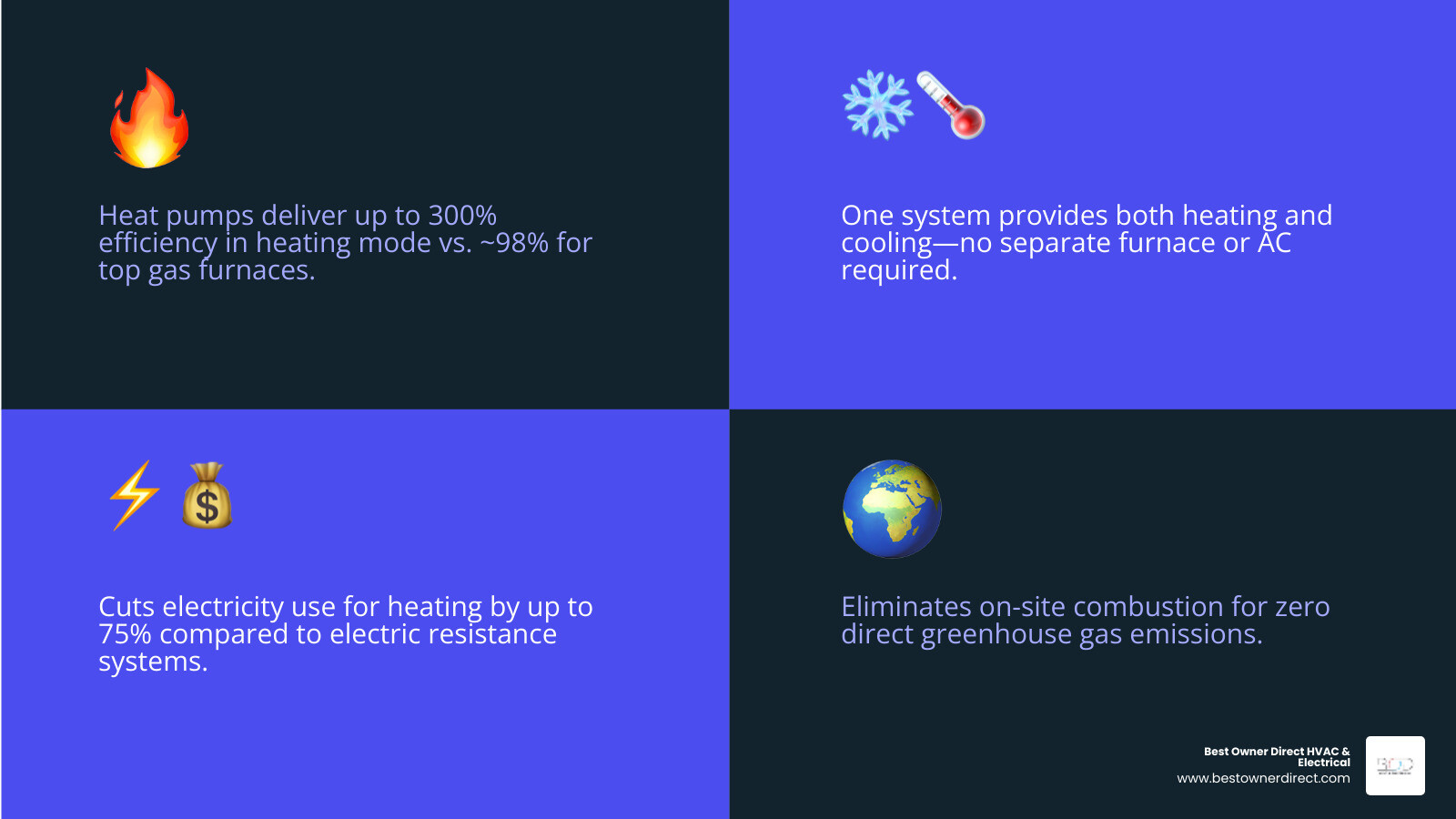
- Up to 300% efficient in heating mode vs. ~98% for the best gas furnaces
- One system for heating and cooling — no separate furnace and AC needed
- Reduces electricity use for heating by up to 75% compared to electric resistance heating
- Lower carbon emissions — no on-site combustion, no greenhouse gases
- Works in extreme cold — modern cold-climate models operate effectively down to -22°F
- Better comfort — more consistent temperatures, improved humidity control, and quieter operation
- Strong financial incentives — federal tax credits and state rebates help offset upfront costs
- 62% to 95% of U.S. households would see lower energy bills by making the switch
Most homes in the Pacific Northwest still rely on traditional HVAC setups — a gas furnace for winter and a separate air conditioner for summer. It works, but it's not the most efficient or cost-effective approach available in April 2026. Heat pumps have quietly become the smarter choice for homeowners who want reliable comfort, lower bills, and a smaller environmental footprint.
Understanding the Technology: Heat Transfer vs. Combustion
To understand why we are so excited about this technology at Best Owner Direct HVAC & Electrical, we have to look under the hood. Traditional heating systems, like gas furnaces or electric baseboards, are "creators." They burn natural gas or use high-resistance electricity to create thermal energy from scratch. Even the most high-tech gas furnace can only ever be about 98% efficient because some energy is always lost during the combustion process.
A Heat Pump, on the other hand, is a "mover." It uses the refrigeration cycle to extract heat from the ambient air outside—yes, even when it feels cold to us—and pumps it into your home.
This process relies on a few key components:
- The Outdoor Unit: This contains a coil and a compressor. In the winter, it absorbs heat from the Oregon air.
- The Refrigerant: This specialized fluid circulates through the system, absorbing and releasing heat as it changes from liquid to gas.
- The Reversing Valve: This is the "magic" part. It allows the system to switch directions. In the summer, it pulls heat out of your house to cool it down. In the winter, it brings heat in.
Because it is moving heat rather than making it, a heat pump can deliver up to three times more heat energy than the electrical power it consumes. That is the fundamental secret behind the heat pump advantages over traditional hvac.
Key Heat Pump Advantages Over Traditional HVAC Systems
When we talk to homeowners in places like Hillsboro, Oregon City, or Tualatin, the conversation usually starts with efficiency. But the benefits go far beyond just a lower utility bill.
| Feature | High-Efficiency Gas Furnace | Modern Heat Pump |
|---|---|---|
| Efficiency Rating | Up to 98% AFUE | Up to 300% (COP of 3.0+) |
| Functionality | Heating Only | Heating & Cooling |
| Energy Source | Natural Gas / Propane | Electricity |
| Carbon Emissions | Higher (Combustion) | Zero (On-site) |
| Humidity Control | Limited | Excellent |
One of the Top 3 Deciding Factors in Selecting a Heat Pump or Furnace is the "two-in-one" nature of the system. In the Pacific Northwest, our summers are getting warmer. If you have an old furnace and no AC, you’re looking at buying two separate machines to stay comfortable year-round. A heat pump replaces both.
Furthermore, this technology isn't just for your air. Many of our customers are asking: What Is a Heat Pump Water Heater? These units apply the same "heat moving" principle to your home's water supply, offering massive savings over traditional electric water heaters.
Maximizing Efficiency: Heat Pump Advantages Over Traditional HVAC
Efficiency isn't just a buzzword; it's a measurable reduction in energy waste. An ENERGY STAR certified air-source heat pump can provide heating for approximately one-third the cost of traditional electric resistance heating and half the cost of oil heat.
Modern units often feature variable-speed motors. Unlike traditional furnaces that are either "100% on" or "completely off," variable-speed systems ramp up and down slowly. This prevents those annoying cold drafts and keeps your home at a rock-steady temperature. If you've ever wondered about the specifics of these systems, check out our Heat Pump Water Heater Frequently Asked Questions to see how this tech is changing every corner of the home.
Year-Round Versatility and Comfort
The dual functionality of a heat pump means your home stays perfectly conditioned 365 days a year.
- In Heating Mode: You get steady, warm air that doesn't feel "scorched" like a gas furnace.
- In Cooling Mode: It acts exactly like a high-end air conditioner, removing heat and excess moisture from your home.
- Dehumidification: Heat pumps are exceptionally good at pulling moisture out of the air during our muggy spring days, which prevents that "sticky" feeling indoors.
Performance in the Pacific Northwest: Cold-Climate Reliability
One of the biggest myths we hear in Beaverton and Lake Oswego is that heat pumps don't work when it freezes. While that might have been true in the 1980s, the technology in April 2026 is a different beast entirely.
Modern "cold-climate" heat pumps use advanced vapor injection and variable-speed compressors to maintain efficiency even when temperatures drop to -15°F or even -22°F. For most of us in the Portland metro area, our winters rarely see those extremes, meaning a heat pump is in its "sweet spot" for almost the entire season.
However, for those who want absolute peace of mind, we often discuss: Is a Dual Fuel Heating System Right for Your Home? A dual-fuel or hybrid system pairs an electric heat pump with a gas furnace backup. The heat pump handles the bulk of the work, and the furnace only kicks in during the absolute coldest nights of the year.
Cold-Climate Heat Pump Advantages Over Traditional HVAC
In cold weather, traditional electric furnaces struggle and become incredibly expensive to run. Cold-climate heat pumps, however, are designed with:
- Enhanced Vapor Injection: This boosts the heating capacity when the air outside is frigid.
- Smart Defrost Cycles: These prevent ice buildup on the outdoor coils without wasting excess energy.
- High COP (Coefficient of Performance): Even at 5°F, many units still provide twice the heat energy of the electricity they use.
Environmental Impact and Sustainability
As we look toward the future of the Pacific Northwest, sustainability is a major priority for many families in West Linn and Sherwood. Home heating and cooling is typically the largest source of emissions in a single-family home.
By switching to a heat pump, you are effectively "decarbonizing" your home. Because these systems run on electricity, their carbon footprint gets smaller every year as our local electrical grid incorporates more wind, solar, and hydro power.
Reducing Your Carbon Footprint with Heat Pump Advantages Over Traditional HVAC
Research shows that switching to an air-source heat pump can reduce household carbon dioxide emissions by about 40% compared to a gas furnace. In regions with very clean electrical grids, that reduction can be as high as 75%. Furthermore, modern units are transitioning to low-GWP (Global Warming Potential) refrigerants, ensuring that the system is eco-friendly from the inside out.
Choosing Your Configuration: Ducted vs. Ductless Systems
Not every home in Oregon was built with a basement full of ductwork. One of the great heat pump advantages over traditional hvac is flexibility.
- Ducted Systems: These look and feel like a traditional central air system, using your existing vents to distribute air.
- Ductless (Mini-Split) Systems: These are perfect for older homes in Portland or Newberg that rely on baseboard heat or radiators. You can have individual "heads" in different rooms, allowing for precise zone control.
If you've been struggling with a room that is always too hot or too cold, you should ask: Should You Get a Ductless Heat Pump? These systems are incredibly quiet and efficient because they don't lose energy through leaky ductwork—a problem that accounts for more than 20% of energy loss in many homes. You can easily Keep Your Home Warm with a Ductless System while also enjoying world-class cooling in the summer.
Frequently Asked Questions about Heat Pumps
How does a heat pump differ from a traditional furnace?
A furnace creates heat by burning gas or using electric coils. A heat pump doesn't create heat; it captures heat from the outside air and moves it into your home. This makes the heat pump up to three times more efficient than any furnace.
Can a heat pump effectively cool my home in the summer?
Absolutely. In the summer, a heat pump works exactly like a high-efficiency central air conditioner. It pulls the heat out of your indoor air and dumps it outside, leaving you cool and comfortable.
Do heat pumps work during extreme Pacific Northwest winters?
Yes. While older models struggled in the cold, today’s cold-climate heat pumps are designed for temperatures far below what we typically see in the Willamette Valley. For those in particularly cold pockets, a dual-fuel setup provides the ultimate safety net.
Conclusion
The shift toward heat pump technology is more than just a trend—it's a fundamental upgrade in how we think about home comfort. Between the massive energy savings, the environmental benefits, and the sheer comfort of consistent, filtered air, the heat pump advantages over traditional hvac are undeniable.
At Best Owner Direct HVAC & Electrical, we pride ourselves on helping homeowners in Tigard, Gresham, Milwaukie, and across the region find the perfect fit for their unique homes. Whether you are looking for a full central system or a flexible ductless solution, our team is here to ensure you get a professional installation that lasts for decades.
Are you ready to stop burning fuel and start moving heat? Check out our Heat Pump services today and let's get your home ready for whatever the Oregon weather throws our way!


The Anatomy of a Wall Vent: Directing Heat Downward in WinterIf your furnace is running but your floors are freezing, the solution might be a simple 10-second vent adjustment. Pointing your wall vent louvers downward forces warm air into your living space.
Read more

Can Mini Split Installation Efficiently Cool an Older Oregon Home That Never Had Central AC?Learn about mini split benefits for homes that never had central cooling
Read more

DIY Furnace Filter Replacement vs. Professional Fall Tune-UpsSwapping a furnace filter is a great start for fall heating prep, but it only addresses airflow. We define where safe DIY maintenance ends and when combustion safety requires professional tools.
Read more