Menu


What Is a Heat Pump Water Heater — and Why More Oregon Homeowners Are Making the Switch
What is a heat pump water heater? It is a highly efficient appliance that pulls heat from the surrounding air and transfers it into a storage tank to warm your water — rather than generating heat directly using electric coils or a gas burner.
Here is a quick breakdown:
- What it does: Moves heat from ambient air into your water tank
- How efficient: 2 to 3 times more efficient than a standard electric water heater
- How it compares to gas: Roughly 5 times more efficient than a conventional gas unit
- Annual savings: Up to $550 per year for a typical household of four
- Also known as: A hybrid electric water heater
- Best for: Homes with a basement, garage, or utility room with adequate airflow
Water heating accounts for nearly 20% of the average home's energy use — making it one of the biggest and most overlooked opportunities to cut utility bills. Yet most homeowners focus on solar panels or electric vehicles and never think twice about what is sitting in their utility room quietly eating up energy year after year.
A heat pump water heater changes that equation. Instead of burning fuel or running resistance coils, it works more like a refrigerator in reverse — moving existing heat rather than creating new heat from scratch. The result is dramatically lower energy use, reduced carbon emissions, and real savings on every utility bill.
For homeowners in the Portland metro area and surrounding Oregon communities, this technology is especially relevant right now, with strong federal tax credits and local utility rebates making the upgrade more accessible than ever before.
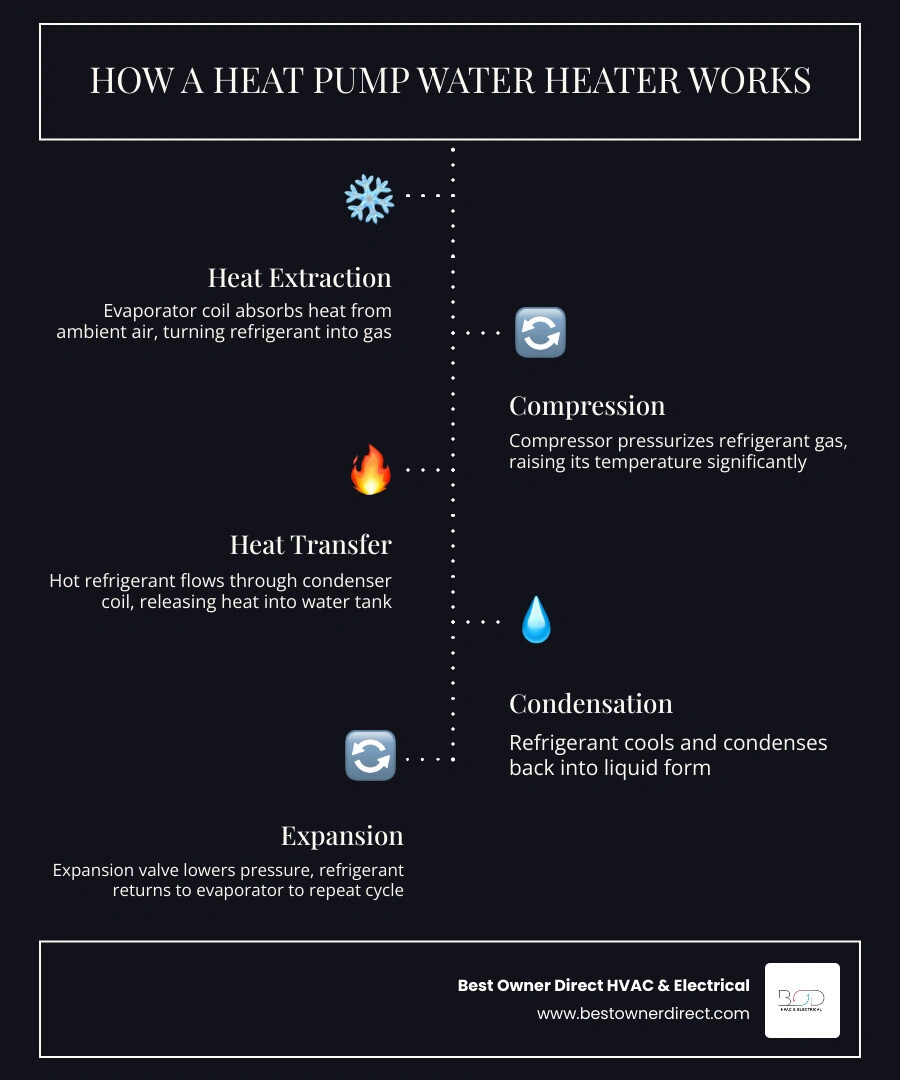
What is a heat pump water heater and how does it differ from traditional tanks?
When we look at the history of home appliances, the way we heat water hasn't changed much in decades—until now. To understand what is a heat pump water heater, we first have to look at how a traditional tank works. A standard electric water heater uses "resistance" heating, which is essentially like a giant toaster element sitting inside a tank of water. It takes a massive amount of electricity to get those coils hot enough to warm 50 or 80 gallons of water.
A heat pump water heater (HPWH) takes a completely different approach. Instead of creating heat, it moves it. Even in a room that feels "cool" to us, there is still plenty of thermal energy in the air. The HPWH harvests that energy and concentrates it. This is why you often hear them called "hybrid" water heaters; they have the heat pump on top but still include standard electric backup elements for times when you have a house full of guests and the demand for hot water is exceptionally high.
For a deeper dive into these differences, you can check out our Heat Pump Water Heater vs Traditional Tank Comparison.
Understanding what is a heat pump water heater's refrigerant cycle
The magic happens through a refrigerant cycle. If you have ever felt the back of your refrigerator and noticed it’s warm, you’ve seen this technology in action. A refrigerator pulls heat out of the insulated box and dumps it into your kitchen.
A heat pump water heater does the exact opposite. It uses an evaporator coil to pull heat from the air in your garage or basement. That heat is absorbed by a refrigerant, which is then squeezed by a compressor. When you compress a gas, it gets much hotter. This super-heated gas then passes through a condenser (a heat exchanger) wrapped around or inside the water tank, transferring all that "free" energy from the air directly into your shower water.
To learn more about the technical specifics, read our article on What is a Heat Pump Water Heater.
Comparing efficiency with gas and electric resistance
When we talk about efficiency in the water heater world, we use a metric called the Uniform Energy Factor (UEF).
- Standard Electric Tanks: Usually have a UEF around 0.93.
- Heat Pump Water Heaters: Boast UEF ratings between 3.0 and 4.0.
In simple terms, a standard electric heater is less than 100% efficient because some energy is lost during the process. A heat pump water heater is 300% to 400% efficient because it is moving three to four times more energy than it consumes in electricity.
Compared to gas units, HPWHs create zero onsite emissions and have a much smaller carbon footprint. In fact, switching to a heat pump water heater can save about one ton of greenhouse gas emissions annually. For families in the Pacific Northwest, where our grid is increasingly powered by clean energy, this is a massive win for the environment. You can explore more about these regional advantages in our guide on Heat Pump Benefits for Pacific Northwest Homeowners.
The "Refrigerator in Reverse": How the technology works
It’s often said that it’s easier to move something than to make something. Think of it this way: it’s easier to move a pile of wood from the yard into the house than it is to grow the tree from scratch.
The reverse refrigeration process follows this logic:
- Ambient Air: A fan pulls in the surrounding air.
- Heat Extraction: The evaporator coil absorbs the heat from that air into a cold refrigerant.
- Compressor Intensification: The compressor increases the pressure of the refrigerant, raising its temperature significantly.
- Heat Exchanger: The hot refrigerant travels through a coil, transferring its thermal energy to the water in the tank.
- Exhaust: The now-cooled air is exhausted back into the room (providing a nice dehumidification bonus!).
Operating modes for what is a heat pump water heater
One of the best features of modern HPWHs is that they are smart. You can choose how you want the unit to behave based on your needs:
- Hybrid Mode: The default setting. It primarily uses the heat pump but will kick on the electric resistance elements if you’re using a lot of water quickly.
- Efficiency/Economy Mode: This uses only the heat pump. It’s the most energy-efficient way to operate, though it takes a bit longer to recover after a long shower.
- Electric-only Mode: This turns off the heat pump and operates just like a traditional electric heater. This is rarely used but can be helpful in extremely cold conditions (below 37°F).
- Vacation Mode: If you’re heading out of town, this mode keeps the water just warm enough to prevent freezing, saving you a bundle while you're away.
Have more questions about these modes? See our Heat Pump Water Heater Frequently Asked Questions.
Installation requirements for Pacific Northwest homes
Because a heat pump water heater needs to "breathe" to harvest heat, you can't just tuck it into a tiny closet and forget about it. It needs airflow.
Most manufacturers require the unit to be installed in a space with at least 1,000 cubic feet of air (roughly the size of a 12' x 12' room). If your utility room is smaller than that, we can often install louvered doors to let air circulate from the rest of the house.
The ambient temperature is also important. These units work best when the air is between 40°F and 90°F. In Oregon, basements and garages are usually perfect for this. Another thing to keep in mind is condensate drainage. Just like an air conditioner, these units pull moisture out of the air as they cool it. This means we need to install a drain line or a small condensate pump to whisk that water away. The "side effect" is a drier, less musty basement—a huge benefit in our damp Pacific Northwest climate!
Electrical requirements and voltage options
If you are replacing an old electric water heater, the transition is usually very straightforward. However, if you are switching from gas to electric, we need to look at your electrical panel.
| Feature | 240V Hardwired (Standard) | 120V Plug-in (Retrofit) |
|---|---|---|
| Power Source | Dedicated 30-amp circuit | Standard wall outlet |
| Installation | Requires 240V wiring | Easiest for gas-to-electric swaps |
| Recovery Speed | Fast (uses backup elements) | Slower (heat pump only) |
| Best For | New construction/Full electric homes | Replacing gas with minimal electrical work |
If you're unsure which one your home can handle, our team at Best Owner Direct HVAC & Electrical can perform a safety check and help you decide. Explore our Water Heater Services for more details.
Maintenance for long-term reliability and performance
A heat pump water heater is a sophisticated piece of equipment, but it doesn't require a PhD to maintain. With a little bit of care, these units can easily reach a 15-year lifespan.
- Clean the Air Filter: Since the unit pulls in air, it has a filter to keep dust off the coils. We recommend checking and cleaning this every three months. It’s usually as simple as rinsing it in the sink.
- Check the Anode Rod: Like any tank heater, the anode rod protects the tank from corrosion. We should check this every few years and replace it if it's degraded.
- Tank Flushing: We recommend an annual flush to remove sediment buildup, which ensures the unit stays efficient and quiet.
- Professional Checkups: Having a licensed technician look over the compressor and refrigerant levels every year or two ensures everything is running at peak performance.
Frequently Asked Questions about heat pump water heaters
Will a heat pump water heater make my house colder?
Technically, yes, the exhaust air is cooler than the room air. However, in a basement or garage, most homeowners never notice the difference. In the summer, this cooling effect is actually a nice bonus! If the unit is in a small utility room, the cooling might be more noticeable, which is why proper placement and airflow are so important.
How do I determine the correct size for my household?
Don't just look at the tank size (e.g., 50 gallons). Look at the First Hour Rating. This tells you how many gallons of hot water the unit can provide in a single hour starting with a full tank. A household of four typically needs a First Hour Rating of 60 to 70 gallons to ensure everyone gets a hot shower in the morning.
What financial incentives are available in 2026?
As of May 2026, the incentives are better than ever. The Federal Tax Credit (under the Inflation Reduction Act) allows you to claim 30% of the project cost, up to $2,000. On top of that, many local Oregon utility providers offer rebates ranging from $500 to $1,500. When you combine these incentives with the annual energy savings, the "payback period" for the higher upfront cost is often just a few years.
Conclusion
Understanding what is a heat pump water heater is the first step toward a more comfortable, efficient, and sustainable home. Whether you are living in Cornelius, Portland, Hillsboro, or any of our surrounding communities, making the switch is one of the smartest investments you can make for your property.
At Best Owner Direct HVAC & Electrical, we pride ourselves on providing high-quality workmanship and honest advice. Our licensed technicians are experts in home electrification and are ready to help you navigate the installation process from start to finish.
Ready to lower your energy bills and upgrade your home comfort?Schedule your heat pump water heater replacement in Cornelius, OR today!


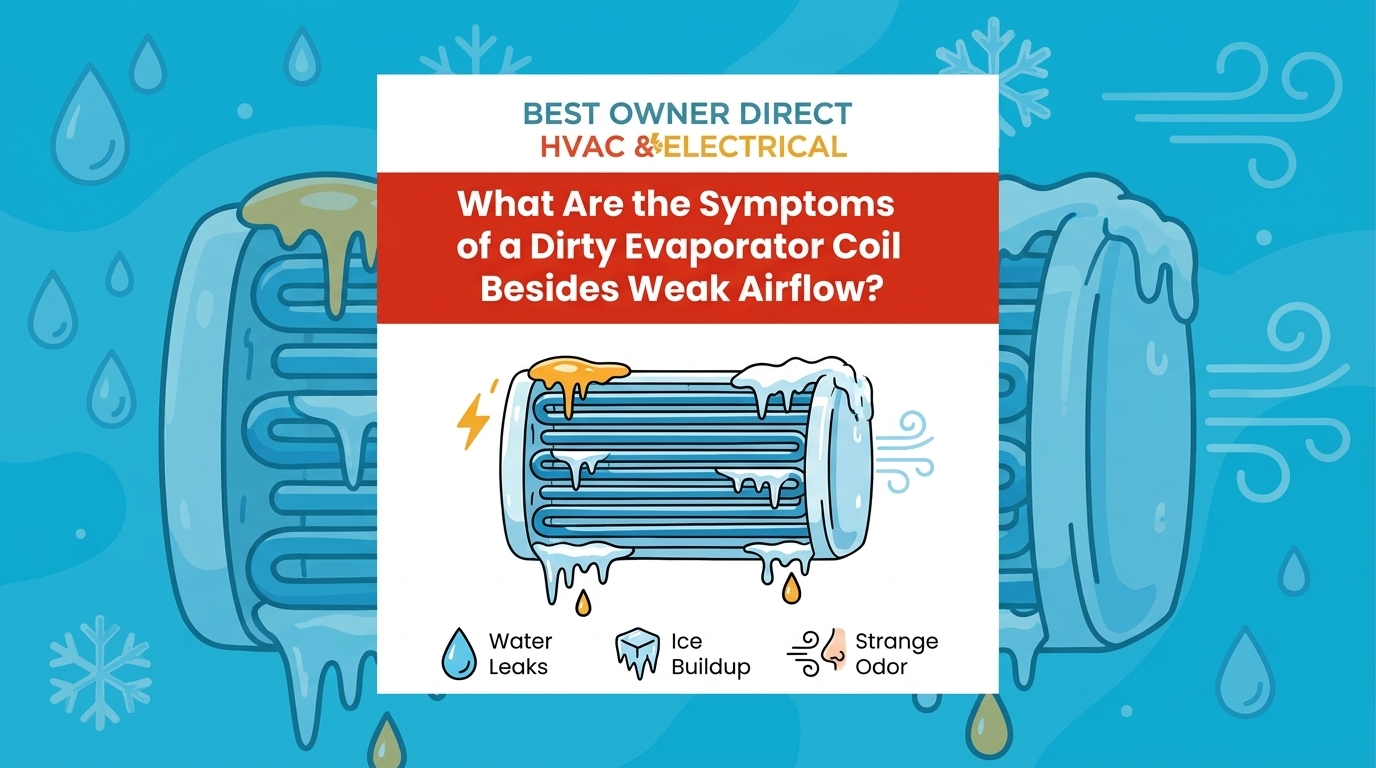
What Are the Symptoms of a Dirty Evaporator Coil Besides Weak Airflow?When your vents blow hard but your house still feels muggy, you might be dealing with a hidden AC issue. Discover why high humidity and non-stop cycling point to coil buildup.
Read more
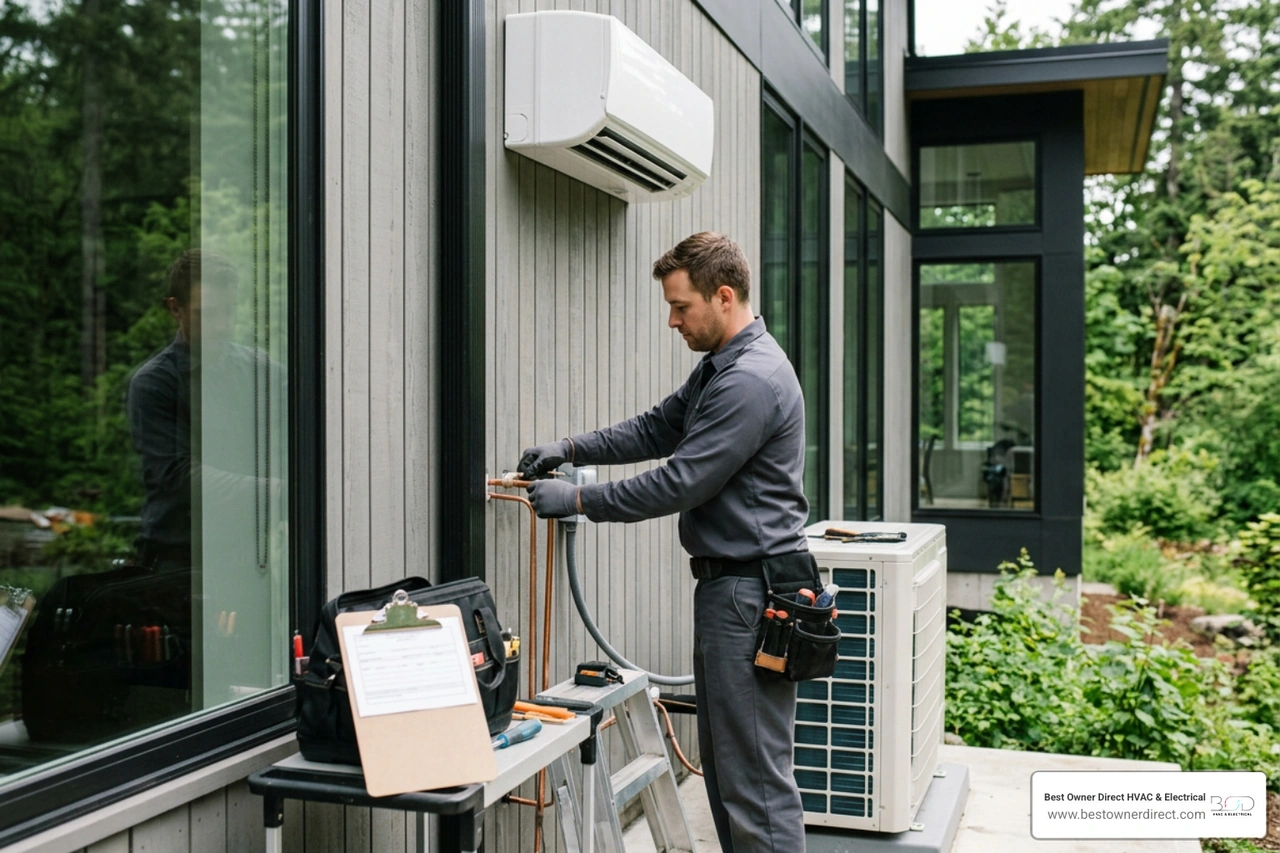
What Permits Are Needed for Mini Split Installation in Oregon?Learn what permits are needed for mini split installation in Oregon, including mechanical and electrical requirements, from Best Owner Direct HVAC & Electrical.
Read more
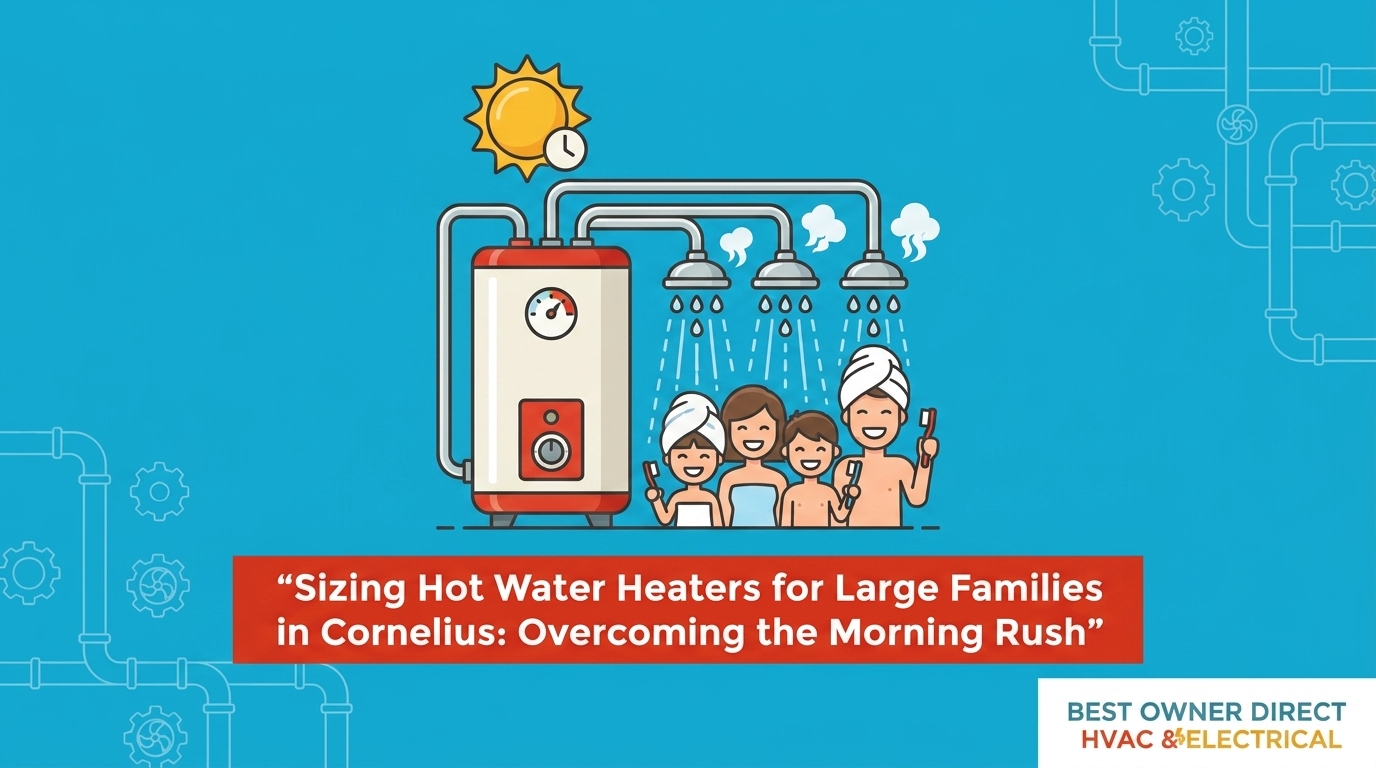
Sizing Hot Water Heaters for Large Families in CorneliusIf your morning routine is constantly ruined by cold showers, your tank might just be undersized. Find out how local groundwater temperatures impact your actual household demand.
Read more