Menu


Why Knowing How to Extend the Life of Your Heat Pump Can Save You Thousands
Knowing how to extend the life of your heat pump is one of the smartest things you can do as a homeowner in Cornelius, OR, and across the Portland metro area. Heat pumps work year-round — heating in winter, cooling in summer — which means they wear out faster than most other home comfort systems. A neglected unit can fail well before its time, forcing an expensive replacement that can run into the thousands of dollars.
Quick answer: How to extend the life of your heat pump
- Change or clean air filters every 30–90 days to prevent airflow restriction and motor strain
- Clear debris from the outdoor unit and maintain at least 2 feet of clearance on all sides
- Schedule professional maintenance at least once a year to check refrigerant, electrical components, and overall system health
- Use HEAT or COOL mode instead of AUTO to prevent unnecessary mode-switching and mechanical wear
- Keep thermostat settings stable — avoid large temperature swings that cause short cycling
- Seal air leaks and improve insulation to reduce how hard your system has to work
- Watch for warning signs like unusual noises, rising energy bills, or inconsistent temperatures and address them quickly
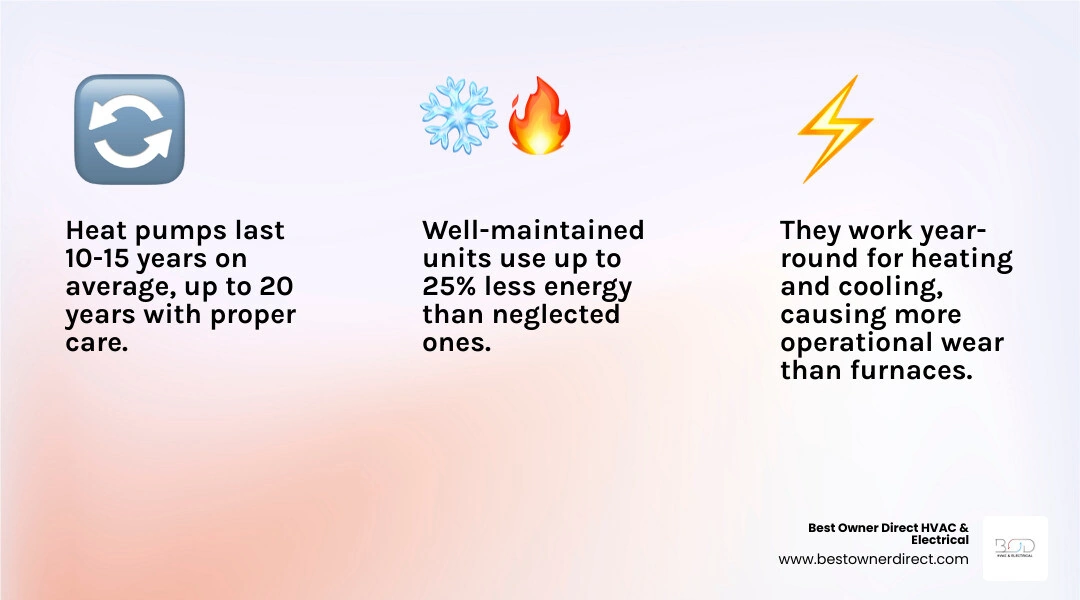
The good news? Most of what determines whether your heat pump reaches 15 to 20 years — or gives out at 10 — comes down to consistent, simple habits. A well-maintained heat pump uses up to 25% less energy than a neglected one. That difference shows up on your utility bill every single month.
This guide walks you through exactly what to do, from filter changes to professional tune-ups, so your system keeps running efficiently for as long as possible.
Understanding the Average Lifespan of a Heat Pump in Oregon
In our corner of the Pacific Northwest, from the hills of Gaston to the busy streets of Portland, we rely on our heat pumps more than almost any other appliance. Because they handle both heating and cooling, they are the "workhorses" of the HVAC world.
Typically, the average lifespan of a heat pump is between 10 and 15 years. However, with perfect installation and meticulous care, it is entirely possible for a unit to last up to 20 years. If you are wondering why there is such a wide gap, it often comes down to operational wear. A furnace only runs for a few months a year, but a heat pump is active nearly every day.
The local climate also plays a role. While we don't deal with the extreme salt air of the coast, our damp winters and occasional snow can stress an outdoor unit. Understanding How Does a Heat Pump Work? is the first step in realizing that this machine doesn't create heat—it moves it. When the system is dirty or neglected, moving that heat becomes much harder, leading to a shorter life for the compressor.
Essential DIY Maintenance: How to Extend the Life of Your Heat Pump

You don’t need to be a licensed technician to perform the most critical tasks for your system. In fact, the most common reason for premature failure is something every homeowner can prevent: poor airflow.
The Power of the Air Filter
Think of your air filter as the lungs of your HVAC system. When it’s clogged with dust, pet hair, and Oregon pollen, your heat pump has to "suffocate" to pull in air. This forces the blower motor to work 15% harder, which eventually leads to burnout.
We recommend checking your filter every month and replacing or cleaning it every 30 to 90 days. If you have pets in a home in Hillsboro or Sherwood, you might need to do this even more frequently. For more details on this simple but vital task, check out Why Should You Regularly Clean Your HVAC Filter?.
Outdoor Unit Care
Your outdoor unit needs room to breathe. We often see beautiful landscaping in Lake Oswego or West Linn that has grown too close to the heat pump. To extend the life of your heat pump, you should:
- Maintain Clearance: Keep at least 2 feet of space around the unit and 5 feet above it. Trim back shrubs and remove fallen leaves.
- Clean the Coils: Gently hose down the outdoor coils with a garden hose (avoid high-pressure settings that can bend the delicate fins). Always spray from the inside out if possible to push debris away from the unit.
- Winter Management: During our rare but messy snowstorms, ensure snow and ice don't bury the unit. Use warm water to melt ice—never use sharp objects to chip it away, as you could puncture a refrigerant line.
For a full list of tasks you can handle yourself, see our DIY Maintenance Checklist for Your HVAC at Home.
Why Professional Maintenance and Correct Sizing are Critical
While DIY tasks are great, some things require a pro. Professional annual maintenance is a necessity, not a suggestion. A neglected heat pump can lose up to 25% of its efficiency, leading to higher bills and more frequent repairs.
During a professional tune-up, a technician will:
- Verify Refrigerant Levels: Too much or too little refrigerant can kill a compressor in a single season.
- Inspect Electrical Terminals: We tighten connections and apply nonconductive coatings to prevent corrosion.
- Lubricate Moving Parts: This reduces friction, which is a major cause of energy waste and mechanical wear.
The Importance of Correct Sizing
Longevity actually begins the day your unit is installed. If a heat pump is too large for your home, it will "short cycle," turning on and off rapidly. This is like driving a car only in "city miles"—the constant starting and stopping wears out the motor much faster than long, steady runs.
At Best Owner Direct HVAC & Electrical, we use Manual J calculations to ensure your system is perfectly sized for your specific square footage and insulation levels. You can learn more about the long-term benefits in The Importance of Regular HVAC Check-Ups and Tune-Ups and What’s the Value of Preventative HVAC Maintenance?.
Managing Thermostat Settings to Extend the Life of Your Heat Pump
How you interact with your thermostat can physically age your heat pump. One of the biggest mistakes homeowners make is using the "AUTO" mode. In this mode, the system might switch from heating to cooling several times a day to maintain a precise temperature, causing unnecessary wear on the reversing valve.
Instead, manually switch to "HEAT" in the winter and "COOL" in the summer. Additionally, avoid "setback" strategies where you drop the temperature by 10 degrees at night. This can trigger the "Emergency Heat" or electric resistance strips, which are far less efficient and put more strain on the electrical system. For summer-specific optimization, read How Can I Make My HVAC Run More Efficiently This Summer?.
Recognizing Warning Signs to Extend the Life of Your Heat Pump
Your heat pump will often tell you it's struggling before it actually dies. Catching these "cries for help" early can be the difference between a small repair and a total system replacement.
- Unusual Noises: Grinding, rattling, or whining sounds often indicate a failing motor or a loose component.
- Energy Bill Spikes: If your usage hasn't changed but your bill has jumped, your system is likely working twice as hard to do the same job.
- Inconsistent Temperatures: If one room in your Tualatin home is freezing while another is warm, your system may have airflow or refrigerant issues.
Don't ignore these red flags. Review the Warning Signs Your Heat Pump Needs Repair or Replacement to know when to call in the experts.
Improving Home Efficiency to Reduce HVAC Workload
One of the most effective ways to extend the life of your heat pump is to make sure it doesn't have to work so hard. If your home is "leaky," your heat pump has to run longer to maintain comfort.
- Attic Insulation: Ensure your attic has at least 12 inches of insulation. This keeps the heat in during winter and out during summer.
- Duct Sealing and Cleaning: Duct leaks can account for up to 30% of energy loss. Cleaning your ducts also prevents dust from immediately clogging your new filters.
- Weatherstripping: Seal drafts around doors and windows in older homes in Forest Grove or Newberg to keep your conditioned air inside.
- Register Clearance: Make sure furniture and rugs aren't blocking your vents. Your system needs a balanced "push and pull" of air to operate efficiently.
Explore our full range of Heat Pump Services to see how we can help optimize your home's efficiency.
Frequently Asked Questions about Heat Pump Care
How often should I clean or replace my heat pump filters?
You should check your filters every month. Most standard 1-inch filters need to be replaced every 30 to 90 days. If you use high-efficiency media filters (4-5 inches thick), they may last 6 to 12 months, but you should still inspect them regularly for dust buildup.
Is it better to use the 'Auto' or 'Heat/Cool' mode for longevity?
It is much better for the unit's lifespan to use "HEAT" or "COOL" modes. "AUTO" mode can cause the system to toggle back and forth between heating and cooling, which places extreme stress on the reversing valve and compressor.
Can I clean the outdoor coils myself without damaging the unit?
Yes, you can gently hose off the outdoor unit to remove dust and grass clippings. However, avoid using a pressure washer, as the high pressure can flatten the aluminum fins, permanently restricting airflow. For a deep chemical clean of the coils, it is best to hire a professional.
Conclusion
At Best Owner Direct HVAC & Electrical, we are dedicated to helping our neighbors in Cornelius, Tigard, Beaverton, and the surrounding areas stay comfortable without breaking the bank. By following these steps—changing your filters, keeping your outdoor unit clear, and managing your thermostat wisely—you can significantly extend the life of your heat pump.
A little prevention today prevents a major headache tomorrow. Whether you need Heat Pump Maintenance in Beaverton, OR or a comprehensive Heat Pump Tune-Up in Tigard, OR, our family-owned team is here to help.
Don't wait for your system to fail during a July heatwave or a January freeze. Schedule your professional heat pump service today and give your HVAC system the long, healthy life it deserves.


End-of-Summer Electrical Inspections: Checking Outdoor Disconnect BoxesAfter months of intense Pacific Northwest sun, your outdoor AC disconnect box can become brittle and unsafe. Learn the visual warning signs of UV degradation.
Read more
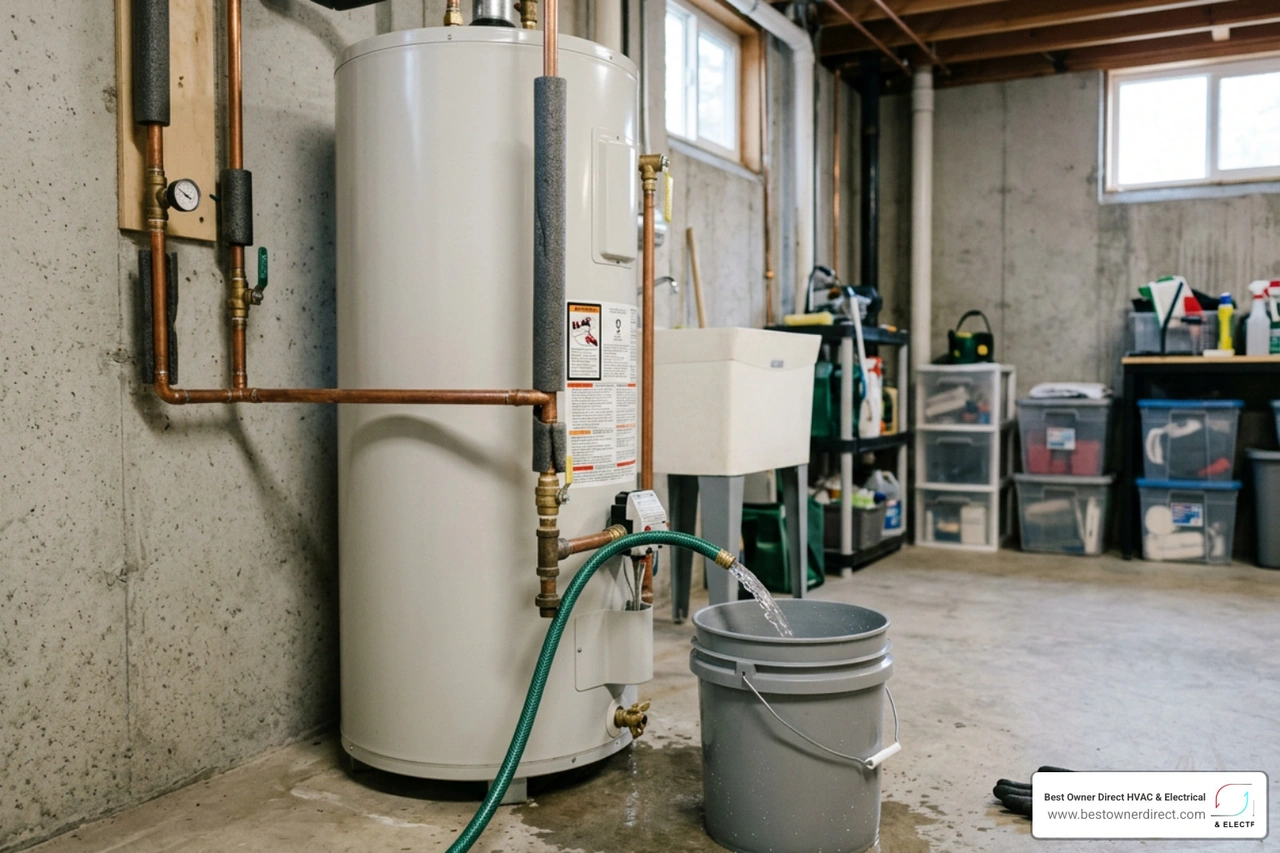
Step-by-Step Guide to How Often to Flush Your Water Heater in OregonLearn how often to flush your water heater in Oregon with our step-by-step guide, covering signs, DIY steps, and maintenance tips.
Read more
Hiring an HVAC Company vs. an Independent Technician for End-of-Season MaintenanceYour AC system has endured months of heavy summer use and needs reliable servicing. Compare the accountability and warranty support of established providers versus independent technicians.
Read more