Menu


Why Knowing How to Choose the Right Water Heater Can Save You Money and Headaches
Knowing how to choose the right water heater is one of the smartest home decisions you can make — and the stakes are higher than most people realize. Water heaters are the second-largest energy consumer in the average Canadian household, accounting for nearly 19.3% of total home energy use. That means the wrong choice doesn't just mean a cold shower — it means years of unnecessarily high energy bills.
Between washing dishes, doing laundry, and showering, the average Canadian uses around 75 litres of hot water every single day. With that kind of daily demand, your water heater works hard — and choosing the right one for your home's size, fuel source, and lifestyle matters a lot.
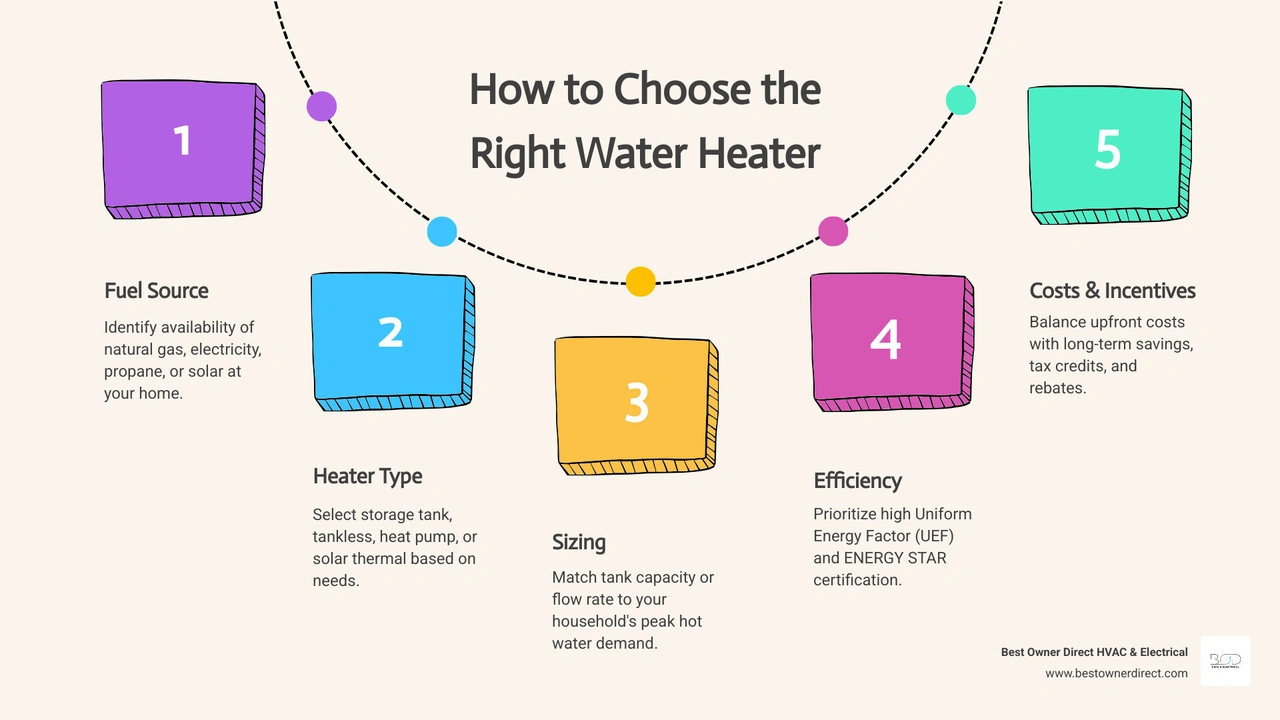
Here's a quick overview of how to choose the right water heater for your home:
- Identify your fuel source — natural gas, electricity, propane, or solar
- Choose your heater type — storage tank, tankless, heat pump, or solar thermal
- Size it correctly — match tank capacity or flow rate to your household's peak demand
- Check efficiency ratings — look for the Uniform Energy Factor (UEF) and ENERGY STAR certification
- Factor in total costs — weigh upfront price against long-term operating savings
- Look for incentives — federal tax credits and utility rebates can offset the cost of efficient models
- Plan for maintenance — different types need different care to stay efficient and last longer
If your current water heater is aging, running out of hot water frequently, or driving up your energy bills, now is the right time to explore your options — before you're forced into a rushed decision after a failure or flood.
Exploring the Main Types of Water Heating Systems
As of April 2026, the technology behind heating your water has advanced significantly. When we help homeowners in areas like Hillsboro or Beaverton, we find that the first step in how to choose the right water heater is understanding the fundamental differences between the systems available on the market.
Storage Tank Water Heaters
The conventional storage tank remains the most common choice. These units keep a ready reservoir of hot water (typically 30 to 80 gallons) available at all times. When you turn on the tap, hot water is released from the top of the tank, and cold water enters the bottom to be heated. While they are familiar and have a lower initial purchase price, they suffer from "standby heat loss," meaning they use energy to keep water hot even when you aren't using it.
Tankless On-Demand Water Heaters
Unlike storage tanks, Tankless Water Heaters Beaverton OR heat water directly without the use of a tank. When a hot water tap is turned on, cold water travels through a pipe into the unit, where either a gas burner or an electric element heats the water. This provides a constant supply of hot water.
Heat Pump (Hybrid) Water Heaters
These are the efficiency champions of 2026. Instead of generating heat directly, they move heat from the surrounding air into the water. They are two to four times more energy-efficient than conventional electric heaters. Because they pull heat from the air, they work best in spaces that stay between 40°F and 90°F and have enough clearance (usually about 1,000 cubic feet of air space).
Solar Thermal Systems
Solar domestic hot water (SDHW) systems use the sun's energy to provide hot water. In our region, these are usually configured with closed-loop antifreeze collectors to ensure they work year-round. These systems can typically generate about 60% of a home's hot water needs, usually requiring a conventional backup for cloudy days.
Condensing Models
If you use natural gas and have a high demand for hot water, a condensing water heater might be the answer. These units capture hot exhaust gases that would normally go out the flue and use them to preheat the incoming cold water, significantly boosting efficiency.
Comparing tank vs. tankless performance
The debate between tank and tankless often comes down to lifestyle. Tankless units offer an endless supply of hot water, which is a lifesaver for large families in Gladstone or Portland who take back-to-back showers. They also offer significant space savings, as they are about the size of a suitcase and mount on the wall.
While storage tanks typically last 10 to 15 years, a well-maintained tankless unit can boast a 20-year lifespan. However, tankless systems can struggle if you try to run the dishwasher, washing machine, and two showers at the same time. For more details on these high-performance units, check out our Best Tankless Water Heater Gladstone OR Guide.
Evaluating Fuel Sources for Your Home’s Infrastructure
The fuel source available in your home is often the biggest "deciding factor" when determining how to choose the right water heater. Whether you are looking for Water Heater Installation Cornelius OR or a replacement in Tigard, your home's existing setup will dictate your best path forward.
- Natural Gas: Generally, gas water heaters cost less to run (often by about half) compared to standard electric models. They also have faster recovery rates, meaning they can heat a tank of water much quicker than electricity.
- Electricity: Electric units are widely available and don't require venting. While traditional electric resistance tanks can be expensive to operate, modern heat pump models have completely changed the math, offering massive savings for all-electric homes.
- Propane: Common in more rural areas around Gaston or Banks where natural gas lines don't reach. Propane offers similar performance to natural gas.
- Solar & Geothermal: These are excellent for those looking to minimize their carbon footprint, though they almost always require a backup system for peak demand periods.
Infrastructure impact on fuel choice
Switching fuel types isn't always as simple as swapping the unit. For example, if you are considering Water Heater Replacement Forest Grove OR and want to switch from electric to gas, you'll need to factor in the installation of gas lines and proper venting.
Conversely, upgrading to a high-powered electric tankless unit might require an electrical panel upgrade to handle the significant amperage draw. Heat pump models also have specific venting and drainage needs because they dehumidify the air as they work, producing condensate that must be drained away.
Sizing Your System: How to Choose the Right Water Heater for Your Household Demand
Getting the size right is critical. If the unit is too small, you'll be shivering in a cold shower. If it's too large, you're paying to heat water you'll never use. When we perform a Water Heater Replacement Hillsboro OR, we look at more than just the number of gallons.
For Storage Tanks: First-Hour Rating (FHR)
The FHR is the number of gallons a water heater can supply per hour (starting with a full tank). This is the number you should look for on the yellow EnergyGuide label.
| Household Size | Recommended Tank Capacity (Electric) | Recommended Tank Capacity (Gas) |
|---|---|---|
| 1–2 People | 30–40 Gallons | 30 Gallons |
| 3–4 People | 50–80 Gallons | 40–50 Gallons |
| 5+ People | 80–120 Gallons | 50–75 Gallons |
For Tankless Units: Gallons-Per-Minute (GPM)
Tankless units are sized by their flow rate. To calculate your needs, add up the GPM of the fixtures you expect to run at the same time. A typical shower uses about 2 GPM. If you want to run two showers (4 GPM) and a kitchen faucet (1.5 GPM) simultaneously, you need a unit that can handle at least 5.5 GPM.
Key lifestyle factors on how to choose the right water heater
Your daily habits matter as much as your house size. Do you have a whirlpool tub? Those can require 60 to 80 gallons of water all at once. Do you have teenagers who take 30-minute showers? You might need a larger FHR or a tankless system. Even your appliances play a role; front-loading washing machines use about 10 gallons per load, while older top-loaders can use up to 20. For a deeper dive into sizing for our local climate, see our Water Heaters Service Beaverton OR Guide.
Maximizing Energy Efficiency and Performance Metrics
In 2026, efficiency is measured by the Uniform Energy Factor (UEF). The higher the UEF, the more efficient the water heater.
- Standard Gas Tanks: Typically have UEFs between 0.63 and 0.95.
- Gas Tankless: Ranges from 0.82 up to 0.98 for condensing models.
- Heat Pump Water Heaters: These are the clear winners, with UEFs ranging from 3.3 to 4.1. This means they are 330% to 410% efficient!
Choosing an ENERGY STAR certified model can save you significantly. For instance, an ENERGY STAR heat pump water heater can save a family of four about $550 per year on electric bills. Over the life of the unit, that’s over $5,000 in savings. If you're looking for the top-rated models in our area, our Best Water Heaters Cornelius OR Guide highlights the most reliable performers.
Professional guidance on how to choose the right water heater
We always encourage our customers to look beyond the sticker price. High-efficiency models often qualify for federal tax credits of 30% (up to $2,000 for heat pumps). Many local utilities in the Portland metro area also offer rebates to encourage the switch to energy-efficient technology. When you use our Water Heater Services, we help you navigate these incentives to make the upgrade more affordable.
Maintenance and Installation for Long-Term Reliability
A water heater is a major investment, and like a car, it needs regular "oil changes" to last. Proper installation is the first step in ensuring longevity, especially in areas with varying water conditions like North Plains or Oregon City.
If you need Water Heater Repair North Plains OR, it’s often because routine maintenance was skipped. Here is what we recommend for all homeowners:
- Check the Anode Rod: This "sacrificial" rod hangs inside storage tanks and attracts corrosive elements so the tank doesn't rust. It should be inspected every 2 to 3 years.
- Flush the Tank: Sediment and mineral scale build up at the bottom of the tank, acting as an insulator and making the burner work harder. Flushing a few gallons out every six months helps maintain efficiency.
- Test the T&P Valve: The Temperature and Pressure relief valve is a safety feature. We recommend testing it annually to ensure it hasn't seized up.
- Descale Tankless Units: If you have hard water, tankless heat exchangers can scale up. These should be flushed with a descaling solution annually.
Ensuring longevity through routine care
Hard water is a common enemy for water heaters in our region. Mineral buildup can reduce efficiency and lead to premature tank failure. We often recommend installing a water softener or scale inhibitor to protect your investment. Additionally, insulating your hot water pipes within the first two meters of the heater can reduce heat loss and save on energy. For those facing a sudden breakdown, our Emergency Water Heater Repair Guide Beaverton OR provides immediate steps to take to protect your home from water damage.
Frequently Asked Questions about Water Heaters
How long do different types of water heaters typically last?
On average, a traditional storage tank water heater lasts about 10 to 15 years. Heat pump water heaters share a similar lifespan. Tankless water heaters are more durable, often lasting 20 years or more because their components are easily replaceable and they don't suffer from tank corrosion.
What is the most energy-efficient water heater available in 2026?
The heat pump water heater (also known as a hybrid water heater) is currently the most energy-efficient option for most homes. With efficiencies over 300%, they use a fraction of the electricity of a standard tank. For gas-connected homes, a condensing tankless water heater with a UEF of 0.98 is the gold standard.
Should I repair my old unit or invest in a replacement?
If your water heater is over 10 years old and requires a major repair (like a leaking tank or a failed control board), replacement is usually the better investment. Newer models are significantly more efficient, and the energy savings alone often pay for the new unit over a few years.
Conclusion
At Best Owner Direct HVAC & Electrical, we know that how to choose the right water heater isn't just about picking a box off a shelf. It's about finding the perfect balance of comfort, efficiency, and long-term value for your specific home and family. Whether you are in Lake Oswego, Tualatin, or downtown Portland, our focus is always on quality workmanship and ensuring your home remains a sanctuary of comfort.
If you're ready to upgrade your home's hot water system or simply want an expert opinion on your current setup, we are here to help. From energy-efficient heat pumps to space-saving tankless units, we provide the reliable service you need to keep the hot water flowing.
Ready to find your perfect match? Explore our Water Heater solutions today and let us help you make an informed choice for your home’s future.


Hiring an HVAC Company vs. an Independent Technician for End-of-Season MaintenanceYour AC system has endured months of heavy summer use and needs reliable servicing. Compare the accountability and warranty support of established providers versus independent technicians.
Read more
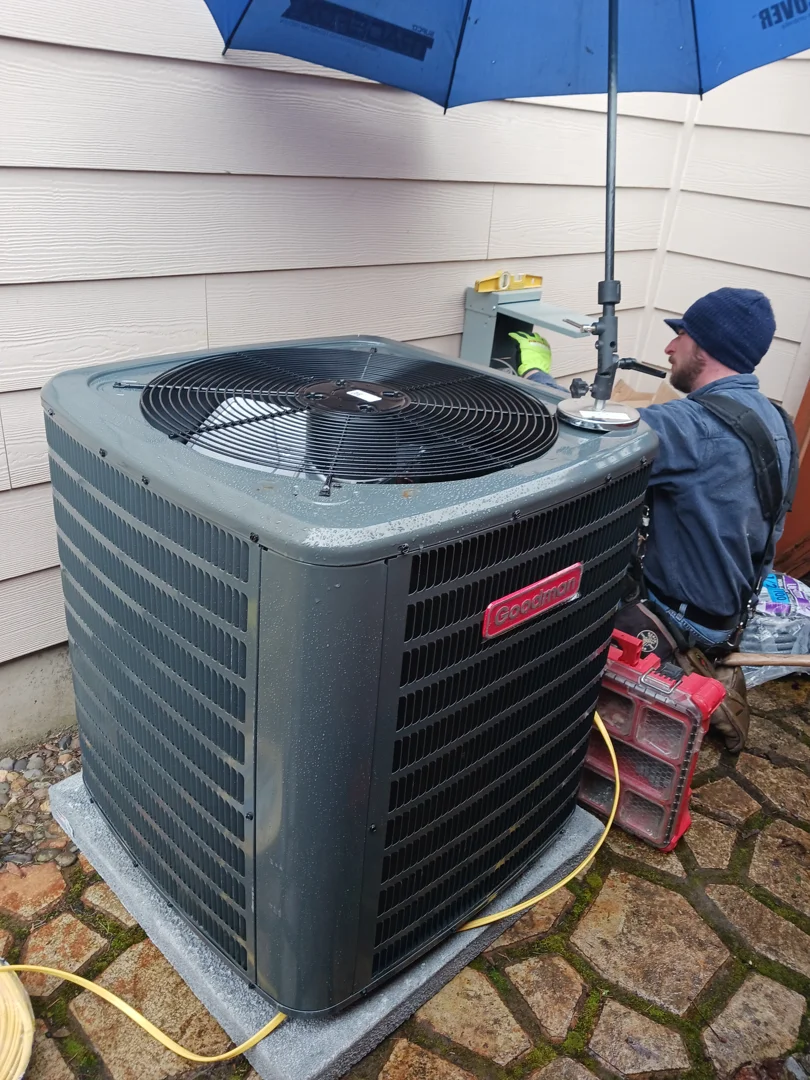
5 Common Questions About What Shortens Your AC Lifespan Even With Light UseDiscover what shortens your AC lifespan even with light seasonal use in Oregon and how to prevent early failure with expert maintenance tips.
Read more

How Dust Accumulation Inside Wall Vents Affects Indoor AllergiesAs windows close for late summer, trapped pollen and dander recirculate through your home. The mechanical link between dirty ducts and back-to-school allergies is often overlooked.
Read more