Menu


When the Heat Hits: Facing AC Breakdowns in Washington County
Your air conditioning system is running nonstop, but the house still feels uncomfortably warm, and navigating emergency AC repair wait times in Washington County suddenly becomes your top priority. An unexpected cooling failure during the peak heatwaves of July is one of the most stressful situations a homeowner can face. The indoor temperature steadily climbs, the air grows stagnant, and the realization sets in that you need professional help immediately.
If you need immediate assistance with Local HVAC Services, our team is ready to help you navigate the process.
During these extreme weather events, local dispatch boards fill up within hours. Homeowners often find themselves facing multi-day wait times across the region as peak demand outstrips available technician hours. Understanding the logistics behind these delays is the first step in managing the situation safely and effectively. When you know how the dispatch process works, you can take the right steps to protect your equipment, keep your family comfortable, and ensure your service request is prioritized accurately.
The Reality of Peak Summer Demand
Many homeowners assume that a quick phone call will result in a technician arriving within the hour. In our experience managing local HVAC dispatch operations, the reality of July peak heatwaves paints a very different picture. When the temperature spikes, hundreds of aging or stressed systems fail simultaneously across the region.
• Mild Spring/Fall Days — Typical Dispatch Timeline: Same-day or next-day service — Primary Cause of Delay: Standard scheduling and routing
• First Warm Week of Summer — Typical Dispatch Timeline: 24 to 48 hours — Primary Cause of Delay: Sudden influx of neglected maintenance issues
• Peak July Heatwave — Typical Dispatch Timeline: Multiple days (varies by triage severity) — Primary Cause of Delay: Widespread system failures and saturated dispatch boards
Setting the right expectations early helps reduce frustration. By understanding that these wait times are a systemic industry challenge rather than a lack of customer care, you can shift your focus toward safe home temperature management while you wait for the experts to arrive.
The Anatomy of a Summer Dispatch Surge
To truly understand why wait times balloon during the summer, we have to look at the specific climate patterns of the Pacific Northwest. Cornelius and the greater Washington County area experience sudden, intense summer heatwaves that can instantly overwhelm local AC repair dispatch boards. We often transition from mild, overcast weather directly into extreme heat domes with very little transition time.
This rapid shift puts immense strain on cooling equipment. Systems that have been sitting idle for months are suddenly asked to run at maximum capacity for days on end. The regional HVAC infrastructure simply isn't scaled to handle the sheer volume of simultaneous breakdowns that occur when temperatures exceed 95 degrees for prolonged periods.
If you are located within our Washington County Service Areas, you have likely witnessed this phenomenon firsthand. The morning a heat dome arrives, our phones begin ringing before the sun is fully up.
• The Monday Morning Surge: Homeowners who noticed their systems struggling over the weekend all call at 7:00 AM on Monday.
• The Afternoon Overload: As peak daytime temperatures hit between 3:00 PM and 6:00 PM, systems that were barely hanging on finally trip their breakers or overheat.
• The Compounding Backlog: Every emergency call takes time to properly diagnose and repair. When the incoming call volume is five times higher than the available labor hours, a backlog naturally forms.
The bottom line: A summer dispatch surge is a purely mathematical bottleneck. There are only so many certified technicians and so many hours in a day. When extreme weather hits Washington County, the demand for cooling repairs instantly eclipses the region's maximum service capacity.
Labor Bottlenecks vs. Regional Supply Chain Realities
When homeowners hear about long wait times, they often assume the local HVAC company simply doesn't have enough technicians on staff. While labor availability is a factor, wait times are frequently dictated by complex supply chain logistics rather than just labor shortages.
There is a significant difference between a technician being unavailable to diagnose your system and a specific replacement part being out of stock. In our experience with local HVAC dispatch operations, getting a professional to your home for a diagnostic visit is only the first half of the equation. If your system has suffered a major component failure, the timeline for restoring your cooling depends heavily on regional inventory.
For a deeper understanding of how these components function and fail, you can review our comprehensive Air Conditioning Repair Guide.
The Journey of a Replacement Part
Industry-wide supply chain realities heavily impact the timeline for resolving complex AC failures. While our service vehicles are fully stocked with common universal parts like capacitors, contactors, and standard fan motors, we cannot carry every proprietary component for every brand and model of air conditioner.
When a major proprietary part fails—such as a specific variable-speed compressor or a unique electronic control board—it must be sourced through regional distribution channels.
• Local Supply Houses: We first check local Washington County suppliers. During a heatwave, these shelves empty rapidly.
• Regional Hubs: If the part is out of stock locally, it frequently needs to be shipped from larger regional hubs in the Portland metro area.
• Factory Orders: In rare cases involving older or highly specialized equipment, the part must be ordered directly from the manufacturer, adding significant transit time.
Therefore, a multi-day wait for air conditioning restoration is often a waiting game for a delivery truck, not a service van. Transparent communication about these supply chain realities is essential so you know exactly what is causing the delay.
Triage Communication: What to Tell Your HVAC Dispatcher
When the dispatch board is completely saturated, how you communicate with the person answering the phone can significantly impact how your call is prioritized. Dispatchers use a triage system, much like an emergency room, to determine which situations pose the greatest risk to property or safety.
Providing clear, accurate details helps the dispatcher understand the severity of your situation. If you need Emergency AC Repair, taking a few minutes to gather specific information before you call will streamline the entire process.
In our experience managing local HVAC dispatch operations, clear communication makes all the difference. For instance, we recently responded to a same-day appointment where a faulty fan had brought a returning customer's system down. Because the homeowner accurately reported the specific buzzing sound from the outdoor unit and noted the fan blades were stationary, our technician arrived fully prepared, checked the circuits immediately, and replaced the fan with a stock part to restore cooling on the spot.
Essential Details for the Dispatch Board
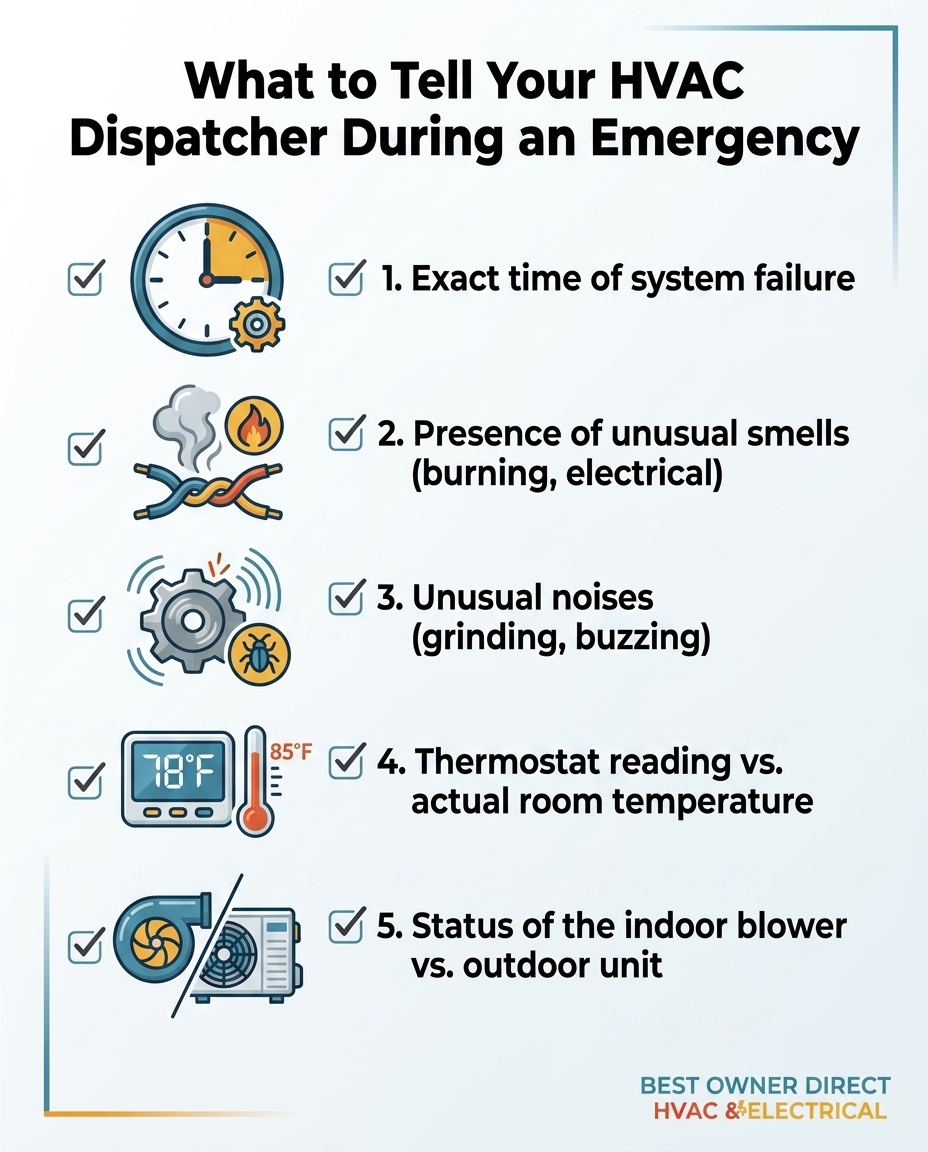
Before you pick up the phone, walk out to your equipment and gather the following information:
1. Identify specific sounds or smells: A buzzing, grinding, or squealing noise indicates a mechanical struggle. An acrid, burning plastic smell strongly points to an immediate electrical hazard. Report these instantly.
2. Check the airflow temperature: Note whether the system is blowing warm air through the vents, or if it is completely silent and not turning on at all. These two symptoms point to entirely different categories of failure.
3. Note the system behavior: Check if the indoor blower (the fan inside your home) is running while the outdoor unit (the condenser) remains silent.
4. Record the thermostat data: Tell the dispatcher exactly what the thermostat is set to, what the current indoor temperature reads, and if the screen is blank.
5. Provide the system age: Knowing whether the unit is three years old or twenty years old helps the technician anticipate the likely points of failure.
Sometimes, accurate reporting allows a dispatcher to suggest a safe, temporary mitigation step—like turning off the system at the breaker to prevent a small electrical short from damaging the expensive compressor—while you wait for a final repair.
Safe Home Temperature Management While You Wait
Once you have communicated your symptoms and are placed on the schedule, your next priority is managing the environment inside your home. Waiting for a repair during a Washington County / Cornelius OR heatwave requires a proactive approach to keep your living space safe and relatively comfortable.
The most critical rule: Never attempt DIY electrical or refrigerant repairs. Modern air conditioners contain high-voltage components and pressurized chemicals that require specialized training and licensing to handle safely. Opening electrical panels or tampering with refrigerant lines can result in severe injury or permanent destruction of the equipment.
Instead, focus on practical, non-technical strategies to mitigate the heat:
• Turn the thermostat to 'OFF': If your AC is blowing warm air or making strange noises, turn the system completely off at the thermostat. Forcing a struggling compressor to run continuously will cause it to burn out, transforming a minor repair into a major system replacement.
• Block solar gain: Close all blinds, shades, and curtains on the east and south-facing windows during the morning, and the west-facing windows during the peak heat of the afternoon. Sunlight beaming through glass is one of the primary ways heat enters a home.
• Utilize portable fans strategically: Ceiling fans and portable oscillating fans do not lower the room's temperature, but they do create a wind-chill effect on your skin. Run them only in rooms that are currently occupied.
• Prioritize hydration and safety: Drink plenty of water and avoid using heat-generating appliances like the oven, stove, or dryer during the hottest parts of the day.
By taking these steps, you can significantly slow the rate at which your home absorbs heat, making a multi-day wait much more tolerable.
Cutting the Red Tape: The Owner Direct Dispatch Advantage
When you are sweltering in your living room, the last thing you want to deal with is a convoluted corporate phone tree. The frustration of dealing with multi-layered corporate HVAC structures is a common complaint during summer emergencies. Often, these large call centers obscure true wait times, passing you from department to department without providing a clear answer on when a technician will actually arrive.
This is where the structure of your chosen service provider becomes critical. As an "Owner Direct" business, we cut out the corporate red tape entirely. Direct communication with an owner-operated business leads to honest, transparent dispatch times and realistic ETAs.
In our local HVAC dispatch operations, we believe that transparency is the highest form of customer service. If we know a specific replacement part will take three days to arrive from a Portland distribution hub, we will tell you that immediately. We do not overpromise just to get you on the schedule. This direct accountability means you are never left guessing about the status of your repair. You receive straight answers from the people who are actually coordinating the logistics, allowing you to make informed decisions about your family's comfort.
Proactive Strategies to Bypass the Emergency Queue
The most effective way to navigate the emergency repair queue is to avoid entering it in the first place. Transitioning from a reactive emergency mindset to a proactive prevention strategy is the secret to surviving July peak heatwaves without breaking a sweat.
We frequently see the benefits of early intervention. For example, during a recent spring season, we scheduled a diagnostic repair on short notice right before a major heat wave approached. Because the homeowner noticed a slight drop in cooling performance and called us early, we were able to identify and fix the failing component before the extreme heat arrived. The AC operated flawlessly through the subsequent heatwave, preventing a total breakdown and completely bypassing the emergency queue.
Scheduling diagnostic visits at the first sign of trouble—rather than waiting for total system failure—gives you a massive advantage. Minor symptoms like a slight rattle, a musty smell, or energy bills that are creeping upward are all early warning signs.
Enrolling in an AC Maintenance Plan ensures that a trained professional inspects your system before the summer heat arrives. During these visits, technicians can clean the condenser coils, test electrical connections, and measure refrigerant levels. Identifying a weak capacitor in May is a simple, stress-free fix. Waiting for that same capacitor to fail on a 100-degree afternoon in July guarantees a stressful emergency call.
Partner with a Local Expert for Reliable Cooling
Dealing with an air conditioning breakdown during a heatwave is never a pleasant experience, but understanding the logistics behind dispatch times and supply chain realities can significantly reduce your stress. By knowing what to communicate to the dispatcher and how to manage your home's temperature safely, you regain control of the situation.
Our commitment to transparent communication during high-demand periods remains unwavering. We understand the urgency of local HVAC dispatch operations, and we prioritize honest assessments and reliable service scheduling above all else. When you reach out to our team, you are partnering with local experts who will give you the unvarnished truth about your system and work diligently to restore your comfort.
If you are noticing the early warning signs of a failing system, or if you are currently navigating emergency AC repair wait times in Washington County, do not hesitate to reach out. We are here to provide the direct, accountable service you deserve to keep your home cool and safe all summer long.
Frequently Asked Questions
What is considered a true AC emergency?
A true AC emergency typically involves situations that pose a direct threat to safety or property, such as burning electrical smells, sparking from the unit, or a complete system failure when vulnerable individuals (infants, elderly, or those with medical conditions) are in the home. If your system is leaking large amounts of water that threatens drywall or flooring, that also requires immediate prioritization. Standard cooling delays, while uncomfortable, are generally triaged slightly below immediate safety hazards.
How long does it take to fix an AC during a heatwave?
During a severe heatwave, fixing an AC can take anywhere from 24 hours to several days, depending on the nature of the failure. If the issue requires a simple universal part like a capacitor, the repair can often be completed the same day a technician arrives. However, if a proprietary component like a compressor has failed and must be shipped from a regional hub, the timeline extends significantly based on supply chain logistics.
Should I call multiple HVAC companies if the wait time is long?
While it is tempting to call multiple companies, it can sometimes complicate your situation if you schedule multiple diagnostic visits and forget to cancel them. Most reputable local companies are experiencing the exact same weather-driven surge and pulling from the same regional parts distributors. Partnering with one transparent, owner-direct company that provides honest ETAs is usually more effective than jumping between different dispatch boards.
How can I stay cool if my AC is broken and I'm waiting for a repair?
Staying cool involves minimizing the heat entering your home and maximizing airflow. Keep all blinds and curtains closed during the day to block solar heat, avoid using heat-generating appliances like ovens, and use portable fans in the rooms you are actively occupying. Staying hydrated and spending the hottest afternoon hours on the lowest floor of your home or in a shaded, well-ventilated area will also help.
Does turning my thermostat down lower make the AC cool faster?
No, turning the thermostat down to an extreme low does not make the air conditioner cool the house any faster. Your AC system operates at a constant speed; it simply runs until it reaches the target temperature and then shuts off. Setting it artificially low only forces the system to run longer, which can overwork the equipment and potentially cause it to freeze up or fail entirely.
Why do AC parts sometimes take days to arrive?
AC parts can take days to arrive because local supply houses cannot stock every proprietary component for every make and model of equipment. When a specific factory part fails, it often needs to be ordered and shipped from a larger regional distribution hub or directly from the manufacturer. During peak summer heatwaves, these supply chains become strained industry-wide, leading to unavoidable shipping delays.


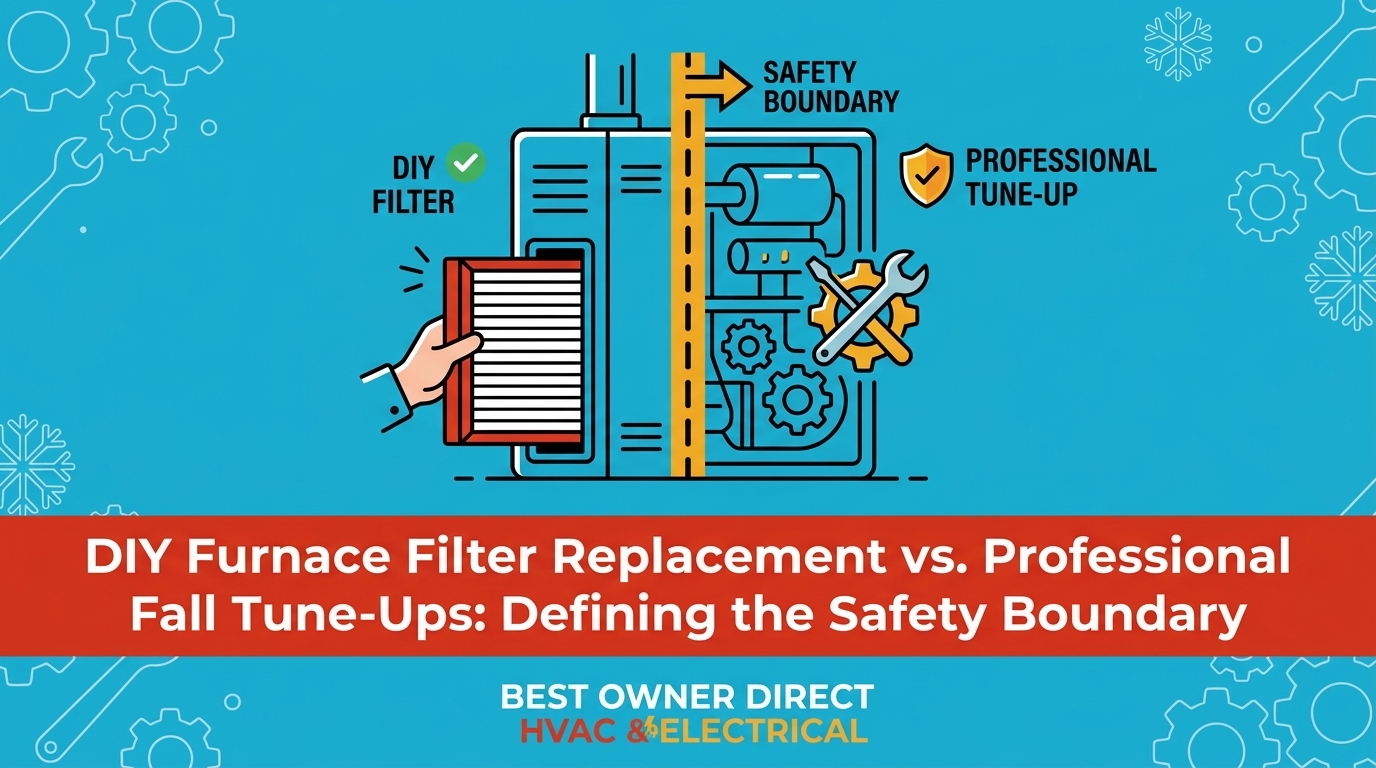
DIY Furnace Filter Replacement vs. Professional Fall Tune-UpsSwapping a furnace filter is a great start for fall heating prep, but it only addresses airflow. We define where safe DIY maintenance ends and when combustion safety requires professional tools.
Read more

MERV 13 vs. HEPA: Which Filter Cuts Smoke Best?Learn how MERV 13 and HEPA filters reduce smoke particles in your home, and discover which option works best for your HVAC system during wildfire season.
Read more
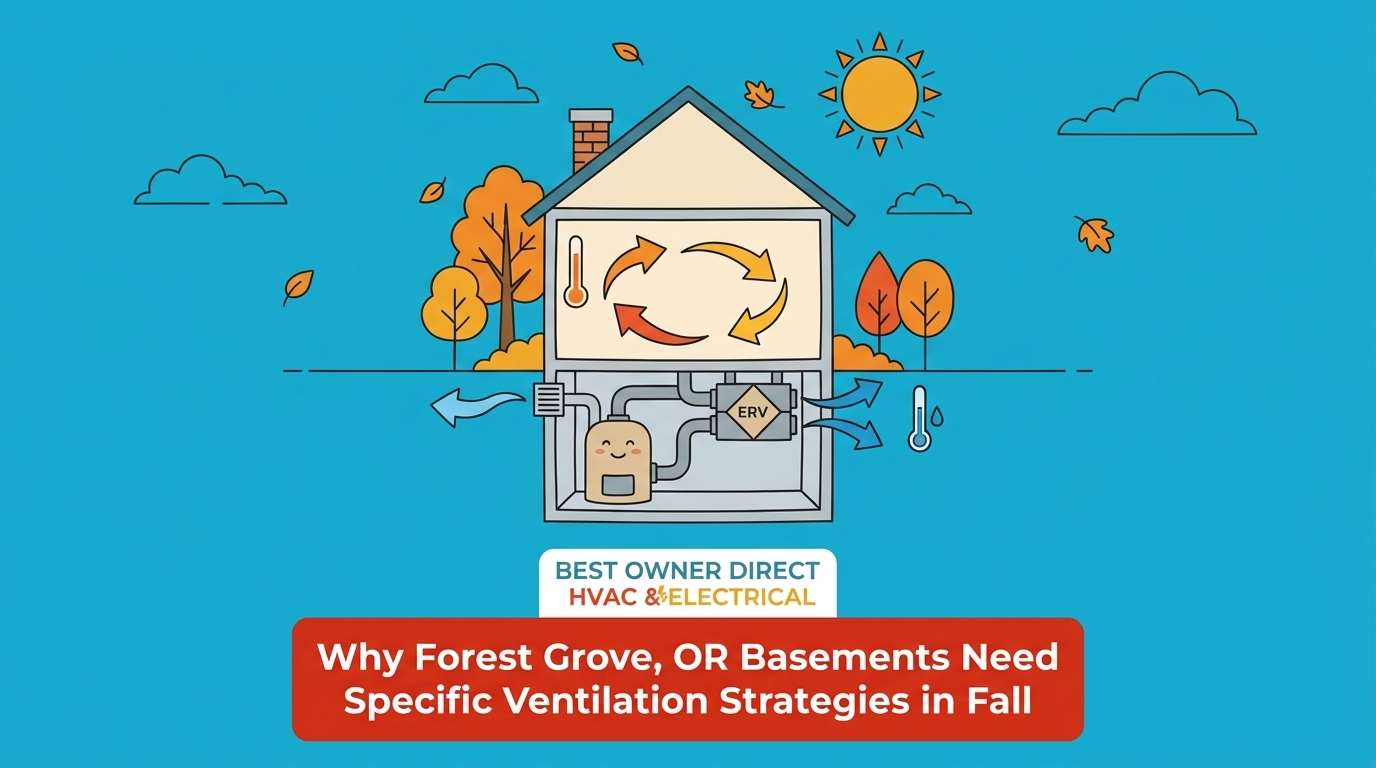
Why Forest Grove Basements Need Specific Ventilation Strategies in FallAs September rains raise local water tables, your subterranean spaces can quickly become damp and musty. Find out if your home needs dedicated HVAC return air.
Read more