Menu


Does a Shade for Your Air Conditioning Unit Actually Help? (Short Answer: Yes)
A shade for air conditioning unit setups is one of the simplest upgrades a homeowner can make to protect outdoor equipment and reduce energy strain — especially during Portland metro summers when temperatures push your system to work overtime.
Here's a quick summary of what you need to know:
- Shading reduces heat buildup around the condenser, helping it release heat more efficiently
- UV exposure degrades metal casings and coils over time — shade acts like sunscreen for your unit
- Proper shading can improve efficiency by up to 10%, though the real gains vary based on unit size and placement
- Airflow must stay unrestricted — the wrong shade does more harm than good
- Both commercial shades and landscaping (trees, shrubs, lattice screens) are valid options with different trade-offs
- Full covers are for off-season use only — never run your AC under a solid cover
That said, how much you actually benefit depends on what type of shade you use, how it's installed, and whether airflow is maintained. The rest of this guide breaks all of that down in plain terms.
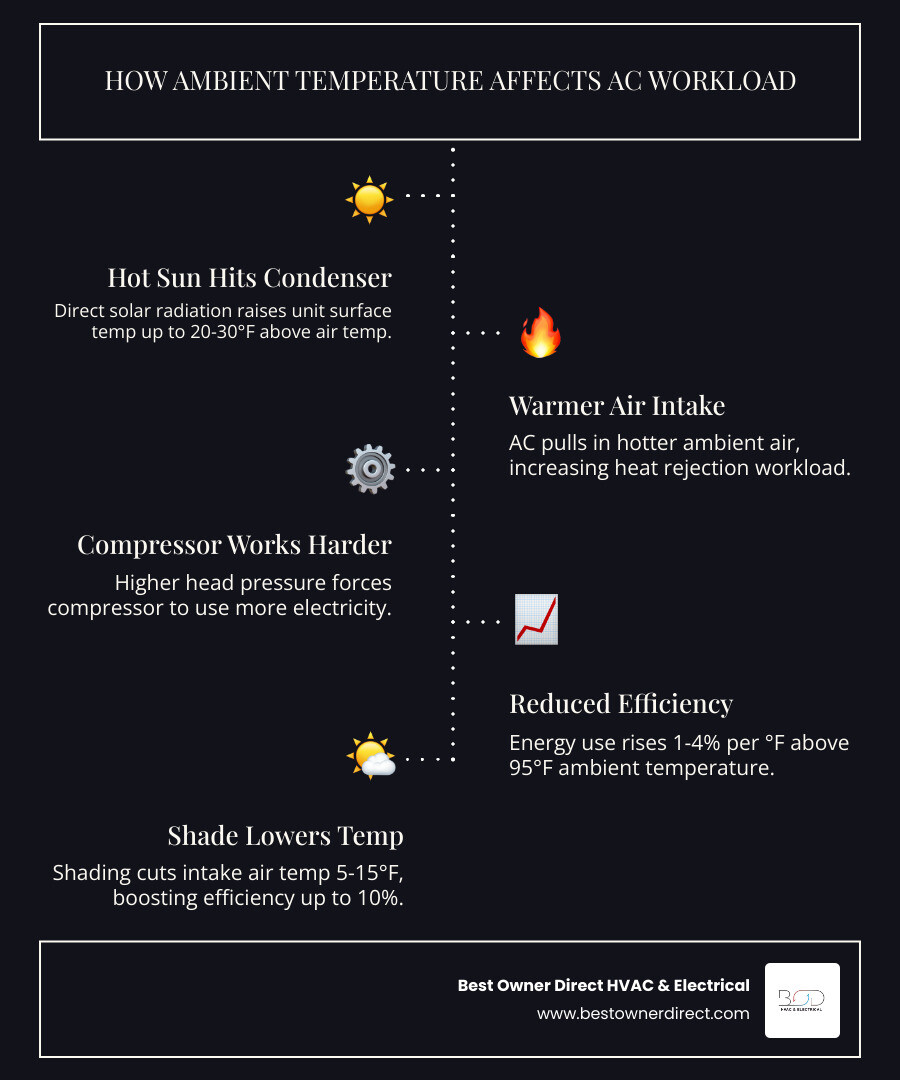
Your outdoor condenser sits in the sun, rain, and wind every day. In Oregon's climate — with wet winters, dry summers, and the occasional hail storm — that exposure adds up fast. Without any protection, your unit absorbs direct solar radiation, which raises the temperature of the air it pulls in to cool your home. The harder your system has to work, the more energy it burns and the faster components wear out.
The good news is that adding a shade for your air conditioning unit doesn't have to be complicated or expensive. From purpose-built steel awnings to strategically planted shrubs, there are practical options for almost every yard, budget, and skill level.
The Benefits of Installing a Shade for Air Conditioning Unit
When we talk about installing a shade for air conditioning unit systems, we aren't just talking about keeping the metal box from getting hot to the touch. The real benefits happen inside the machine.
The primary job of your outdoor condenser is to release heat that was pulled from inside your home. If the unit is sitting in direct, 95-degree sunlight in Hillsboro or Beaverton, it’s much harder for that heat to escape. By providing shade, you lower the ambient temperature immediately surrounding the unit. This allows the heat exchange process to happen faster and with less mechanical effort.
Beyond energy efficiency, a good shade acts as a shield. UV rays are surprisingly destructive; over years of exposure, they can cause the metal casing to become brittle and the cooling coils to degrade. Furthermore, a well-designed shade can protect against falling debris like pine needles, small branches, or even hail during our unpredictable Oregon spring storms. By keeping the "guts" of the machine cooler and cleaner, you are effectively extending its lifespan and reducing the likelihood of a mid-summer breakdown. For a deeper dive into whether this is right for your home, check out our article on should you shade your outdoor air conditioning unit.
Popular Types of AC Shades and Materials
Not all shades are created equal. In our experience serving the Portland metro area, we see a variety of solutions ranging from high-tech fabrics to heavy-duty metal. If you are also looking for ways to how to keep your business cool this summer, these same materials apply to commercial rooftop units.
- Galvanized Steel Awnings: These are the "heavy hitters" of the AC shade world. Often wall-mounted, they use a spray-molding process to resist rust and impact. They are incredibly durable and provide a solid barrier against rain and snow.
- UV-Resistant Fabric Sails: These are popular for homeowners who want an aesthetic, modern look. High-density polyethylene (HDPE) fabrics block up to 95% of UV rays while remaining breathable.
- Mesh Screens and Protective Nets: These are lightweight and focus on blocking debris while providing light shade. They are excellent for keeping cottonwood seeds or leaves out of the delicate fins.
- Aluminum Slats: Similar to steel, aluminum offers great heat dissipation and won't rust in our damp Oregon climate.
The most critical factor regardless of material is airflow. An AC unit "breathes" a massive amount of air—sometimes over 170,000 cubic feet per hour for a standard 3-ton unit. Any shade you choose must have an open structure to ensure heat isn't trapped against the machine.
Choosing the Right Shade for Air Conditioning Unit Sizing
Sizing your shade isn't just about the dimensions of the unit; it’s about the "clearance zone."
- Central HVAC Units: These typically require a shade that is at least 6 to 12 inches wider than the unit on all sides to account for the sun's angle throughout the day.
- Window Units: A small, sloped awning is usually sufficient here, but it must be secured tightly to the exterior wall to prevent vibration noise.
- Mini-Split Condensers: These are often wall-mounted, so a matching wall-mounted steel shade is usually the best fit.
Always measure your unit's height, width, and depth, then add at least 2 feet of vertical clearance to ensure the exhaust fan can push hot air away without it bouncing off the shade and back into the intake.
Common Mistakes When Using a Shade for Air Conditioning Unit
The biggest mistake we see is "suffocating" the unit. If you wrap your AC in a tight mesh or place a solid lid directly on top of it, you’ve created a heat trap. The unit will overheat, and you could actually void your manufacturer's warranty.
Another common error is recirculating exhaust. If the shade is too low, the hot air blowing out of the top of the unit hits the shade and is sucked back into the sides. This makes the AC work twice as hard. Lastly, don't forget the plumbing; while you're focused on the shade, should you clean your ac drain line to ensure the whole system is running smoothly.
How to Install an AC Shade Safely
Safety and stability are paramount, especially during our windy Oregon winters. If you're installing a commercial shade for air conditioning unit, look for models with triangular support brackets and 1.5mm thickened steel for maximum stability.
- Placement: Identify the south and west-facing sides of your unit. This is where the sun hits hardest in the afternoon.
- Clearance: Ensure there is at least 2 to 3 feet of space between any side panels and the unit itself. Vertical clearance should be 5 to 6 feet if possible.
- Securement: Use heavy-duty anchor bolts for wall-mounted units. For freestanding shades, ensure they are anchored into the ground or a concrete pad so they don't become projectiles during a storm.
- No-Tool Options: Some modern shades use adjustable straps and brackets that snap onto the unit's frame. These are great for renters or those who aren't comfortable with a power drill.
If you aren't sure if your current unit can handle the summer heat even with a shade, it might be worth asking: is it time to upgrade your a-c?
DIY vs. Commercial Shading Solutions
Many homeowners in Gresham or Lake Oswego prefer a more natural look. Here is how DIY landscaping stacks up against commercial products:
| Feature | DIY Landscaping (Trees/Shrubs) | Commercial Steel/Fabric Shades |
|---|---|---|
| Cooling Effect | High (transpiration cools the air) | Moderate (blocks direct radiation) |
| Maintenance | High (pruning, leaf cleanup) | Low (occasional cleaning) |
| Installation | Slow (takes years for trees to grow) | Instant (ready in minutes) |
| Aesthetics | Natural, blends with yard | Modern, utilitarian |
| Protection | Minimal against falling objects | High against hail and debris |
Pro Tip: If you go the DIY route, plant deciduous trees. They provide thick shade in the summer but drop their leaves in the winter, allowing the sun to reach the unit and prevent ice buildup. Always keep shrubs at least 3 feet away from the unit to maintain maintenance access.
Frequently Asked Questions
Does shading the condenser really save 10% on energy?
While some organizations like the EPA suggest up to 10% savings, real-world studies (like those from the Florida Solar Energy Center) show more modest gains of 1–3% specifically from shading the unit. However, if you shade the entire area or the windows of your home with trees, you can see savings as high as 25–50%. The real value of an AC shade is often found in the increased lifespan of the equipment rather than just the monthly bill.
When should I use a full cover instead of a shade?
Full, solid covers should only be used during the off-season (winter). They are designed to keep snow, ice, and heavy debris out of the unit when it is not in use. Never, ever turn on your AC with a full cover still attached. A shade, on the other hand, is designed to stay on year-round and allow the unit to breathe while it operates.
How does shading protect against severe Oregon weather?
In places like Tualatin and West Linn, we get our fair share of "mixed" weather. A sturdy galvanized steel shade can act as a shield against hail, which can flatten the delicate aluminum fins on your condenser. It also prevents heavy snow from piling up directly on the fan blades. Keeping the unit clean is half the battle; find out what happens when you don t change the ac filter to see how internal cleanliness is just as vital as external protection.
Conclusion
At Best Owner Direct HVAC & Electrical, we want your home to be a sanctuary of comfort. Whether you are in Cornelius, Portland, or anywhere in the surrounding metro area, taking care of your AC unit is an investment in your home's future. A simple shade for air conditioning unit is a great first step toward better efficiency and a longer-lasting system.
If you’re worried about how your system will handle the upcoming heat or if you need a professional to ensure your installation meets safety standards, our licensed technicians are here to help. We offer reliable, energy-efficient solutions tailored to the unique climate of the Pacific Northwest.
Schedule your professional AC service today and let us help you stay cool all summer long!


How a Heat Pump Protects Your Family During Extreme Heat in Portland, ORLearn how adding a heat pump protects your family during extreme heat in Portland, OR, with reliable cooling, air purification, and whole-home comfort.
Read more
How Much Clearance Does a House Air Vent Need for Safe Heating?Rearranging your living room for fall? Placing couches or rugs too close to floor registers creates fire hazards and strains your furnace. See the exact measurements for safe furniture placement.
Read more
How to Diagnose a Heat Pump Running But Not Heating or CoolingIs your heat pump running but not heating or cooling? Learn what it means and how to diagnose common causes like reversing valve failure or low refrigerant.
Read more