Menu


Why How Proper AC Installation Affects Long Term Performance Is the Question Every Oregon Homeowner Should Be Asking
How proper AC installation affects long term performance is one of the most important things to understand before investing in a new cooling system — because even a top-of-the-line AC unit can fail early, waste energy, and leave you uncomfortable if it isn't installed correctly.
Here's a quick summary of what proper installation actually does for your system:
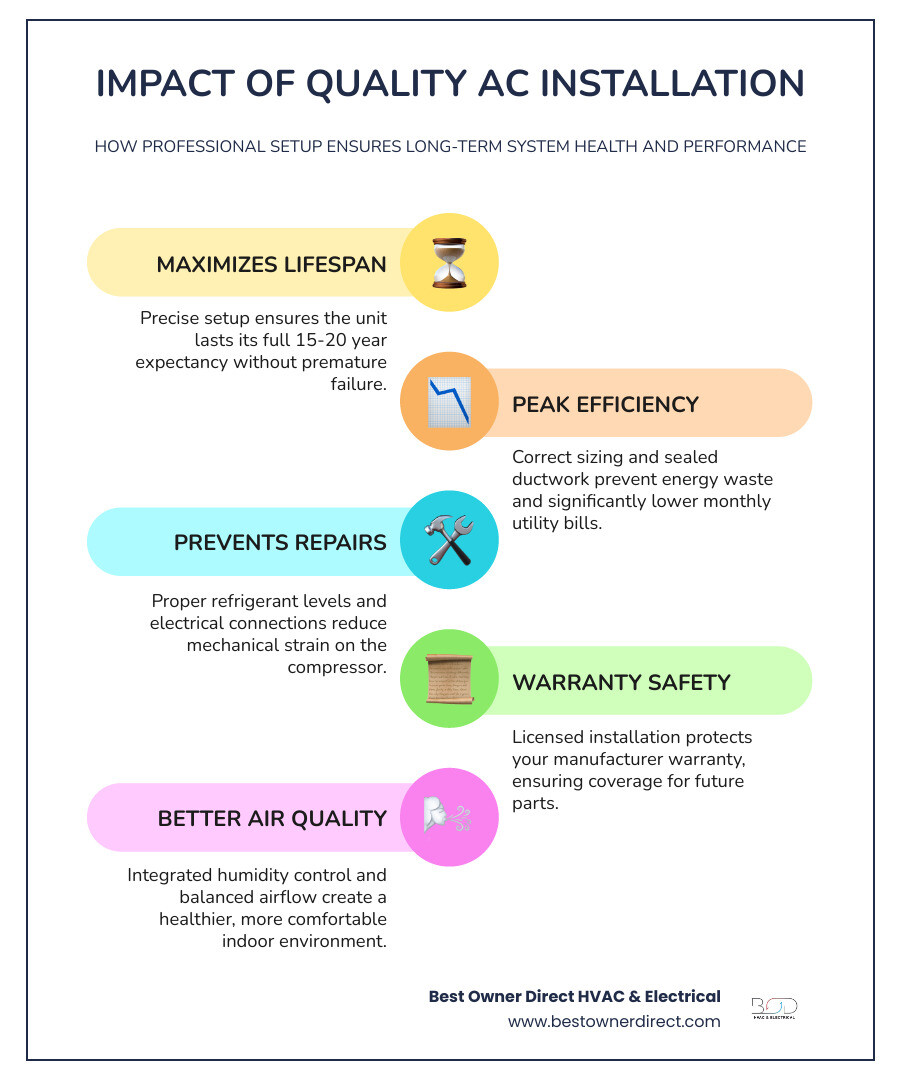
- Extends lifespan - A correctly installed AC can last 15-20 years or more. A poorly installed one may fail in under a decade.
- Cuts energy bills - Right-sized equipment and sealed ductwork prevent the system from working harder than it needs to.
- Prevents breakdowns - Proper refrigerant charging, secure electrical connections, and balanced airflow reduce wear on key components like the compressor.
- Protects your warranty - Most manufacturers require professional installation to keep warranty coverage valid.
- Improves indoor comfort and air quality - Sealed ducts, correct sizing, and proper drainage all contribute to even temperatures and cleaner air throughout your home.
Think of it this way: a poorly installed system doesn't just underperform on day one — it quietly accumulates problems that show up as expensive repairs, rising utility bills, and premature replacement down the road. Installation quality is the foundation everything else is built on.
In this guide, we break down exactly what separates a professional AC installation from a rushed or inexperienced one — and why it matters for homeowners throughout Beaverton, Hillsboro, Portland, and the surrounding Oregon communities served by Best Owner Direct HVAC & Electrical.
How Proper AC Installation Affects Long Term Performance and Efficiency
When we talk about how proper ac installation affects long term performance, the conversation usually starts with sizing. Many "Joes" or budget contractors use a "rule of thumb" based solely on square footage. This is a recipe for disaster. A true professional performs a Manual J Load Calculation, which looks at your home’s insulation, window orientation, ceiling height, and even the local climate in places like Forest Grove or Tualatin.
If a system is too large (oversized), it will "short-cycle," turning on and off rapidly. This prevents the system from reaching its peak efficiency and puts immense strain on the compressor. If it’s too small, it will run constantly, driving up your energy bills and wearing out the motor years before its time.
| Feature | Correctly Sized AC | Oversized AC |
|---|---|---|
| Cycle Length | Long, steady cycles | Short, frequent bursts |
| Humidity Control | Excellent moisture removal | Poor (clammy air) |
| Energy Consumption | Optimized for SEER2 ratings | High due to startup surges |
| Component Wear | Minimal / Even | High (Compressor fatigue) |
| Lifespan | 15–25 years | Less than 10 years |
Beyond sizing, the efficiency of your unit is measured by its SEER (Seasonal Energy Efficiency Ratio). In May 2026, we are looking at SEER2 standards that require even more precision during setup. A high SEER unit is a great investment, but it only delivers those savings if the installation is flawless. To learn more about picking the right hardware, check out our Guide to Choosing the Best HVAC System for Your Home.
Why proper ac installation affects long term performance of ductwork
You can have the most efficient AC in Oregon, but if your "delivery system" — the ductwork — is failing, you’re throwing money out the window. Proper installation involves checking static pressure and ensuring the ducts are sized to handle the airflow the new unit produces.
Leaky ducts are a major culprit in performance loss, with research showing that 20% to 30% of conditioned air can be lost through poorly sealed joints. We ensure every connection is tight and sealed with professional-grade mastic or foil tape. This prevents your attic or crawlspace from being the coolest part of your house while your bedroom stays warm. For more tips on optimizing your setup, see these 10 Surefire Strategies to Make Your AC Work Better.
How proper ac installation affects long term performance and humidity control
In the Pacific Northwest, we don't just deal with heat; we deal with moisture. An air conditioner’s secondary job is to act as a dehumidifier. When a professional handles your AC Installation in Beaverton, OR, they ensure the evaporator coil is perfectly matched to the outdoor condenser.
If the installation is rushed and the system short-cycles, the air doesn't spend enough time crossing the cold coils to drop its moisture. This leaves your home feeling "sticky" even if the thermometer says it's 72 degrees. Long-term, high humidity leads to mold growth and poor indoor air quality, which is why getting the installation right from day one is a health priority as much as a comfort one.
The Technical Foundation: Refrigerant and Airflow

One of the most common "Joe" mistakes is failing to calibrate the refrigerant charge. Refrigerant is the lifeblood of your AC. If it’s undercharged, the system won't absorb heat effectively, forcing the compressor to run hotter and longer. If it’s overcharged, you risk "slugging" the compressor with liquid refrigerant, which can cause instant, catastrophic failure.
Pros use specialized tools to measure "subcooling" and "superheat" to ensure the charge is exactly what the manufacturer specified. This precision is a huge factor in How Can I Make My HVAC Run More Efficiently This Summer?.
Similarly, airflow velocity must be tested. If air moves too fast, it won't dehumidify; if it moves too slow, the coils might freeze over. A professional installation includes a final test-out to verify that the air moving through your vents is at the correct CFM (Cubic Feet per Minute) to keep the system healthy and your home comfortable.
Protecting Your Investment: Warranties and Safety
Installing an AC isn't just about moving air; it involves high-voltage electricity and pressurized chemicals. A "Joe" might skip the permit process or leave wires loose, creating a fire hazard. We follow all local Oregon building codes to ensure your home remains safe.
Furthermore, your manufacturer's warranty is a valuable safety net. Most brands, like those we install in Oregon City and West Linn, explicitly state that the warranty is void if the system is not installed by a licensed professional. A DIY or uncertified "side-job" installation could cost you thousands if a major part fails in year three.
When reviewing What to Consider When You’re Getting an HVAC Quote, always verify that the contractor is licensed and insured. This is the only way to truly Protect Your AC Warranty for the long haul.
Maximizing Lifespan Through Post-Installation Care
While how proper ac installation affects long term performance is the primary driver of success, the work doesn't stop once the last screw is tightened. A well-installed system in Portland or Lake Oswego can last 15–25 years, but only if it receives regular attention.
Think of installation as the birth of the system and maintenance as its healthy lifestyle. We recommend:
- Filter Changes: Every 1–3 months to maintain airflow.
- Annual Tune-ups: To clean coils and check electrical connections.
- Duct Cleaning: Every 3–5 years to keep the air moving freely.
Scheduling a Spring AC and HVAC Maintenance Checklist visit is the best way to catch minor wear and tear before it becomes a breakdown. There are at least 5 Reasons You Need an AC Tune-Up Every Year, ranging from lower bills to better air quality.
Frequently Asked Questions About AC Installation
How long does a properly installed AC last in Oregon?
In our local climate—from the humid valleys of Cornelius to the breeze in Tigard—a properly installed and maintained AC system typically lasts between 15 and 20 years. Some high-quality systems that receive biannual maintenance have been known to push past the 25-year mark. However, without that professional initial setup, many units start failing around year 8 or 9.
Can a bad installation cause high energy bills?
Absolutely. If your system was improperly charged with refrigerant or the ducts were not sealed, the unit has to run significantly longer to reach your thermostat's setting. This "invisible" energy waste can add 20% to 30% to your monthly cooling costs. If you notice your bills are much higher than your neighbor's with a similar-sized home, it’s a major red flag.
What are the signs of a "Joe" installation?
You might be dealing with a "Joe" installation if you notice:
- Uneven Cooling: One room is an ice box while the other is a sauna.
- Noisy Operation: Banging, whistling, or rattling sounds from the vents or outdoor unit.
- Short-Cycling: The unit turns on and off every few minutes.
- Poor Drainage: Water pooling around the indoor unit because the condensate line wasn't pitched correctly.
- Frequent Breakdowns: If you're calling for repairs on a system that is less than five years old, the original installation is likely the culprit. If these issues persist, it might be time to ask When to Replace Your Air Conditioner and start fresh with a professional team.
Conclusion
At the end of the day, your air conditioner is one of the most expensive appliances in your home. Why risk its future on a subpar installation? Understanding how proper ac installation affects long term performance is the first step toward decades of worry-free comfort.
At Best Owner Direct HVAC & Electrical, we take pride in serving our neighbors across Cornelius, Beaverton, Hillsboro, and the entire Portland metro area. We don't just "drop in" a unit; we engineer a cooling solution tailored to your specific home. Our licensed technicians focus on the details—from Manual J sizing to precision refrigerant charging—so you can enjoy lower bills and a longer-lasting system.
Don't settle for a "Joe" when you can have a Pro. Schedule your professional AC installation today and feel the difference that quality workmanship makes!


Sealing Leaky Ductwork Before the Winter Cold Sets InYour furnace is only as effective as the ducts delivering its warmth. If you're tired of drafty rooms, securing your system's thermal envelope is the first step to true winter comfort.
Read more
All About How a Mini Split Adds Value to Your HomeLearn how a mini split adds value to your home with energy savings, zoned comfort, and increased property valuation.
Read more
How Blocked Return Vents Suffocate Your Heating SystemMany homeowners accidentally cover large return grilles when rearranging furniture for the fall. Find out how this simple mistake starves your furnace of airflow and causes it to overheat.
Read more