Menu


When Your AC Starts Talking: What Those Strange Noises Are Telling You
AC making strange noises what they mean is one of the most common concerns homeowners across the Portland metro area bring to our team at Best Owner Direct HVAC & Electrical — and for good reason. Modern air conditioners are engineered to run quietly, typically between 25 and 55 decibels, roughly the level of a soft conversation. So when your system suddenly starts banging, hissing, screeching, or rattling, it is almost always a sign that something needs attention.
Here is a quick reference to the most common AC noises and what they typically indicate:
• Banging / Clanking — Most Likely Cause: Loose or broken internal part (compressor, fan blade) — Urgency: High — turn off immediately
• Hissing — Most Likely Cause: Refrigerant leak or duct gap — Urgency: High — call a pro
• Squealing / Screeching — Most Likely Cause: Worn motor bearings or high compressor pressure — Urgency: High — turn off immediately
• Grinding — Most Likely Cause: Metal-on-metal wear, failing motor bearings — Urgency: High — turn off immediately
• Buzzing — Most Likely Cause: Electrical issue, failing capacitor, or frozen coils — Urgency: Moderate to High
• Clicking (repeated) — Most Likely Cause: Faulty thermostat relay or failing capacitor — Urgency: Moderate
• Rattling — Most Likely Cause: Loose panels, screws, or debris in the unit — Urgency: Low to Moderate
• Whistling — Most Likely Cause: Clogged air filter or blocked vents — Urgency: Low to Moderate
• Gurgling / Bubbling — Most Likely Cause: Clogged condensate drain or refrigerant issue — Urgency: Moderate
Think of unusual AC sounds as your system’s way of sending an early warning before a small problem becomes a costly breakdown. Catching these audio clues early can be the difference between a simple repair and a full system replacement.
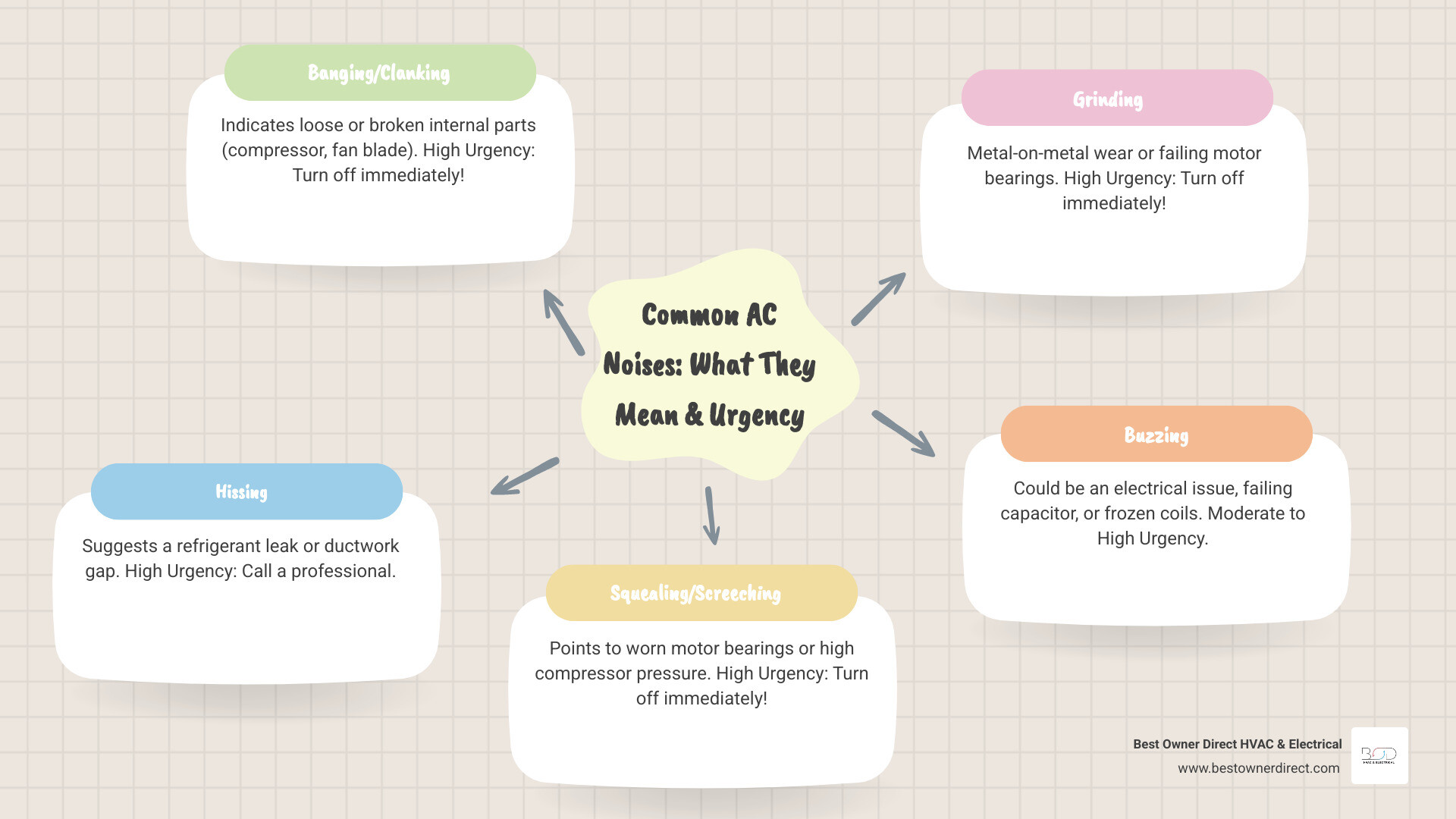
AC Making Strange Noises: What They Mean for Your Home’s Comfort
As we move through April 2026, many of our neighbors in Hillsboro, Beaverton, and Portland are firing up their air conditioners for the first time this season. When everything is working perfectly, your AC should be a silent partner in your home comfort. But what exactly does “normal” sound like?
Most modern AC systems operate within a 25 to 55-decibel range. To put that in perspective, a quiet library is about 40 dB, while a normal conversation is roughly 60 dB. Some high-efficiency variable-speed units can run as low as 19 dB—essentially a whisper. You should hear a steady, uniform hum from the outdoor condenser and a gentle whoosh of air through your vents. A single, crisp click when the unit starts up or shuts down is also perfectly normal—that’s just the relay switch doing its job.
However, when the sounds deviate from this baseline, it’s often a signal of mechanical wear. Air conditioning systems are designed to last 15 to 20 years, but that longevity depends entirely on how well the components are moving together. When parts lose their balance or lubrication, they start to “complain” through noise.
Identifying AC Repair Signs early is vital. Noise is rarely just a cosmetic issue; it is a symptom of energy being wasted or parts being destroyed. If your unit is sounding more like a construction site than a cooling system, it’s likely struggling against friction or internal pressure, which can significantly shorten that 20-year lifespan.
Decoding the Symphony: Common Air Conditioner Noises and Their Causes
When we visit homes in Cornelius or Lake Oswego to diagnose a noisy unit, we often find that the system is suffering from a “domino effect.” A small issue, like a loose screw, creates a vibration. That vibration eventually loosens a fan blade, which then strikes the housing and causes a catastrophic failure.
Understanding the “language” of your AC can help you stop this domino effect in its tracks. Most noises stem from three main issues: component failure, loose hardware, or airflow restrictions. By reviewing 11 of the Most Common Central Air Conditioner Problems in 2022, we can see that noise is almost always the first red flag for these deeper mechanical struggles.
Banging and Clanking: AC Making Strange Noises What They Mean for Internal Parts
If your AC sounds like someone dropped a handful of silverware into a dryer, you are likely dealing with a banging or clanking noise. This is usually a sign of a loose or broken part inside the system’s “heart”—the compressor.
The compressor contains several heavy-duty moving parts, including connecting rods, piston pins, and a crankshaft. If any of these snap or come loose, they will thrash around inside the sealed compressor housing. Because the compressor is a sealed unit, these internal breaks usually mean the entire component needs to be replaced.
Clanking can also come from the blower assembly. If the indoor blower wheel becomes unbalanced or if the motor mounts fail, the wheel will wobble and strike the metal casing. This creates a rhythmic, metallic “thwack” that can be heard throughout the ductwork. If you hear this, you should also ask yourself, Why Is My Air Conditioning Making a Grinding Noise? because clanking can quickly turn into a grinding sound as the metal-on-metal contact worsens.
Hissing and Whistling: AC Making Strange Noises What They Mean for Airflow and Refrigerant
Hissing is one of the more “spooky” sounds an AC can make. In fact, it’s often listed among the 3 of the Spookiest A/C Problems & How You Can Solve Them.
A persistent hissing sound usually indicates one of two things:
1. Refrigerant Leak: Refrigerant is under high pressure. When it escapes through a tiny crack in the coils or lines, it makes a distinct “snake-like” hissing sound. This is a serious issue that requires a licensed technician, as refrigerant is a hazardous chemical.
2. Internal Valve Failure: If the compressor’s internal valves are leaking or if the expansion valve is malfunctioning, you may hear hissing as the pressure equalizes incorrectly.
Whistling, on the other hand, is usually an airflow issue. This is often called the “tea kettle effect.” When your air filter is completely clogged with dust—a “dust bunny convention,” if you will—the blower motor has to work overtime to pull air through the tiny remaining gaps. This creates a high-pitched whistle. You might also hear this if you have too many vents closed or if there are gaps in your ductwork.
Squealing and Screeching: Motor and Belt Issues
Squealing is often compared to nails on a chalkboard. In older units, this is frequently a sign of a worn-out fan belt. Just like a belt in your car, the AC belt can slip or fray over time, leading to that piercing scream.
In modern, beltless systems, squealing usually points to failing motor bearings in either the outdoor condenser fan or the indoor blower motor. If these bearings aren’t properly lubricated, the friction creates a high-pitched screech.
The 15-Second Rule: It is worth noting that some compressors make a brief, high-pitched squeal for about 10 to 15 seconds when they first start up. This is often due to the pressure equalizing. However, if that screech lasts longer than 15 seconds or occurs while the unit is already running, it is a major red flag for high internal pressure, and you should shut the system down immediately to prevent an explosion of the internal seals.
Identifying the Source: Indoor Unit, Outdoor Condenser, or Ductwork?
Before you call us for a repair in Oregon City or Tualatin, you can help speed up the process by identifying exactly where the noise is coming from. We recommend a simple “isolation test” to narrow things down.
1. The Fan Test: Go to your thermostat and switch the setting from “Auto” to “On” while the cooling is turned off. This runs only the indoor blower fan. If the noise starts now, the problem is likely in your indoor air handler or ductwork (think blower motor, loose filters, or debris in the vents).
2. The Cooling Test: Now, turn the cooling on so the outdoor unit kicks in. If the noise only happens when the outdoor unit is running, the culprit is likely the compressor, the condenser fan, or the refrigerant lines.
Knowing the location helps us determine if we’re looking at a faulty relay switch in the outdoor unit or a frozen evaporator coil inside. If you want to dive deeper into your own diagnosis, check out our guide on How to Troubleshoot Your AC Like a Pro. For residents needing AC Repair Oregon City OR, being able to tell us “the buzzing is definitely coming from the outdoor cabinet” allows us to arrive with the right electrical components ready to go.
DIY Troubleshooting and When to Call for Professional AC Repair in Hillsboro
While many AC noises require a pro, there are a few things you can safely check yourself. We always encourage our customers to start with the fundamentals:
• Check the Filter: A dirty filter is the root of many HVAC evils. If your AC is whistling or thumping, swap in a fresh filter. If light doesn’t pass through your old one, it was definitely time.
• Clear the Debris: If your outdoor unit is rattling, turn off the power at the breaker and check for twigs, leaves, or stones that may have fallen into the fan cage. “Helicopter” seeds are famous for causing a “thwapping” sound like playing cards in bicycle spokes.
• Tighten the Panels: Sometimes a “scary” rattling noise is just a loose screw on the exterior cabinet. Grab a screwdriver and ensure all the panel screws are snug.
• Inspect the Vents: Ensure at least 80% of your home’s vents are open and unblocked by furniture or rugs to prevent whistling.
However, there are clear lines you shouldn’t cross. If you are looking for AC Repair Hillsboro OR or AC Repair Portland OR, you should call us immediately if you encounter:
• Electrical Burning Smells: If a noise is accompanied by the scent of ozone or burning plastic, shut it down at the breaker.
• Persistent Clicking: If the unit clicks rapidly but won’t start, you likely have a failing capacitor or contactor.
• Hissing: Never attempt to patch a refrigerant line yourself.
The Risks of Ignoring Unusual AC Sounds in 2026
It can be tempting to ignore a small rattle or a faint buzz, especially when life in the Portland metro area gets busy. But in HVAC, noise is rarely just a nuisance—it’s a warning.
Ignoring a banging sound in your compressor is like driving a car with a broken engine rod; eventually, that rod is going to punch a hole through the side of the engine. In an AC, this leads to a catastrophic failure that turns a repair into a much more expensive full system replacement.
There are also significant safety hazards. Electrical buzzing can lead to house fires if it’s caused by arcing wires. Refrigerant leaks aren’t just bad for your energy bill; they are harmful to the environment and can cause respiratory issues if they occur indoors.
The “Turn-Off-Now” List:If you hear any of the following, do not wait. Turn the system off at the thermostat and the breaker:
1. Loud Banging/Metal-on-Metal: Parts are physically breaking.
2. High-Pitched Screaming: Dangerously high pressure in the compressor.
3. Persistent Hissing: Active refrigerant leak.
4. Loud Buzzing with a Burning Smell: Electrical failure.
Regular preventative maintenance and seasonal tune-ups are the best ways to ensure your AC remains a “silent partner.” During a tune-up, we lubricate those bearings, tighten the hardware, and check the refrigerant levels so those noises never start in the first place.
Frequently Asked Questions About AC Noises
Is it safe to run my AC if it is making a loud banging noise?
No. A banging noise usually means a part has come loose or broken inside the compressor or fan assembly. Continuing to run the unit can cause catastrophic damage, potentially destroying the entire system. Turn it off immediately and call for service.
Why does my air conditioner click repeatedly when it tries to turn on?
Repeated clicking is usually an electrical communication issue. Your thermostat is sending a “start” signal, but the electrical contactor or the start capacitor is failing to respond correctly. This prevents the compressor from turning on and can eventually lead to a burned-out motor if left unaddressed.
Can a dirty air filter cause my AC to make whistling sounds?
Yes, absolutely. A clogged filter restricts the amount of air the blower motor can pull. This creates a high-pressure “whistling” effect as air is forced through the tiny remaining gaps. It’s the most common cause of whistling and is easily fixed by a simple filter change.
Conclusion
Your home should be a sanctuary of quiet comfort. When your ac making strange noises what they mean becomes a source of stress, you don’t have to decode the symphony alone. Whether you are in Banks, Gladstone, or right here in Cornelius, our team is ready to help.
At Best Owner Direct HVAC & Electrical, we pride ourselves on providing reliable, affordable, and energy-efficient solutions for our neighbors throughout the Portland metro area. Our licensed technicians have the expertise to diagnose whether that rattle is a simple loose screw or a sign of a failing compressor.
Don’t let a small squeak turn into a major breakdown. Schedule your professional air conditioning service today and let us bring the “sound of silence” back to your home.


Reading Between the Lines of HVAC Reviews in the Portland MetroEvaluating contractors ahead of the fall heating season requires more than glancing at a star average. See which review details prove genuine community accountability over slick automated marketing.
Read more
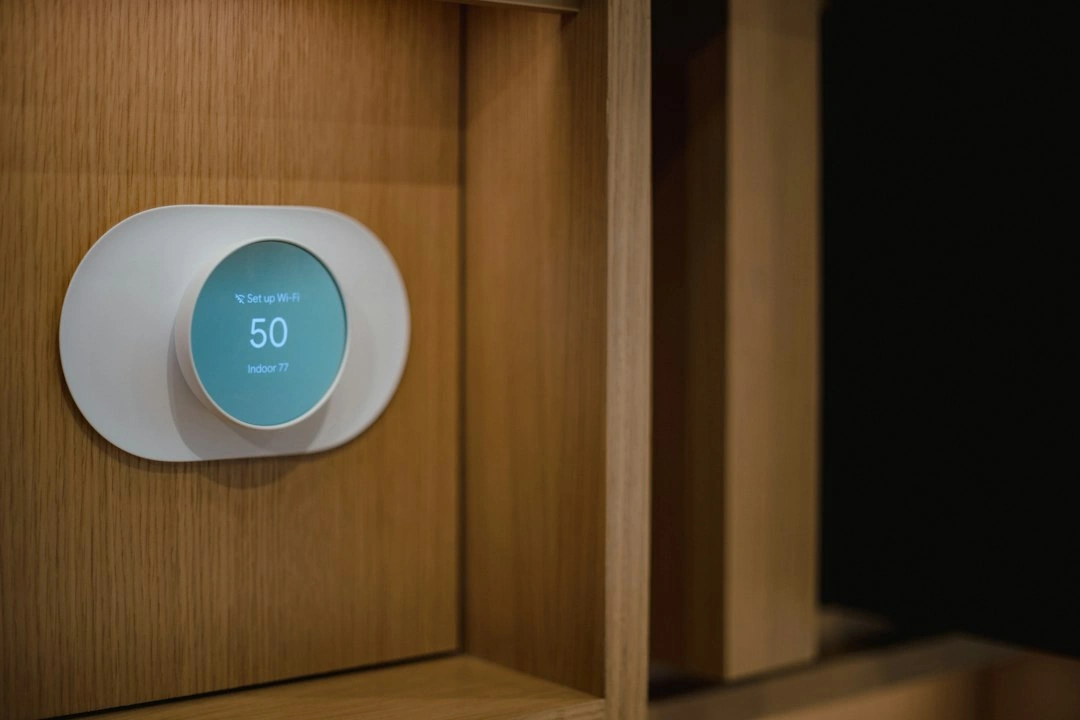
How Oregon Homeowners Can Test Thermostats Before Calling for Local Heat Pump RepairLearn how to check your thermostat before calling for heat pump repair with this step-by-step guide for Oregon homeowners.
Read more

High-Efficiency Heat Pumps vs. Standard Units for Oregon's Mild AutumnsStandard heat pumps often blast too much heat on chilly fall mornings, causing uncomfortable temperature swings. Inverter-driven systems solve this by providing gentle, constant warmth.
Read more