Menu


Does a Leaking Water Heater Need to Be Replaced? Here's What Homeowners in Beaverton, OR Need to Know
Does a leaking water heater need to be replaced? Not always — but it depends on where the leak is coming from and how old your unit is. Here's a quick answer:
- Leak from the tank body or bottom: Almost always requires full replacement. Internal corrosion cannot be repaired.
- Leak from a valve, fitting, or connection: Often repairable, especially if the unit is under 10 years old.
- Leak from condensation: Not a true leak — may be resolved by adjusting temperature settings.
- Unit over 10 years old with any leak: Replacement is usually the smarter, more cost-effective choice.
Finding water pooling around your water heater is one of those moments that can stop your day cold. For homeowners in Beaverton and across the Portland metro area, it raises an immediate question: is this a quick fix, or is it time for a new unit? The answer matters — a failing tank can release 40 to 80 gallons of water into your home in minutes, causing water damage, mold growth, and potential electrical hazards. Acting fast and knowing what you're dealing with is the difference between a manageable repair and a costly home emergency.
Identifying the Source: Does a Leaking Water Heater Need to Be Replaced?
When we arrive at a home in Cornelius or Hillsboro to inspect a "leaky" unit, the first thing we do is act like detectives. We need to find the "smoking gun" — the exact point where water is escaping. Identifying the source is the single most important factor in determining does a leaking water heater need to be replaced.
Generally, water heater leaks fall into two categories: top-of-tank and bottom-of-tank.
- Top-of-Tank Leaks: These are often the "good news" leaks. They typically involve the cold water inlet or hot water outlet pipes. If a connection has vibrated loose over the years or a fitting has corroded, we can often simply tighten or replace that specific part.
- Bottom-of-Tank Leaks: If you see water pooling around the base and the top of the unit is bone dry, we are likely looking at internal tank failure. Because standard water heaters are made of steel, they eventually succumb to oxidation. Once the internal lining of the tank cracks or rusts through, there is no "patch" that can safely hold back the pressure of dozens of gallons of hot water.
To dive deeper into this decision-making process, you can check out our detailed guide on does a leaking water heater mean you need a repair or a replacement.
Minor Component Failures: Does a Leaking Water Heater Need to Be Replaced Immediately?
If the leak is coming from a specific component rather than the tank itself, you might be in luck. In many cases, a few replaceable parts are the culprits. Here are the most common "minor" issues we see in the Beaverton area:
- T&P Valve (Temperature and Pressure Relief Valve): This is a safety device designed to release water if the tank gets too hot or the pressure gets too high. If it’s dripping, it could be faulty, or it might be doing its job because your water pressure is too high.
- Drain Valve: Located at the bottom of the tank, this plastic or brass valve is used for flushing the unit. If it doesn't close completely, it will drip. This is a relatively simple part for us to swap out.
- Loose Heating Element Gaskets: In electric models, the heating elements are bolted into the side of the tank. If the gaskets fail, water will seep out from the electrical panel area.
While these issues are repairable, they shouldn't be ignored. Even a small drip can lead to significant rust or electrical shorts. For more information on navigating these fixes, see our best water heater repair guide beaverton or or contact us for professional water heater repair beaverton or.
Condensation vs. Leaks: Does a Leaking Water Heater Need to Be Replaced if it is Just Sweating?
Believe it or not, sometimes a "leak" isn't a leak at all. If you’ve ever taken a cold soda out of the fridge on a humid Oregon summer day, you know all about condensation. The same thing can happen to your water heater.
When a large amount of cold water enters the tank (like after a long shower), and the surrounding air is warm and humid, the tank can "sweat." This moisture drips down and pools at the base, looking suspiciously like a tank failure. We often see this when the burner cycles on a gas unit, creating hot exhaust that meets a cold tank.
How can you tell the difference? Wipe up the water and watch the unit. If the water only appears when the unit is filling with cold water or during high-humidity days, it might just be condensation. Setting your thermostat to 120 degrees Fahrenheit and ensuring proper ventilation can often solve this. If you're unsure, our residential water heater repair guide beaverton or offers more tips on diagnosing these phantom leaks.
Signs Your Water Heater Has Reached the End of Its Lifespan
In home appliances, water heaters are the quiet workhorses. They sit in the garage or a closet for a decade, doing their job without complaint — until they don't. It is important to know that most standard tank-type water heaters have a predictable life expectancy.
| Feature | Standard Tank Water Heater | Tankless Water Heater |
|---|---|---|
| Typical Lifespan | 8–12 Years | 15–20+ Years |
| Primary Failure Cause | Internal Tank Corrosion | Scale Buildup / Component Wear |
| Maintenance Need | Annual Flush / Anode Check | Annual Descaling |
| Efficiency | Moderate | High (On-Demand) |
If your unit is approaching the 10-year mark, you should be on high alert. Beyond visible puddles, keep an ear and an eye out for these warning signs:
- Rusty Water: If your hot water looks like tea but the cold water is clear, the inside of your tank is likely rusting away.
- Rumbling or Popping Noises: This is the sound of sediment buildup. Over time, minerals in our local water (especially in areas like Forest Grove or Gaston) settle at the bottom. As the water heats, bubbles trapped under this "crust" pop, which sounds like someone is knocking on the tank. This sediment also causes the tank to overheat and eventually crack.
- Inconsistent Temperatures: If your showers are getting shorter and shorter, the lower heating element or the burner may be failing due to sediment.
If you are seeing these signs, it is likely time to look into water heater replacement beaverton or.
Tank Corrosion: Does a Leaking Water Heater Need to Be Replaced if the Tank is Rusted?
The short answer is yes. Once a steel tank begins to corrode from the inside out, the structural integrity of the vessel is compromised.
Most tanks are equipped with a "sacrificial anode rod." This is a long rod made of magnesium or aluminum that hangs inside the tank. Its sole purpose is to corrode instead of the tank. Think of it as a lightning rod for rust. However, once that rod is completely dissolved (usually every 3 to 5 years), the water starts attacking the steel tank walls.
Signs of Internal Tank Failure:
- Persistent dampness at the very bottom of the tank jacket.
- Rust stains trailing down the side of the unit from behind the insulation.
- A metallic "iron" smell in your hot water.
- Visible "pitting" or small holes in the metal.
Once the tank is rusted, there is no turning back. The risk of a catastrophic rupture — where the tank dumps its entire contents at once — becomes a "when," not an "if."
Immediate Steps to Take When You Spot a Leak
If you find a puddle today, don't panic, but do move quickly. Following these steps can prevent a small leak from turning into a flooded basement or a mold colony.
- Turn Off the Power or Gas:
- For Electric heaters: Find your circuit breaker and flip the switch to "Off." Water and electricity are a dangerous mix; you don't want a leak reaching the internal wiring.
- For Gas heaters: Turn the dial on the thermostat to the "Off" or "Pilot" position. Then, close the gas shut-off valve on the pipe leading to the unit.
- Shut Off the Water Supply: Look for the cold-water pipe leading into the top of the heater. There should be a handle (either a lever or a wheel). Turn it clockwise to stop more water from entering the tank.
- Drain the Tank: If the leak is significant, you’ll want to empty the tank to stop the flow. Attach a garden hose to the drain valve at the bottom and run the other end to a floor drain or outside. Open a hot water faucet somewhere in the house to let air in, which helps the tank drain faster.
- Clean Up Standing Water: Mold can begin to grow within 24 to 48 hours of water exposure. Use towels, a wet-dry vac, and fans to dry the area completely.
In an emergency, especially with modern systems, you may need an emergency tankless water heater in beaverton or to get your home back to normal quickly.
Choosing Your Next System: Tank vs. Tankless
If the verdict is that your water heater must be replaced, you have a big decision to make: do you stick with a traditional tank, or go tankless? In May 2026, the technology for both has never been better, but each has its place.
Traditional Tank Water Heaters:
- Pros: Generally simpler to install if you are replacing an existing tank; can handle high-demand "spikes" if sized correctly.
- Cons: They take up more space; they waste energy by keeping 50 gallons of water hot 24/7 (standby heat loss); they have a shorter lifespan.
Tankless Water Heaters:
- Pros: They only heat water when you turn on the tap (on-demand); they take up almost no floor space (wall-mounted); they can last 20 years or more.
- Cons: They require specific venting and gas line sizes; they can be a larger upfront investment.
For our neighbors in the Portland metro area, we often recommend tankless systems for families who are tired of running out of hot water during the third shower of the morning. You can learn more in our tankless water heater beaverton or guide or browse our tankless water heaters beaverton or services.
Frequently Asked Questions about Leaking Water Heaters
How long will a water heater last once it starts leaking?
It’s unpredictable. A tank leak might be a slow drip for a month, or it could turn into a catastrophic flood in an hour. Because a failing tank can release 40 to 80 gallons of water in minutes, we never recommend "waiting it out." If the tank is leaking, it has already failed.
Is a leaking water heater a safety hazard?
Yes. Beyond the obvious slip-and-fall risk and water damage, leaks in electric models can cause short circuits and fires. In gas models, a leak can interfere with the burner assembly, potentially leading to gas leaks or carbon monoxide issues. Furthermore, damp environments are breeding grounds for mold, which can impact your family's respiratory health.
Can I still use my hot water if the tank is leaking?
If the leak is from a minor fitting, you might be able to use it for a few hours while waiting for a technician. However, if the tank body is leaking, you should shut the system down immediately. Using a leaking tank increases the internal pressure and heat, which can cause the small crack to expand rapidly.
Conclusion
At Best Owner Direct HVAC & Electrical, we’ve seen how a little puddle can turn into a big headache for homeowners from Oregon City to North Plains. Whether you’re in Beaverton, Tigard, or right here in Cornelius, our goal is to keep your home safe, dry, and comfortable.
Does a leaking water heater need to be replaced? If the tank is old or the leak is coming from the body, the answer is a resounding yes. But if it's a simple valve or a loose connection, we can often save you the cost of a full replacement with a professional repair.
Maintenance Tips to Prevent Future Leaks:
- Flush the Tank Annually: Remove the sediment that causes overheating and corrosion.
- Check the Anode Rod: Every 3 years, have us check the "sacrificial" rod to ensure your tank is protected.
- Test the T&P Valve: Periodically lift the lever to ensure it isn't stuck.
- Set the Temp to 120°F: This reduces the stress on the tank and saves energy.
- Install a Leak Detector: Modern smart sensors can alert your phone the second they detect moisture.
Don't wait for a flood to find out if your water heater is on its last legs. If you see water where it shouldn't be, give us a call. Our licensed technicians serve the entire Portland metro area, including Tualatin, West Linn, and Wilsonville, with reliable, same-day service.
Request professional water heater services today and let us take the stress out of your home maintenance!


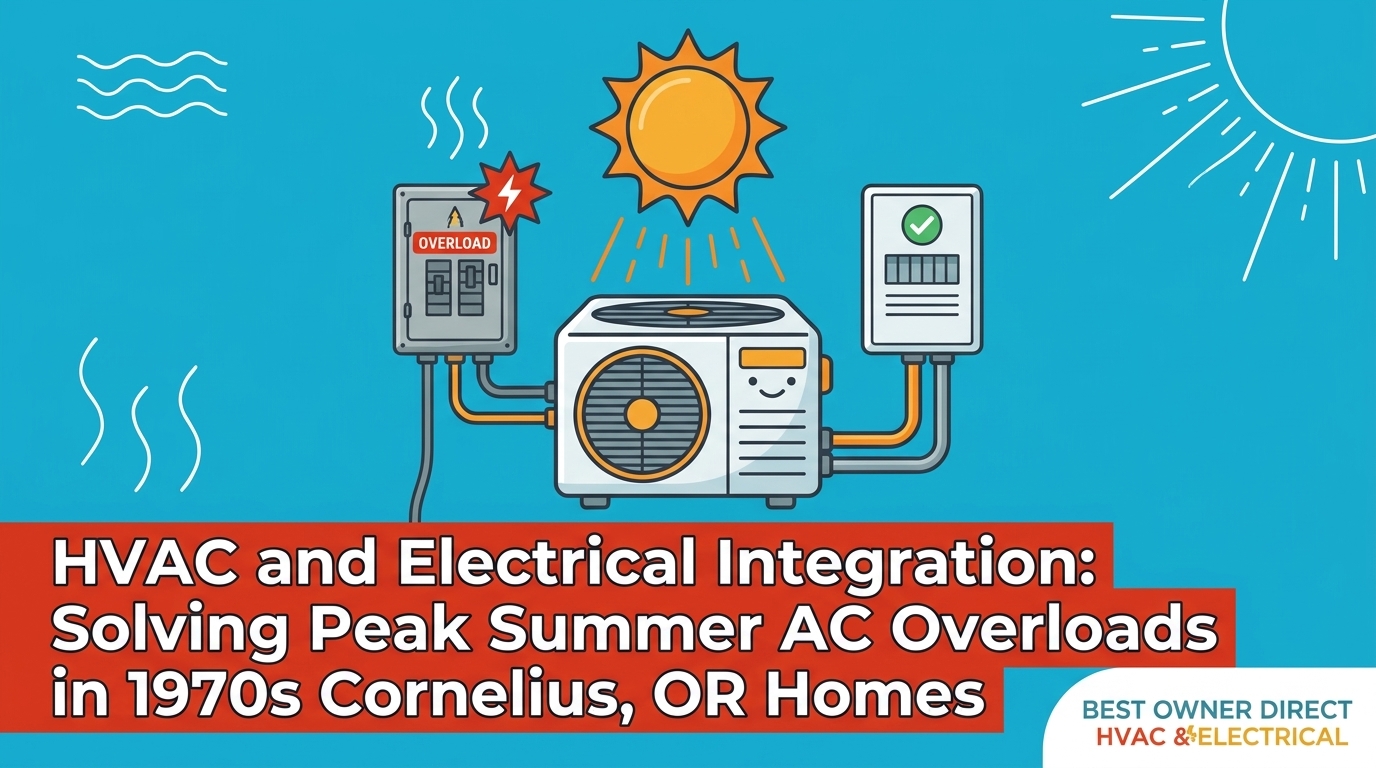
How Cornelius Homes Handle Peak Summer AC Loads on Older Electrical PanelsModern AC units often overwhelm aging 1970s electrical panels during intense summer heat. Review the warning signs and specific upgrades needed to keep your home safely cooled.
Read more

The Electrical Toll of a Struggling HVAC System on Your Home's BreakersAn aging air conditioner does not just lose cooling power; it actively stresses your electrical panel. A tripping breaker during late summer heat is a warning sign requiring professional diagnosis.
Read more

End-of-Summer Electrical Inspections: Checking Outdoor Disconnect BoxesAfter months of intense Pacific Northwest sun, your outdoor AC disconnect box can become brittle and unsafe. Learn the visual warning signs of UV degradation.
Read more