Menu

Why Hot Water Recovery Speed Matters for Your Home
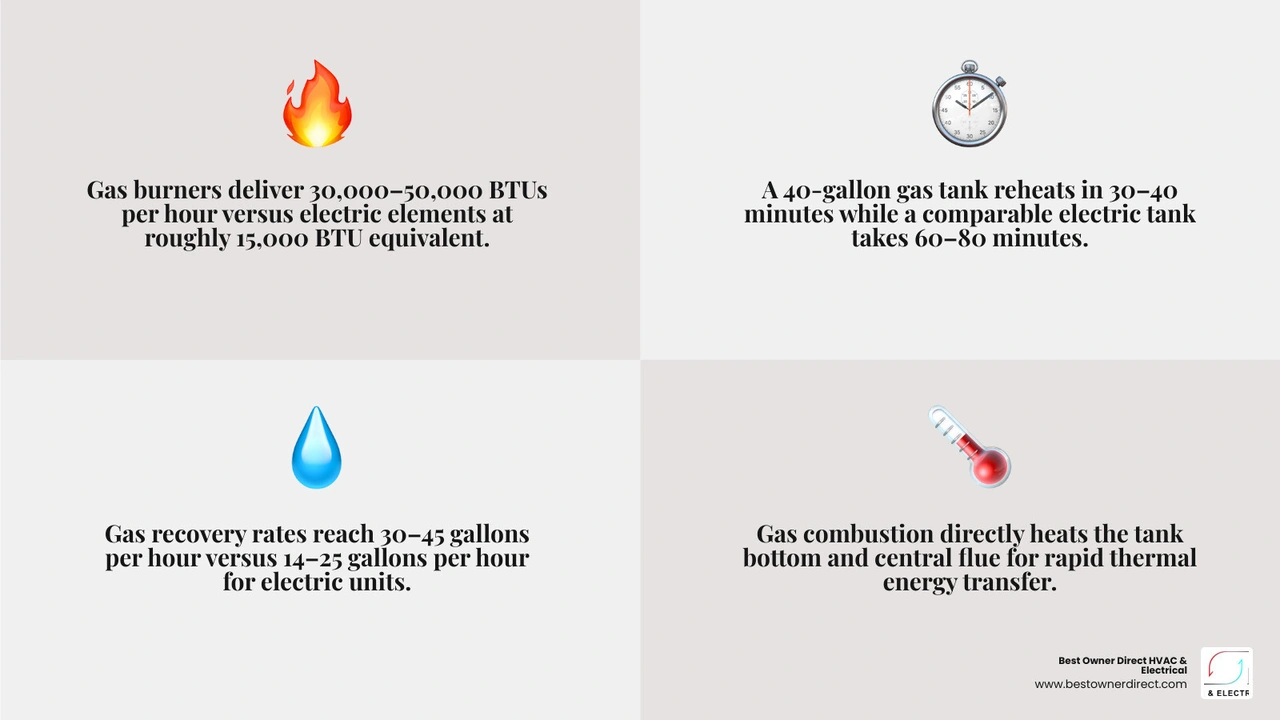
How gas water heaters heat faster than electric comes down to one simple thing: raw heat output. A standard gas burner delivers 30,000 to 50,000 BTUs per hour. A typical electric heating element produces the equivalent of roughly 15,000 BTUs per hour. That gap is why a 40-gallon gas water heater can fully reheat a tank in 30 to 40 minutes, while a comparable electric unit takes 60 to 80 minutes to do the same job.
Here is a quick side-by-side comparison:
| Feature | Gas Water Heater | Electric Water Heater |
|---|---|---|
| Full tank heat-up (40 gal) | 30-40 minutes | 60-80 minutes |
| Recovery rate | 30-45 gallons per hour | 14-25 gallons per hour |
| Heat source | Gas burner (30k-50k BTU) | Resistance element (~15k BTU) |
| Works during power outage | Yes (older pilot models) | No |
| Energy efficiency | 60-70% (venting losses) | 90-95% |
For most households, that speed difference is felt most during the morning rush — back-to-back showers, a running dishwasher, and a laundry cycle all competing for hot water at once. Families with high hot water demand often find that even a larger electric tank can't keep up with what a smaller gas unit can recover in the same window of time.
Understanding why this happens — and what factors influence it in the real world, including your local inlet water temperature here in the Portland metro area — can help you make a smarter decision about your next water heater.
The Science of How Gas Water Heaters Heat Faster Than Electric
To understand why gas is the undisputed speed champion of the traditional storage tank world, we have to look at the basic physics of heat transfer. Every water heater’s job is to take cold municipal water and raise its temperature to a comfortable, safe level (typically around 120°F to 140°F). However, the method used to generate and transfer that thermal energy differs dramatically between gas and electric systems.
Gas water heaters rely on combustion heating. Inside a gas unit, natural gas or propane is piped to a burner located beneath the water tank. When the thermostat calls for heat, the burner ignites, creating an open flame. This flame directly heats the metal bottom of the tank, while the hot combustion gases rise through a central flue or chimney running up the middle of the tank. This design maximizes the surface area of metal in direct contact with both the flame and the hot exhaust, allowing thermal energy to rapidly saturate the water.
Electric units, on the other hand, rely on electrical resistance. Instead of a fire beneath the tank, they use one or two metal heating elements that screw directly into the side of the tank and sit submerged in the water. When electricity flows through these elements, the resistance of the metal causes them to glow hot, warming the surrounding water.
While this direct submersion makes electric units incredibly efficient—nearly 100% of the electricity used is converted directly into heat—it is a much slower process. The heat transfer is limited by the physical surface area of the elements and the maximum electrical current your home's electrical panel can safely deliver. To learn more about how these operational dynamics affect energy use, check out our Gas vs Electric vs Heat Pump Guide 2026.
BTU vs Wattage: How Gas Water Heaters Heat Faster Than Electric
The speed difference is easiest to see when we translate electrical power and gas combustion into the same unit of measurement: the British Thermal Unit (BTU). A BTU is the amount of heat required to raise the temperature of one pound of liquid water by one degree Fahrenheit.
Let's look at the math:
- Electric Heating Elements: The vast majority of residential electric water heaters use dual 4,500-watt elements. Because of electrical safety standards and standard residential wiring, only one element typically runs at a time. A 4,500-watt element produces approximately 15,350 BTUs of heat per hour.
- Gas Burners: A standard residential gas water heater features a burner rated between 30,000 and 50,000 BTUs per hour.
This means a standard gas water heater packs two to three times the raw heating power of a standard electric water heater. Even though the electric model is technically more efficient at converting its energy source into heat without waste, the sheer volume of heat energy produced by the gas burner allows it to heat water at a much faster rate. It is the difference between trying to heat a swimming pool with a highly efficient hair dryer versus a slightly less efficient jet engine.
Burners vs Heating Elements
The physical design of the heating interfaces also plays a major role in speed. In a gas water heater, the burner at the bottom heats the entire lower dome of the tank. As the water at the bottom gets hot, it naturally rises, creating a strong convection current inside the tank. This continuous movement ensures that cold water is constantly pushed down toward the heat source, resulting in rapid, uniform heating. Additionally, the exhaust flue running through the center of the tank acts as a secondary heat exchanger, warming the water from the inside out as the hot air escapes.
In contrast, electric resistance elements are static rods. While they do create local convection currents, the heat transfer is highly localized. Standard electric tanks use an upper and a lower element. To avoid overloading your electrical panel, the system is wired so that the upper element heats the top portion of the tank first (ensuring you get some hot water quickly), and then switches power to the lower element to heat the rest of the tank. This sequential heating process, while practical for managing electrical loads, inherently doubles the time it takes to heat the entire volume of water from top to bottom.
Comparing Recovery Rates and Heating Times
When comparing water heaters, "recovery rate" is the most important metric for busy households. Recovery rate refers to the volume of water the heater can raise by a specific temperature (usually a 90°F rise, from a 50°F inlet temperature to a 140°F tank setting) in one hour.
The table below outlines how these differences play out across common tank sizes:
| Tank Capacity (Gallons) | Fuel Type | Average Heating Time (Full Tank) | Average Recovery Rate (GPH) |
|---|---|---|---|
| 40 Gallons | Gas | 30 - 40 minutes | 30 - 45 GPH |
| 40 Gallons | Electric | 60 - 80 minutes | 14 - 20 GPH |
| 50 Gallons | Gas | 40 - 50 minutes | 40 - 50 GPH |
| 50 Gallons | Electric | 75 - 90 minutes | 18 - 22 GPH |
| 80 Gallons | Electric | 120 - 150 minutes | 20 - 25 GPH |
As you can see, a gas unit can recover almost twice as fast as an electric unit of the same size. This performance gap is why choosing the right fuel type is critical to long-term satisfaction. For a deeper dive into how these metrics impact your utility bills and home comfort, read our guide on Energy Efficient Water Heater Options Compared.
Recovery Rate Differences
Because gas water heaters recover so quickly, manufacturers can often install smaller tanks to meet the same household demand. A 40-gallon gas unit can easily keep up with the hot water needs of a family that would otherwise require a 50-gallon or even a 65-gallon electric unit.
This recovery advantage also changes how we look at standby heat loss. Because electric units take so long to heat up, they must maintain their target temperature constantly, leading to continuous standby energy loss as heat slowly radiates through the tank walls. A gas unit can sit idle, lose some heat, and then rapidly make up for that loss in a matter of minutes when called upon.
Recovery Rates: How Gas Water Heaters Heat Faster Than Electric During Peak Demand
Imagine a cold winter morning in Beaverton or Lake Oswego. Two teenagers are taking back-to-back showers, the washing machine is running a warm cycle, and someone is rinsing dishes in the kitchen sink. This is "peak demand" — the window of time when your household tests the absolute limits of your water heating system.
Under this heavy load, an electric water heater will quickly deplete its stored hot water. Once the tank is filled with cold inlet water, the single active 4,500-watt element begins its slow recovery process. It will take over an hour of continuous operation before the tank is fully hot again. During this recovery window, anyone attempting to use hot water will be met with a lukewarm trickle.
A gas water heater handles this scenario with ease. As cold water enters the bottom of the tank, the high-BTU burner ignites immediately. Because it can recover up to 45 gallons of hot water per hour, it actively reheats the incoming cold water even while hot water is being drawn from the top of the tank. This rapid recovery means the family can stagger their morning routines by just 15 to 20 minutes and never run out of hot water.
Real-World Factors Affecting Water Heater Performance
While laboratory ratings give us a standard baseline, the actual heating speed you experience in your Oregon home depends on several environmental and maintenance factors. Whether you live in Hillsboro, Forest Grove, or Oregon City, real-world conditions will dictate how hard your water heater has to work. To understand how regional climate and home styles influence these choices, see our article on the Best Water Heater Type for the Pacific Northwest.
Inlet Water Temperature and Seasonal Changes
The temperature of the cold water entering your home from municipal water lines or private wells has a massive impact on heating times. In the Portland metro area, our winter groundwater temperatures can drop to a chilly 40°F to 45°F. In the summer, that inlet temperature might rise to a much milder 65°F.
This temperature swing changes the "temperature rise" your water heater must achieve.
- In the Summer: To reach a target temperature of 120°F, your water heater only needs to raise the water temperature by 55°F. A 40-gallon gas unit can handle this in about 25 to 30 minutes.
- In the Winter: The water heater must raise that 40°F water by 80°F to reach the same target. This extra workload forces your water heater to work roughly 35% harder, extending recovery times.
Because gas burners have such high BTU capacities, they handle this seasonal drop with minimal noticeable delay. An electric unit, however, will struggle significantly in the winter, often taking up to an hour and a half to recover a fully depleted tank.
Sediment Buildup and Maintenance
Another silent performance killer is sediment buildup. Over time, dissolved minerals in our local water supply (such as calcium and magnesium) naturally precipitate out of the water and settle to the bottom of the tank. This is especially common in areas with moderate water hardness across the Willamette Valley.
This layer of sediment acts as an unwanted insulation blanket between the heat source and the water.
- In Gas Heaters: The burner must heat through a thick layer of rock-like scale before it can warm the metal tank bottom. This traps heat in the combustion chamber, wasting energy and potentially overheating the tank metal, which can lead to premature tank failure. A mere half-inch of sediment can increase gas heating times by 20% to 40%.
- In Electric Heaters: Sediment can bury the lower heating element entirely. Deprived of water circulation, the submerged element will quickly overheat and burn out, leaving you with only the upper element active and doubling your recovery times.
To keep your system running at peak speed, we highly recommend scheduling an annual tank flush. Flushing removes these mineral deposits, restoring your system's original heating efficiency and extending its lifespan.
Tankless vs. Storage Tank Heating Speeds
For homeowners looking to maximize heating speed, tankless water heaters present an appealing alternative to traditional storage tanks. Often called "on-demand" water heaters, these compact systems eliminate the storage tank entirely, heating water instantly as it flows through the unit.
On-Demand Gas vs. Electric Tankless
While tankless systems are incredibly convenient, the speed of on-demand heating still depends heavily on your fuel source.
- Gas Tankless Heaters: These units use high-powered gas burners (often rated from 150,000 to 199,000 BTUs) to flash-heat water in seconds. They can easily handle a high flow rate, delivering 5 to 9 gallons of hot water per minute. This allows you to run multiple showers simultaneously without a drop in temperature, even during our cold Oregon winters.
- Electric Tankless Heaters: To heat water instantly without a storage tank, an electric unit requires an immense amount of electrical power. A typical whole-home electric tankless unit can demand up to 120 amps of power, requiring three or four dedicated 40-amp double-pole breakers. For many older homes in Portland, Milwaukie, or West Linn, this requires a costly electrical panel upgrade. Furthermore, because of the lower BTU-equivalent output of electrical elements, electric tankless units often struggle to maintain a high flow rate when incoming groundwater is very cold, sometimes restricting you to just one shower at a time in the winter.
For a comprehensive breakdown of how these systems compare side-by-side, check out our Tankless vs Tank vs Heat Pump Water Heater Comparison.
Heat Pump Hybrid Recovery Speeds
In recent years, hybrid heat pump water heaters have surged in popularity due to their incredible energy efficiency. These systems work like a refrigerator in reverse, pulling heat from the surrounding air and transferring it into the water tank.
While hybrid heaters can save you a significant amount on your monthly operating costs, they are engineered for efficiency rather than raw heating speed. In pure "heat pump" or "eco" mode, these units recover very slowly — typically only 8 to 12 gallons per hour.
To compensate for this, hybrid models feature traditional electric resistance backup elements. When hot water demand spikes, the unit switches to "hybrid" or "high demand" mode, activating the electric elements to speed up recovery. However, even in hybrid mode, they can only match the recovery speed of a standard electric water heater. If you have a large family with back-to-back showers, a hybrid unit must be sized larger (e.g., upgrading from a 50-gallon to an 80-gallon tank) to ensure you don't run out of hot water during busy mornings.
Frequently Asked Questions About Water Heater Speeds
We hear many of the same questions from our customers in Cornelius, Hillsboro, and across the metro area when they are trying to choose the right system. Here are some of the most common queries regarding water heater speeds:
How long does it take a 40-gallon water heater to heat up?
For a traditional storage tank starting from a completely cold state (such as after a professional installation or a long vacation):
- A gas 40-gallon water heater will take approximately 30 to 40 minutes to fully heat the tank to 120°F.
- An electric 40-gallon water heater will take about 60 to 80 minutes to reach the same temperature.
If you have run out of hot water mid-shower, you don't always have to wait for a full recovery. Because of how water stratifies in the tank, a gas unit will often deliver usable hot water at the top of the tank within 15 minutes of running empty, whereas an electric unit will require at least 30 minutes before providing a comfortable shower temperature.
Does cold weather affect water heater recovery times?
Yes, absolutely. During the winter, municipal water lines in Oregon run through cold ground, dropping incoming water temperatures significantly. This means your water heater must perform a much larger "temperature rise" to reach your thermostat's set point.
Because gas water heaters have a much higher BTU output, they can overpower this cold incoming water quickly, resulting in only a minor, often unnoticeable increase in heating time. Electric water heaters, however, are limited by their fixed wattage. In the dead of winter, you can expect an electric water heater to take 20% to 30% longer to recover a depleted tank compared to the summer months.
Is it worth switching from an electric to a gas water heater?
If heating speed and high hot water recovery are your top priorities, switching to gas can be highly beneficial. However, the feasibility of the switch depends entirely on your home's existing infrastructure.
If your home already has a natural gas line run for a furnace, stove, or fireplace, extending that line to your utility room is a straightforward process. You will also need to install a proper venting system to safely route combustion gases out through your roof or an exterior wall. If your home is currently all-electric and has no gas service, the infrastructure upgrades required to bring gas to your property can be substantial. In those cases, upgrading to a larger electric tank or a high-efficiency hybrid heat pump system is often the more practical route.
Conclusion
When it comes to keeping your home comfortable and ensuring your family never has to endure a cold shower, understanding how gas water heaters heat faster than electric is a game-changer. The raw power of gas combustion simply cannot be matched by standard electrical resistance elements, making gas the clear winner for active, high-demand households.
At Best Owner Direct HVAC & Electrical, we are dedicated to helping our neighbors throughout Cornelius, Beaverton, Hillsboro, Tigard, and the surrounding communities find the perfect balance of comfort, speed, and energy efficiency. Whether you need a quick diagnostic check on a slow-heating unit, a routine tank flush to clear out performance-killing sediment, or a professional installation of a new high-recovery system, our licensed technicians are here to help.
Ready to upgrade your home’s comfort? Contact us today to explore our Best Owner Direct Water Heater Services and find the perfect hot water solution for your family.


End-of-Summer Electrical Inspections: Checking Outdoor Disconnect BoxesAfter months of intense Pacific Northwest sun, your outdoor AC disconnect box can become brittle and unsafe. Learn the visual warning signs of UV degradation.
Read more
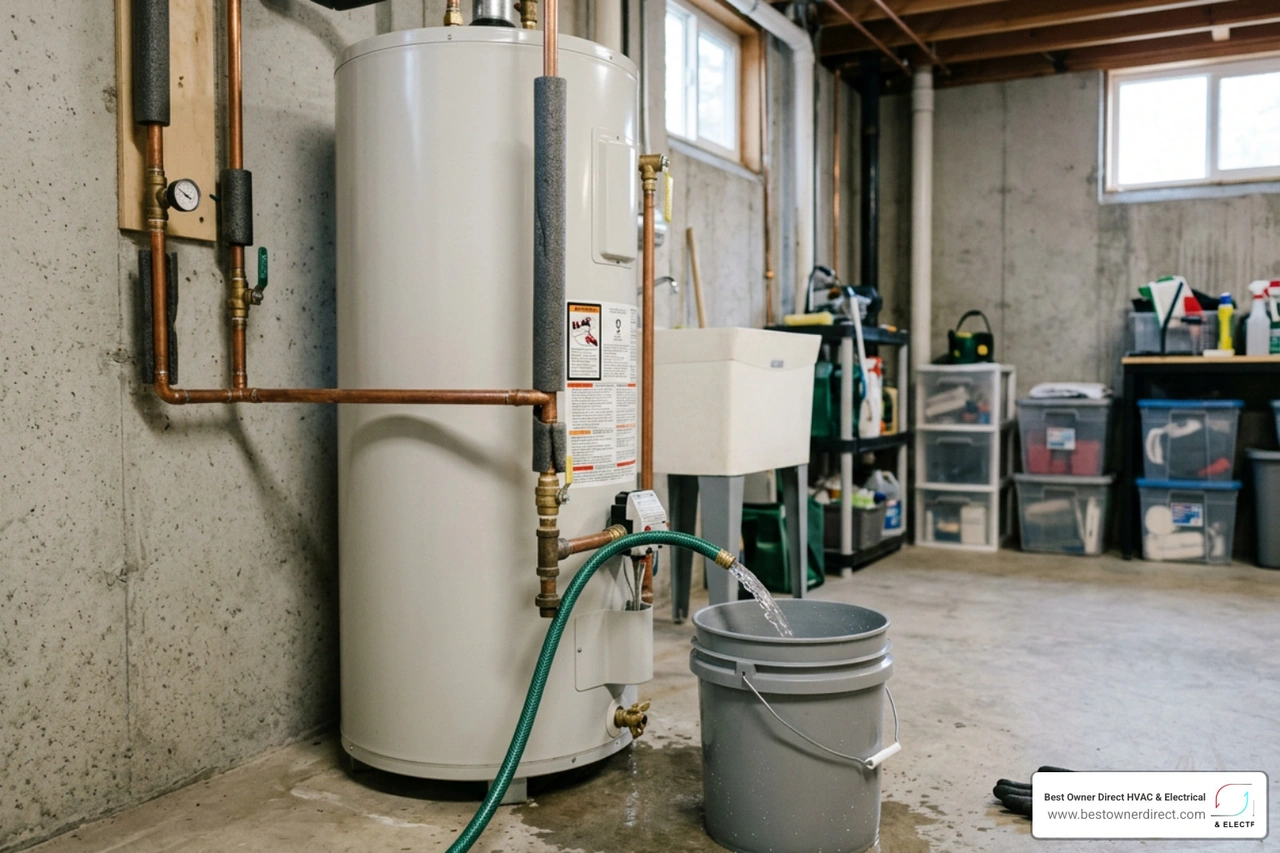
Step-by-Step Guide to How Often to Flush Your Water Heater in OregonLearn how often to flush your water heater in Oregon with our step-by-step guide, covering signs, DIY steps, and maintenance tips.
Read more
Hiring an HVAC Company vs. an Independent Technician for End-of-Season MaintenanceYour AC system has endured months of heavy summer use and needs reliable servicing. Compare the accountability and warranty support of established providers versus independent technicians.
Read more