Menu


The right heat pump for a Tualatin Valley home is the one sized to your home's actual heat loss, rated to perform in our wet 30–45°F winters, and installed by someone who will still answer the phone next year. Brand matters less than sizing and installation quality — that's the honest answer most homeowners don't hear.
What is a heat pump, and why does it fit Oregon so well?
A heat pump is a single system that heats and cools your home by moving heat rather than generating it — in winter it pulls heat from outdoor air into your house, and in summer it runs in reverse like an air conditioner. Because western Oregon winters are mild and damp rather than brutally cold, a heat pump spends almost all of its life in the temperature range where it is most efficient. That's why heat pumps have become the default recommendation for homes across the Tualatin Valley and Portland metro.
How do you size a heat pump correctly?
Correct sizing starts with a load calculation — an assessment of your home's square footage, insulation, windows, air-tightness, and duct condition — not a rule of thumb based on square feet alone. An oversized heat pump short-cycles: it blasts, shuts off, and never dehumidifies properly. An undersized one runs constantly and leans on backup heat during cold snaps. When we quote a heat pump installation, sizing the equipment to the house is the step we refuse to skip, because it determines comfort and operating cost for the next 15 years.
Which features actually matter in our climate?
Three things earn their cost in the Pacific Northwest; most other spec-sheet items are nice-to-haves:
• Cold-climate (low-ambient) performance. Look at the heating capacity the unit holds at 17°F, not just the headline rating. Our valley floors rarely stay that cold for long, but ice storms happen, and you want heat when they do.
• Variable-speed (inverter) operation. A unit that can run low and slow keeps temperatures steady, dehumidifies better in our damp shoulder seasons, and runs quieter. We explain the trade-offs in single-stage vs. two-stage vs. variable-speed.
• A defrost strategy suited to wet cold. Western Oregon's humid winters make outdoor coils frost more often than drier climates at the same temperature. Defrost cycles are normal here — we cover what's normal and what isn't in our defrost guide.
Ducted or ductless — which type fits your house?
If your home has ducts in decent condition, a ducted heat pump replaces your existing furnace-and-AC arrangement invisibly. If you have no ducts (many older Cornelius and Forest Grove homes), electric baseboard heat, or a bonus room that never stays comfortable, a ductless mini-split avoids the cost and losses of new ductwork. We compare the two honestly in mini-split vs. ducted.
Where do buyers go wrong?
The failure modes we see most often: accepting a bid priced off square footage with no load calculation; letting a low bid win when it quietly reuses leaky ducts; and buying more efficiency tier than the house can use while skipping duct sealing that would matter more. A heat pump is a system, not an appliance — the house it connects to is half the performance.
What about incentives?
Oregon homeowners frequently qualify for utility and Energy Trust of Oregon incentives on qualifying heat pumps, and federal tax credits have applied to qualifying high-efficiency equipment in recent years. Amounts and rules change, so we confirm what's current for your specific equipment when we quote — and financing options can spread the remainder into manageable payments. For the current, sourced program list — including which federal credits ended for 2026 installs — see our Oregon rebates & incentives guide.
How Best Owner Direct approaches it
We're a family-owned shop — our project manager sizes and quotes your system, our own technicians install it, and it's backed by our 1-year workmanship warranty. Amana is our featured brand, and we also install Daikin, Goodman, Ruud, Midea, and Mitsubishi Electric, so the recommendation fits your house and budget rather than a sales quota. When you're ready, request a heat pump assessment and we'll walk your home with you.
What to read next
Once you've settled on a heat pump, the next honest question is how to pay for it — see how homeowners actually finance a new system.
Sources
• ENERGY STAR — air-source heat pumps
• Energy Trust of Oregon — heat pump incentives
• ENERGY STAR — federal tax credits for energy efficiency
Quick answers
Questions we hear about this
Do heat pumps work in Oregon winters?+Yes. Western Oregon winters are mild and damp — mostly 30–45°F — which is squarely in the range where modern heat pumps heat efficiently. Cold-climate models hold useful capacity well below freezing for the occasional ice storm.
What size heat pump does my home need?+The only honest answer comes from a load calculation of your specific home — insulation, windows, air-tightness, and ducts. Square-footage rules of thumb routinely oversize equipment, which causes short-cycling and poor dehumidification.
Which heat pump brands does Best Owner Direct install?+Amana is our featured brand, and we also install Daikin, Goodman, Ruud, Midea, and Mitsubishi Electric. We'll recommend the equipment that fits your home and budget, and we service what we sell.
How long do heat pumps last?+A well-installed, properly-maintained heat pump commonly runs 15 years or more, with sizing and installation quality mattering as much to lifespan as the equipment itself. Annual maintenance is the cheapest way to protect that lifespan.
Do I need a backup heat source with a heat pump?+Most modern heat pumps include electric backup (auxiliary/emergency heat) built in for the rare deep cold snap, so a separate backup system usually isn't necessary in our climate. Dual-fuel setups pairing a heat pump with a gas furnace are an option for homes that already have gas service.


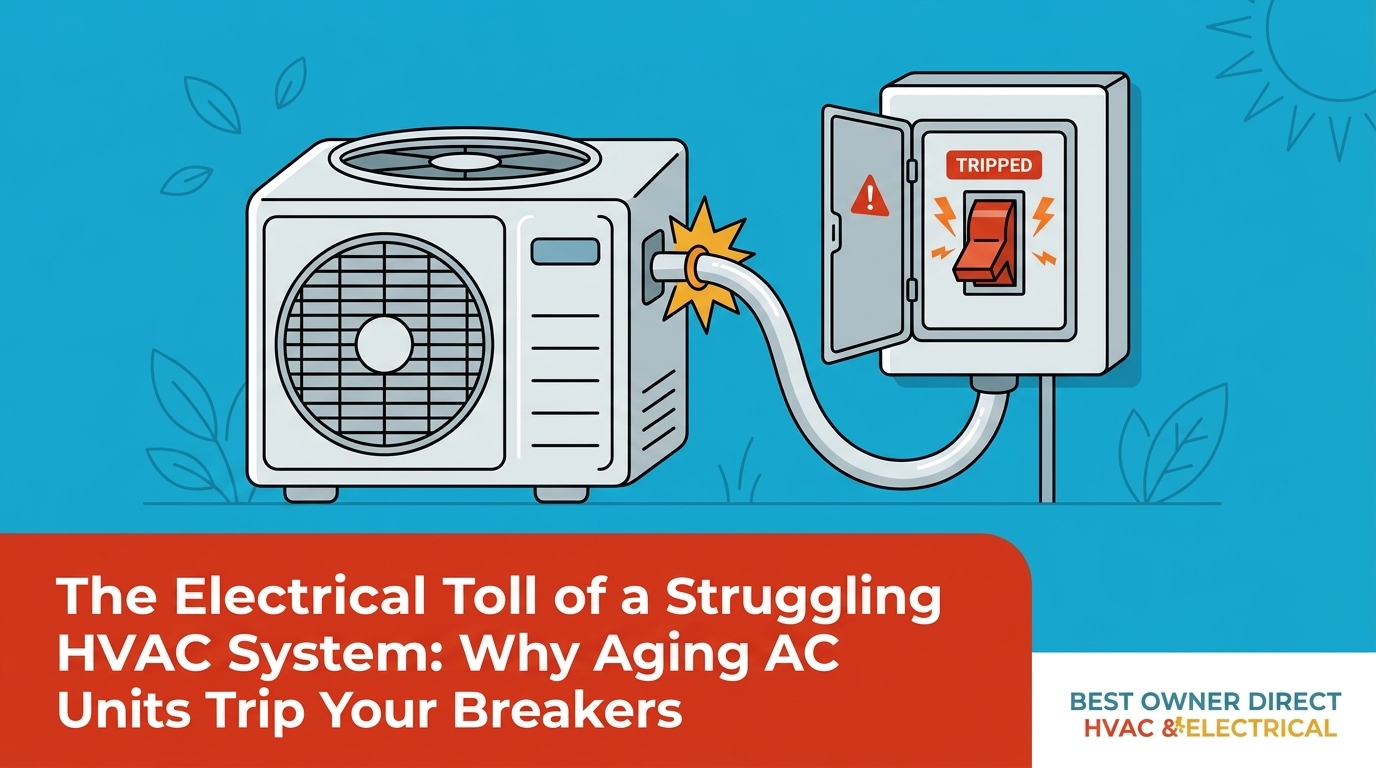
The Electrical Toll of a Struggling HVAC System on Your Home's BreakersAn aging air conditioner does not just lose cooling power; it actively stresses your electrical panel. A tripping breaker during late summer heat is a warning sign requiring professional diagnosis.
Read more
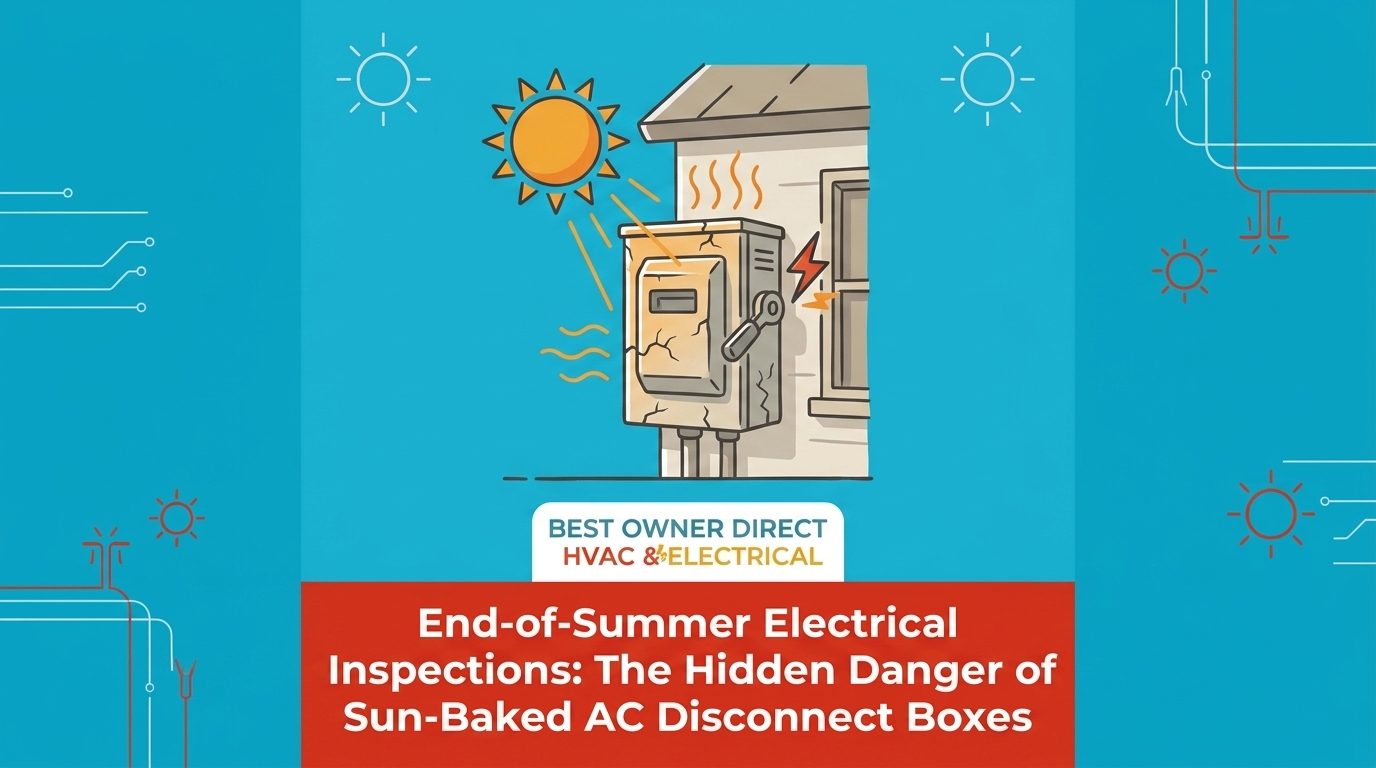
End-of-Summer Electrical Inspections: Checking Outdoor Disconnect BoxesAfter months of intense Pacific Northwest sun, your outdoor AC disconnect box can become brittle and unsafe. Learn the visual warning signs of UV degradation.
Read more
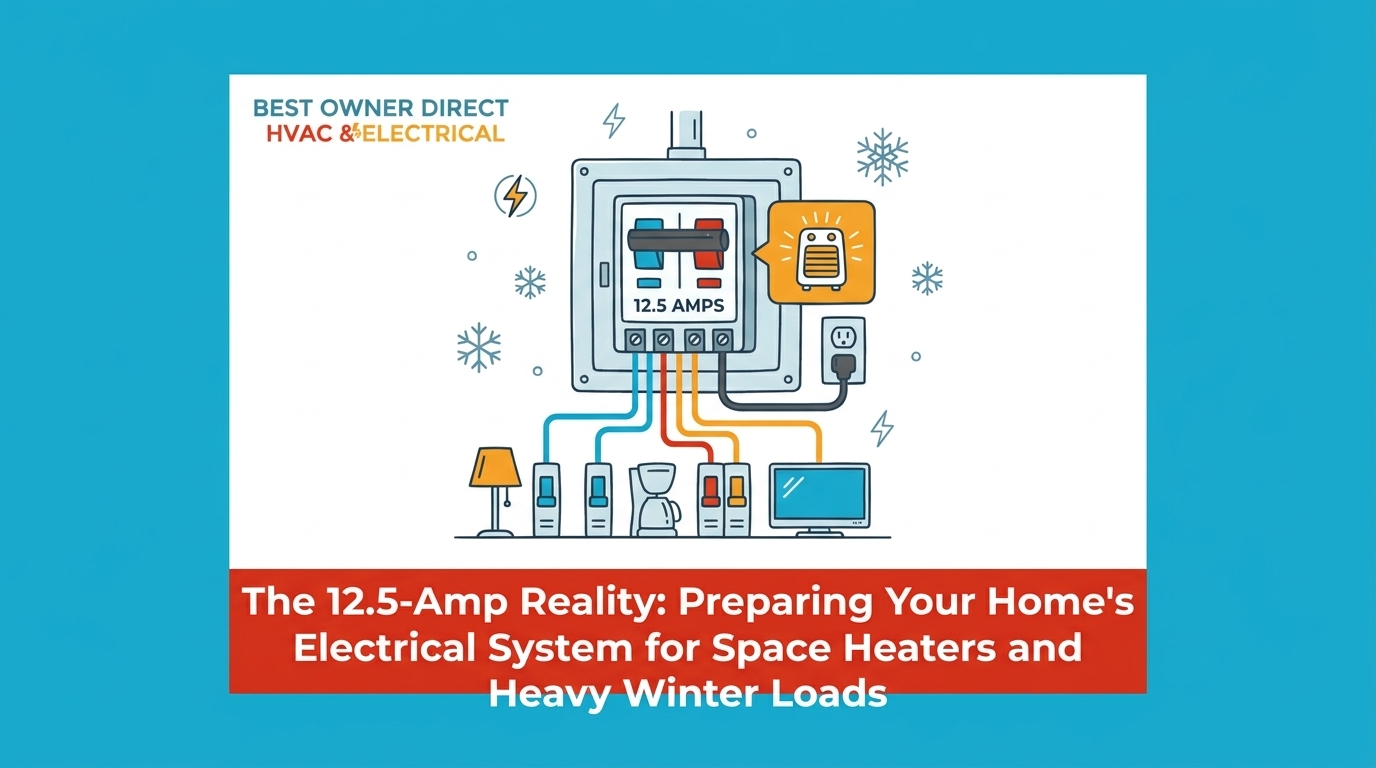
Preparing Your Home's Electrical System for Space Heaters and Heavy Winter LoadsA standard 1500W space heater consumes nearly 80% of an older bedroom circuit's capacity instantly. Find out why resetting that tripped breaker is a hidden fire hazard.
Read more