Menu


Why Oregon Homeowners Need a Plan to Keep Their AC Running Longer
Knowing how to extend the life of your AC in Oregon can mean the difference between a system that lasts well over 15 years and one that breaks down years ahead of schedule. Oregon's climate is unlike almost anywhere else in the country — from the damp, moss-friendly winters of the Willamette Valley to the smoke-filled summers that push your filters to their limits. That combination of persistent moisture, wildfire smoke, seasonal pollen, and dramatic temperature swings creates real, measurable stress on your cooling system year after year.
Here is a quick answer to help you get started right away:
To extend the life of your AC in Oregon:
- Change air filters every 30 to 45 days during wildfire season and peak pollen periods
- Keep at least 2 feet of clearance around your outdoor condenser unit at all times
- Schedule a professional tune-up every spring before the summer heat arrives
- Use a smart thermostat to reduce unnecessary runtime and system strain
- Rinse outdoor coils gently with a garden hose after heavy smoke or dust events
- Never wrap your unit in plastic tarps — trapped moisture accelerates rust and corrosion
- Address minor issues immediately before they become expensive compressor failures
- Seal leaky ductwork to stop the 20 to 30 percent of energy that escapes through gaps
A properly maintained AC unit can last 15 to 20 years. Skipping maintenance shortens that window considerably — and in Oregon's unpredictable climate, your system faces challenges that homeowners in drier states simply do not deal with. An air conditioner sitting idle through a wet Oregon winter can quietly develop small problems that only reveal themselves on the hottest day of the year — exactly when you need it most.
The good news is that most of the damage is preventable. A mix of simple monthly habits and one annual professional visit goes a long way toward keeping your system reliable for the long haul.
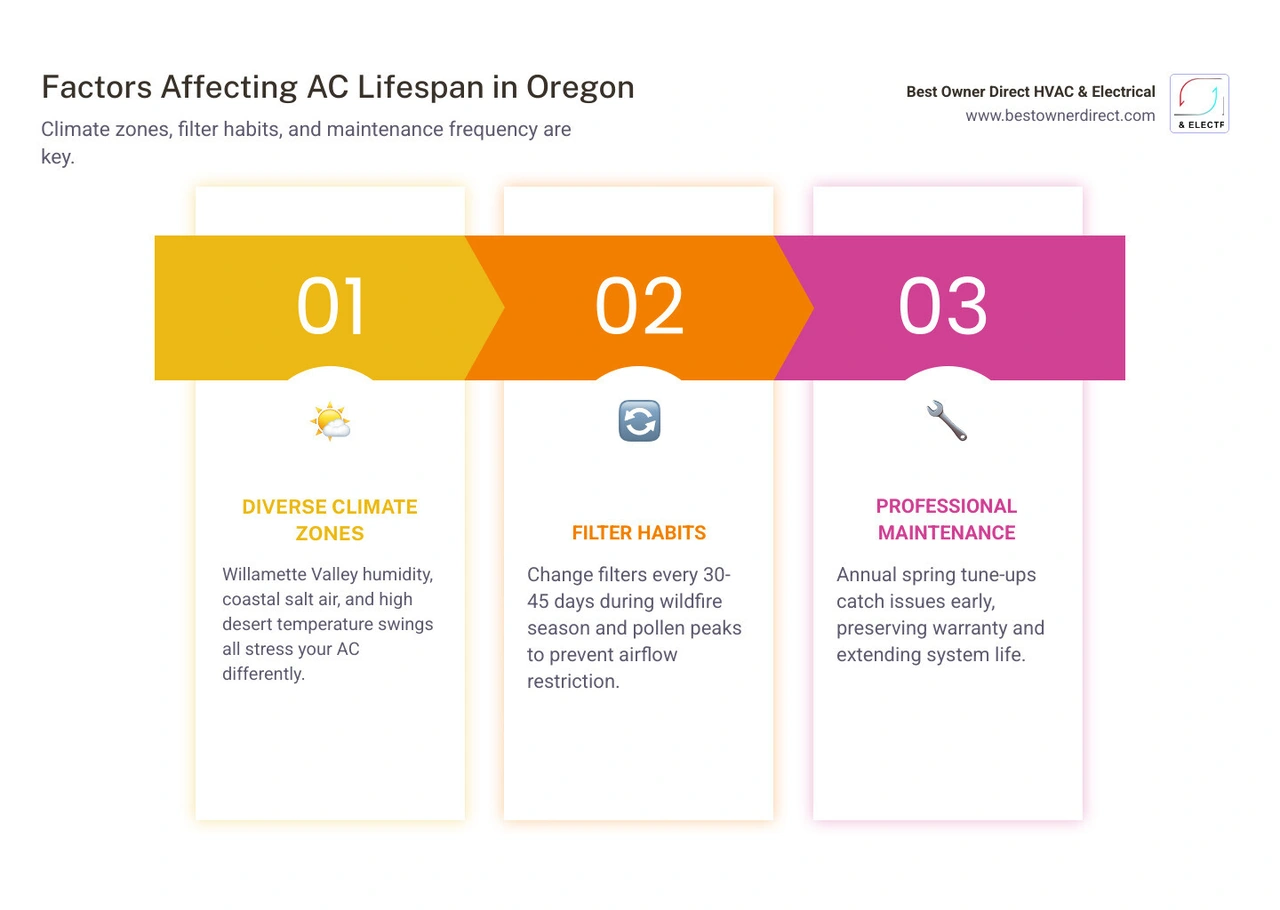
How Oregon’s Diverse Climate Impacts Your AC Lifespan
While Oregon is famous for its gorgeous green landscapes, that very same environment poses unique mechanical challenges for home cooling systems. In the Willamette Valley and the greater Portland metro area—including communities like Hillsboro, Beaverton, and Lake Oswego—we experience a distinct blend of high seasonal humidity, heavy spring pollen, and prolonged damp winters.
Persistent moisture is one of the quietest culprits behind premature AC failure. High humidity levels mean your air conditioner has to work twice as hard to dehumidify your indoor air while cooling it. This extra moisture must be successfully drained away. If your system's condensate lines are neglected, damp conditions quickly lead to mold growth, clogged drains, and rust inside the unit.
Furthermore, the damp marine air that occasionally sweeps through our valley carries moisture that settles on outdoor components. Over months of winter dormancy, this constant dampness can corrode copper coils, degrade electrical connections, and cause concrete condenser pads to settle unevenly in saturated soil.
When summer finally arrives, we often see dramatic temperature swings—cool morning breezes followed by blazing afternoon heatwaves. This rapid shift causes thermal expansion and contraction in your system's copper coils and electrical wiring, which can loosen connections and stress critical joints over time.
To understand how different cooling systems hold up under these local conditions, let's look at how their typical lifespans compare:
| AC System Type | Average Lifespan in Oregon | Key Climate Vulnerability | Best Longevity Practice |
|---|---|---|---|
| Central Air Conditioning | 12 to 17 Years | Outdoor debris accumulation & moisture corrosion | Maintain 2-foot clearance; annual coil cleaning |
| Heat Pump Systems | 15 to 20 Years | Year-round wear and tear (heating & cooling cycles) | Semi-annual professional inspections |
| Ductless Mini-Splits | 15 to 20 Years | Indoor blower wheel dust & outdoor wall unit debris | Monthly indoor filter rinses; keep outdoor unit clear |
How to Extend the Life of Your AC in Oregon Against Wildfire Smoke and Pollen
In recent years, summer in the Pacific Northwest has unfortunately become synonymous with wildfire season. The fine particulate matter (PM2.5) carried by wildfire smoke is incredibly invasive. These tiny, sticky ash particles do not just stay outdoors; they are pulled toward your home and can quickly bypass low-quality, basic fiberglass filters.
Once inside your system, these microscopic particulates settle directly onto your indoor evaporator coils. This creates a physical, insulating barrier that severely restricts heat transfer. Because the coils cannot effectively absorb heat, your system is forced to run longer, hotter cycles to cool your home. This continuous overworking leads to rapid airflow restriction, extreme system strain, and eventually, a frozen evaporator coil or a completely burned-out compressor.
Spring pollen is another major hurdle. The Willamette Valley is notorious for some of the highest grass and tree pollen counts in the nation. When Douglas fir needles, cottonwood fluff, and thick yellow pollen coat your outdoor condenser unit, they block the delicate aluminum fins. This prevents the outdoor unit from releasing the heat it pulled from your home, forcing the entire system to run under dangerously high pressure.
Essential DIY Maintenance: How to Extend the Life of Your AC in Oregon
You do not need a background in mechanical engineering to protect your cooling system. Taking a proactive, hands-on approach to basic care is the single most effective way to prevent mid-season breakdowns.
Managing Air Filters Across Oregon's Seasons
Your air filter is the first line of defense for both your indoor air quality and your cooling equipment. When a filter becomes clogged with dust, pet dander, pollen, and wildfire ash, it acts like a wall. The blower motor has to work significantly harder to pull air through the blockage, which spikes your energy bills and wears out the motor prematurely. In fact, according to the U.S. Department of Energy, simply replacing a dirty air filter with a clean one can lower your air conditioner’s energy consumption by 5% to 10%.
- Standard Schedule: Under normal conditions, check your filter monthly and replace it every 90 days.
- Heavy Use & High Pollen (Spring/Summer): If you have pets, suffer from seasonal allergies, or live in a highly wooded area like Sherwood or Oregon City, check your filter every 30 days and replace it every 30 to 45 days.
- Wildfire Smoke Events: During active smoke advisories, your filter can become completely saturated in a matter of days. Check it weekly and replace it immediately if it appears gray or dark.
- Filter Quality Matters: We highly recommend using pleated filters with a MERV (Minimum Efficiency Reporting Value) rating between 8 and 11. These filters capture fine smoke and pollen particles without restricting airflow. Avoid cheap fiberglass filters (which let too much debris pass through) and ultra-high MERV filters above 13 (which can restrict airflow too much unless your system was specifically designed for them).
Outdoor Condenser Care and the Two-Foot Clearance Rule
Your outdoor condenser unit is responsible for releasing all the heat captured from inside your home. To do this efficiently, it needs a continuous, unobstructed supply of fresh air.
- The Two-Foot Rule: Maintain at least 2 feet of clear space on all sides of your outdoor unit. Cut back any shrubs, ivy, ornamental grasses, or garden beds that have crept too close.
- The Overhead Rule: Keep trees trimmed so branches do not hang directly over the unit, preventing falling leaves, twigs, and sap from clogging the top fan grille.
- Debris Removal: Oregon's wet autumns and winters pile wet leaves, pine needles, and organic debris against the base of the condenser. This wet debris holds moisture against the metal cabinet, accelerating rust and corrosion on the base pan. Clear away any accumulation monthly.
- Combating Moss and Algae: Because of our damp, shaded yards, moss and algae frequently grow on the concrete pads supporting outdoor units. These growths act like wet sponges, holding moisture against the bottom of the unit. Gently scrub the concrete pad with a stiff brush to keep it clean and dry.
Smart Thermostats and Home Insulation Upgrades
Reducing the physical workload on your air conditioner is a highly effective way to add years to its lifespan.
Installing a smart thermostat allows you to automate your cooling schedule so your system isn't running at maximum capacity when nobody is home. Setting your thermostat just a few degrees higher when you are away can make a massive difference. Each degree you raise the thermostat can save you about 1% to 3% on cooling energy use, translating directly to less mechanical wear and tear.
Additionally, your AC is only as good as the envelope containing the cool air. If your home has poor attic insulation or leaky ductwork, your air conditioner has to run almost continuously to keep up with the heat. Leaky ducts can waste 20% to 30% of your home's cooling energy. Sealing those duct gaps and upgrading your attic insulation keeps the cool air inside, allowing your AC to complete its cycles quickly and rest more often.
Common DIY Mistakes That Shorten AC Life
While we love a proactive homeowner, some DIY cleaning methods do far more harm than good. Avoid these common maintenance blunders:
- Using Pressure Washers: Never use a pressure washer to clean your outdoor condenser coils. The high-pressure stream will instantly bend and crush the delicate aluminum fins, permanently blocking airflow and requiring professional fin-combing or expensive coil replacement. Instead, use a gentle spray from a standard garden hose.
- Wrapping the Unit in Plastic Tarps: It is tempting to wrap your outdoor unit in a heavy plastic tarp for the winter to "protect" it from Oregon's rain. However, non-breathable plastic traps condensation inside. This creates a high-humidity greenhouse environment that causes rapid rust, corrodes electrical contacts, and invites mice and other pests to nest inside the warm, dry control box. Outdoor units are designed to withstand rain; if you must cover it, use a breathable, professionally designed canvas cover that only covers the top of the unit.
- Stacking Items Against the Cabinet: Never use the space around your AC to stack firewood, patio furniture, or garden tools. This restricts airflow and can lead to accidental physical damage to the coils.
Why Professional Annual Maintenance is Critical for Longevity
While monthly DIY habits keep the worst of the debris at bay, there are critical mechanical and electrical tasks that require professional tools and training. Regular professional maintenance can extend the life of your AC system by 5 to 7 years, saving you from premature, expensive replacements.
How to Extend the Life of Your AC in Oregon with Professional Spring Tune-Ups
The ideal time to schedule professional maintenance is during our "spring window"—ideally between April and mid-May, before the first major summer heatwave hits. Getting ahead of the seasonal rush ensures your system is fully optimized and ready to run efficiently when you need it most.
During a professional tune-up, a licensed technician performs several deep-maintenance tasks that homeowners cannot safely do themselves:
- Deep Coil Cleaning: Technicians use specialized, self-rinsing chemical coil cleaners to dissolve deeply embedded grime, pollen, and wildfire ash from both the indoor evaporator and outdoor condenser coils.
- Refrigerant Level and Leak Detection: Refrigerant does not naturally deplete or wear out; it operates in a closed loop. If your system is low on refrigerant, it means there is a physical leak. A technician will use electronic leak detectors to find and repair the leak source rather than simply "topping it off," which is a temporary fix that can permanently damage the compressor.
- Electrical Calibration and Safety Checks: Technicians inspect electrical contacts, tighten loose wiring caused by thermal expansion, and measure voltage and amperage draw on motors. This prevents electrical shorts and component failures.
- Blower Motor Lubrication: Keeping moving parts properly lubricated minimizes friction, reducing the electrical draw and preventing the motor from overheating.
- Condensate Drain Clearing: Technicians flush the drain lines and clean the drip pan to remove algae, mold, and sediment, preventing water backups that can cause severe water damage to your home’s ceilings and walls.
- Warranty Preservation: Most major HVAC manufacturers explicitly state in their warranty terms that the equipment must be professionally serviced annually. Skipping your professional spring tune-up can completely void your warranty, leaving you financially responsible if a major component fails.
Recognizing the Signs That Your AC is Struggling
Between annual visits, keep an eye (and ear) out for these common warning signs that your air conditioner needs immediate, professional attention:
- Weak Airflow: If air is barely trickling out of your registers, it could point to a failing blower motor, a severely clogged filter, or major duct leaks.
- Strange Noises: Squealing, grinding, rattling, or loud banging noises are clear signs of mechanical trouble, such as a slipped belt, loose fan blade, or failing compressor.
- Frequent Cycling: If your AC turns on and off every few minutes (short-cycling), it is placing immense strain on the compressor and electrical components. This is often caused by a dirty sensor, airflow restrictions, or an improperly sized system.
- Rising Energy Bills: A sudden, unexplained spike in your summer utility bills means your system is losing efficiency and running longer to achieve the same cooling results.
- Frozen Evaporator Coils: If you notice ice forming on the brass refrigerant lines or the indoor evaporator unit, turn the system off immediately. Running a frozen AC can cause liquid refrigerant to flood back into the compressor, destroying it completely.
Knowing When to Repair vs. Replace Your Oregon AC Unit
No matter how well you care for your air conditioner, there eventually comes a time when continuing to repair an old system is no longer a sound investment. Deciding whether to repair or replace can be tricky, but we recommend using a few reliable guidelines:
- The 15-Year Rule: On average, a residential air conditioner in our part of Oregon lasts 15 to 20 years. If your system is over 15 years old and requires a major, expensive repair (such as a failed compressor or a cracked coil), replacing the unit is almost always the more cost-effective choice in the long run.
- The Frequency of Breakdowns: If you find yourself calling for emergency repairs every summer, those bills quickly add up. Investing that capital into a modern, reliable system stops the cycle of emergency service fees.
- SEER2 Efficiency Standards: Older systems operate at much lower efficiency levels (often around 10 to 13 SEER). Modern systems must meet strict SEER2 (Seasonal Energy Efficiency Ratio) regulations, starting at 14.3 SEER2 in our region and going much higher. Upgrading to a high-efficiency system can instantly slash your monthly cooling bills, helping the new system pay for itself over time.
- The Refrigerant Transition: If your older AC uses R-22 refrigerant (a chemical phased out due to environmental regulations), repairing a leak is incredibly expensive because the refrigerant supply is extremely limited. Upgrading to a modern system that uses eco-friendly, readily available refrigerants is a much smarter, future-proof decision.
Frequently Asked Questions About Oregon AC Lifespan
How long does an average AC unit last in Oregon's climate?
In the Portland metro and Willamette Valley areas, a properly maintained central air conditioner typically lasts 15 to 20 years. Because our summers are relatively mild compared to southern or desert states, our local systems log fewer annual runtime hours. However, the prolonged damp winters and high seasonal humidity mean that moisture-related wear, rust, and lack of maintenance are the primary factors that shorten this lifespan.
Can wildfire smoke permanently damage my air conditioning system?
Yes, if it is left unaddressed. While the smoke itself doesn't damage the metal components, the fine, sticky ash and soot quickly coat the indoor evaporator coils and outdoor condenser coils. This creates an insulating layer that restricts heat transfer, forcing the compressor to run much hotter and longer. Over time, this extreme thermal stress can lead to premature compressor failure. Changing your filters frequently during smoke events and having your coils professionally cleaned afterward completely prevents this damage.
Why is my air conditioner freezing up during a hot Oregon summer?
An AC freezes up when the temperature of the indoor evaporator coil drops below 32°F, causing the natural condensation on the coil to turn to ice. This is almost always caused by one of two issues:
- Restricted Airflow: A severely clogged air filter, dirty coil, or blocked return vents prevent warm indoor air from passing over the coil to keep it warm.
- Low Refrigerant: A refrigerant leak drops the pressure inside the system, causing the coil temperature to plummet below freezing.
If your system freezes, turn it off immediately at the thermostat to let the ice melt, and call a professional to diagnose the root cause.
Conclusion
Taking the time to understand how to extend the life of your AC in Oregon is one of the smartest investments you can make as a homeowner. By pairing simple monthly DIY habits—like checking your filters, maintaining outdoor clearance, and keeping moisture at bay—with a professional spring tune-up, you can easily keep your system running efficiently for 15 to 20 years.
At Best Owner Direct HVAC & Electrical, we are dedicated to helping our neighbors throughout Cornelius, Portland, Hillsboro, Beaverton, and the surrounding communities enjoy reliable, energy-efficient comfort all year long. Our family-owned business focuses on quality workmanship, transparent service, and customer safety.
Don't wait for the next summer heatwave to test your cooling system. Contact us today to schedule your professional tune-up, or explore our comprehensive air conditioning services to keep your home cool, safe, and comfortable for years to come.


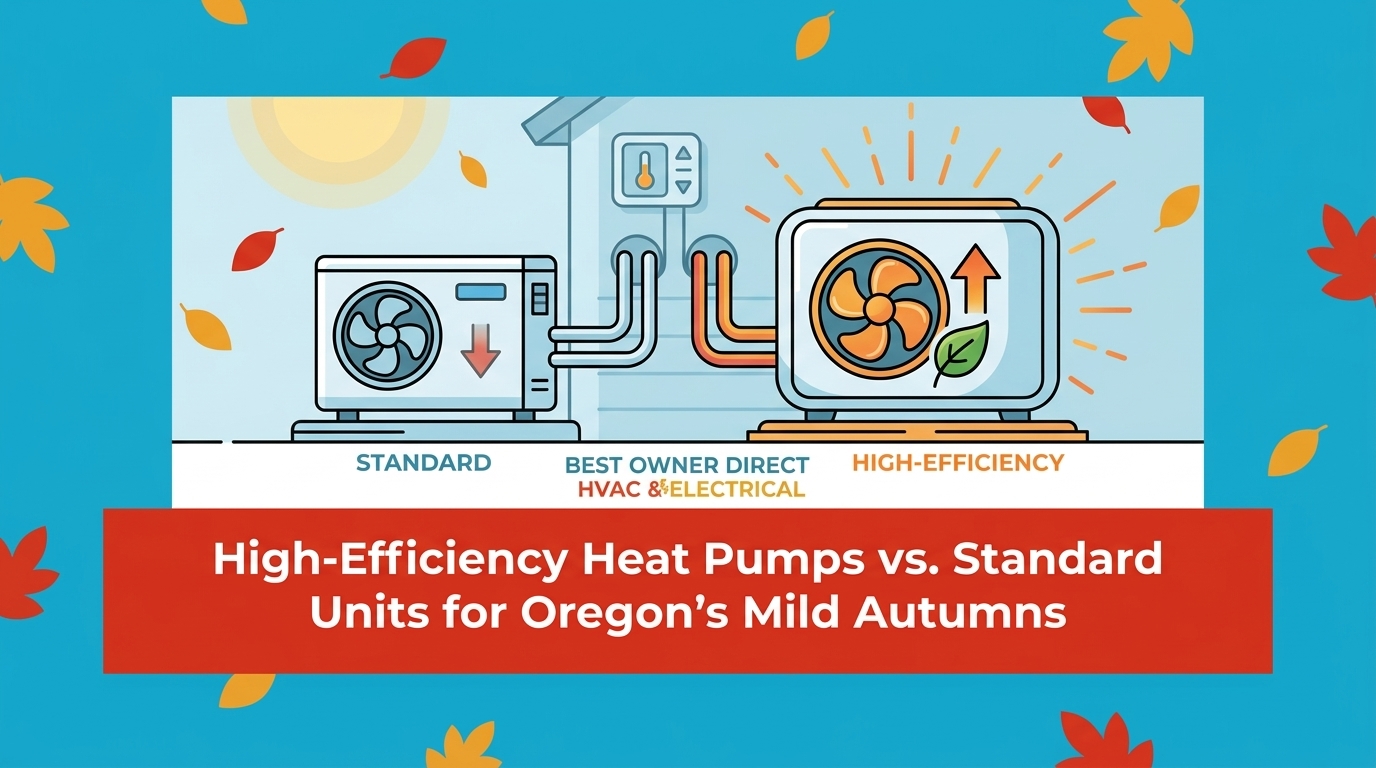
High-Efficiency Heat Pumps vs. Standard Units for Oregon's Mild AutumnsStandard heat pumps often blast too much heat on chilly fall mornings, causing uncomfortable temperature swings. Inverter-driven systems solve this by providing gentle, constant warmth.
Read more
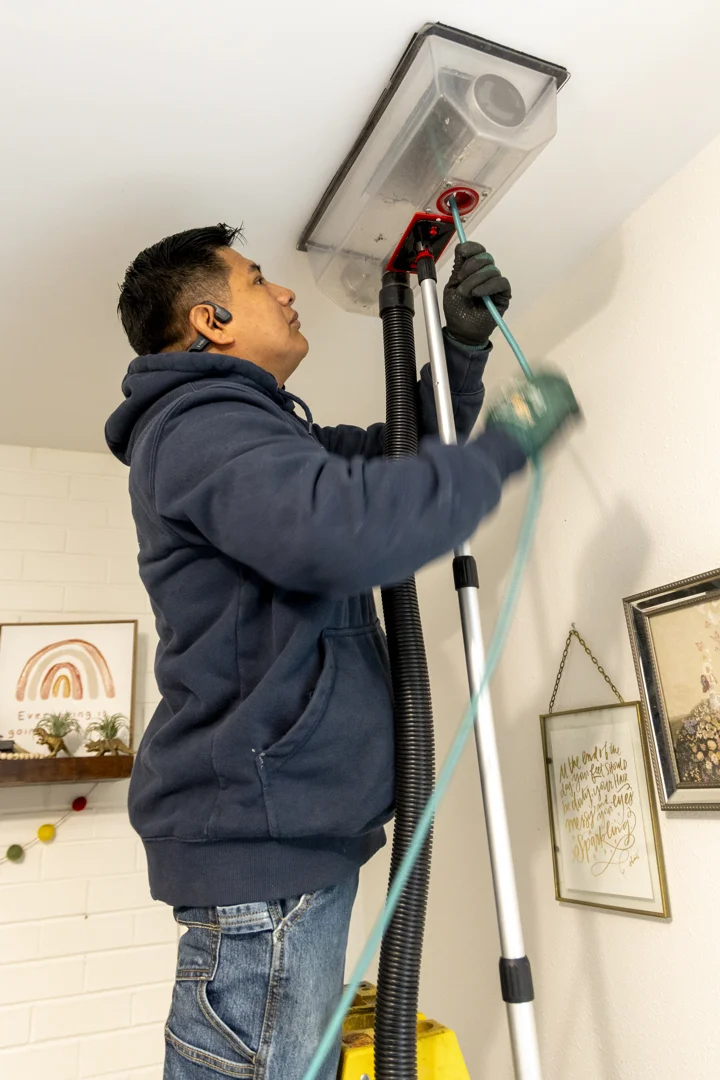
How Airflow Affects Your AC Performance: A Practical GuideLearn how airflow affects your air conditioners performance, from coil freeze-ups to uneven cooling, and optimize your system's efficiency.
Read more
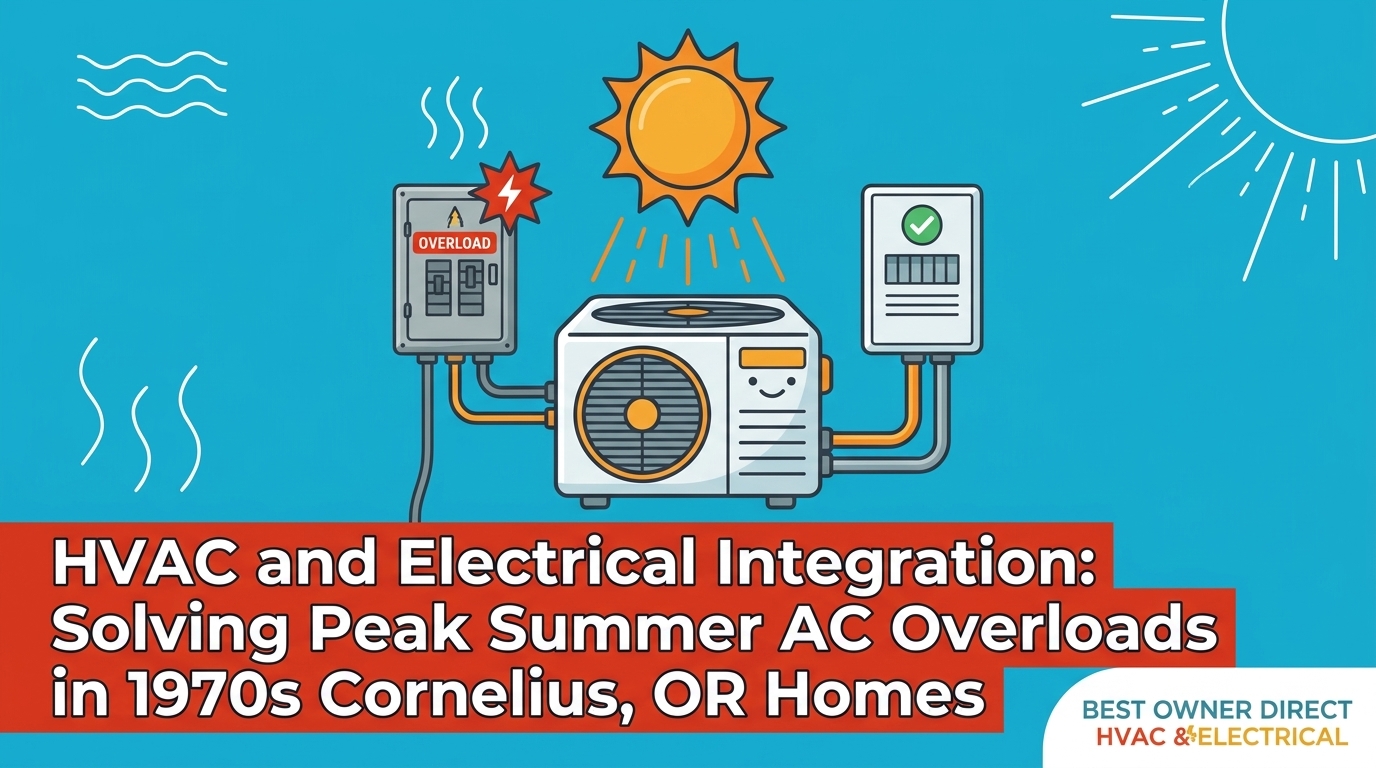
How Cornelius Homes Handle Peak Summer AC Loads on Older Electrical PanelsModern AC units often overwhelm aging 1970s electrical panels during intense summer heat. Review the warning signs and specific upgrades needed to keep your home safely cooled.
Read more