Menu


Myth: Heat Pumps Are Only for Deep Winter and Peak Summer
A persistent myth we frequently hear from homeowners across Cornelius is that comparing high-efficiency heat pumps vs. standard units for Oregon's mild autumns only matters when the temperature drops below freezing. The reality is quite the opposite. Most property owners assume their heating system exists solely to battle the deep freezes of January or the scorching heat waves of July. However, the true test of your system's operational efficiency often happens during the unpredictable September shoulder season, where mornings require a gentle touch of warmth, but afternoons warm up rapidly. If you are relying on outdated technology, you are likely experiencing uncomfortable temperature swings and unnecessary wear on your equipment—a pattern our technicians see on nearly every early-fall service call.
When evaluating your HVAC Services options, exploring Heat Pump Upgrades and Installation can dramatically change how your home feels during these transitional months.
The Shoulder Season Dilemma
The transition from summer to winter creates a unique set of challenges for any climate control system. During the September shoulder season, homes experience low but constant heating demands. The ambient temperature outside might hover in the low 50s—not cold enough to warrant a roaring furnace, but certainly too chilly to leave the system off entirely. This is the exact scenario where the differences between basic and premium systems become glaringly obvious.
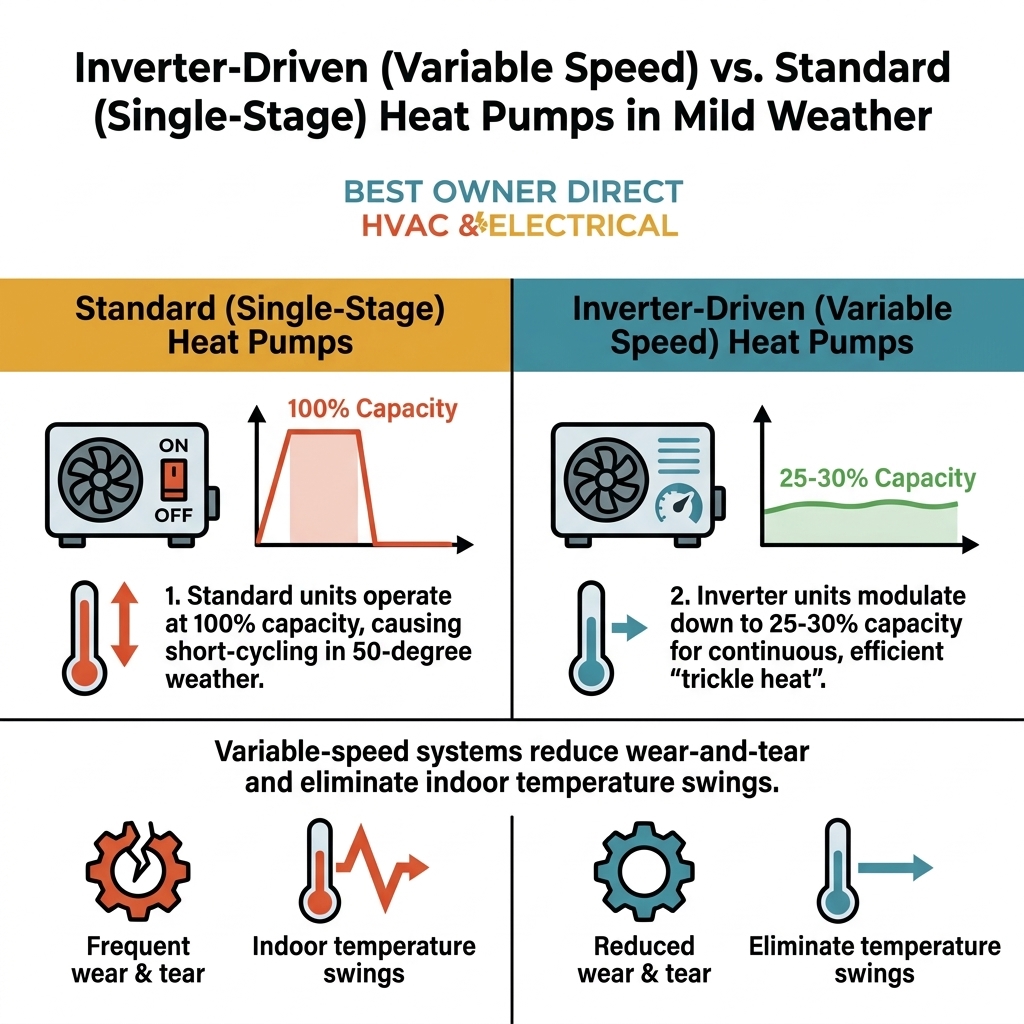
Standard systems operate on a binary principle: they are either entirely on or entirely off. When the thermostat calls for heat on a 55-degree morning, a basic unit blasts maximum capacity, rapidly overshoots the desired temperature, and promptly shuts down. This creates a rollercoaster of indoor comfort. Upgrading to an inverter-driven variable speed compressor changes the entire dynamic, allowing the system to match the exact heating load required without overcompensating.
The Unique Heating Demands of the Willamette Valley
To truly understand why standard HVAC sizing rules fall short in our region, our team at Best Owner Direct HVAC & Electrical always looks at the specific climate profile of Cornelius, OR, and the surrounding Willamette Valley. This area is famous for its distinct microclimates and rapid daily temperature shifts, particularly as summer gives way to fall.
Navigating the Daily Temperature Swings
By late September and early October, the Willamette Valley settles into a predictable but demanding weather pattern. Mornings are often characterized by cool, damp air settling in the valley floor, bringing temperatures down into the 40s. By mid-afternoon, the sun breaks through the overcast skies, pushing temperatures back into the upper 60s or low 70s. This rapid 20- to 30-degree swing within a single day wreaks havoc on traditional heating systems designed for steady, extreme cold.
In the context of HVAC load calculations, this period is known as the "shoulder season." A system perfectly sized to keep your home warm during a 20-degree January night is technically oversized for a 50-degree October morning. Because the heating load (the amount of heat required to maintain the indoor temperature) is so low during the fall, a system designed solely for freezing temperatures struggles to maintain a steady, comfortable environment.
Beyond Raw Efficiency: The Importance of Modulation
When shopping for a new system, many homeowners focus entirely on the HSPF2 (Heating Seasonal Performance Factor) rating. While a high HSPF2 rating indicates a unit uses less electricity to generate heat over a season, raw efficiency is only half the equation in the Willamette Valley.
Modulation—the ability of the system to adjust its output capacity—is just as crucial. A highly efficient system that still operates at 100% capacity will still cause uncomfortable temperature spikes. The cool, damp mornings of an Oregon autumn require a nuanced heating approach that prioritizes steady, low-level output over sudden bursts of intense heat. Without modulation, even the most energy-efficient standard unit will fail to provide the consistent comfort required during the shoulder season.
Standard Single-Stage Units: The All-or-Nothing Approach
To appreciate the benefits of advanced technology, it is helpful to understand exactly how standard single-stage heat pumps operate and why our team frequently replaces them when they struggle during mild weather conditions.
The Problem: Constant Temperature Swings
Standard single-stage heat pumps have one speed: maximum. When the indoor temperature drops below the thermostat setting, the system activates and delivers 100% of its heating capacity. In the middle of winter, this is necessary. The system runs for a long, continuous cycle to combat the freezing air outside. However, during a mild 50-degree autumn morning, this all-or-nothing approach becomes a significant liability.
Because the home only needs a small amount of heat to reach the desired temperature, the system blasts hot air, satisfies the thermostat in a matter of minutes, and immediately shuts off. As the damp Oregon air seeps back into the house, the temperature drops again, and the cycle repeats. This continuous on-and-off process creates noticeable hot and cold spots throughout the home.
The Cause: Fixed-Capacity Limitations
The root cause of this discomfort is a mechanical limitation known as "short-cycling." A standard compressor cannot reduce its output. It is mechanically bound to operate at full capacity whenever it receives a signal from the thermostat. During the shoulder season, the heating load is so small that the system is essentially too powerful for the job at hand.
Think of it like driving a car in stop-and-go traffic but only being able to press the accelerator all the way to the floor or take your foot off entirely. The resulting ride would be jerky, uncomfortable, and incredibly hard on the vehicle's engine.
The Solution: Rethinking Mild-Weather Heating
The negative consequences of short-cycling extend far beyond mere discomfort. The most significant wear-and-tear on any HVAC component occurs during startup. A system that turns on and off constantly degrades its contactors, capacitors, and compressor much faster than a system that runs continuously. Furthermore, the massive draw of electrical current required to start the compressor repeatedly leads to hidden energy waste, negating many of the efficiency benefits the homeowner expected.
Addressing this issue requires looking beyond basic equipment. For those exploring Heating Services prior to the winter rush, shifting away from fixed-capacity limitations is the most effective way to eliminate short-cycling and protect your investment.
High-Efficiency Inverter Technology: The 'Trickle Heat' Solution
The solution to the shoulder season dilemma lies in inverter-driven variable speed compressors. Unlike their single-stage counterparts, these advanced systems utilize complex electronics to alter the frequency of the electrical current supplied to the motor, allowing the compressor to spin faster or slower based on real-time demand.
If you are understanding the difference between single-stage, two-stage, and variable-speed systems, the key takeaway is that variable-speed technology completely redefines how a home is heated during mild weather.
How Variable-Speed Heating Transforms Comfort
1. Continuous Modulation: Inverter-driven units can modulate their output down to 25-30% of their total capacity. Instead of waiting for the temperature to drop and then blasting heat, the system constantly monitors the indoor environment and makes micro-adjustments to its speed, matching the exact heating load required at any given moment.
2. The "Trickle Heat" Effect: During a chilly September morning, a variable-speed unit will operate at its lowest capacity, providing a low, constant stream of warmth. This "trickle heat" perfectly offsets the mild chill without ever overshooting the thermostat setting, resulting in a perfectly stable indoor temperature.
3. Enhanced Humidity Control: One of the secondary benefits of longer, slower heating cycles is vastly improved indoor air quality. Because the system runs continuously at a low speed, air is constantly circulating through the filtration system. This also allows the unit to better manage the damp, humid air characteristic of Willamette Valley autumns, keeping the indoor environment feeling crisp and comfortable.
4. Lower Long-Term Energy Consumption: It seems counterintuitive, but running a system continuously at a low capacity actually uses significantly less energy than the intermittent full-capacity blasts of a standard unit. By avoiding the massive electrical spikes associated with constant startups, inverter technology maximizes operational efficiency.
Side-by-Side Comparison: Inverter-Driven vs. Standard Heat Pumps
When evaluating which technology is right for your home ahead of the winter season, seeing the operational differences side-by-side can help clarify the decision-making process.
• Operational Capacity — Standard Single-Stage Heat Pump: Operates strictly at 100% capacity or 0% (off). — Inverter-Driven (Variable Speed) Heat Pump: Modulates seamlessly between 25% and 100% capacity.
• Mild Weather Performance — Standard Single-Stage Heat Pump: Prone to short-cycling, causing rapid on/off switching. — Inverter-Driven (Variable Speed) Heat Pump: Provides constant "trickle heat" to perfectly match low heating loads.
• Temperature Consistency — Standard Single-Stage Heat Pump: Noticeable temperature swings (1-3 degrees from setpoint). — Inverter-Driven (Variable Speed) Heat Pump: Maintains exact thermostat setpoint with near-zero fluctuation.
• System Longevity — Standard Single-Stage Heat Pump: Higher wear-and-tear due to constant starting and stopping. — Inverter-Driven (Variable Speed) Heat Pump: Reduced mechanical stress due to long, continuous, low-speed operation.
• Energy Efficiency (HSPF2) — Standard Single-Stage Heat Pump: Meets baseline efficiency standards but wastes energy on startups. — Inverter-Driven (Variable Speed) Heat Pump: Achieves premium efficiency ratings by minimizing electrical spikes.
• Noise Levels — Standard Single-Stage Heat Pump: Noticeable "clunk" and rush of air upon startup. — Inverter-Driven (Variable Speed) Heat Pump: Whisper-quiet operation; ramps up slowly without sudden noise.
Redefining Value: Premium Comfort Without the Traditional Markup
Historically, variable-speed technology was viewed by many homeowners as a luxury upgrade. Because these systems utilize advanced electronics and complex compressors, they carry a higher manufacturing cost than basic single-stage units. In the traditional HVAC sales model, this higher base cost is heavily inflated by the time it reaches the consumer.
Bypassing the Middleman
The standard industry supply chain involves manufacturers selling to regional distributors, who then sell to local franchise dealers, who finally sell to the homeowner. Every step in this chain adds a substantial markup. By the time a high-efficiency inverter heat pump is quoted to a homeowner, the price has often been inflated to the point where the operational efficiency and comfort benefits are overshadowed by the upfront barrier.
An owner-direct pricing model fundamentally changes this dynamic. By removing massive franchise fees, distributor markups, and middleman commissions, premium technology becomes highly accessible. This model shifts the narrative away from "variable-speed is too expensive" and focuses instead on securing the best possible equipment for the region's specific climate needs.
Real-World Reliability
When you remove the bloated overhead of a traditional franchise, the focus returns to where it belongs: long-term system performance and customer satisfaction. Just recently, a local homeowner reached out to us regarding persistent heat pump issues during the seasonal transition. By bypassing traditional middlemen, our service team was able to provide high-efficiency solutions and diligent service that completely exceeded their expectations for both performance and overall value.
When evaluating the return on investment for a new system, the focus should remain purely on energy efficiency, the longevity of the equipment due to reduced short-cycling, and the daily comfort of living without constant temperature swings. Premium comfort is no longer locked behind prohibitive markups.
Preparing Your System for the September Shift
As the Willamette Valley transitions into early fall, now is the ideal time to evaluate your current heating setup before the deep winter freeze sets in. Taking proactive steps ensures that whichever system you rely on is operating safely and effectively.
Your Pre-Winter Action Plan
• Monitor cycle times: We always advise our customers to pay close attention to how their system behaves during the first cool mornings of fall. If you notice the unit turning on, blasting air for five minutes, and immediately shutting off, you are experiencing short-cycling.
• Schedule pre-season maintenance: Before relying on your system for daily heating, ensure it has been thoroughly inspected, cleaned, and calibrated by a professional to prevent unexpected breakdowns.
• Explore generic incentives: Federal tax credits and local utility rebates may apply to qualifying high-efficiency heat pump installations. Always verify current, generally applicable energy programs with a tax professional or your local utility provider to maximize your investment.
• Request a proper load calculation: Never replace a unit based solely on the size of the old one. A professional should perform a comprehensive load calculation that accounts for your home's specific insulation, window quality, and the unique shoulder season demands of the region.
Staying proactive with a comprehensive HVAC Maintenance Plan ensures your equipment is fully prepared to handle whatever the Oregon climate delivers, from mild autumn mornings to freezing January nights.
Frequently Asked Questions
Why does my heat pump short cycle in the fall?
Short-cycling in the fall occurs because standard heat pumps operate at full capacity, which is too powerful for mild weather. The system rapidly heats the home, satisfies the thermostat quickly, and shuts off, only to turn back on minutes later as the house cools. This constant on-and-off process causes unnecessary wear on the components.
Is a variable speed heat pump better for mild weather?
Yes, variable-speed technology is exceptionally well-suited for mild weather. Because the compressor can modulate its output down to 25-30% capacity, it provides a low, steady stream of heat that perfectly matches the low heating demands of autumn without overshooting the target temperature.
What is the difference between standard and high efficiency heat pumps?
The primary difference lies in the compressor technology and how it delivers air. Standard units run at a single, fixed speed (100% capacity), while high-efficiency units use inverter technology to vary their speed, resulting in smoother temperature control, quieter operation, and significantly lower energy waste during startup.
Are high-efficiency heat pumps worth it in mild climates?
High-efficiency units are highly valuable in mild climates that experience large daily temperature swings. The ability to provide "trickle heat" during cool mornings and ramp down during warmer afternoons eliminates indoor temperature fluctuations and drastically reduces mechanical stress on the system.
How does inverter technology prevent indoor temperature swings?
Inverter technology prevents temperature swings by constantly monitoring the indoor environment and making micro-adjustments to the compressor speed. Instead of shutting off entirely when the setpoint is reached, it slows down to maintain the exact temperature, providing continuous, even comfort.
Can a variable-speed heat pump improve indoor air quality during shoulder seasons?
Yes, because variable-speed systems run for longer, slower cycles, air is continuously pulled through the home's filtration system. This constant circulation captures more airborne particles and provides superior humidity control compared to a system that frequently shuts off.
Choosing the Right System for Your Home
Understanding the nuances of high-efficiency heat pumps vs. standard units for Oregon's mild autumns ensures you make an informed decision for your home's long-term comfort. By prioritizing advanced inverter technology and owner-direct value, you can eliminate the frustration of short-cycling and enjoy perfectly stable indoor temperatures all season long. Trusting our professional team to guide you through this transition gives you the confidence that your home is prepared for whatever the weather brings.


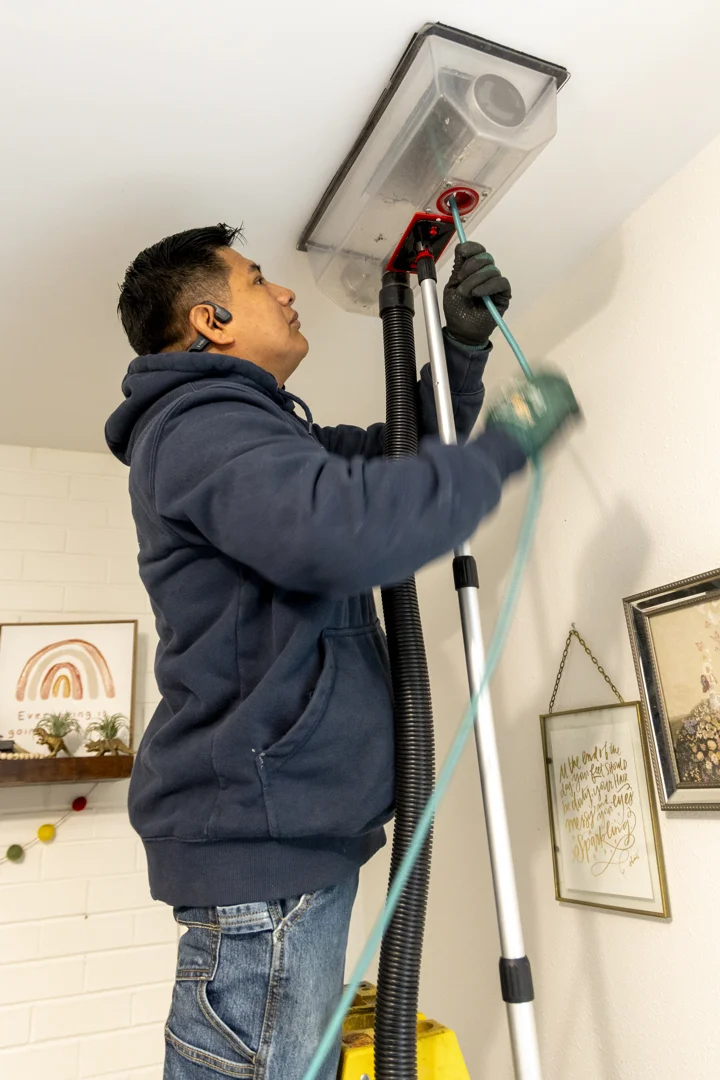
How Airflow Affects Your AC Performance: A Practical GuideLearn how airflow affects your air conditioners performance, from coil freeze-ups to uneven cooling, and optimize your system's efficiency.
Read more
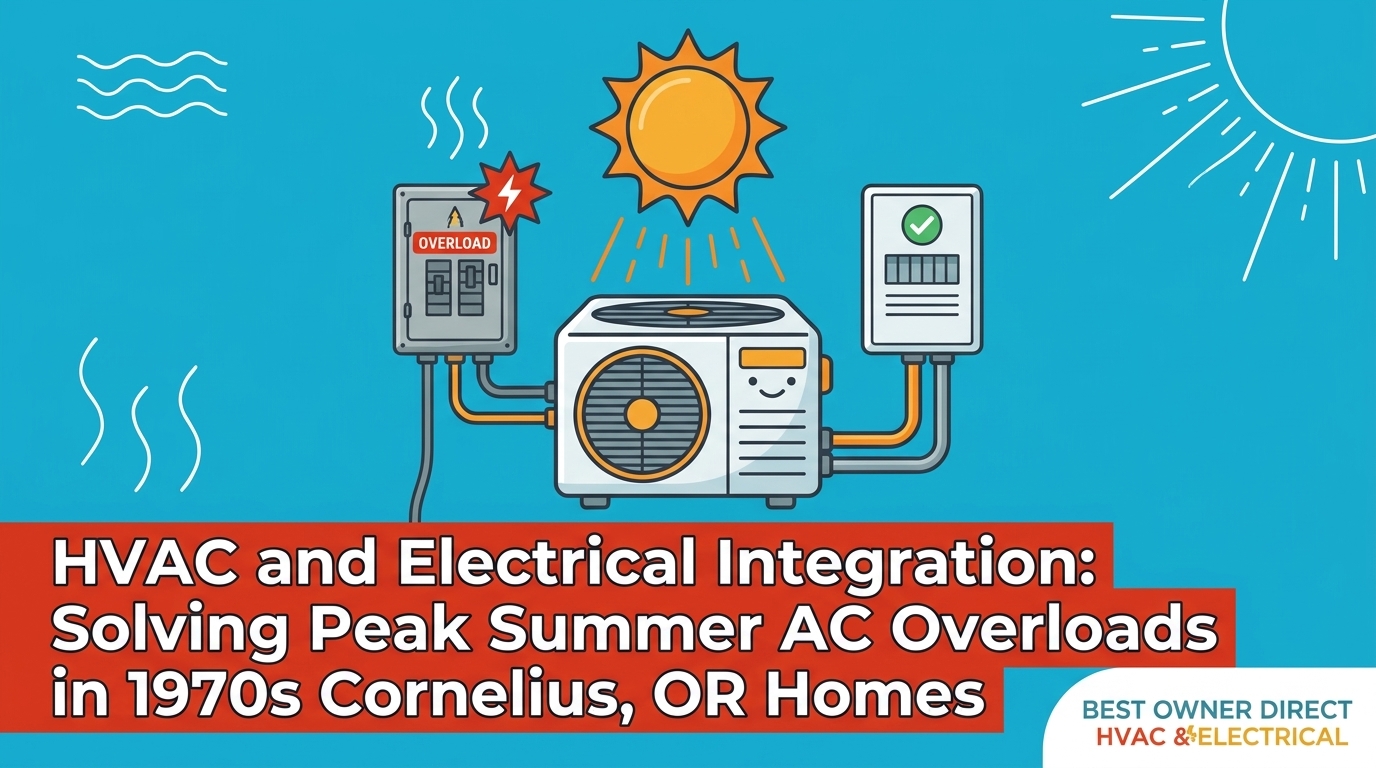
How Cornelius Homes Handle Peak Summer AC Loads on Older Electrical PanelsModern AC units often overwhelm aging 1970s electrical panels during intense summer heat. Review the warning signs and specific upgrades needed to keep your home safely cooled.
Read more

The Electrical Toll of a Struggling HVAC System on Your Home's BreakersAn aging air conditioner does not just lose cooling power; it actively stresses your electrical panel. A tripping breaker during late summer heat is a warning sign requiring professional diagnosis.
Read more