Menu


Check your furnace filter monthly and change it when it looks gray and loaded — for most Tualatin Valley homes that works out to every 1–3 months for common 1-inch filters, and every 6–12 months for thick 4–5 inch media filters. Homes with pets, allergies, or remodeling dust sit at the short end of those ranges.
Why does the filter matter so much?
The filter is the single least expensive component in your entire system, and it protects the most expensive ones. A clogged filter starves the blower of air, making the system run longer, heat and cool less evenly, and wear out sooner. A large share of the "no-heat" and frozen-coil calls we run trace back to a filter nobody had looked at in a year — a five-minute fix that arrived as an emergency.
What's the actual schedule?
• 1-inch pleated filters: check monthly; expect to replace every 1–3 months.
• 4–5 inch media filters: check quarterly; replace roughly every 6–12 months.
• Pets, allergies, wildfire smoke season, or nearby construction: shorten the interval — the filter fills faster when the air carries more.
• Heat pumps: they move air nearly year-round (heating and cooling), so filters load faster than a heating-only furnace's. Check more often.
Which filter should you buy?
Match the size printed on the old filter's frame exactly, and be thoughtful with filtration ratings: a filter far more restrictive than your blower was designed for can choke airflow just like a dirty one. Mid-range pleated filters are the right answer for most systems. If someone in the house has asthma or allergies, the better path is usually a properly-engineered whole-home filtration upgrade rather than the most restrictive 1-inch filter on the shelf — and during smoke season, see our guide to wildfire smoke and indoor air quality.
How do you change it? (Two minutes, no tools)
1. Turn the system off at the thermostat.
2. Find the filter slot — usually where the return duct meets the furnace or air handler, sometimes behind a return grille in a hallway or ceiling.
3. Slide the old filter out and note the airflow arrow on its frame.
4. Insert the new filter with the arrow pointing toward the furnace/blower (with the airflow, not against it).
5. Turn the system back on. Write the date on the filter's edge — future-you will thank you.
What if the filter is clean but airflow still seems weak?
Then the filter isn't the bottleneck — think crushed or leaky ducts, a struggling blower, or a refrigerant issue. Those are worth a professional look before they grow; that's exactly what an annual visit on a maintenance plan catches. Weak airflow plus a system that never stops running is also on our pre-summer AC checklist of things to sort out before the first heat wave.
What to read next
A filter you forget about is an inexpensive habit — a system you never maintain is a cost decision. If you're facing bigger questions about system age or a looming replacement, see what actually drives HVAC system cost before you get a quote.
Quick answers
Questions we hear about this
Which direction does the furnace filter arrow point?+The arrow on the filter frame points in the direction of airflow — toward the furnace or blower, away from the return duct. If you're unsure, note how the old filter sat before removing it.
Are expensive high-MERV filters better?+Not automatically. A 1-inch filter that's too restrictive for your blower chokes airflow much like a dirty filter does. Mid-range pleated filters suit most systems; for allergy-grade filtration, a properly-engineered whole-home media filter is the better tool.
What happens if I never change my furnace filter?+Airflow drops, the blower works harder and runs longer, and the system heats and cools less evenly — and in bad cases the coil ices over or the blower motor overheats. A large share of the "no-heat" and frozen-coil calls we run trace back to a filter nobody had looked at in a year.
Does a bigger house need a bigger filter?+Not necessarily — filter size is set by the return duct or filter slot your system was built with, not your square footage. A larger home just means the same filter loads faster because more air is moving through it.
Can I vacuum and reuse a disposable furnace filter?+No — disposable pleated filters aren't designed to be cleaned and reused; vacuuming damages the pleats and lets dust straight through. Washable filters exist but are a different product entirely and need their own maintenance schedule.


The Electrical Toll of a Struggling HVAC System on Your Home's BreakersAn aging air conditioner does not just lose cooling power; it actively stresses your electrical panel. A tripping breaker during late summer heat is a warning sign requiring professional diagnosis.
Read more
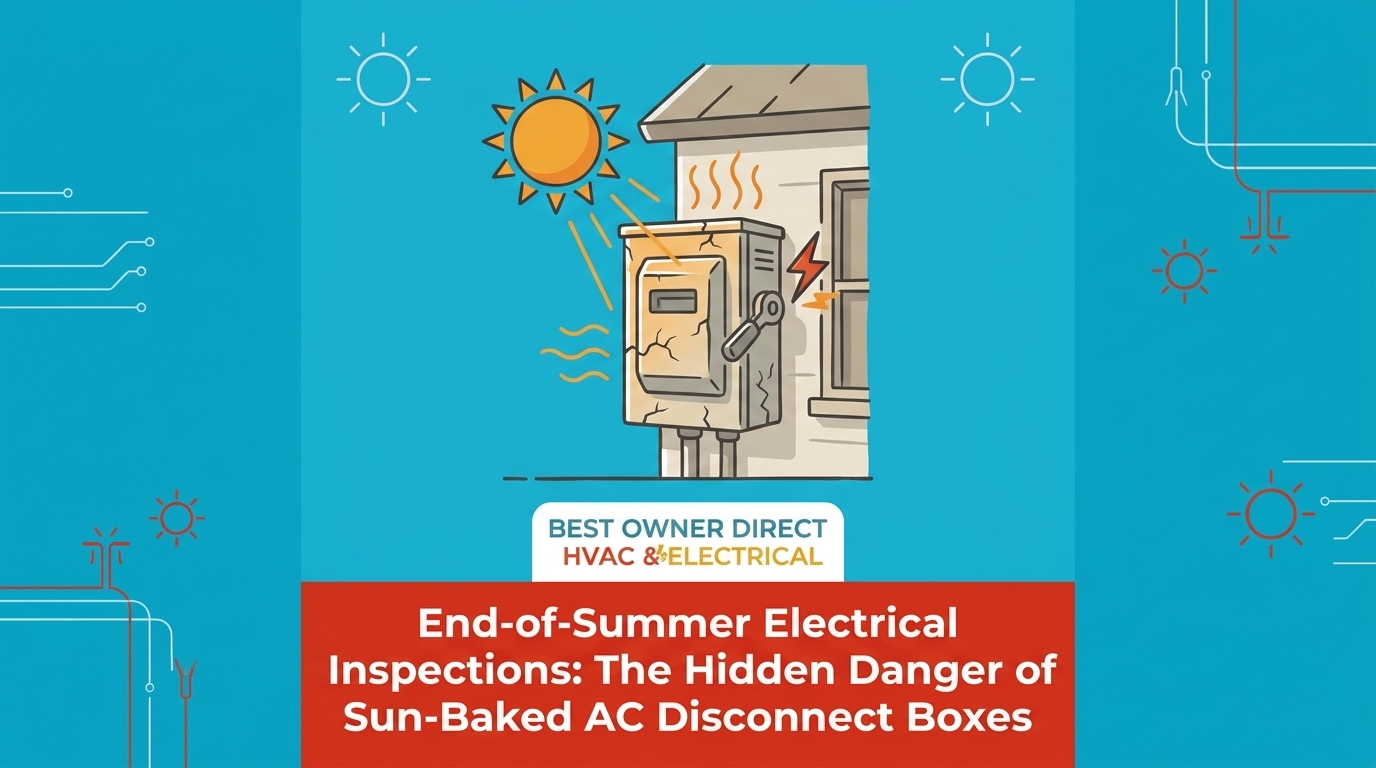
End-of-Summer Electrical Inspections: Checking Outdoor Disconnect BoxesAfter months of intense Pacific Northwest sun, your outdoor AC disconnect box can become brittle and unsafe. Learn the visual warning signs of UV degradation.
Read more
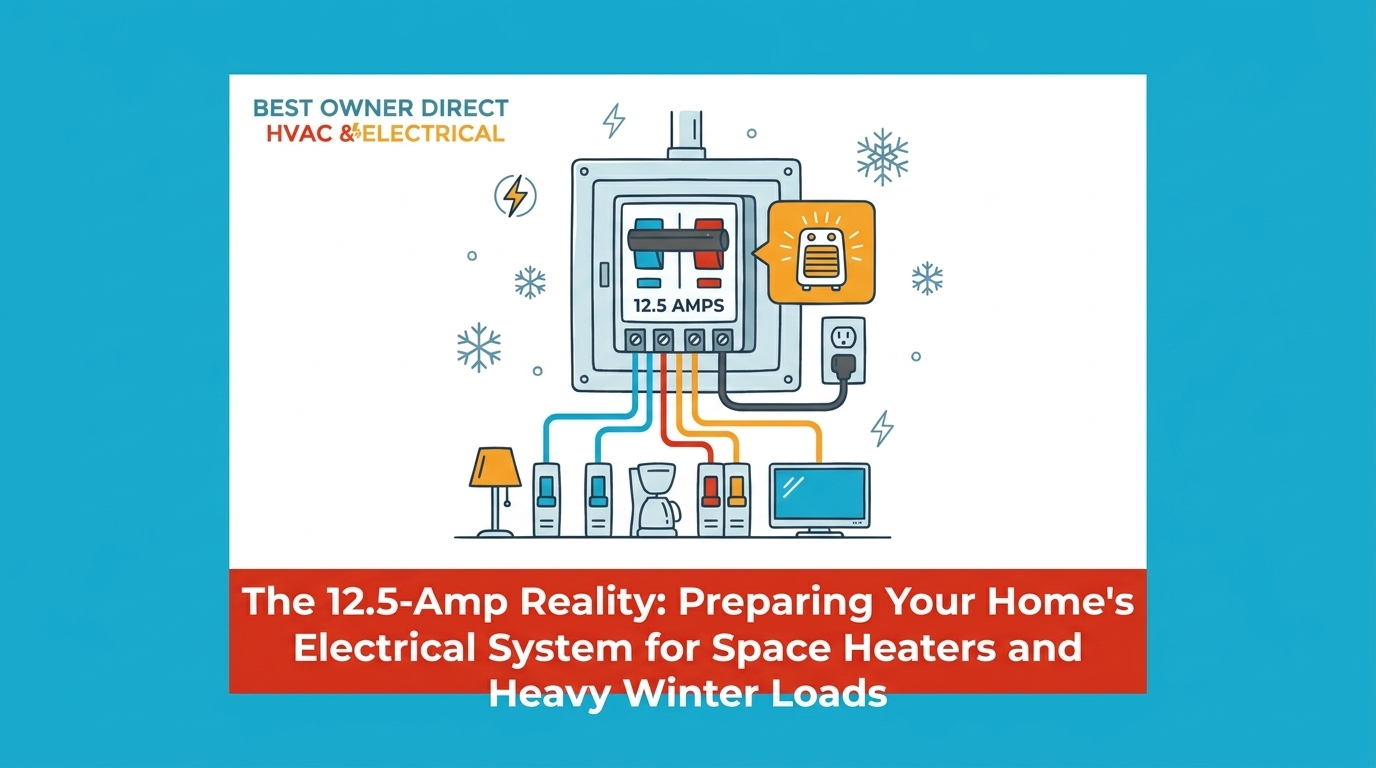
Preparing Your Home's Electrical System for Space Heaters and Heavy Winter LoadsA standard 1500W space heater consumes nearly 80% of an older bedroom circuit's capacity instantly. Find out why resetting that tripped breaker is a hidden fire hazard.
Read more