Menu


Before the first hot stretch hits the Tualatin Valley, give your cooling system a fresh filter, a clean and clear outdoor unit, a thermostat test in cooling mode, and one real test-run on a warm afternoon — then book professional maintenance for the parts you cannot check yourself. Twenty minutes in May beats a breakdown queue in July.
Why check now instead of during the first heat wave?
Because everyone discovers their AC problem on the same day. When the first 95°F afternoon arrives, every weak capacitor and low refrigerant charge in the metro area announces itself at once, and repair schedules fill accordingly. The homeowners who tested in spring are the ones being comfortable, not waiting. (Heat waves deserve their own preparation — see preparing Washington County homes for heat waves.)
The homeowner checklist
1. Replace the filter. Cooling needs airflow even more than heating does; a loaded filter can freeze the indoor coil solid. Schedule details in our filter guide.
2. Clear the outdoor unit. Remove leaves and debris, trim plants to give the unit about two feet of breathing room, and gently rinse the coil fins with a garden hose (water only, no pressure washer — fins bend easily).
3. Check the condensate path. Find the drain line and make sure it isn't blocked; a clogged drain in August means water damage or a safety-switch shutdown.
4. Test cooling mode on a warm day. Set the thermostat a few degrees below room temperature and let it run 15–20 minutes. Air from the vents should feel distinctly cold, the outdoor fan should spin smoothly, and nothing should rattle, screech, or hum loudly.
5. Listen and smell. Grinding, clicking that never stops, or a musty smell from the vents are all early warnings worth acting on while schedules are still open.
What belongs on the professional side?
Refrigerant charge, electrical connections and capacitor health, motor amp draws, coil condition, and system controls — the failure points that take equipment down in a heat wave — need instruments and training. That's what a professional AC tune-up covers, and it's why maintenance plan customers get priority scheduling: their systems are verified before the season, not triaged during it.
What if the test-run fails?
Warm air, ice on the lines, an outdoor unit that hums but won't start, or a breaker that trips: shut cooling off and book a repair — running a struggling system often converts a small fix into a compressor replacement. If your system is aging and this is the second season of trouble in a row, it's worth reading what drives replacement cost before the decision gets made for you on the hottest day of the year.
What to read next
If your system passes this checklist but you're still weighing a repair-vs-replace decision, see what actually drives HVAC system cost before the next bid comes in.
Quick answers
Questions we hear about this
When should I schedule AC maintenance before summer?+Spring — April or May — while repair schedules are still open. Once the first 90°F+ stretch hits the Portland metro, every marginal part fails at once and the queue backs up fast.
Is it normal for my AC to run constantly on a hot day?+Some long run times are normal on the hottest afternoons, but a system that never satisfies the thermostat or runs 24 hours straight usually points to a sizing, airflow, or charge problem worth a professional look.
Why is my air conditioner blowing warm air?+Common causes include a tripped breaker, a thermostat set to the wrong mode, a badly clogged filter starving airflow, or low refrigerant charge. Check the simple things first — breaker, thermostat mode, filter — then call for repair if warm air continues.
Can I clean my AC's outdoor unit myself?+Yes — clearing leaves and debris and rinsing the coil fins gently with a garden hose (water only, no pressure washer) is a safe homeowner task. Anything involving the refrigerant circuit, electrical connections, or capacitors is a professional job.
How often should a central AC system get professional maintenance?+Once a year, ideally in spring — a tune-up checks refrigerant charge, capacitor health, and motor amp draws, the failure points that take a system down mid-heat-wave. Maintenance plan customers get this scheduled automatically with priority service.


The Electrical Toll of a Struggling HVAC System on Your Home's BreakersAn aging air conditioner does not just lose cooling power; it actively stresses your electrical panel. A tripping breaker during late summer heat is a warning sign requiring professional diagnosis.
Read more
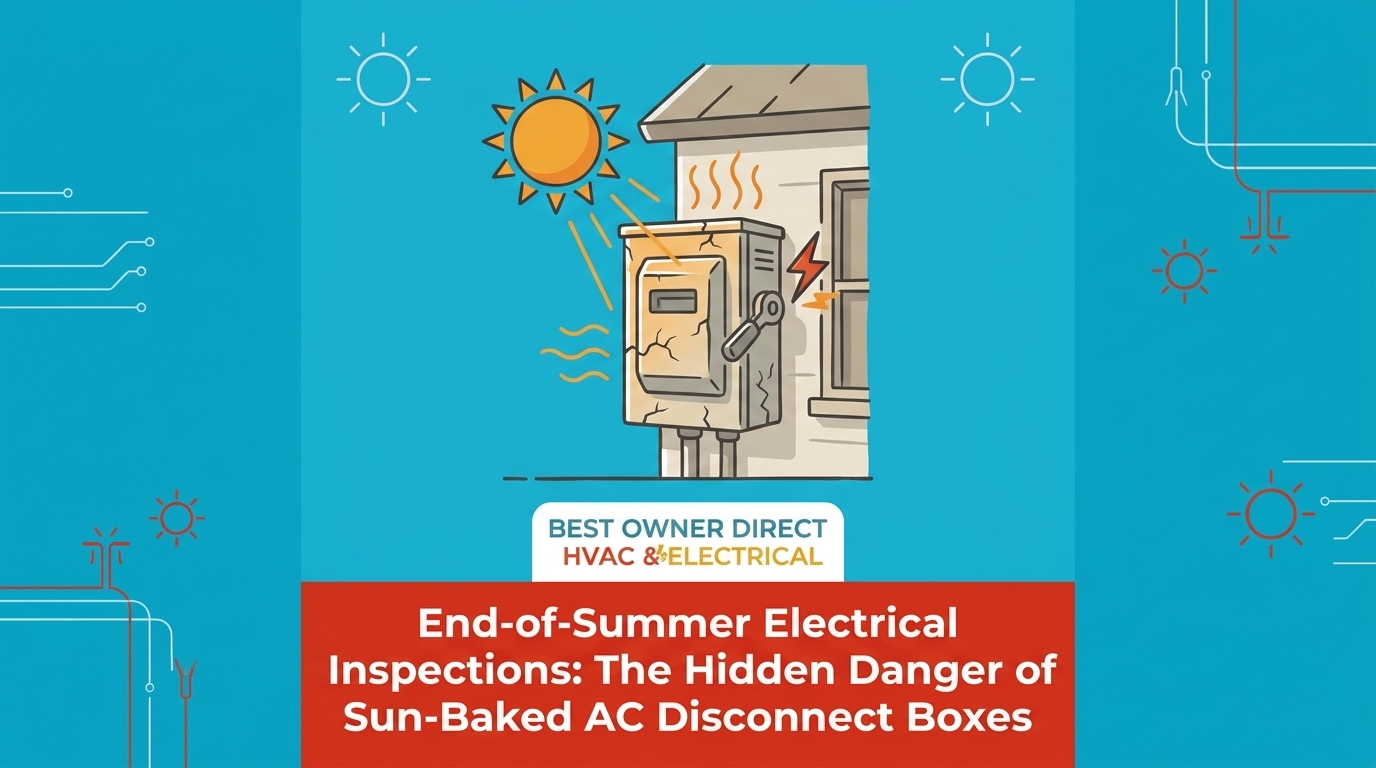
End-of-Summer Electrical Inspections: Checking Outdoor Disconnect BoxesAfter months of intense Pacific Northwest sun, your outdoor AC disconnect box can become brittle and unsafe. Learn the visual warning signs of UV degradation.
Read more
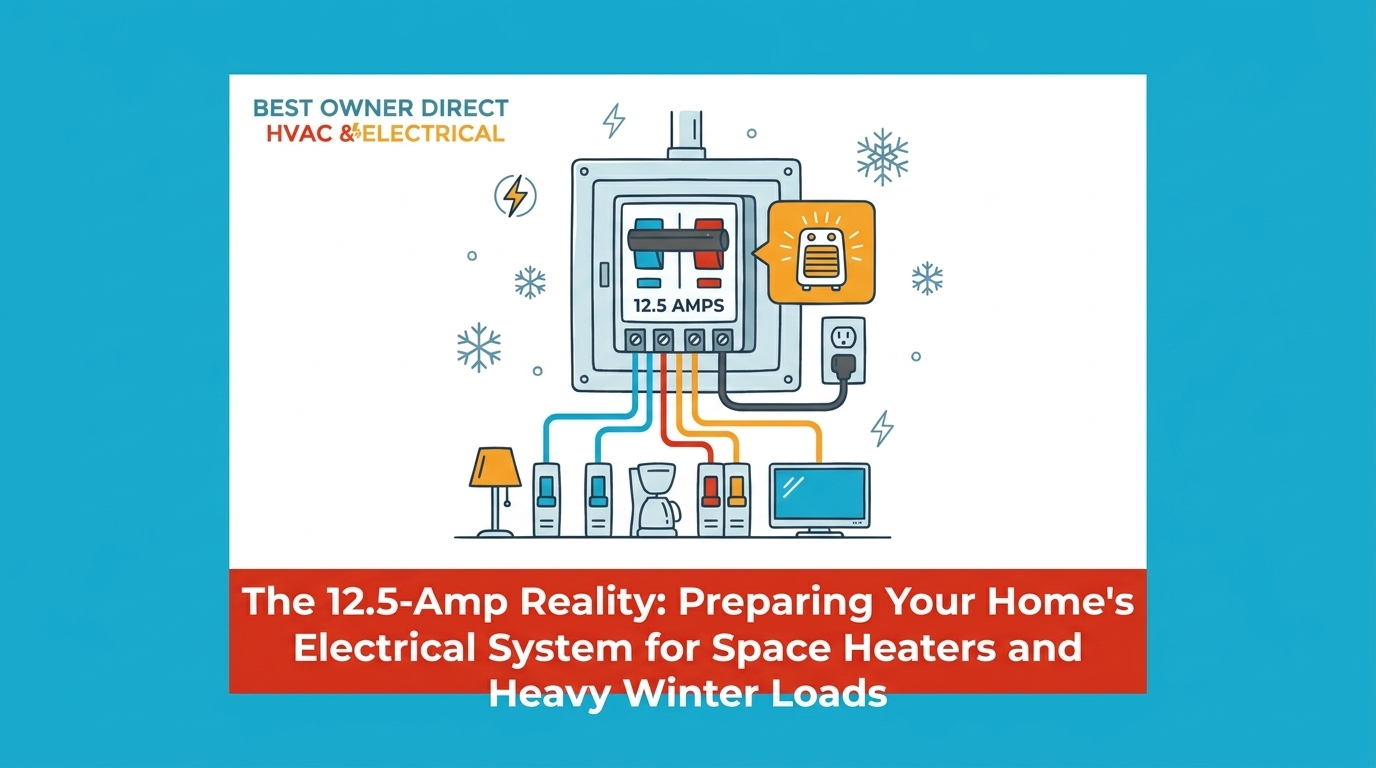
Preparing Your Home's Electrical System for Space Heaters and Heavy Winter LoadsA standard 1500W space heater consumes nearly 80% of an older bedroom circuit's capacity instantly. Find out why resetting that tripped breaker is a hidden fire hazard.
Read more