Menu


Why the AC Tune Up Checklist What Your Technician Should Check Actually Matters
The ac tune up checklist what your technician should check covers far more than most homeowners realize — and knowing what's on it is the difference between catching a small problem early and facing a costly breakdown on the hottest day of the year.
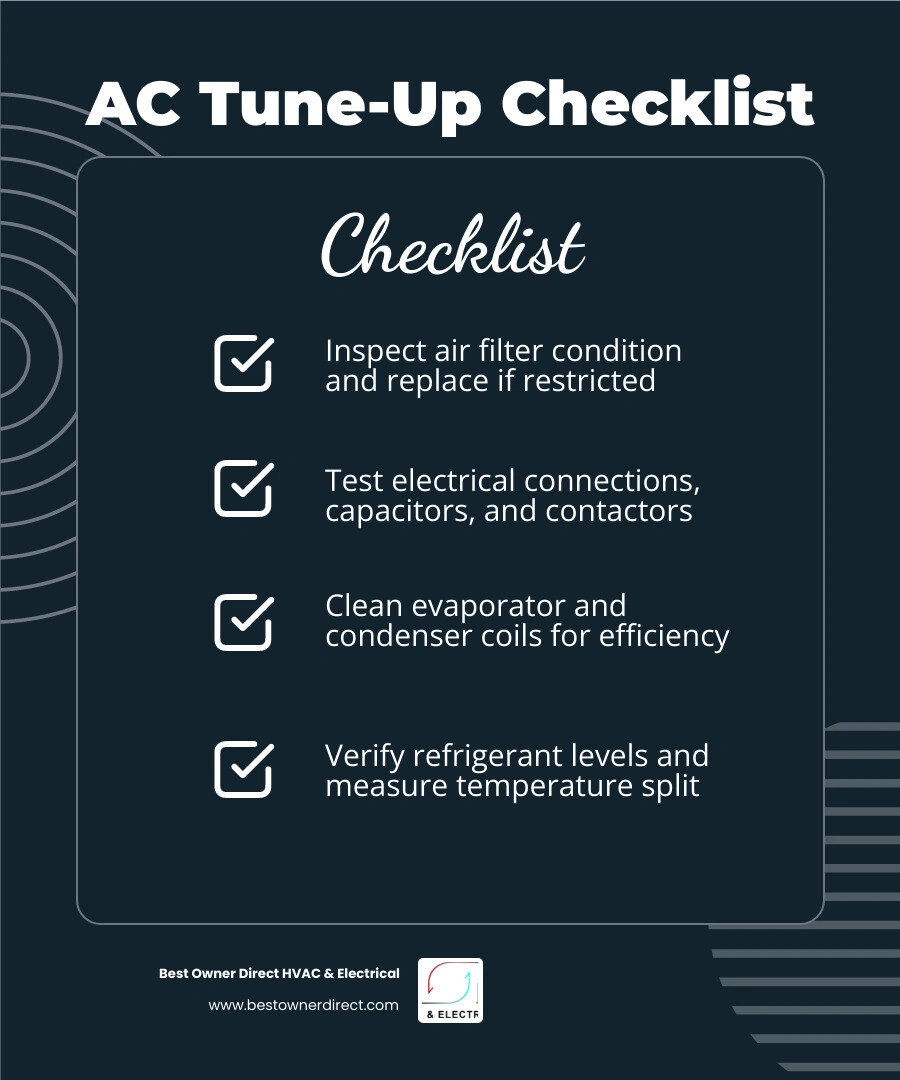
Here's a quick look at what a thorough professional AC tune-up should include:
- Air filter inspection — check condition and replace if dirty or restricted
- Thermostat calibration — verify accurate temperature readings and proper operation
- Electrical connections — tighten all accessible connections and test voltage and amperage
- Capacitor and contactor testing — measure capacitor microfarads; inspect contactor for pitting or wear
- Evaporator coil inspection — check for dirt buildup that reduces cooling efficiency
- Condenser coil cleaning — remove debris and buildup from the outdoor unit
- Refrigerant level verification — measure pressures and line temperatures; inspect for leaks
- Blower motor inspection — check amp draw and wheel condition for proper airflow
- Condensate drain line clearing — flush the drain and test the safety float switch
- Fan blade balance check — inspect for damage that could stress the system
- Static pressure measurement — assess airflow restriction through the duct system
- System performance test — measure the temperature split between supply and return air (should be 15–20°F)
A poorly maintained HVAC system can lose up to 25% of its efficiency over time. A dirty filter alone can increase energy use by up to 15%. These aren't minor inconveniences — they add up on every utility bill and quietly shorten your system's life. In Oregon, where weather swings between wet winters and warm summers, your AC works hard when you need it most. Skipping annual service means you're finding out what's wrong only after something fails.
A real tune-up takes 60 to 90 minutes. Anything shorter likely skips the diagnostic steps that make maintenance worth doing in the first place.
What is an AC Tune-Up and Why Does Your System Need It?
An air conditioning tune-up is proactive, preventative maintenance designed to keep your cooling system operating at peak performance. Think of it as a comprehensive wellness physical for your home's comfort system. While modern air conditioners are built to withstand years of demanding service, they are mechanical systems subjected to extreme temperatures, dust, pollen, and electrical stress. Over months of running, small shifts in refrigerant levels, slight loosening of electrical terminals, and a gradual accumulation of dust on the coils slowly degrade performance.
By scheduling a regular check-up, you ensure that these minor issues are corrected before they cascade into system failures. If you want to dive deeper into why this annual visit is so critical, check out our guide on 5 Reasons You Need an AC Tune-Up Every Year.
Regular maintenance directly impacts your system's lifespan, overall energy efficiency, and daily indoor comfort. A well-maintained air conditioner can reliably last 15 to 20 years, whereas a neglected unit often begins showing catastrophic wear after just 10 to 12 years. From an efficiency standpoint, cleaning the coils and optimizing airflow removes the mechanical strain that forces your system to run longer cycles. When your AC doesn't have to work as hard to cool your home, it consumes less electricity, lowering your monthly utility bills while maintaining a perfectly balanced indoor climate.
How an AC Tune-Up Differs From a Full HVAC Tune-Up
It is common to hear the terms "AC tune-up" and "HVAC tune-up" used interchangeably, but they actually refer to different scopes of service. An AC tune-up is highly specialized, focusing entirely on the cooling-specific components of your system. This includes the outdoor condenser unit, the refrigerant lines, the compressor, and the evaporator coil. Because of this specialized focus, AC tune-ups are traditionally scheduled in the early spring, ensuring your system is prepared to handle the heat of summer.
A full HVAC tune-up, on the other hand, evaluates the complete heating, ventilation, and air conditioning system. This broader service includes a meticulous check of your furnace or heating elements, gas connections, heat exchangers, and burners, which are usually serviced in the autumn. For a detailed breakdown of how these seasonal visits protect your home year-round, read about The Importance of Regular HVAC Check-Ups and Tune-Ups.
The Essential AC Tune Up Checklist What Your Technician Should Check
When a professional technician arrives at your home, they should follow a rigorous, structured protocol. A quality service visit is highly technical and relies on specialized diagnostic instruments to establish a performance baseline.
To help you understand the difference between a superficial visual inspection and a professional diagnostic tune-up, we have compiled this comparison:
| Service Area | Basic Visual Check | Professional Diagnostic Testing |
|---|---|---|
| Refrigerant System | Visually checking lines for obvious oily spots or frost. | Measuring subcooling and superheat using digital manifolds; electronic leak detection. |
| Electrical System | Looking for loose wires or burnt plastic casings. | Testing capacitor microfarads against ratings; measuring motor amp draws with a multimeter. |
| Airflow & Ductwork | Glancing at the air filter and checking if air blows from a vent. | Performing static pressure testing; measuring temperature split between supply and return. |
| Drainage System | Confirming the drain pipe isn't actively overflowing. | Flushing the condensate line; treating with algaecide; testing the safety float switch. |
For a complete overview of what local homeowners should look for during a service visit, refer to our comprehensive AC Tune-Up Guide for Oregon Homeowners.
Indoor Components on the AC Tune Up Checklist What Your Technician Should Check
The indoor portion of your air conditioning system is responsible for absorbing heat from your indoor air and managing humidity. Here are the critical indoor components your technician must inspect:
- Evaporator Coils: Located inside your air handler or furnace cabinet, these coils contain cold refrigerant that absorbs heat. Over time, household dust can bypass the filter and coat these wet coils. This layer of grime acts as an insulator, drastically reducing heat transfer and forcing the system to run longer. Technicians must inspect these coils for dirt buildup or signs of corrosion.
- Blower Motor and Assembly: The blower motor pushes conditioned air through your ductwork. Technicians check the motor's amperage draw to ensure it is operating within manufacturer specifications. A dirty blower wheel can reduce airflow by 20% to 30%, putting immense strain on the motor and causing it to overheat.
- Condensate Drain Line and Safety Switch: As your AC cools the air, it removes moisture. This water collects in a drain pan and flows outside. Algae and dust can easily clog this line, leading to water backups that can damage your ceilings or floors. Your technician must flush this line and test the overflow safety float switch, which automatically shuts down the system if a backup occurs.
- Thermostat Calibration: If your thermostat is out of calibration, your system will cycle incorrectly, wasting energy and reducing comfort. Technicians verify that the temperature displayed on your thermostat matches the actual room temperature.
- Static Pressure Testing: Often described as the "blood pressure" of your HVAC system, static pressure testing measures the resistance to airflow within your ducts. High static pressure indicates restricted airflow, which can damage the compressor and blower motor over time.
Outdoor Components on the AC Tune Up Checklist What Your Technician Should Check
The outdoor unit, or condenser, is where the heat absorbed from your home is released into the outside air. Because it is exposed to the elements, it requires meticulous attention:
- Condenser Coils: Dust, pollen, lawn clippings, and falling leaves easily clog the delicate aluminum fins of the outdoor coil. Dirty coils reduce the system’s ability to release heat, which causes the system to run longer, increasing energy costs and reducing the life of the equipment. Technicians must thoroughly clean these coils.
- Refrigerant Charge Verification: Your air conditioner is a sealed system; it does not consume refrigerant. If levels are low, it indicates a leak. Technicians use digital gauges to measure superheat and subcooling, ensuring the charge is exactly where the manufacturer intended. Too much or too little refrigerant reduces efficiency and can destroy the compressor.
- Compressor Amperage and Voltage: The compressor is the heart of your AC. Technicians measure the electrical current it draws during startup and operation, comparing it to the rated load amps on the manufacturer data plate to identify early signs of mechanical failure.
- Capacitor Health: Capacitors store electrical energy to help your motors start and run. They are the single most common cause of AC failure during hot summer days. Technicians use a multimeter to measure their microfarad output; if a capacitor is operating below its rated capacity, it must be replaced before it fails and leaves you without cooling.
- Contactor Wear: The contactor is an electrical switch that controls power to the compressor and fan motor. Technicians inspect the contactor points for pitting, burn marks, or insect nesting, replacing worn contactors to prevent system electrical shorts.
- Fan Blade Balance: An unbalanced or damaged outdoor fan blade can cause severe vibrations, which can loosen electrical connections or crack copper refrigerant lines.
When to Schedule Maintenance and Signs Your System is Struggling
The ideal time to schedule your professional AC tune-up is in the early spring, before the first hot days arrive. This timing ensures that any worn components are replaced before they are put under heavy operational stress, and it allows you to avoid the busy mid-summer rush when technicians are heavily booked with emergency repairs.
However, you should not wait for spring if your system is showing signs of distress. Common warning signs that your cooling system needs immediate, professional attention include:
- Weak Airflow: If the air coming from your registers feels weak or barely moving, there may be a blower motor issue, a clogged filter, or major ductwork leaks.
- Strange Noises: Squealing, grinding, rattling, or clicking sounds indicate mechanical wear, loose components, or a failing motor bearing.
- Frequent Cycling: If your AC turns on and off rapidly, it is short-cycling, which puts extreme wear on the compressor and wastes energy.
- Unusual Odors: Musty smells point to biological growth in the drain pan or coils, while burning odors indicate electrical wiring issues.
- Warm Air Output: If the system is running but blowing warm or room-temperature air, you may have a refrigerant leak, a failed capacitor, or a compressor issue.
For a deeper look into how often your air conditioner requires professional care, check out our guide on How Often Should You Schedule a Tune-Up for Your Air Conditioner.
Homeowner DIY Tasks vs. Professional Expertise
While a professional tune-up is essential, there are several simple maintenance tasks that homeowners can safely perform to keep their systems running efficiently between professional visits:
- Inspect and Replace Air Filters: This is the single most important DIY task. Check your filter every 30 days during peak cooling season. If you have pets or allergies, replace it promptly. A clean filter prevents dust from coating your indoor coils and maintains proper system airflow.
- Maintain Outdoor Clearance: Ensure there is at least two to three feet of clear space around your outdoor condenser unit. Trim back bushes, weeds, and low-hanging branches, and regularly clear away fallen leaves or grass clippings from the unit’s exterior.
- Keep Vents Unobstructed: Regularly vacuum dust from your indoor supply and return vents. Ensure that furniture, drapes, or rugs are not blocking airflow.
To help you organize your seasonal tasks, we have created a helpful Spring AC and HVAC Maintenance Checklist that outlines what you can do yourself and what is best left to the experts.
Tasks involving high-voltage electricity, delicate internal cleanings, and refrigerant handling must always be performed by a certified professional. Handling refrigerant requires EPA Section 608 certification by law, as improper handling is hazardous to both your health and the environment. Attempting to service electrical components or clean internal coils without proper training can result in severe injury, property damage, or a voided equipment warranty.
Frequently Asked Questions About AC Maintenance
How long does a professional AC tune-up typically take?
A thorough, professional residential AC tune-up typically takes between 60 and 90 minutes. This timeframe allows the technician to perform baseline performance testing, safely shut down power, open the electrical and blower cabinets, clean the coils, flush the drain lines, test all electrical components with diagnostic meters, and document their findings in a detailed written report. If a technician finishes in 15 or 20 minutes, they have likely only performed a basic visual check rather than a true diagnostic tune-up.
Can skipping annual maintenance void my manufacturer warranty?
Yes, skipping annual maintenance can absolutely void your manufacturer warranty. Most major HVAC manufacturers explicitly state in their warranty terms that the warranty is only valid if the system receives regular, documented professional maintenance. If a major component like your compressor fails within the warranty period, the manufacturer may require you to provide proof of annual service before they will cover the cost of the replacement part. Keeping a record of your annual tune-ups is critical to protecting this valuable investment.
What are the red flags of a subpar tune-up service?
The most common red flag of subpar service is a "drive-by" visit that lasts under 30 minutes. If the technician does not use a multimeter to test capacitor microfarads, does not connect gauges to verify refrigerant levels, or fails to inspect the indoor air handler or evaporator coil, the service is incomplete. Another major red flag is a technician who immediately pushes for a full system replacement without being able to explain or show you the specific mechanical failures of your current unit. A reputable technician will always provide a transparent, written report with diagnostic readings and photos of any issues found.
Conclusion
A thorough, professional air conditioning tune-up is the most effective way to protect your home's comfort, lower your monthly energy costs, and extend the lifespan of your cooling system. By understanding the critical steps on the ac tune up checklist what your technician should check, you can easily verify the quality of the service you receive and keep your system running reliably through the warmest summer days.
At Best Owner Direct HVAC & Electrical, we are dedicated to providing our community with reliable, honest, and energy-efficient home comfort services. Our family-owned business focuses on quality workmanship, transparent communication, and exceptional customer care. Whether you need a routine seasonal check-up, a detailed electrical safety inspection, or emergency system support, our licensed technicians are here to help.
Don't wait for the summer heat to stress your system. Schedule your professional AC tune-up in Milwaukie, OR today and enjoy the peace of mind that comes with a perfectly maintained home.



Why Does the Furnace Smell Like Burning Dust on the First Start?That sharp odor on the first chilly September night is alarming, but it rarely means your house is in danger. Learn how to tell harmless burning dust from a serious hazard.
Read more

How Can Oregon Homeowners Keep Indoor Air Fresh When Wildfire Smoke Settles In?Learn how to keep your indoor air clean when outdoor air is smoky with expert tips on HVAC settings, filtration, and sealing for Oregon homeowners.
Read more
Reading Between the Lines of HVAC Reviews in the Portland MetroEvaluating contractors ahead of the fall heating season requires more than glancing at a star average. See which review details prove genuine community accountability over slick automated marketing.
Read more