Menu


Is Your Cooling System Ready for Drastic Late-Summer Weather Shifts?
Is your aging cooling system actually failing, or is it just struggling to keep up with the drastic weather shifts we see this time of year? When evaluating Central AC vs. Heat Pumps for Late Summer Cooling Efficiency, many homeowners we work with realize their current setup simply cannot handle unpredictable August late-summer temperature swings. As the days stay scorching but the nights begin to cool down rapidly during the back-to-school transition, an aging system is forced to work under unique stress. This transitional period is often when our team sees older units finally give out, making it the perfect time to weigh your replacement options before the seasons fully change.
Whether you need a reliable traditional Air Conditioning system or a modern, adaptable Heat Pump, comparing your choices objectively with experienced local professionals is the best way to prepare your home for the months ahead.
Understanding Diurnal Temperature Shifts and HVAC Stress
To understand why your cooling system behaves differently in late summer, you have to look at the environment outside your home. The Pacific Northwest climate reality means we often experience hot afternoon temperatures that rapidly turn into cool, breezy evenings. Meteorologists call this a diurnal temperature shift. A 20 to 30-degree daily drop is completely normal for this region, but it demands an incredibly adaptable cooling system to maintain consistent indoor comfort.
When the sun is beating down on your roof at 3:00 PM, your home needs maximum cooling power. But by 8:00 PM, the outdoor temperature has dropped significantly, and your home only needs a fraction of that cooling capacity. Aging systems are particularly vulnerable to these drastic shifts. They lack the technology to adjust their output, which leads to massive operational stress and uneven temperatures throughout your living spaces. As local HVAC experts serving Cornelius, OR, our team routinely sees older systems running constantly during the day, only to turn on and off rapidly as the evening cools down. This is a telltale sign that your equipment is struggling with the transition.
If your system is showing signs of severe wear from these daily temperature drops, scheduling professional HVAC services can help you determine if the equipment just needs a tune-up or if it is nearing the end of its functional lifespan.
The Hidden Cost of Short-Cycling
In our experience responding to late-summer service calls, one of the most frequent problems caused by cooler evening temperatures is a mechanical issue known as short-cycling. Here is a breakdown of how it happens and why we warn homeowners about the damage it causes:
• The trigger: As the outdoor air cools down, your home loses heat naturally. Your thermostat detects this and tells your oversized or older single-stage system to turn on.
• The blast: Because the system only has one speed (100% power), it blasts your home with freezing air and satisfies the thermostat setting in just a few minutes.
• The shut-off: The system abruptly shuts down before it has a chance to complete a full, efficient cooling cycle.
• The aftermath: Ten minutes later, the indoor temperature creeps up just enough to trigger the thermostat again, repeating the cycle endlessly.
Short-cycling is terrible for your equipment. The most stressful part of an air conditioner's operation is the startup phase, which draws a massive surge of electricity. When your system turns on and off a dozen times an hour, it spikes your energy bills and causes severe wear and tear on the compressor motor, capacitors, and contactors. Furthermore, our technicians often find that short cooling cycles do not run long enough to pull humidity out of the indoor air, leaving your home feeling cold but uncomfortably clammy.
Central AC Performance During Temperature Drops
Traditional central air conditioners are powerful machines designed for one primary job: removing heat from your home during the hottest parts of the year. Modern central ACs offer excellent SEER2 (Seasonal Energy Efficiency Ratio) ratings, meaning they operate incredibly efficiently when dealing with peak afternoon heat. If your main concern is surviving a string of 95-degree days, a standard central AC is perfectly equipped for the task.
However, the limitations of traditional single-stage ACs become obvious when the sun goes down and cooling demand drops. Because they cannot scale their cooling power down to match the milder evening weather, they end up overcooling the space too quickly. During August late-summer temperature swings, this lack of adaptability forces the system to work harder than necessary. Dedicated cooling systems also accumulate significant end-of-season wear after running at full capacity all summer long. By the time late August arrives, filters are clogged, coils are dusty, and electrical components are fatigued from months of heavy use.
That said, a standard AC is still perfectly sufficient for many homes, especially if the ductwork and unit are sized correctly. For example, our technicians at Best Owner Direct HVAC & Electrical recently helped a local family right before the back-to-school season brought a string of scorching days. Their AC needed repair on short notice, so we scheduled the service quickly, resolving the issue just in time for the heat. Because their traditional system was in good shape and properly matched to their home's square footage, it easily handled the extreme weather without needing a complete technology overhaul.
Why Heat Pumps Excel at Partial-Load Efficiency
If traditional ACs are like a light switch that is either entirely on or entirely off, modern heat pumps are like a dimmer switch. We often explain to homeowners that this adaptability is exactly why heat pumps excel during transitional weather. The secret lies in variable-speed compressor technology. Instead of blasting your home with 100% cooling capacity every time they turn on, variable-speed heat pumps can throttle their output down to as low as 30% capacity.
We see firsthand how this partial-load operation is a game-changer for mild evening temperature drops in places like Cornelius, OR. When the outdoor temperature dips to 70 degrees, the heat pump recognizes that your home only needs a gentle stream of cool air to maintain comfort. It runs continuously at a very low, energy-efficient speed. This adaptable cycling completely prevents the short-cycling issues that plague older systems. By running longer at a lower capacity, the system also does a phenomenal job of removing indoor humidity without overcooling the rooms.
According to guidelines from the Department of Energy and Energy Star, variable-speed technology significantly reduces electricity consumption compared to single-stage motors. But the advantages do not stop at cooling. As late summer transitions into early fall, a heat pump provides a massive dual-functionality advantage. By simply reversing the flow of refrigerant, the exact same system that cooled your home in August can provide highly efficient heating in October. If you want to dive deeper into how this technology compares to other modern solutions, reading a comprehensive Central AC vs. Ductless Mini Split Comparison can help clarify your options.
Side-by-Side: Upgrading Your Cooling Tech for Transitional Weather
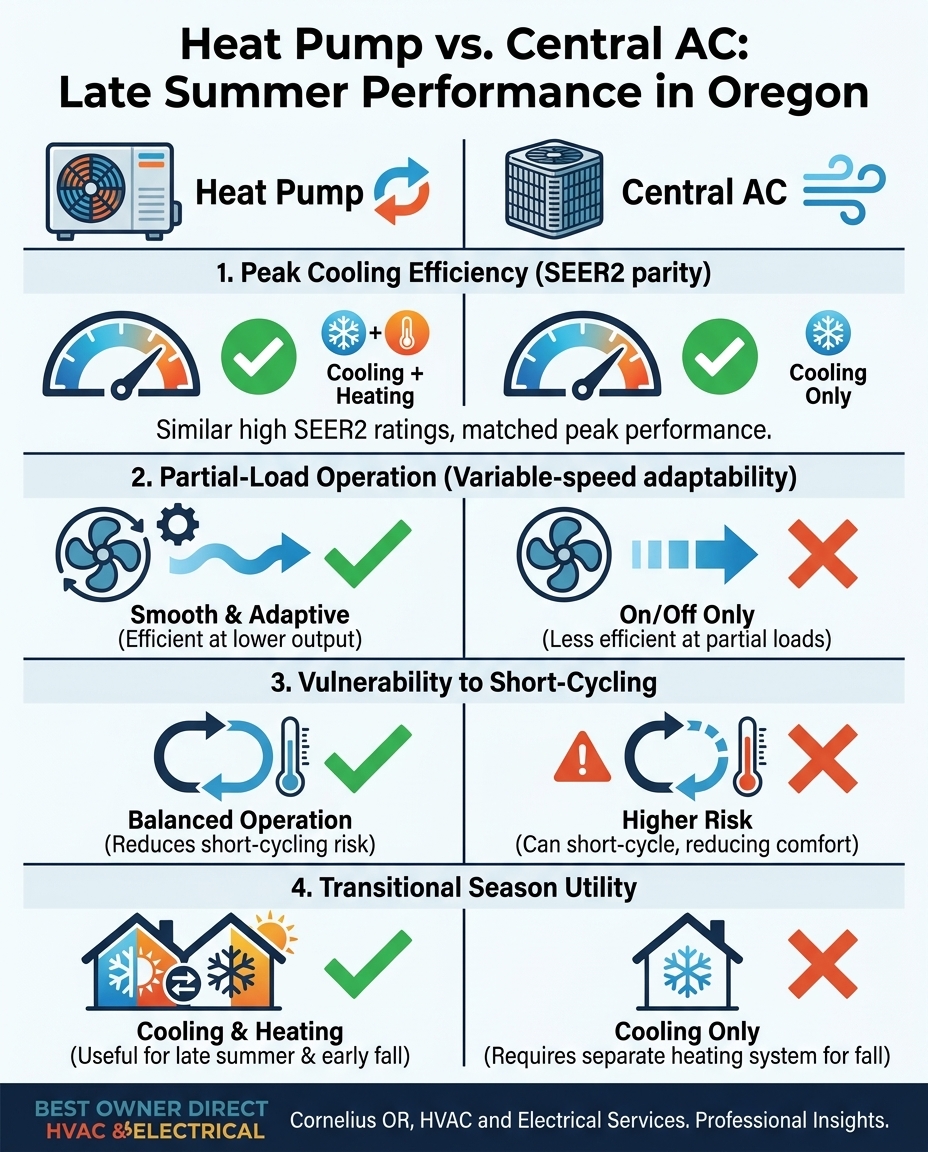
When you are trying to decide between these two technologies, it helps to look at the hard facts. Both systems will keep you cool, but they handle the unique challenges of August late-summer temperature swings very differently. Here is a direct comparison of what our team sees in the field across key transitional weather metrics.
• Peak Cooling Performance — Traditional Central AC (Single-Stage): Excellent. High SEER2 models handle 95°F+ afternoons with ease. — Modern Heat Pump (Variable-Speed): Excellent. SEER2 parity means they match standard ACs in raw cooling power.
• Partial-Load Efficiency — Traditional Central AC (Single-Stage): Poor. Always runs at 100% capacity, leading to wasted energy on mild evenings. — Modern Heat Pump (Variable-Speed): Superior. Throttles down to 30% capacity to match exact cooling demand.
• Adaptability to Temp Swings — Traditional Central AC (Single-Stage): Prone to short-cycling when outdoor temperatures drop rapidly at night. — Modern Heat Pump (Variable-Speed): Maintains steady, even temperatures without rapid on/off cycling.
• Transitional Season Utility — Traditional Central AC (Single-Stage): Cooling only. Sits idle as soon as the fall heating season begins. — Modern Heat Pump (Variable-Speed): Dual-function. Seamlessly switches to high-efficiency heating as weather cools.
As the table shows, the decision often comes down to how much you value evening efficiency and fall heating capabilities versus straightforward, traditional cooling power.
Assessing End-of-Season Wear on Aging Systems
August is notoriously tough on older HVAC equipment. After running heavily through June and July, systems that are 10 to 15 years old often start showing signs of severe fatigue. If you are debating whether to repair your current unit or invest in a new AC or Heat Pump, you need to assess the end-of-season wear accurately.
Signs our technicians look for that indicate your older system is failing due to late-summer stress:
• Grinding or squealing noises: This usually indicates failing blower motors or worn-out compressor bearings.
• Uneven cooling: If your living room is freezing but the bedrooms are warm, the system is losing its capacity to push air effectively.
• Unexplained utility spikes: A sudden jump in your energy bills means the system is working twice as hard to produce the same amount of cooling.
• Constant running: If the unit never shuts off during the day, it has lost its efficiency.
Sometimes, a simple fix is all that is needed. Another Cornelius, OR homeowner recently called our crew when their very old HVAC system stopped working entirely. Our technician found the problem quickly, swapped out a faulty electrical part, and thoroughly cleaned the filter and condenser coils. The system was soon blowing cold air better than it had in years. Regular upkeep through an HVAC maintenance plan can catch these minor issues before they cause total breakdowns.
However, if your system requires major repairs, you have to consider the diminishing returns of keeping it alive. Sourcing rare parts for obsolete, older-refrigerant units is becoming increasingly difficult and expensive. Upgrading before the system fails entirely gives you time to research your options. Keep in mind that generic federal tax credits or local utility rebates may apply to qualifying high-efficiency heat pump upgrades, which can help offset the initial investment. We always recommend verifying current program details with your utility provider or a qualified tax professional.
Honest Advice for Your Next System Upgrade
The truth about the HVAC industry is that there is no single "best" system for everyone. The right choice depends entirely on your home's specific layout, your ductwork, your budget, and your personal comfort goals. Unfortunately, many companies push the most expensive equipment regardless of what the homeowner actually needs.
Working with our team at Best Owner Direct HVAC & Electrical means you get a completely different experience. Avoiding high-pressure sales tactics allows for an honest, objective assessment of your home. We sit down with you to look at the data. If a standard central AC is perfectly sufficient for your cooling needs and your existing furnace is in great shape, we will tell you. If the premium for a variable-speed Heat Pump is justified because you are tired of struggling with August late-summer temperature swings and high winter heating bills, we will show you exactly how the efficiency gains make sense for your property.
Both central air conditioners and heat pumps offer incredible efficiency when properly sized and installed. The key is transparent guidance from a trusted local partner so you understand exactly what you are investing in.
Make a Confident Choice for Your Home's Comfort
Understanding how different systems handle daily temperature shifts is the key to making a confident, long-lasting decision for your home. You do not have to accept uneven temperatures, high utility bills, or the anxiety of wondering if your aging system will survive the rest of the season in Cornelius, OR.
Stop struggling with an inefficient, worn-out cooling system that cannot handle transitional weather. Take control of your indoor comfort by exploring your replacement options today. Reach out to schedule a free, no-pressure estimate, and let us help you compare the true value of a new central AC versus a modern heat pump for your specific home.
Frequently Asked Questions
Do heat pumps cool as efficiently as central ACs during late summer?
Yes, modern heat pumps cool just as efficiently as traditional central air conditioners. Both systems are measured using SEER2 ratings, and top-tier models of both types offer comparable peak cooling performance. During hot August afternoons, a heat pump will remove heat and humidity from your home exactly like a standard AC.
How do temperature swings affect HVAC efficiency?
Large daily temperature swings force cooling systems to operate under varying loads. During the heat of the day, the system runs at maximum capacity, but as the evening cools, less power is needed. Systems that cannot adjust their output will turn on and off rapidly (short-cycle), which wastes energy and causes unnecessary mechanical wear.
Which system is better for varying daily temperatures?
A variable-speed heat pump is generally better equipped for varying daily temperatures. Because the compressor can throttle its output down to match the exact cooling demand of the home, it runs continuously at a low speed during mild evenings. This provides consistent comfort and better humidity control than a single-stage system.
Is it worth replacing my aging AC with a heat pump?
Replacing an aging AC with a heat pump is often worth it if you want to improve your home's overall energy efficiency and gain fall heating capabilities. Heat pumps consolidate your heating and cooling into one highly efficient unit. However, the exact return on investment depends on your current setup and local utility rates.
How do heat pumps work during sudden temperature drops?
When the outdoor temperature drops suddenly, a variable-speed heat pump automatically reduces its cooling capacity. Instead of shutting off entirely or blasting freezing air, it slows down its operation to maintain the set temperature gently. If the weather drops low enough to require heating, the system can reverse its operation to warm the home.
Are there energy rebates available for upgrading my cooling system?
Yes, there are often generic federal tax credits and local utility incentive programs available for upgrading to qualifying high-efficiency cooling systems, particularly heat pumps. Because program requirements and availability change frequently, we always advise verifying current rebates with your utility provider or a tax professional before installation.


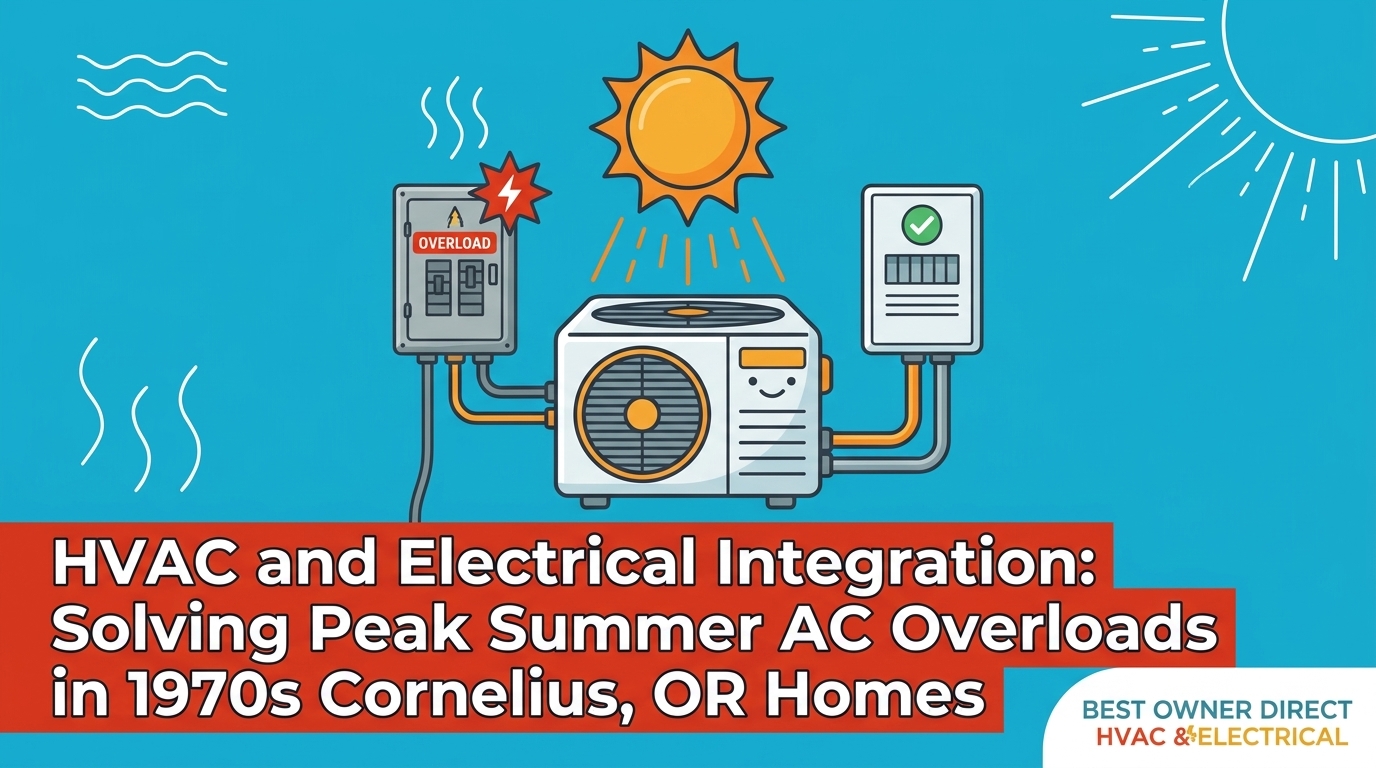
How Cornelius Homes Handle Peak Summer AC Loads on Older Electrical PanelsModern AC units often overwhelm aging 1970s electrical panels during intense summer heat. Review the warning signs and specific upgrades needed to keep your home safely cooled.
Read more

The Electrical Toll of a Struggling HVAC System on Your Home's BreakersAn aging air conditioner does not just lose cooling power; it actively stresses your electrical panel. A tripping breaker during late summer heat is a warning sign requiring professional diagnosis.
Read more
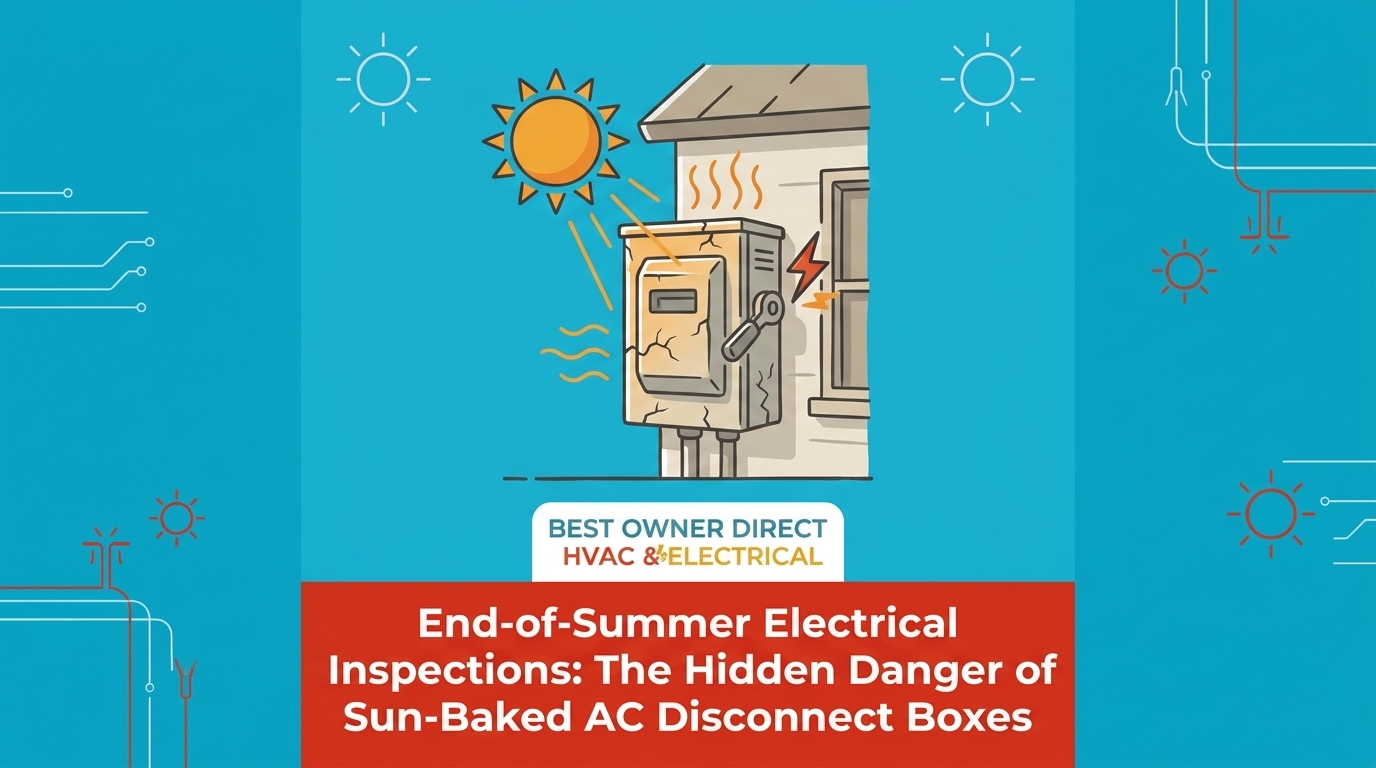
End-of-Summer Electrical Inspections: Checking Outdoor Disconnect BoxesAfter months of intense Pacific Northwest sun, your outdoor AC disconnect box can become brittle and unsafe. Learn the visual warning signs of UV degradation.
Read more