Menu


What Are the Most Common AC Repairs and What Causes Them?
Understanding the most common AC repairs and what causes them can save you from a miserable summer — and a surprisingly large repair bill. Whether your system is blowing warm air, making strange noises, or shutting off every few minutes, there's almost always a specific, identifiable cause behind it.
Here's a quick overview of the most common AC repairs homeowners face:
| Repair Issue | Most Common Cause |
|---|---|
| Bad capacitor | Heat stress, power surges, age |
| Clogged condensate drain | Algae and debris buildup |
| Refrigerant leak | Worn fittings, coil corrosion |
| Frozen evaporator coil | Dirty filter, low refrigerant, poor airflow |
| Electrical control failure | Frequent cycling, wire corrosion |
| Compressor failure | Overheating, refrigerant problems, age |
| Fan motor burnout | Dust buildup, lack of lubrication |
| Dirty condenser coils | Outdoor debris, neglected maintenance |
| Thermostat malfunction | Dead batteries, miscalibration, sensor issues |
| Short cycling | Oversized unit, dirty filter, low refrigerant |
Bad capacitors alone account for roughly 21.5% of all AC service calls — making them the single most common repair technicians see. And according to HVAC professionals, nine out of ten central AC problems trace back to one simple culprit: a dirty air filter.
The good news? Most of these failures are preventable. Annual maintenance catches up to 95% of AC problems before they strand you on the hottest day of the year. The bad news is that most homeowners don't find out about these issues until their system stops working — often during a Portland metro heat wave when every HVAC company in the area is fully booked.
This guide walks you through every major repair type, what triggers each one, how to spot early warning signs, and how to decide whether your system is worth fixing or ready to be replaced.
The Most Common AC Repairs and What Causes Them
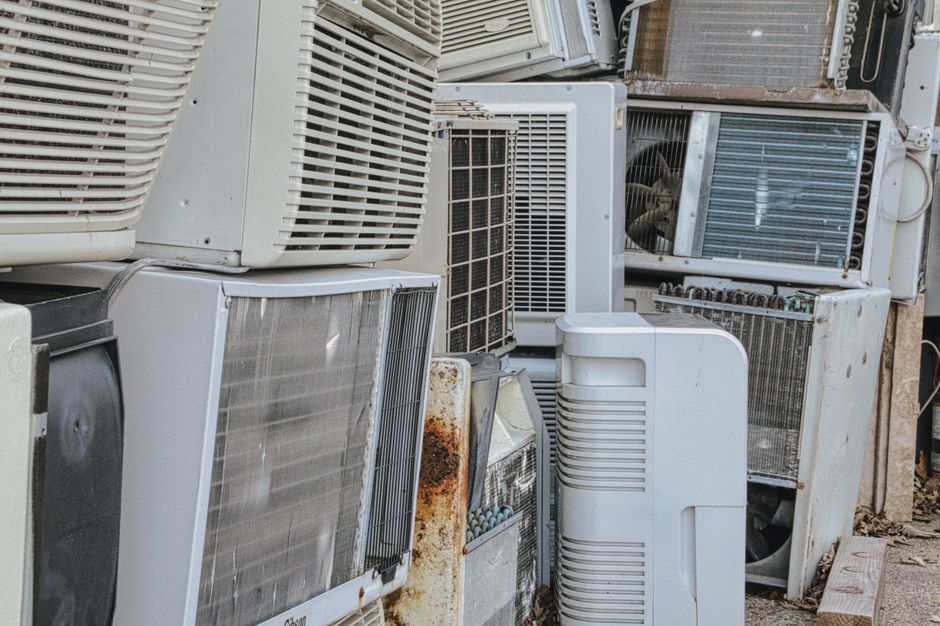
When your air conditioner breaks down during a sweltering July afternoon in Hillsboro or Lake Oswego, it rarely happens without warning. AC systems are complex, interconnected machines. When one component is forced to work under strain, it creates a domino effect that can lead to system-wide failure.
To keep your home comfortable and avoid major system breakdowns, we recommend reading our Air Conditioning Repair Complete Guide. Understanding the mechanics of your cooling system is the first step toward proactive home maintenance.
Troubleshooting the Most Common AC Repairs and What Causes Them in Central Air Systems
Central air conditioning systems are the workhorses of many homes in the Portland metro area. Because they rely on a complex network of ductwork, high-voltage electrical connections, and pressurized refrigerant lines, they are susceptible to several standard mechanical failures.
1. Failed Capacitors
The capacitor is a small, cylindrical device inside your outdoor condenser unit that acts like a short-term battery. It stores up electrical energy and releases it in a powerful burst to help the compressor and fan motors start up (the start capacitor) and keep running smoothly (the run capacitor).
Capacitors are incredibly sensitive to heat stress and electrical fluctuations. When summer temperatures climb in places like Beaverton and Tigard, the electrical cabinet inside your outdoor unit can reach extreme temperatures. This heat, combined with standard power surges or simple age, degrades the chemical components inside the capacitor. When it fails, you may hear a faint humming sound from the outdoor unit, but the fan and compressor will refuse to turn on. For a deeper dive into this specific issue, read our guide on What Causes an AC Capacitor to Fail and How to Prevent It.
2. Clogged Condensate Drain Lines
Your air conditioner does more than lower the temperature inside your house; it also dehumidifies the air. As warm, humid air passes over the cold evaporator coil, moisture condenses on the metal fins and drips into a drain pan. This water is then carried out of your home through a narrow PVC pipe called the condensate drain line.
Over time, dust, pet dander, and pollen that bypass your air filter settle into this moist environment. This creates a perfect breeding ground for algae, mold, and bacterial slime. Eventually, a thick clog forms. When the water has nowhere to go, it backs up into the drain pan. If your system is equipped with a safety float switch, it will shut down to prevent a flood. If not, the water will overflow, causing hidden water damage to your drywall, ceilings, and flooring.
3. Refrigerant Leaks
Refrigerant is the lifeblood of your air conditioner. It circulates in a closed loop between the indoor evaporator coil and the outdoor condenser coil, absorbing heat from inside your home and releasing it outdoors. A common misconception is that air conditioners "use up" refrigerant over time. In reality, a properly sealed system should never need its refrigerant topped off.
If your system is low on refrigerant, you have a leak. These leaks typically develop in the copper tubing, particularly around joints, service valves, or within the delicate U-bends of the evaporator coil due to formicary corrosion (corrosion caused by household acids in the air). Operating a system with a refrigerant leak not only destroys your cooling efficiency but also harms the environment. It can also cause the compressor to overheat and fail prematurely.
4. Frozen Evaporator Coils
Your indoor evaporator coil typically hovers around a chilly temperature to effectively cool the air blowing across it. However, if something restricts the airflow over those coils, or if the refrigerant charge drops too low, the coil's temperature will plunge below freezing. The moisture condensing on the coil will instantly turn to ice.
As the ice builds up, it acts as an insulating barrier, preventing the refrigerant from absorbing heat from your indoor air. Soon, your vents will blow warm air, and you may notice ice forming on the brass valves of your outdoor unit or along the copper refrigerant lines. This is often caused by a neglected air filter or a Dirty Evaporator Coil Air Conditioner, which blocks necessary heat exchange.
5. Electrical Control Failures and Tripped Breakers
The electrical demands of a central air conditioner are substantial. Wire connections can corrode over time due to seasonal temperature swings and moisture. Furthermore, the contactor—an electrical switch that controls power to the compressor and fan motor—can wear out. Every time your system cycles on, a small electrical arc occurs across the contactor's metal plates. Over years of service, this arcing creates pitting and soot buildup, which can cause the contactor to stick or fail to close. If your system is constantly shutting down your electrical panel, you should read our troubleshooting guide on Why Is My A/C Tripping the Breaker.
6. Compressor Failure and Fan Motor Burnout
The compressor is the heart of your AC system, responsible for pressurizing the refrigerant and pumping it through the coils. Because it is the most heavily stressed component, it is highly vulnerable to failures caused by other unresolved issues. If your system has suffered from chronic short cycling, incorrect refrigerant levels, or dirty coils, the compressor will eventually overheat and seize. Similarly, the outdoor condenser fan motor can burn out if it is forced to work against dust, leaves, and debris that restrict the fan blades' movement.
How Ductless Mini-Splits and Heat Pumps Experience the Most Common AC Repairs and What Causes Them
Ductless mini-splits and heat pumps are increasingly popular throughout the Pacific Northwest, including Cornelius and Forest Grove. While they perform the same basic cooling function as a central AC, their design and specialized components lead to a different set of common repair issues.
| Feature / Repair Issue | Central AC | Ductless Mini-Split / Heat Pump |
|---|---|---|
| Air Distribution | Central ductwork network | Individual wall/ceiling air handlers |
| Compressor Control | Standard single or two-stage | Variable-speed inverter technology |
| Common Drainage Issue | Gravity-fed main PVC drain line | Tiny internal condensate pumps with lift |
| Defrost Cycle Failures | None (cooling only) | Reversing valve or control board failure |
| Communication Errors | Simple low-voltage thermostat wire | Multi-conductor shielded communication lines |
Ductless mini-splits rely heavily on advanced inverter technology, which allows the compressor to adjust its speed precisely to meet your home's heating or cooling demands. While highly efficient, this requires complex printed circuit boards (PCBs) that are sensitive to power surges and voltage fluctuations.
Additionally, because mini-split indoor units are mounted directly on your walls, they cannot always rely on gravity to drain condensate water. Many models use miniature internal condensate pumps to lift water up and out through the wall. These tiny pumps have small motors that can burn out, or their internal float switches can get stuck, leading to water dripping directly down your interior walls.
For heat pumps that provide both heating in our damp Oregon winters and cooling in the summer, the reversing valve is a critical component. This valve physically slides to reverse the flow of refrigerant, changing the system's function from cooling to heating. If the reversing valve gets stuck due to physical wear or a failing solenoid coil, your system will be trapped in one mode.
Warning Signs Your Air Conditioner Is About to Fail
An air conditioner rarely stops working without giving you a few warning signs first. Paying attention to how your system sounds, smells, and operates can help you schedule a service call before a minor mechanical strain turns into a complete system failure.
Strange Noises and Unusual Odors
Your air conditioner should operate with a gentle, predictable hum. If you start hearing loud, jarring sounds, it is a clear indicator that a mechanical component is failing.
- Squealing or Screeching: This often points to a failing blower motor bearing or a worn-out fan belt in older central systems.
- Clanging, Banging, or Rattling: These sounds usually suggest that something has come loose. It could be a fan blade hitting a housing unit, loose motor mounts, or internal components within the compressor starting to fail. To learn more about diagnosing these sounds, check out our guide on AC Making Strange Noises: What They Mean.
Unusual smells are another major red flag. If you notice a musty, stale odor whenever the system turns on, you are likely dealing with mold or mildew growth inside your ductwork or on your evaporator coil. This is common in our humid, rainy climate and should be addressed to protect your indoor air quality. Conversely, a sharp, metallic, or burning plastic smell indicates scorched electrical wires, a failing motor winding, or a stuck contactor. If you smell burning, shut the system off at the breaker immediately and read Does Your Air Conditioner Smell? Here's What It Means.
Short Cycling and Weak Airflow
A healthy air conditioner should run for roughly 15 to 20 minutes to cool your home, shut off for a similar period, and then cycle back on. If your system is turning on and off every few minutes, it is experiencing a phenomenon known as short cycling.
Short cycling is incredibly damaging to your compressor and fan motors because the startup phase is when these components experience the most heat and electrical stress. This behavior can be caused by:
- An oversized AC unit that cools the home too quickly without dehumidifying.
- A severely clogged air filter that restricts airflow, causing the system to overheat.
- A malfunctioning thermostat or thermostat sensor that misreads indoor temperatures.
If your system is running but you can barely feel any cool air coming out of your supply registers, your airflow is restricted. This lack of circulation can cause your indoor coils to freeze up. If you suspect your system is icing over, turn it off immediately and refer to our guide on Why Is My A/C Unit Frozen to prevent permanent compressor damage.
Repair vs. Replacement: The Decision Framework for Oregon Homeowners
When your air conditioner experiences a major mechanical failure, you face a difficult choice: do you invest in a repair, or is it time to replace the entire system? This decision is especially critical for older systems that use outdated technology or have suffered from years of deferred maintenance.
The 50% Rule and the $5,000 Rule
To help homeowners make an objective, financially sound decision, HVAC professionals rely on two classic decision-making frameworks:
- The 50% Rule: This rule is simple. If the cost of repairing your current air conditioner exceeds 50% of the value of a brand-new, modern system, replacement is almost always the smarter financial choice.
- The $5,000 Rule: To use this rule, multiply the estimated repair cost by the age of your system in years. If the resulting number is greater than $5,000, you should invest that money into a new, energy-efficient replacement instead.
For example, if your 12-year-old system requires a major component repair, multiplying that repair value by 12 will likely exceed the threshold. Investing in a new system with a fresh manufacturer's warranty and updated SEER2 (Seasonal Energy Efficiency Ratio) ratings will provide greater long-term reliability and lower monthly utility bills.
Refrigerant Phase-Outs: R-22 vs. R-410A
The type of refrigerant your air conditioner uses plays a massive role in your repair-versus-replace decision.
If your home's air conditioner was installed before 2010, there is a high probability that it operates on R-22 refrigerant (commonly known as Freon). Because R-22 is an ozone-depleting substance, the EPA has completely phased out its production and import. Consequently, the remaining supply of R-22 is extremely scarce, making any repairs that involve fixing a leak and recharging an R-22 system incredibly expensive.
Even R-410A (the refrigerant that replaced R-22) is undergoing its own phase-down to make way for newer, more environmentally sustainable refrigerants like R-32. If your older system has a major refrigerant leak, attempting to patch the copper lines and recharge the system is often a temporary band-aid on obsolete technology. Upgrading to a modern, high-efficiency system is typically the most reliable and environmentally responsible path forward.
Frequently Asked Questions About AC Troubleshooting
Why is my AC running but not blowing cold air?
When your indoor blower fan is running but the air coming out of your vents feels lukewarm, there are a few common culprits to check first. Start by verifying that your thermostat is set to "Cool" and that the temperature is set below your current room temperature.
Next, check your indoor air filter. A heavily clogged filter can restrict airflow so severely that your evaporator coil freezes, blocking any actual cooling. Finally, step outside and listen to your outdoor condenser unit. If the fan is spinning but you don't hear the deep hum of the compressor, or if the outdoor unit isn't running at all, you may have a failed capacitor, a tripped breaker, or a refrigerant leak. For step-by-step instructions, read our guide on AC Not Cooling Properly: What to Check First.
How often should I replace my home's air filters?
As a general rule of thumb, standard 1-inch pleated air filters should be replaced every 30 to 90 days. However, the ideal frequency depends heavily on your household's specific needs:
- Every 30 Days: If you have multiple pets, family members with severe allergies or asthma, or if you live in a dusty area.
- Every 60 Days: For the average suburban home with one pet or mild seasonal allergies.
- Every 90 Days: For single-occupant homes with no pets or vacation properties that see minimal use.
Using high-quality, properly rated MERV (Minimum Efficiency Reporting Value) filters protects your indoor air quality and keeps your evaporator coils clean, preventing airflow restrictions that lead to system failures.
What should I do if my air conditioner is leaking water?
If you notice water pooling around your indoor furnace or air handler, you should shut your air conditioning system down immediately at the thermostat. Continued operation will only produce more condensate water, increasing the risk of expensive water damage to your home's structure.
Once the system is off, check your condensate drain line. If you can locate the access point (usually a small T-shaped pipe near the indoor unit), you can try using a wet/dry vacuum to clear the clog from the outside drain termination point. If the drain pan is cracked or the internal condensate pump has failed, you will need a licensed technician to replace the damaged components and treat the system to prevent future algae buildup.
Conclusion
Your home's air conditioner is a vital investment in your family's comfort and safety. While understanding the most common AC repairs and what causes them can help you troubleshoot minor issues, most electrical, mechanical, and refrigerant-related problems require the hands-on expertise of a professional.
At Best Owner Direct HVAC & Electrical, we are proud to be a family-owned company based in Cornelius, OR. Our team of licensed, highly trained technicians serves homeowners and businesses throughout the surrounding communities, including Beaverton, Hillsboro, Forest Grove, Newberg, Lake Oswego, and Portland. Whether you need a quick capacitor replacement, a thorough drain line clearing, or a complete system upgrade to a modern, energy-efficient heat pump, we are here to help with reliable, same-day service.
Don't wait for the next major heat wave to find out if your air conditioner is up to the task. If your system is making strange noises, blowing warm air, or is simply overdue for its annual safety inspection, contact us today to schedule your service or find professional AC Repair Near Me.


End-of-Summer Electrical Inspections: Checking Outdoor Disconnect BoxesAfter months of intense Pacific Northwest sun, your outdoor AC disconnect box can become brittle and unsafe. Learn the visual warning signs of UV degradation.
Read more
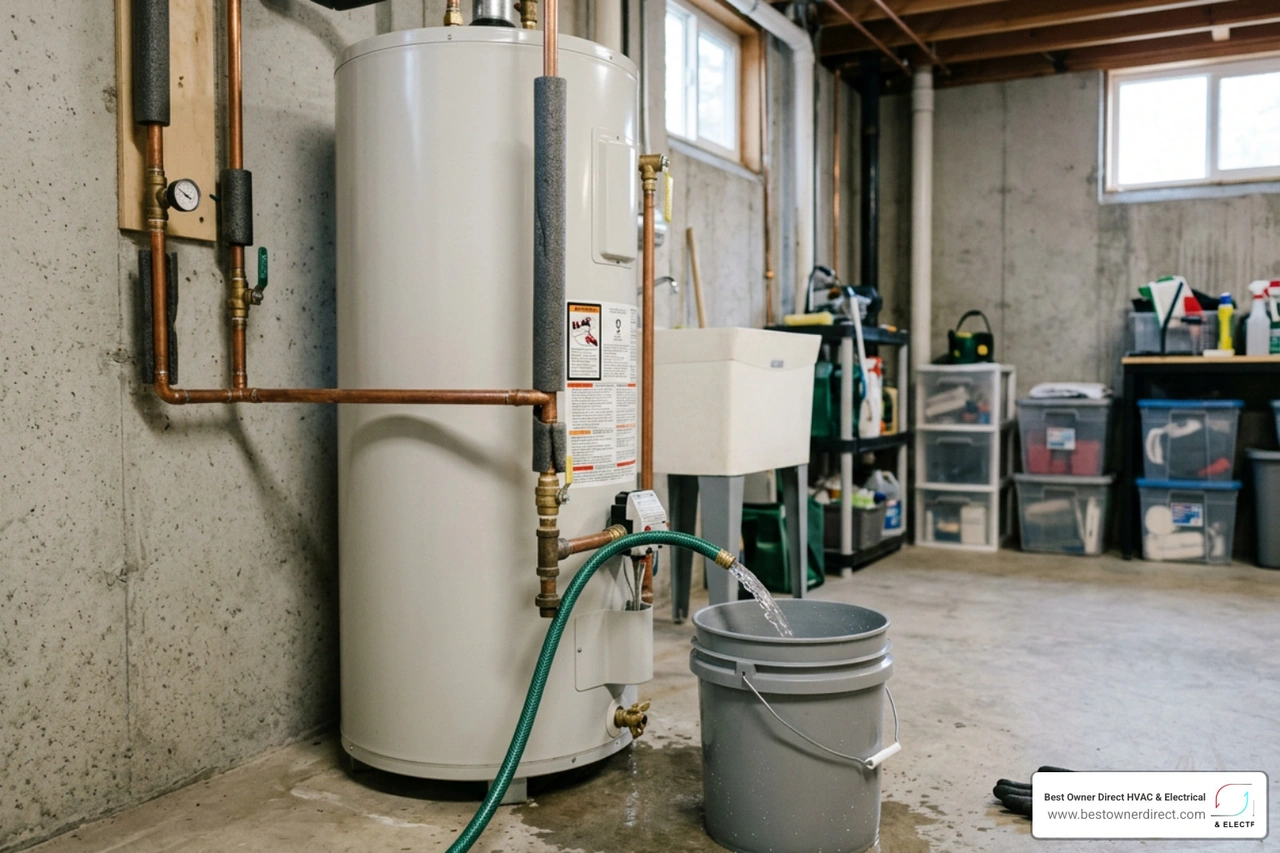
Step-by-Step Guide to How Often to Flush Your Water Heater in OregonLearn how often to flush your water heater in Oregon with our step-by-step guide, covering signs, DIY steps, and maintenance tips.
Read more
Hiring an HVAC Company vs. an Independent Technician for End-of-Season MaintenanceYour AC system has endured months of heavy summer use and needs reliable servicing. Compare the accountability and warranty support of established providers versus independent technicians.
Read more