Menu


Diagnose AC Electrical Problems Before They Cause a Breakdown
Electrical connection problems can shut down an air conditioner by limiting power, creating heat, or causing a short circuit. To diagnose the issue safely, first note whether the breaker trips immediately or after the AC runs for several minutes, replace a dirty air filter, and watch for humming, clicking, flickering lights, or a burning-plastic smell. If you smell burning insulation or see scorch marks, turn the system off at the thermostat and breaker and do not reset it again. For homeowners seeking AC repair in Cornelius, OR, these early signs can prevent a small connection issue from damaging a motor, capacitor, or control board.
Explore our AC services | Request AC repair
Loose wires and corroded terminals raise electrical resistance, which produces damaging heat and voltage drops. A weak capacitor may leave the outdoor unit humming without starting, while a tripped breaker may point to overload, a short, or a failing component. Best Owner Direct HVAC & Electrical is a family-owned HVAC, electrical, and water-heater services company based in Cornelius, OR, serving Portland metro and surrounding Oregon communities.
I'm Chandrine Stepisnik, and contact Best Owner Direct HVAC & Electrical for AC repair when warning signs appear.
The Science of How Electrical Connection Problems Cause AC Breakdowns
To understand the core reasons behind sudden cooling failures, we have to look at the physical forces happening inside the wiring harness and control box of your cooling system. Your air conditioner is a heavy-duty electromechanical appliance. The outdoor condenser unit relies on a high-voltage 240-volt dedicated circuit that channels continuous electrical current to power the compressor and the condenser fan motor. When everything is tight and clean, electricity flows effortlessly. However, everyday operation introduces two silent culprits: thermal expansion and micro-vibrations.
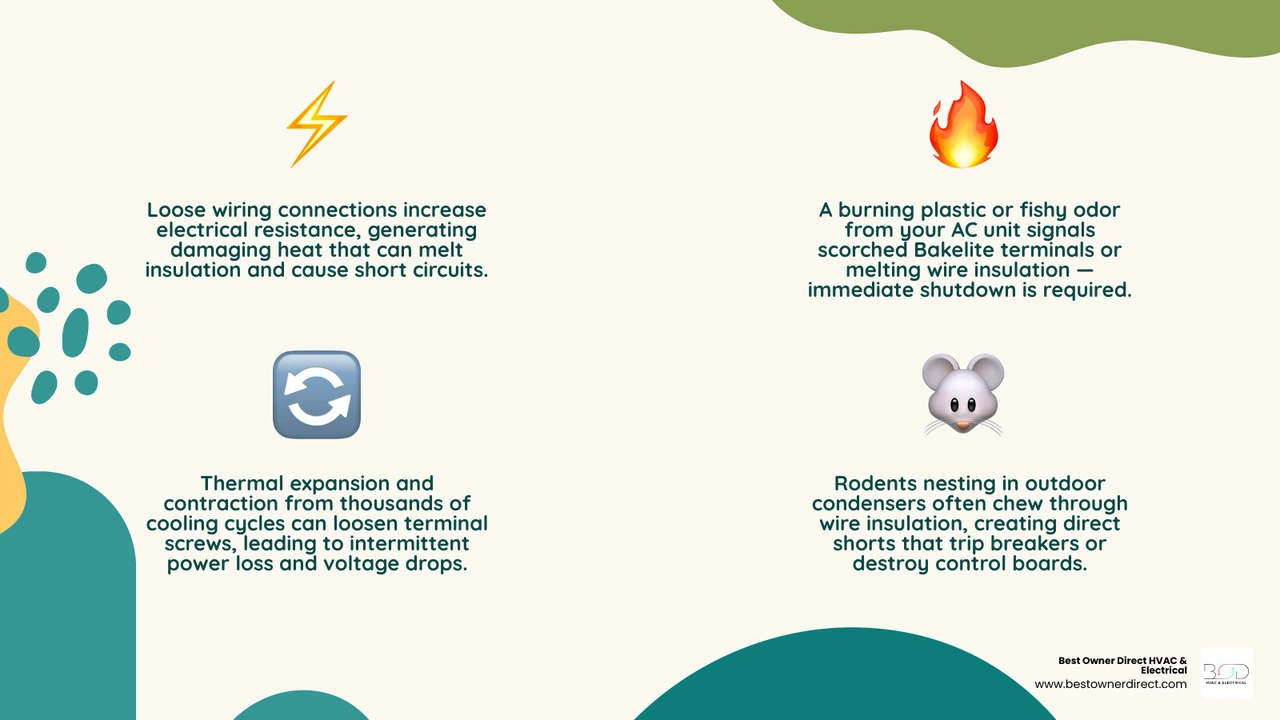
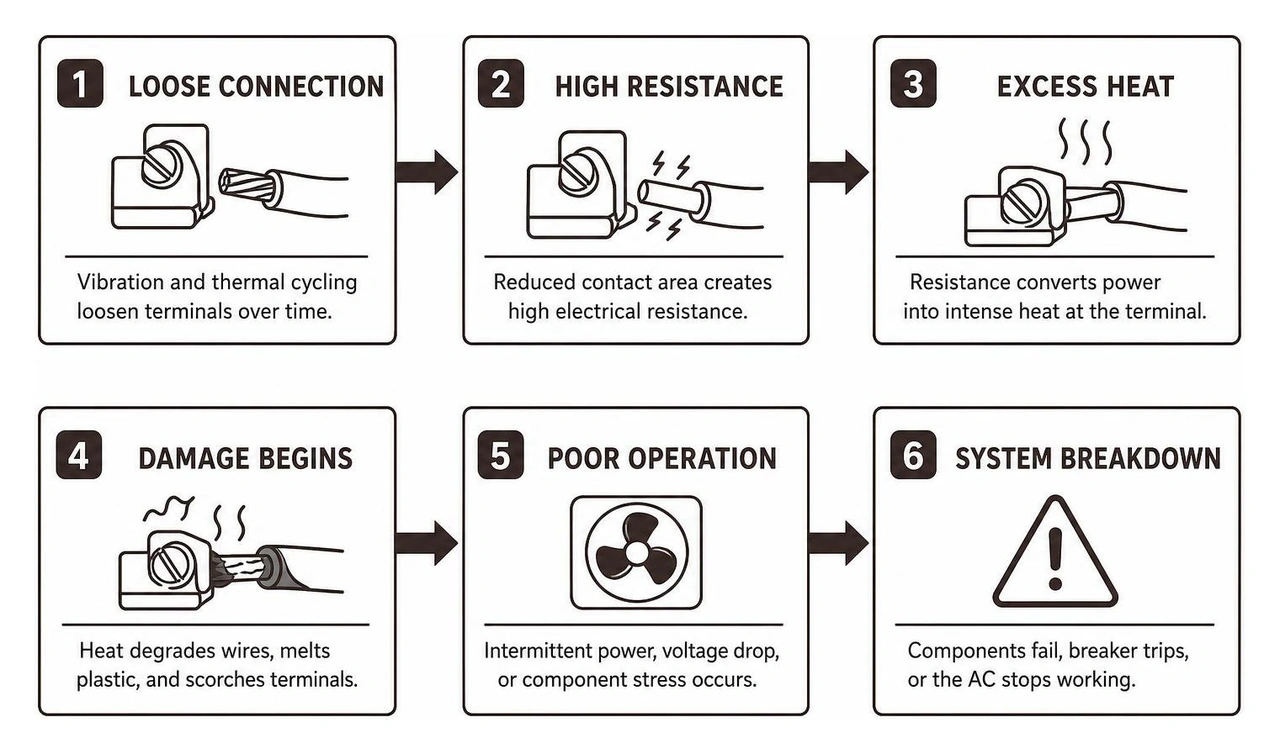
Every time your air conditioner starts, electrical current generates natural heat within the conductors. As copper and aluminum wires heat up, they expand slightly; when the system cycles off, they cool down and contract. Over thousands of cooling cycles, this microscopic expansion and contraction movement causes screw terminals to loosen. Simultaneously, the powerful spinning motions of the compressor and fan motor produce constant micro-vibrations across the unit's chassis. Over time, these vibrations back out terminal screws, loosen wire nuts, and wiggle push-on spade connectors out of place.
When a terminal connection becomes loose, the contact surface area between the wire and the terminal shrinks. In basic electrical physics, reducing the path of electrical flow creates high electrical resistance. Think of electrical resistance like a severe kink in a high-pressure garden hose—except instead of backing up water, restricted electricity converts directly into intense, concentrated heat. Temperatures at a loose wiring terminal can quickly exceed 300°F. This extreme heat degrades the wire, melts surrounding plastic components, scorches terminal blocks, and causes intermittent system operation. If you want to check fundamental components before scheduling service, reviewing ac troubleshooting tips before calling a professional can help you inspect the external system safely.
Understanding How Electrical Connection Problems Cause AC Breakdowns via Capacitor Failure
Capacitor failure is widely recognized as the single most common electrical repair in residential cooling systems. To understand why, consider the mechanical challenge your air conditioner faces during startup. A stationary compressor motor at rest possesses heavy mechanical inertia. Electrically, a stopped motor temporarily acts like a dead short until the internal rotor begins spinning and generates opposing counter-electromotive force. Overcoming this resting inertia requires a massive surge of startup current, known as Locked Rotor Amperage (LRA).
Start and run capacitors serve as high-capacity electrical storage tanks. They store energy and discharge it at the exact microsecond the thermostat calls for cooling, providing the phase-shifted voltage boost and electrical torque needed to kick-spin the compressor and fan motor.
- Start Capacitors: Deliver a brief, powerful burst of electrical torque to overcome resting inertia during the initial second of startup.
- Run Capacitors: Remain continuously in the circuit to provide ongoing phase-angle correction and smooth, steady rotational torque to keep the motor running efficiently.
Capacitors are filled with a specialized electrolytic fluid and thin conductive foils sealed in an aluminum canister. Over years of sweltering summer operation, constant heat exposure and high internal voltage degrade this electrolyte. When a capacitor loses 20% to 30% of its rated microfarad rating, it can no longer deliver sufficient starting torque. The compressor tries to start, cannot turn over against resting head pressure, and gets trapped in a locked-rotor condition. It hums loudly, draws peak amperage, overheats within seconds, and shuts down on internal thermal overload. Learning the primary role of capacitors in hvac systems helps you see why keeping them in peak condition is vital. Furthermore, catching the 6 signs that your capacitor needs to be replaced allows you to swap a failing capacitor before it damages your expensive compressor motor windings.
How Electrical Connection Problems Cause AC Breakdowns Through Loose and Corroded Wiring
Another major electrical vulnerability stems from wire oxidation and terminal corrosion. Outdoor condenser units are subjected to high outdoor humidity, morning dew, seasonal rain, and ambient temperature shifts. When moisture penetrates the electrical cabinet, it triggers metal oxidation on copper wiring leads, brass lugs, and steel terminal screws.
Corrosion adds a layer of non-conductive scale over terminal contact points, which drastically increases electrical resistance. This resistance causes a severe localized voltage drop. For instance, while your home electrical panel may feed 240 volts to the outside disconnect, a corroded terminal might deliver only 215 volts directly to the compressor terminals. Electric motors are designed to operate within strict voltage tolerances. When voltage drops, the motor must pull significantly higher amperage to produce the mechanical horsepower required to pump refrigerant. This excessive current overheats the motor's internal copper magnet wire, degrades its protective varnish, melts plastic wire insulation, and scorches the terminal block. If your system runs continuously without generating crisp, cold air, checking ac not cooling properly what to check first can help identify whether poor voltage or restricted airflow is degrading overall cooling output.
Contactors and Relays: Arcing, Pitting, and Welded Points
The contactor is the high-voltage electrical gatekeeper of your air conditioner. It is a heavy-duty electromechanical switch controlled by your home's 24-volt thermostat circuit. When the thermostat calls for cooling, a small magnetic coil energizes, pulling down a metallic armature that presses high-voltage contact points together, closing the circuit and sending 240 volts straight to the compressor and fan.
Because the compressor draws heavy inrush amperage the moment those contact points meet, a momentary electrical arc jumps across the tiny gap before full contact is established. Over thousands of cooling cycles, this intense arcing erodes the conductive silver coating on the contact pads, leaving them pitted, black, and covered in non-conductive carbon buildup.
This wear leads to two common failure states:
- Contact Pitting and Carbon Resistance: The points become so scorched and uneven that electrical current cannot pass cleanly. The contactor buzzes and chatters, creating fluctuating voltage that starves the compressor of starting power and causes motor stalling.
- Contact Welding: The extreme heat of electrical arcing can physically melt the metal contact pads together, permanently welding the switch shut. When contacts weld, the outdoor condenser will continue running nonstop around the clock—even if you turn the indoor thermostat to "OFF." This continuous running can cause severe mechanical strain and compressor burnout.
When you notice your outdoor unit running constantly or refusing to kick on, scheduling expert hvac repair beaverton or ensures a qualified technician can safely test, discharge, and replace worn switching components.
Step 1: Recognize the Warning Signs Before Total Breakdown
Diagnosing electrical issues early saves your cooling system from catastrophic component burnout. You do not need professional diagnostic meters to detect initial warning signs; your basic senses—hearing, smell, and sight—provide the first line of defense. If you live around the western suburbs and need prompt diagnostics, having access to experienced ac repair hillsboro or technicians can stop minor electrical faults from spiraling into system-wide breakdowns.
Strange Sounds: Buzzing, Clicking, and Motor Humming
Your air conditioner should operate with a steady, predictable hum of rushing air and a rhythmic mechanical purr. When electrical connections degrade, the noises change noticeably:
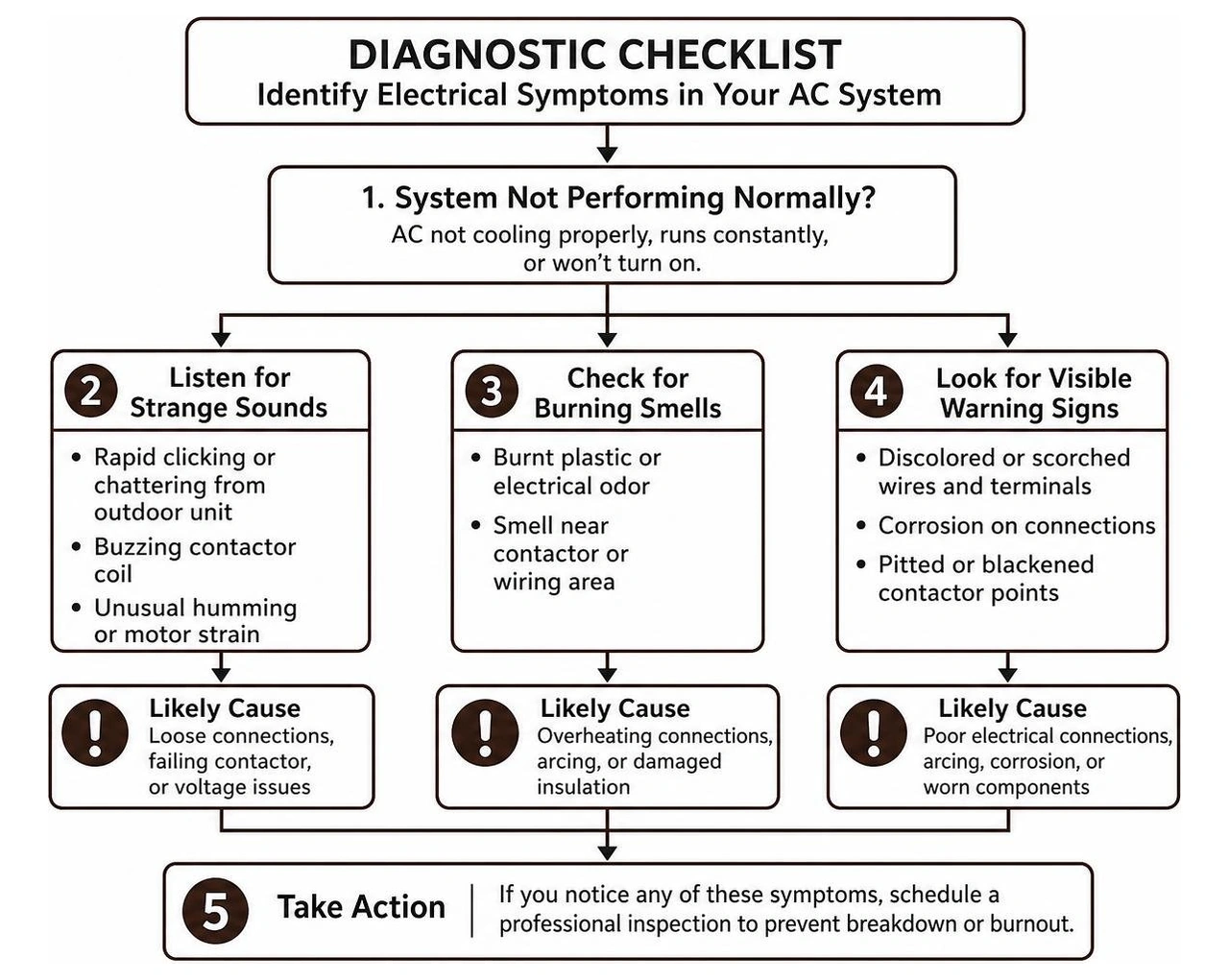
- Rapid Clicking or Chattering: If you hear a machine-gun clicking sound coming from the outdoor cabinet when cooling turns on, the low-voltage magnetic coil in the contactor is struggling to hold the contact points closed due to voltage drops or a failing relay.
- Deep Straining Hum: If the outdoor unit emits a deep, heavy electrical buzz followed by a sharp click and dead silence, the compressor is attempting to start but cannot spin. This is a classic symptom of a failed start capacitor, low voltage across loose connections, or a locked motor rotor.
- High-Pitched Electrical Buzzing: Indicates arcing across loose terminal lugs or a failing 24-volt control transformer inside the indoor air handler.
Burning Plastic Odors and Fishy Electrical Smells
Never ignore strange odors coming from your supply air vents or the outdoor equipment. Electrical insulation, wire sheathing, and control board terminal blocks are manufactured with synthetic plastics, nylon coatings, and Bakelite resin.
When loose connections or failing motor windings generate extreme resistance heat, this synthetic insulation begins to melt and vaporize. It produces a sharp, pungent odor that smells distinctly like burning plastic, acrid chemical smoke, or a strong fishy stench. If you detect this smell:
- Immediately turn the system to OFF at your thermostat.
- Go to your main breaker panel and switch off the dedicated AC circuit breaker.
- Do not turn the unit back on until the wiring and electrical cabinet have been visually and electrically tested. Running a system with melting insulation is a serious fire hazard.
Flickering Home Lights and Low-Voltage Thermostat Drops
Every large electric motor pulls a momentary spike of inrush current at startup. However, in a properly functioning electrical setup, this surge lasts only a fraction of a second and should not disrupt your home’s electrical stability.
If the indoor lights across your home noticeably dim or flicker for a full second or two whenever the outdoor AC kicks on, the compressor is struggling against high starting resistance or a dead capacitor, pulling excessive Locked Rotor Amps for too long.
Additionally, pay attention to your thermostat display. Central air conditioning systems utilize a 24-volt step-down transformer in the indoor air handler to power low-voltage control circuits, thermostats, and safety switches. If high heat, shorted wires, or failing components cause the low-voltage circuit to ground out, the control board's small 3-amp or 5-amp fuse will blow. This immediately cuts all low-voltage power, leaving you with a blank, unresponsive thermostat display and a completely dead system.
Step 2: Differentiate Between Thermal and Magnetic Breaker Trips
A tripped circuit breaker is often viewed as an annoying interruption, but your breaker is an essential safety shield engineered to prevent electrical fires and wire destruction. When your AC breaker trips, the exact timing of the trip reveals the type of fault occurring inside your cooling equipment.
| Trip Mechanism | Fault Type | Typical Timing | Underlying Root Causes |
|---|---|---|---|
| Thermal Trip | Gradual Overcurrent / Overload | Trips after 5 to 30 minutes of continuous operation | Restricted airflow, dirty filters, failing motor bearings, high head pressure, loose terminal resistance |
| Magnetic Trip | Direct Short Circuit / Ground Fault | Trips instantaneously (milliseconds) the moment it starts | Bare hot wire touching metal casing, shorted compressor motor windings, fried control board |
- Thermal Trips (Gradual Overload): Thermal breaker protection relies on an internal bimetallic strip. As electrical current flows through the breaker, it gently warms this metal strip. If the AC draws slightly higher current than rated (for example, pulling 26 amps on a 20-amp breaker due to dirty coils, high head pressure, or high-resistance terminals), the metal strip slowly bends until it mechanically trips the switch open. This process takes several minutes of sustained running.
- Magnetic Trips (Instantaneous Short Circuits): Magnetic protection uses an internal electromagnetic coil designed to react in milliseconds. When a direct short circuit occurs—such as bare 240-volt conductors contacting each other or internal motor windings melting and touching the compressor’s grounded steel shell—current surges to hundreds of amps instantly. The electromagnetic coil creates an instantaneous magnetic pull that throws the breaker open immediately.
If you are dealing with frequent power cutoffs, understanding ac circuit breaker keeps tripping what it means will help you pinpoint whether your system is fighting an airflow overload or a severe electrical short. If trips happen repeatedly, contacting licensed ac repair tigard or specialists ensures the circuit and equipment are analyzed safely.
The Dangers of the Repeated Reset and the One-Reset Rule
When an air conditioner trips its breaker, many homeowners walk over to the electrical panel, flip the switch back to "ON," and carry on. When it trips again twenty minutes later, they flip it again. This repeated resetting is exceptionally dangerous.
We strongly advise all homeowners to follow the strict One-Reset Rule:
- If your AC breaker trips once, turn the thermostat to OFF.
- Firmly switch the breaker completely to the OFF position, then back to ON.
- Turn the thermostat back to COOL and observe the system.
- If the breaker trips a second time, DO NOT reset it again.
Continuously forcing a breaker back on pumps high-current electrical surges through compromised wiring, weakened capacitors, and deteriorating motor windings. Doing so can turn a repairable electrical issue into an internal compressor burnout, known as a "grounded compressor." In a grounded compressor, the internal motor insulation burns up completely, contaminating the entire refrigeration loop with corrosive acid and necessitating a full system replacement.
Step 3: Inspect Key Physical Vulnerabilities from Mechanical Load to Pests
Electrical failures do not always originate within the wires themselves. Often, severe mechanical strain or external environmental hazards force electrical components beyond their safe operating limits. Maintaining comprehensive hvac service beaverton or addresses both physical airflow mechanics and underlying electrical safety before summer heat waves arrive.
How Dirty Filters and Airflow Restriction Overload Motor Amperage
A clogged air filter is commonly viewed as an airflow or efficiency issue, but it directly impacts the electrical health of your blower motor. Your indoor air handler relies on a steady stream of air to cool its internal blower motor windings while delivering conditioned air throughout your living spaces.
When a filter becomes packed with dust, pet hair, and debris, static duct pressure spikes dramatically. The blower motor is forced to work against extreme resistance, causing its electrical current draw (amperage) to climb well beyond its design threshold. This sustained overcurrent overheats the motor’s internal copper windings, degrades the bearing lubrication, and generates extreme heat on the indoor control board. The soldered relay pins on the circuit board can overheat, melt their solder joints, and ruin the electronic board completely. Regularly changing your air filter every 30 to 90 days is the easiest, most cost-effective electrical insurance you can give your HVAC system.
Rodent Damage and Weather-Induced Corrosion in Outdoor Condensers
The outdoor condensing unit sits exposed to weather, moisture, and local wildlife all year long. The warm, sheltered interior of the electrical cabinet makes an attractive winter nesting site for mice, squirrels, and insects.
- Pest Chewing: Rodents must constantly gnaw on materials to wear down their teeth. They frequently chew through the colorful insulation of high-voltage wiring harnesses and thin 24-volt low-voltage thermostat control wires. Stripped, bare wires left touching the metal chassis create instant short circuits, blow system control fuses, and ignite nesting debris.
- Insects and Pests in Contactors: Ants and spiders are attracted to the warm electromagnetic coils of contactors. When they crawl between open contact points and the switch snaps shut, their squished bodies form a non-conductive barrier that prevents electrical current from flowing to the compressor.
- Moisture and Corrosion: Rain, winter freeze-thaw cycles, and summer humidity can deteriorate the weather-tight seal on your outdoor disconnect box. Water intrusion accelerates galvanic corrosion across copper-to-aluminum terminals, resulting in high-resistance connections and intermittent power loss.
Frequently Asked Questions About AC Electrical Failures
Why does my AC circuit breaker trip the moment it starts?
An instantaneous breaker trip—occurring in the exact millisecond the system tries to kick on—points to a magnetic fault or dead short circuit. This occurs when an uninsulated, energized hot wire comes into direct physical contact with a neutral wire, ground wire, or the unit's metal chassis. It can also indicate a grounded compressor, where the internal motor windings have overheated, melted their protective insulation varnish, and made direct contact with the steel shell of the compressor housing.
Can a bad electrical connection ruin my compressor?
Yes. A loose or corroded electrical connection causes a significant voltage drop at the compressor terminals. When an electric motor is starved of its rated operating voltage, it draws significantly higher current (amps) to produce the necessary rotational power to pump refrigerant. This excess current generates severe internal heat within the motor windings, breaking down the chemical composition of the compressor oil, burning out internal motor insulation, and leading to catastrophic compressor seizure.
How often should HVAC electrical connections be checked?
HVAC electrical connections should be professionally inspected, tested, and tightened at least once a year during a comprehensive spring cooling tune-up. Scheduling a routine hvac tune up beaverton or ensures that a licensed technician measures start and run capacitor microfarads, tightens loose terminal screws backed out by vibration, checks contactor points for pitting, and tests live operating amperage against factory nameplate specifications.
Conclusion
Understanding how electrical connection problems cause ac breakdowns is the key to preventing costly mid-summer cooling outages and protecting your home from serious fire and shock hazards. From loose terminal lugs and corroded copper leads to degraded capacitors, pitted contactor points, and rodent-damaged control wiring, your cooling system relies on clean, unobstructed electrical power to operate smoothly.
By recognizing the sensory warning signs—such as unusual chattering noises, deep motor humming, flickering interior lights, and acrid burning odors—and adhering strictly to the One-Reset Rule, you can catch minor electrical faults before they destroy major components like your blower motor or compressor.
When your cooling system shows warning signs of electrical failure, do not take chances with high-voltage circuits. Best Owner Direct HVAC & Electrical is a family-owned HVAC, electrical, and water-heater services company based in Cornelius, OR, serving homeowners and businesses throughout the Portland metro and surrounding Oregon communities. Our licensed technicians provide thorough diagnostic testing, precision electrical tightening, and reliable same-day repairs to keep your home cool and safe. When warning signs appear, rely on ac repair near me from the trusted local professionals at Best Owner Direct HVAC & Electrical.


Why Does the Furnace Smell Like Burning Dust on the First Start?That sharp odor on the first chilly September night is alarming, but it rarely means your house is in danger. Learn how to tell harmless burning dust from a serious hazard.
Read more

How Can Oregon Homeowners Keep Indoor Air Fresh When Wildfire Smoke Settles In?Learn how to keep your indoor air clean when outdoor air is smoky with expert tips on HVAC settings, filtration, and sealing for Oregon homeowners.
Read more
Reading Between the Lines of HVAC Reviews in the Portland MetroEvaluating contractors ahead of the fall heating season requires more than glancing at a star average. See which review details prove genuine community accountability over slick automated marketing.
Read more