Menu


That First Chilly September Night: Panic or Patience?
Your thermostat clicks, the blower kicks on, and instead of fresh, warm air, a harsh, acrid odor fills your living room. If you are frantically searching, "why does the furnace smell like burning dust on the first start?" you are entirely justified in your concern. Smelling something burning from your vents is terrifying. Your immediate instinct is likely to assume the worst, shut everything down, and call for emergency help. Before you panic, it helps to understand exactly what is happening inside your unit.
Every year, as the seasons shift toward early fall, our team at Best Owner Direct HVAC & Electrical fields calls from anxious homeowners experiencing this exact issue. A sudden temperature drop prompts that September first-chilly-night furnace start, and the resulting smell sends families into a frenzy. The good news is that in the vast majority of cases we see across Cornelius, your home is perfectly safe. The odor is a normal, temporary mechanical reaction to months of inactivity.
However, knowing the difference between a harmless seasonal quirk and a true safety hazard is critical for your peace of mind. By understanding how your heating systems operate and learning how to properly triage the situation, you can save yourself a lot of unnecessary stress. Furthermore, prioritizing an annual furnace tune-up with our technicians often eliminates this alarming surprise entirely, ensuring your equipment runs cleanly and safely from the very first cycle of the season.
The Science Behind the Scent: What Happens During Summer Dormancy?
To understand why that alarming odor occurs, we have to look at what your heating equipment does during the warmer months. In our years of keeping Cornelius comfortable, we have observed how our mild, dry summers mean your heating equipment sits completely dormant for a long stretch of time. While it rests, the air inside your home continues to circulate, carrying microscopic particles along with it.
Here is the step-by-step physical process of what creates that distinct burning smell:
1. The Accumulation Phase: Throughout the summer, household particles—including regular dust, pet dander, pollen, and airborne debris—settle inside the cabinet. They land directly on the heat exchanger, which is the core component responsible for warming the air before it blows through your vents.
2. The Ignition Sequence: When that sudden September cold snap hits and you turn the thermostat to "heat," the burners ignite. The heat exchanger must reach extremely high temperatures very rapidly to effectively warm the passing air.
3. The Flash-Incineration: As the metal of the heat exchanger heats up, all that settled summer dust has nowhere to go. It is instantly flash-incinerated by the intense surface heat.
4. The Distribution: The blower motor pushes air over this hot, freshly incinerated dust, carrying the resulting smoky, dusty odor directly through your ductwork and into your living spaces.
This flash-incineration is a completely normal, expected mechanical process for residential HVAC operation. The dust layer is incredibly thin, meaning it burns away quickly. The smell is simply the byproduct of a clean slate being created inside your system. There is no active fire, and the internal components are functioning exactly as designed to safely contain the combustion process.
The 30-Minute Self-Triage Rule for Homeowners
As an owner-direct business, our priority is honest education. We want to empower you with the knowledge to evaluate the situation safely so you do not waste your hard-earned money on emergency diagnostic fees for normal dust burn-off. When you encounter that September first-chilly-night furnace start odor, we recommend following our 30-minute self-triage rule.
Harmless burning dust smells typically dissipate within 15 to 30 minutes of continuous operation. Because the layer of settled dust is microscopic, it does not take long for the heat exchanger to burn it away completely. Here is a simple checklist to safely monitor your system during this initial phase:
• Note the time: The moment you smell the odor, check the clock. Give the system a strict 30-minute window to clear the air.
• Ventilate the space: Open a few windows or doors to create cross-ventilation. This helps the harmless odor exit your home faster and keeps the indoor air quality comfortable while the burn-off occurs.
• Keep the cabinet closed: Never attempt to open the furnace cabinet, remove panels, or inspect internal parts yourself. Your system contains high-voltage electrical components and raw gas lines. Troubleshooting internal mechanics requires a licensed professional.
• Monitor the vents: Pay attention to the airflow and the nature of the smell. If the smell completely fades after one or two heating cycles, your system is functioning normally. You can also review what to listen for during your first furnace test of the fall to ensure the mechanical sounds are normal.
If the 30 minutes pass and the smell is just as strong, or if it changes in character, that is your cue to take further action. The 30-minute rule is designed to give you a clear, calm boundary between patience and professional intervention.
When to Worry: Normal Dust vs. Dangerous Furnace Odors
While burning dust is harmless, other odors are critical warning signs that demand immediate attention. Knowing how to distinguish between a temporary nuisance and a dangerous malfunction can protect your home and your family. If an odor persists beyond the 30-minute triage window, or if it smells sharply chemical or toxic, you must act quickly.
Here is a breakdown of what different odors mean and how you should respond:
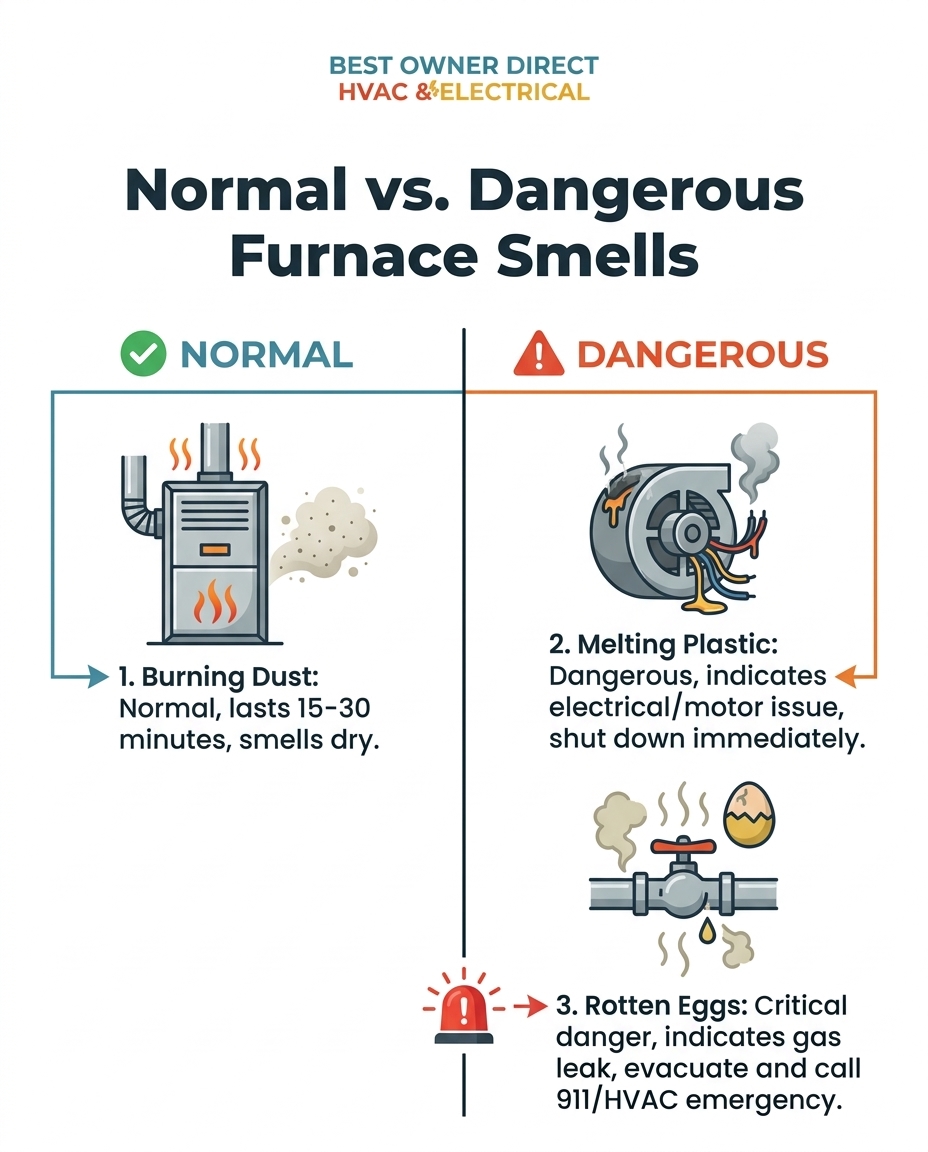
• Dry, dusty, or like an old hair dryer — Likely Cause: Normal dust burn-off on the heat exchanger — Required Action: Wait 15-30 minutes; open windows to ventilate.
• Sharp, metallic, or melting plastic — Likely Cause: Fraying wires, failing motor, or overheated electrical components — Required Action: Shut down the system immediately at the thermostat and breaker.
• Rotten eggs or sulfur — Likely Cause: Raw natural gas leak (mercaptan additive) — Required Action: Shut off the unit, evacuate the home immediately, and call 911 or your gas provider.
Electrical and Ozone Smells
If your vents emit a sharp, metallic odor that smells like melting plastic, burning rubber, or an electrical spark, this is not normal dust. These odors are often caused by failing blower motors, a seized bearing causing a belt to overheat, or fraying wires where the insulation is melting away. An ozone smell—similar to the scent of the air after a severe lightning storm—can indicate an overheating electrical transformer or a failing capacitor. If you detect these acrid, chemical smells, shut your system down immediately at the thermostat and the breaker panel. Do not wait 30 minutes. Contact professional HVAC services to safely diagnose and repair the electrical fault.
Gas and Rotten Egg Odors
Natural gas is naturally odorless, so utility companies add a chemical called mercaptan to give it a distinct, highly noticeable rotten egg smell. If you smell rotten eggs or sulfur when your heat kicks on, it indicates a raw gas leak. This is a severe hazard. Never attempt to investigate the source of a gas leak yourself. Do not turn on lights, use your cell phone near the unit, or try to inspect the gas valve. Shut off the unit if you can do so safely on your way out, leave the house immediately, and call for emergency help from outside.
Proactive Prevention: Stopping the Smell Before It Starts
While we have established that a brief dust burn-off is a normal part of the seasonal transition, it does not mean you are forced to endure it every single year. The smell can be minimized, and often eliminated entirely, through proactive, professional care before the cold weather arrives.
A comprehensive pre-season cleaning directly addresses the root cause of the odor. When a Best Owner Direct HVAC & Electrical technician services your equipment, they safely access the internal cabinet and carefully clean the heat exchanger, removing the accumulated summer dust before the first ignition ever happens. This means that when you finally switch your thermostat to heat on that first chilly September night, the burners ignite against clean metal, producing warm air without the smoky, dusty byproduct.
For example, one local family we worked with recently scheduled a pre-heating season tune-up and had our team add some additional ducts to improve airflow. Because their system was thoroughly cleaned, inspected, and optimized beforehand, they bypassed the seasonal burning dust surprise entirely when fall rolled around. Their equipment transitioned smoothly into the heating season without a single alarming odor. (Note: If you are considering upgrading your system during this fall prep season, keep in mind that generic federal tax credits or local utility incentive programs may apply to qualifying high-efficiency installations. We always advise checking with your utility provider or tax professional to verify current programs.)
Beyond professional cleaning, you play a crucial role in prevention by managing your air filters. Starting the season with a fresh, high-quality air filter prevents additional dust, pet dander, and debris from being pulled into the cabinet and settling on the components. If you run your system's fan during the summer to circulate air, a clean filter acts as your primary defense against excessive dust buildup. By combining a fresh filter with proactive maintenance, you ensure your system runs reliably, efficiently, and odor-free.
Frequently Asked Questions About Fall Furnace Odors
Is it safe to run a furnace that smells like burning?
Yes, it is generally safe if the smell is strictly burning dust during the first few uses of the season. The odor is simply settled debris burning off the heat exchanger, which is a normal mechanical process. However, if the smell resembles melting plastic, electrical ozone, or rotten eggs, it is not safe to run. You should shut the system down immediately and seek professional assistance.
How long does the burning dust smell last on a furnace?
The standard burn-off period for harmless dust is typically 15 to 30 minutes of continuous operation. Because the layer of dust on the heat exchanger is very thin, it flash-incinerates quickly once the unit reaches its operating temperature. If the smell persists for several hours or returns strongly during subsequent heating cycles, our team recommends a professional inspection.
Should I turn off my heater if it smells like burning?
If you are experiencing a September first-chilly-night furnace start and the smell is dry and dusty, you do not need to turn off the heater immediately; allow it 30 minutes to clear. However, if you smell acrid smoke, melting wires, or gas, you must turn off the heater right away. Trust your senses—if the odor is chemical or highly offensive, prioritize safety and shut off the power at the thermostat.
What does a bad furnace smell like?
A bad or dangerous furnace smell is distinct from normal dust. It often smells like melting plastic, burning rubber, or a sharp, metallic electrical spark, indicating failing motors or melting wire insulation. The most dangerous smell is a sulfur or rotten egg odor, which is the chemical mercaptan added to natural gas to warn you of a raw gas leak.
Why does my furnace smell like dust even after the first start?
If your system continues to smell like dust well past the initial burn-off, you likely have an airflow or filtration issue. A heavily clogged air filter will continuously allow excess debris to bypass the filter and land on the hot heat exchanger. It could also indicate that your ductwork is excessively dirty, blowing settled dust into your living spaces every time the blower motor engages.
Can changing the air filter reduce the burning smell?
Yes, changing your air filter regularly is one of the most effective ways to reduce burning dust smells. A clean filter traps household particles, pet dander, and airborne debris before they can enter the cabinet and settle on the heat exchanger. Starting the heating season with a fresh filter ensures that less dust is available to burn off when the burners ignite.
Breathe Easy This Fall with Expert Local Support
If you are still wondering, "why does the furnace smell like burning dust on the first start?" remember that a brief, dusty odor is a perfectly normal part of the seasonal transition in Cornelius, OR. Your equipment has been sitting idle, and it just needs a few minutes to clear the slate. Open a few windows, set a timer for 30 minutes, and let the system do its job.
However, you should always trust your senses. If the smell lasts longer than half an hour, or if it carries the sharp scent of electrical issues or the dangerous odor of gas, help is readily available. You do not have to navigate heating season anxieties alone. Schedule an inspection or a pre-season tune-up with our Best Owner Direct HVAC & Electrical team today to ensure your system is clean, safe, and ready to keep you comfortable all winter long.



How Can Oregon Homeowners Keep Indoor Air Fresh When Wildfire Smoke Settles In?Learn how to keep your indoor air clean when outdoor air is smoky with expert tips on HVAC settings, filtration, and sealing for Oregon homeowners.
Read more
Reading Between the Lines of HVAC Reviews in the Portland MetroEvaluating contractors ahead of the fall heating season requires more than glancing at a star average. See which review details prove genuine community accountability over slick automated marketing.
Read more
How Oregon Homeowners Can Test Thermostats Before Calling for Local Heat Pump RepairLearn how to check your thermostat before calling for heat pump repair with this step-by-step guide for Oregon homeowners.
Read more