Menu


Keep Wildfire Smoke Out of Your Portland Metro Home
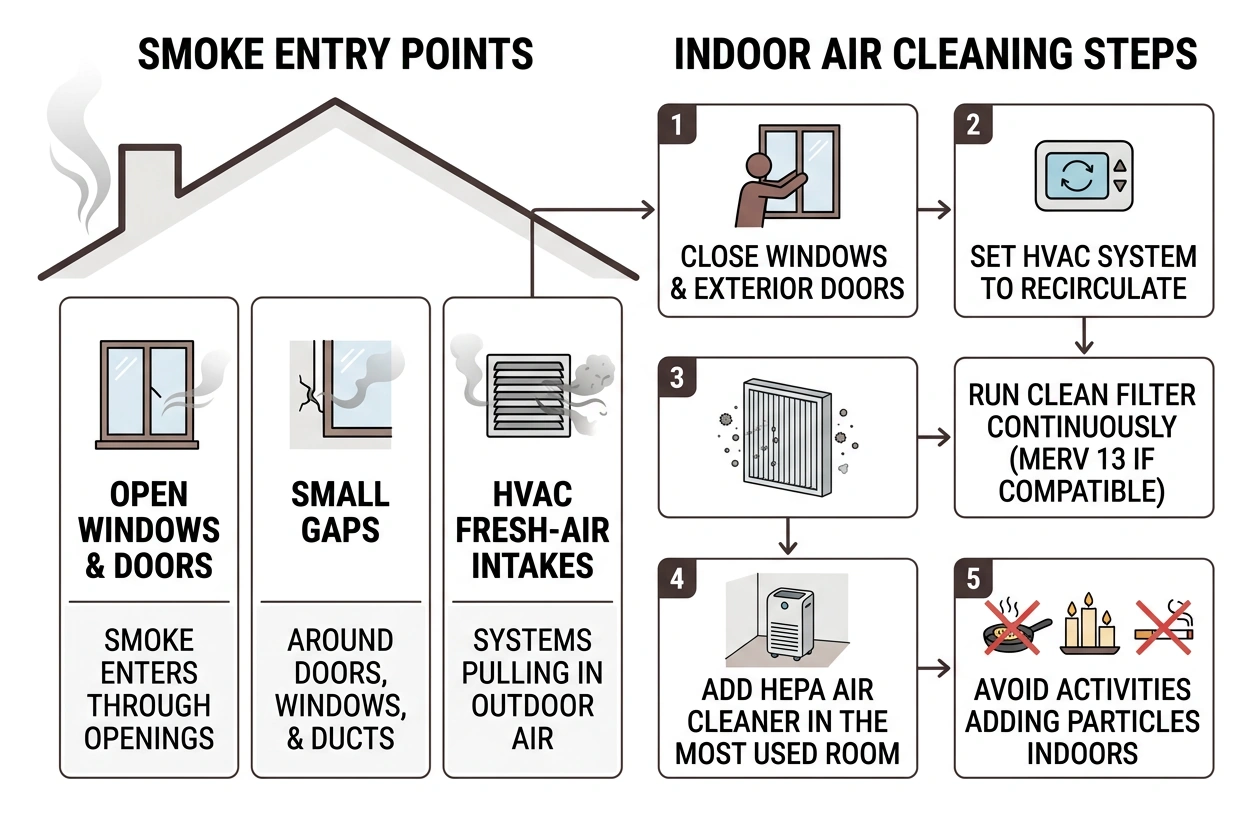
When outdoor air turns smoky, close windows and exterior doors, set your HVAC system to recirculate, and run a clean filter continuously. A MERV 13 filter, if compatible with your system, can help capture fine smoke particles. Add a properly sized HEPA air cleaner in the room you use most, and avoid frying, candles, smoking, and other activities that add particles indoors. For homeowners seeking indoor air quality services in Portland, OR, these steps can make the air inside far cleaner while wildfire smoke lingers outside.
For more help, explore whole-house air filtration or schedule indoor air quality service.
Smoke can enter through open windows, HVAC fresh-air intakes, and small gaps around doors, windows, and ducts. Best Owner Direct HVAC & Electrical is a family-owned HVAC company based in Cornelius, OR, serving Portland metro homeowners and surrounding Oregon communities with practical indoor air solutions.
Contact Best Owner Direct HVAC & Electrical for indoor air quality help.
I am Chandrine Stepisnik, and I will walk you through the simple steps that help protect your home's air during smoky Oregon days.
How Wildfire Smoke Infiltrates Oregon Homes and Threatens Health
During late summer and early autumn across the Pacific Northwest, wildfire plumes can quickly turn blue skies into an eerie orange haze. The primary threat in this haze is fine particulate matter, commonly measured as PM2.5 (particles 2.5 microns or smaller in diameter). To put this size into perspective, a human hair is roughly 40 to 50 microns across, while smoke particles are microscopic—frequently smaller than 1 micron.
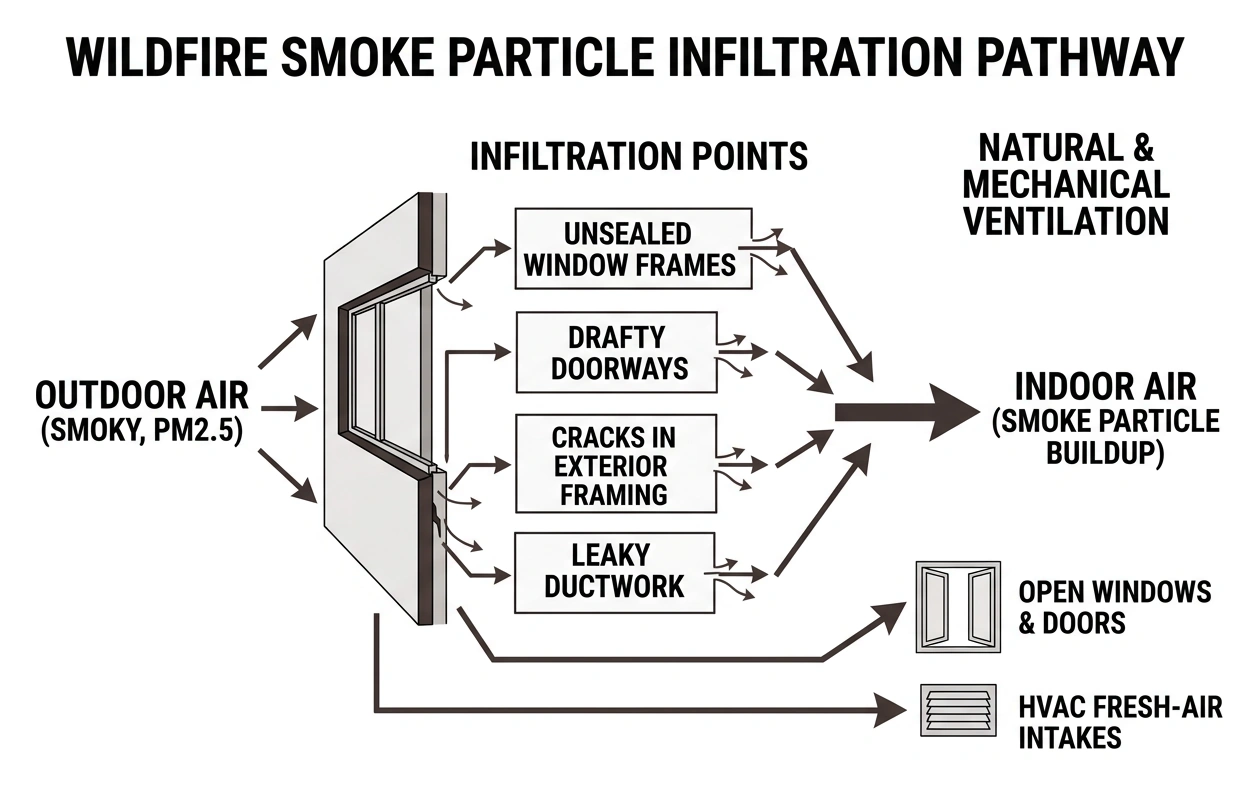
These tiny particles enter homes through three main avenues:
- Natural Ventilation: Smoke flows freely through open windows, sliding doors, and skylights.
- Mechanical Ventilation: Unadjusted HVAC fresh-air intakes, kitchen range exhausts, and bathroom vents draw outdoor air directly inside.
- Infiltration: Smoke seeps through microscopic structural gaps, cracks in exterior framing, unsealed window frames, drafty doorways, and leaky ductwork.
Without active air filtration and sealed building envelopes, indoor air does not remain a safe sanctuary. Research from public health studies—including findings from Missoula Public Health during severe wildfire seasons—shows that indoor environments without filtration quickly match outdoor pollution levels. Even with closed doors and windows, indoor PM2.5 levels typically sit between 55% and 60% of outdoor concentrations if no supplemental filtration is running.
These fine particulates bypass the upper respiratory system's natural defenses, traveling deep into lung tissues and entering the bloodstream. Vulnerable groups—including infants, young children, older adults, pregnant individuals, and people with asthma or cardiovascular conditions—face elevated risks of shortness of breath, wheezing, bronchitis, and cardiac distress.
| Particle Type | Typical Size (Microns) | Health Impact | Effective Filter Rating |
|---|---|---|---|
| Human Hair | 40 – 50 µm | Minimal (visual nuisance) | Basic Fiberglass |
| Pollen Spores | 10 – 30 µm | Seasonal allergies, sneezing | MERV 6 – 8 |
| Household Dust Mites | 5 – 10 µm | Eye & throat irritation | MERV 8 – 10 |
| Fine Wildfire Smoke (PM2.5) | 0.3 – 2.5 µm | Deep lung penetration, inflammation | MERV 13+ / True HEPA |
| Ultra-Fine Combustion Gases | < 0.1 µm | Bloodstream absorption | Activated Carbon + HEPA |
How to Keep Your Indoor Air Clean When Outdoor Air Is Smoky
Protecting your household requires a coordinated strategy: establishing an airtight barrier, adjusting mechanical systems to avoid pulling in outdoor air, and running robust filtration. Learning how to keep your indoor air clean when outdoor air is smoky ensures your family breathes easy even when the Air Quality Index (AQI) outside reaches unhealthy levels. Selecting the best AC filter options for homes dealing with smoke and pollen provides the foundation for effective mechanical defense.
Managing Central HVAC and Air Conditioner Settings
Your central heating and cooling system is your primary line of defense. Standard settings, however, can inadvertently pull smoky outdoor air straight into your living areas.
- Switch the Thermostat Fan from "Auto" to "On": Setting the fan to "Auto" means the system only cleans the air when actively heating or cooling. Setting the fan to "On" keeps indoor air circulating through your filter 24/7. Upgrading to a MERV 13 filter and running the fan continuously can reduce indoor PM2.5 concentrations by roughly 50%, while even a standard filter running continuously can reduce particles by about 24%.
- Close Outdoor Air Dampers and Turn On Recirculation: If your HVAC system features a fresh-air intake damper or energy recovery ventilator (ERV/HRV), set it to recirculate mode or temporarily close the damper to prevent drawing in exterior smoke.
- Window AC Units: Ensure the fresh-air vent is tightly shut. Check that the side accordion panels are completely sealed against the window frame with weatherproofing tape or foam.
- Portable Air Conditioners: Single-hose portable units expel indoor air outdoors, creating negative air pressure that pulls smoky air into your home through wall cracks and window frames. If you must use a portable unit, choose a dual-hose model and ensure the window slider kit is sealed tightly.
For complete coverage, pairing system controls with a dedicated whole-house air filtration setup ensures particles are captured before circulating between rooms.
Sealing Building Gaps and Duct Penetrations
A high-performance filter cannot protect your home if outdoor air easily bypasses your building envelope. Sealing unwanted air leaks keeps smoke outside:
- Weatherstripping and Draft Stoppers: Install adhesive foam tape along window sashes and place heavy fabric draft stoppers or rolled towels along the base of exterior doors.
- Seal Ductwork: Ducts running through unconditioned crawlspaces, basements, or attics can suck in smoke-laden air through loose joints and distribute it to every register. Professional duct sealing closes these hidden leaks, preserving indoor pressure and air cleanliness.
- Close Fireplace Dampers: Ensure fireplace flues and dampers are fully closed. If your fireplace is drafty, place a temporary magnetic or foam cover over the opening.
Advanced Air Cleaning Strategies and Clean Room Protocols
When severe smoke episodes linger for several days across Washington and Multnomah counties, whole-house systems benefit from focused, supplemental filtration in primary living zones.
Essential Filtration Tips: How to Keep Your Indoor Air Clean When Outdoor Air Is Smoky
Choosing the right supplemental air cleaners ensures effective particle capture without generating harmful secondary pollutants:
- Select True HEPA Air Purifiers: Standalone air purifiers with True HEPA filters capture 99.97% of airborne particles down to 0.3 microns. Verify the unit's Clean Air Delivery Rate (CADR) for smoke; the CADR should equal at least two-thirds of the room's total square footage.
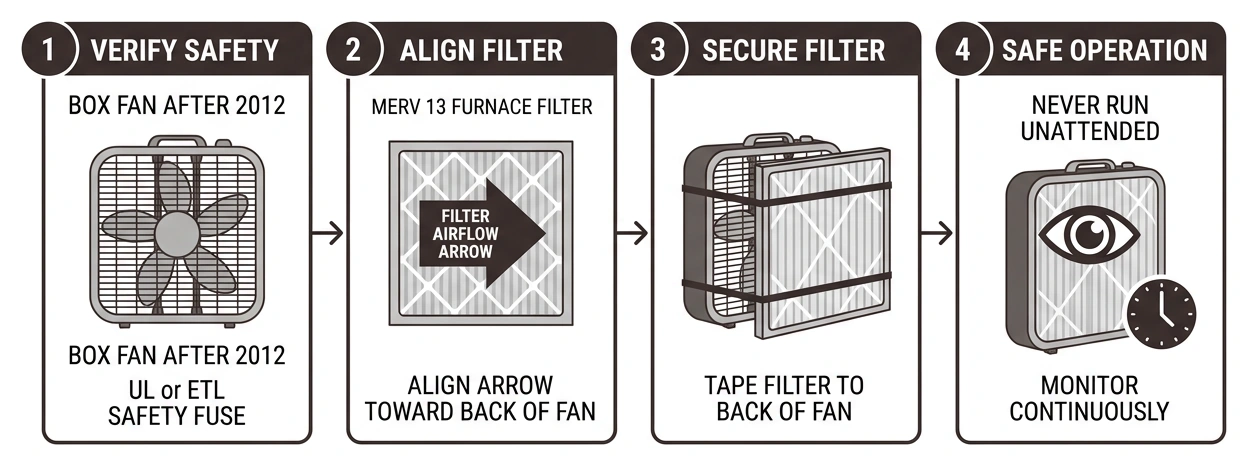
- Build a Safe DIY Box-Fan Cleaner: If commercial purifiers are unavailable, build a Corsi-Rosenthal box or a single-filter unit using a 20x20-inch box fan and a MERV 13 furnace filter. Research demonstrates that DIY fan filters reduce indoor PM2.5 by about 56% in large rooms within 90 minutes and up to 99% in small rooms within 60 minutes. Always use a box fan manufactured after 2012 featuring UL or ETL safety fuses, align the filter airflow arrow toward the back of the fan, and never leave DIY units running unattended.
- Avoid Ozone-Generating Cleaners: Avoid ionizers, plasma generators, and electronic air cleaners that produce ozone. Ozone is a lung irritant that reacts with volatile smoke compounds, creating harmful secondary chemical byproducts. You can safely enhance the air quality in your home with air purifiers by sticking with mechanical True HEPA and carbon filtration.
Step-by-Step Setup: How to Keep Your Indoor Air Clean When Outdoor Air Is Smoky in a Dedicated Clean Room
A "clean room" serves as a protected sanctuary inside your house—especially useful for older homes without central cooling or when outdoor air quality reaches hazardous levels.
- Choose the Best Room: Select an interior room with few or no exterior windows and doors (such as a master bedroom or basement den), ideally with an attached bathroom.
- Seal the Perimeter: Keep all windows closed. Seal gaps along window sills and under the door with painter's tape or damp towels.
- Position Continuous Filtration: Place your portable HEPA air purifier or verified DIY filter in the center of the room, running it continuously on its highest setting.
- Manage Room Temperature: Keep blinds and solar shades drawn to block radiant heat. Run a circulating ceiling or oscillating fan to keep air moving comfortably without pulling in outside air.
- Enforce a Zero-Combustion Rule: Do not light candles, use incense, operate gas stoves, or use aerosol sprays. Avoid frying or searing meats in the kitchen, as high-heat cooking releases fine cooking oils and particles that quickly degrade indoor air.
Post-Smoke Cleanup and Restoring Home Air Quality
Once regional winds shift and outdoor air quality improves, the recovery process begins. Lingering soot, fine ash, and adsorbed smoke gases can remain settled on soft furnishings and inside HVAC ducts, re-emitting odors and irritants for weeks.
- Ventilate When Safe: Check regional monitors via AirNow.gov. Once outdoor air returns to the "Good" or "Moderate" range, open windows on opposite sides of your home for 30 to 60 minutes to flush out stale indoor air and built-up carbon dioxide.
- Use Damp Cleaning Techniques: Never dry-sweep or use leaf blowers near entryways, as this re-suspends settled ash into your breathing zone. Wipe down all hard surfaces, window frames, baseboards, and walls using microfiber cloths dampened with warm water and mild soap. Learn practical ways regarding how to reduce dust in your home to prevent settled particles from circulating.
- Vacuum with Sealed HEPA Equipment: Vacuum carpets, rugs, and upholstered furniture using a vacuum cleaner equipped with a certified HEPA exhaust filter. Standard unsealed vacuums simply blow microscopic ash straight back into the room.
- Schedule Professional Air Duct Care: Smoke particles settle inside return vents and duct plenums. Arranging professional duct cleaning clears accumulated soot and dust, preventing your HVAC system from recirculating smoke residues when winter heating begins.
- Verify Indoor Health: If lingering odors, unexplained sneezing, or respiratory irritation continue after cleaning, professional household air quality testing can pinpoint hidden particulate or chemical concentrations.
Frequently Asked Questions About Wildfire Smoke Protection
When should I evacuate if indoor smoke and heat become unmanageable?
If indoor temperatures rise above 85°F to 90°F in homes without air conditioning and opening windows is impossible due to hazardous smoke, the combination of heat stress and poor air quality creates dangerous health risks. Seek shelter in air-conditioned public spaces—such as community clean-air centers, libraries, or regional cooling shelters—especially for children, seniors, or individuals with heart or respiratory conditions.
What indoor activities should be avoided during a smoke advisory?
Avoid burning wood or gas fireplaces, lighting candles or incense, frying or broiling foods, using gas stoves without exterior-vented hoods, spraying aerosol products (cleaners, hairsprays, air fresheners), smoking or vaping indoors, and dry sweeping or using unsealed vacuums.
How frequently should air filters be changed after severe smoke?
Inspect your HVAC and air cleaner filters every 3 to 5 days during active wildfire smoke events. If a filter appears dark gray or visibly coated with soot, replace it immediately. Always install a fresh, high-efficiency filter once the wildfire smoke event concludes, as loaded filters restrict system airflow and reduce HVAC operating efficiency.
Conclusion
Safeguarding your home against wildfire smoke requires preparation, airtight sealing, and high-efficiency filtration. By setting your HVAC fan to run continuously, deploying True HEPA air cleaners, setting up a clean room, and keeping outdoor pollutants from entering your living space, you can maintain fresh, breathable indoor air throughout the wildfire season.
Best Owner Direct HVAC & Electrical is a family-owned HVAC, electrical, and water-heater services company based in Cornelius, OR, serving homeowners and businesses throughout the Portland metro and surrounding Oregon communities. Our licensed technicians provide dependable solutions to keep your heating, cooling, and air filtration systems operating at peak performance. For expert guidance on whole-home filtration upgrades and professional maintenance, explore our indoor air quality services in Portland, OR today.


Reading Between the Lines of HVAC Reviews in the Portland MetroEvaluating contractors ahead of the fall heating season requires more than glancing at a star average. See which review details prove genuine community accountability over slick automated marketing.
Read more
How Oregon Homeowners Can Test Thermostats Before Calling for Local Heat Pump RepairLearn how to check your thermostat before calling for heat pump repair with this step-by-step guide for Oregon homeowners.
Read more
High-Efficiency Heat Pumps vs. Standard Units for Oregon's Mild AutumnsStandard heat pumps often blast too much heat on chilly fall mornings, causing uncomfortable temperature swings. Inverter-driven systems solve this by providing gentle, constant warmth.
Read more