Menu


How Wildfire Smoke Affects Your AC and Indoor Air Quality
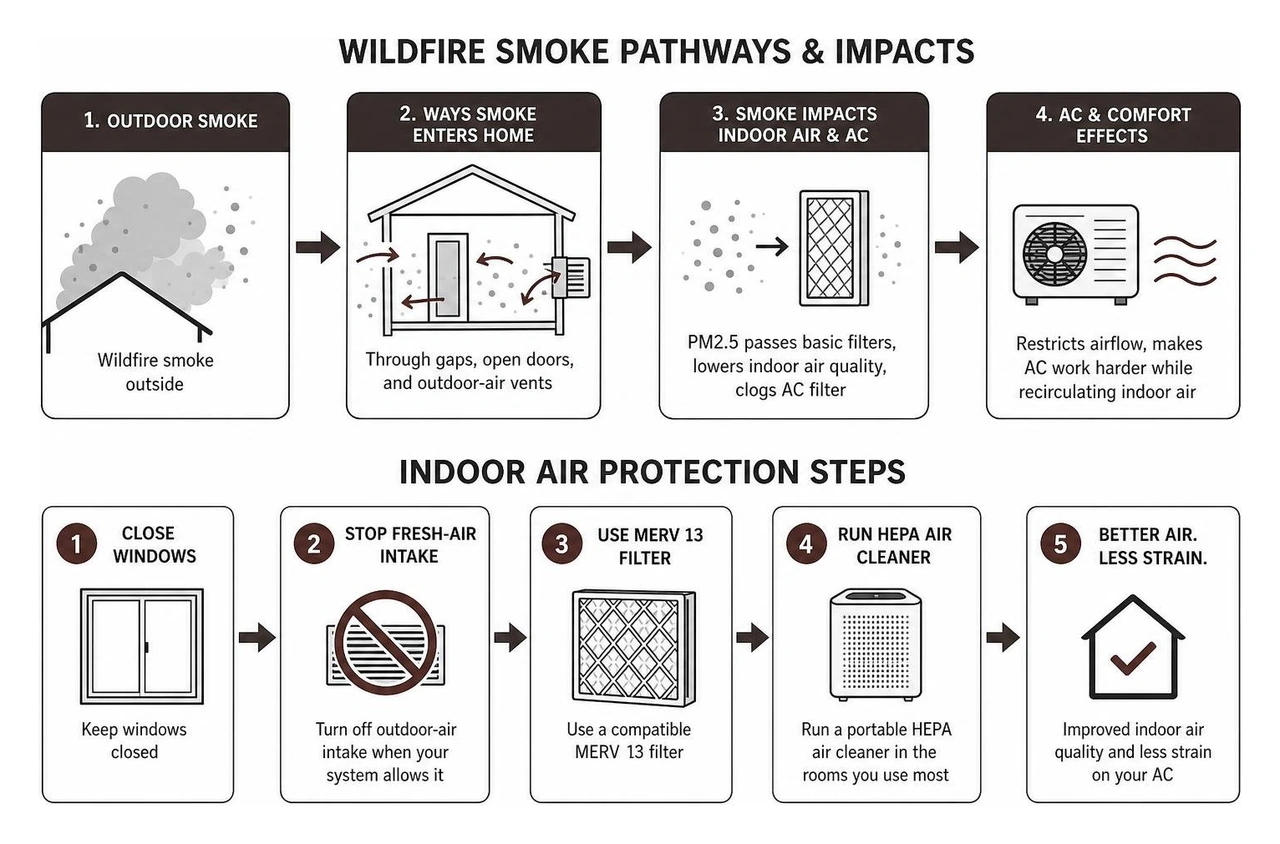
Wildfire smoke can enter Portland-area homes through small gaps, open doors, and outdoor-air vents. Its tiny PM2.5 particles can pass through basic filters, lower indoor air quality, and clog your AC filter. To reduce exposure, close windows, stop fresh-air intake when your system allows it, use a compatible MERV 13 filter, and run a portable HEPA air cleaner in the rooms you use most. Best Owner Direct HVAC & Electrical is a family-owned HVAC company based in Cornelius, OR, serving homes and businesses across the Portland metro and surrounding Oregon communities.
Up: Household Air Quality Testing | Down: Indoor Air Quality Solutions in Portland, OR
Smoke does not always stay outside. It can build up on filters, restrict airflow, and make your cooling system work harder while it recirculates the air in your home. I am Chandrine Stepisnik, and the next sections explain the practical steps that can help protect your air and AC during smoke events.
For help preparing your HVAC system for smoke season, explore indoor air quality solutions in Portland, OR.
Understanding How Wildfire Smoke Affects Your AC and Indoor Air Quality
When late-summer wildfires sweep across the Pacific Northwest, they create an unmistakable orange haze and an aggressive layer of airborne soot. Most homeowners assume that shutting every door and turning on the air conditioner guarantees complete isolation from the outdoor environment. However, understanding how wildfire smoke affects your ac and indoor air quality reveals that our living spaces and cooling systems are deeply interconnected with the air outdoors.
Wildfire smoke is not simply nuisance dust; it is a complex, hazardous mixture of gases and microscopic solids produced by incomplete combustion. When these pollutants blanket a neighborhood, they infiltrate homes through three distinct pathways: natural ventilation (open doors and windows), mechanical ventilation (outdoor fresh-air intakes, exhaust fans, and heat recovery ventilators), and building envelope leakage (unsealed cracks around window casings, siding penetrations, and recessed lighting).
Without proactive management and household air quality testing, indoor pollutant concentrations can surge rapidly, retaining 55% to 60% or more of the particulate levels measured outside.
| Pollutant Category | Outdoor Wildfire Source | Typical Indoor Penetration Without Filtration | Indoor Risk Level |
|---|---|---|---|
| Fine Particulate Matter (PM2.5) | Forest biomass combustion | 60% – 85% through envelope cracks and vents | High (Deep lung and blood penetration) |
| Volatile Organic Compounds (VOCs) | Burning vegetation and structures | 70% – 95% (Gaseous state passes basic media) | High (Eye, nose, throat irritation, headaches) |
| Polycyclic Aromatic Hydrocarbons (PAHs) | Incomplete timber burning | 50% – 80% (Can adsorb onto indoor surfaces) | Severe (Long-term toxicity) |
| Coarse Ash & Soot (>10 µm) | Wind-blown heavy ash | 20% – 40% (Settles quickly near entryways) | Moderate (Filter clogs, surface discoloration) |
Critical Factors in How Wildfire Smoke Affects Your AC and Indoor Air Quality
Your central air conditioning system is primarily engineered to manage indoor temperature and balance humidity—it is not fundamentally designed as an industrial air scrubber. When severe smoke occurs, two major mechanical vulnerabilities arise:
- Static Pressure Spikes and Airflow Starvation: Standard 1-inch fiberglass filters capture only large dust particles and pet hair. When fine smoke particulates and sticky ash blanket the filter surface, the fibers rapidly choke. This creates elevated static pressure within the return drop, forcing the blower motor to pull against extreme resistance.
- Evaporator Coil Contamination: As fine ash bypasses ill-fitting or low-efficiency filters, it settles onto the moist surface of your indoor evaporator coil. The combination of moisture and ash forms a dense grime that blocks heat exchange. The system can freeze up, and the compressor is forced into extended duty cycles, dramatically driving up electrical consumption.
Understanding how the right filter improves your ac efficiency is critical when attempting to protect expensive mechanical components against severe seasonal strain.
Particulate Matter (PM2.5) and Chemical Infiltration Indoors
The primary public health danger in wildfire smoke is fine particulate matter ($PM_{2.5}$), composed of particles measuring 2.5 micrometers in diameter or smaller—about 30 times thinner than a human hair. Because of their microscopic mass, these particles remain suspended in indoor air currents indefinitely rather than settling to the floor. When inhaled, $PM_{2.5}$ bypasses the upper respiratory tract's natural defenses, lodging deep in the alveoli and crossing directly into the bloodstream.
Beyond solid particles, smoke carries a toxic cocktail of gaseous pollutants, including polycyclic aromatic hydrocarbons (PAHs), benzene, acrolein, and formaldehyde. Tightly closed homes can inadvertently trap these chemical compounds indoors, allowing them to accumulate to concentrations that trigger severe respiratory distress, eye inflammation, migraines, and asthma attacks. Protecting your overall indoor air quality requires a targeted strategy combining proper system settings, high-grade mechanical filtration, and targeted air purification.
Optimizing AC Settings and Ventilation During Smoke Events
Managing your HVAC system during a wildfire smoke inversion requires a departure from standard summertime operating habits. Many people assume running the air conditioner automatically pulls in smoky outside air. In reality, a standard residential split-system AC recirculates the air already present within your home. The real challenge lies in properly managing fresh-air intakes and setting fan controls correctly.
Adjusting Thermostat Fan Modes and Recirculation
The most effective immediate setting adjustment you can make on your central thermostat during a smoke event is switching the fan setting from AUTO to ON.
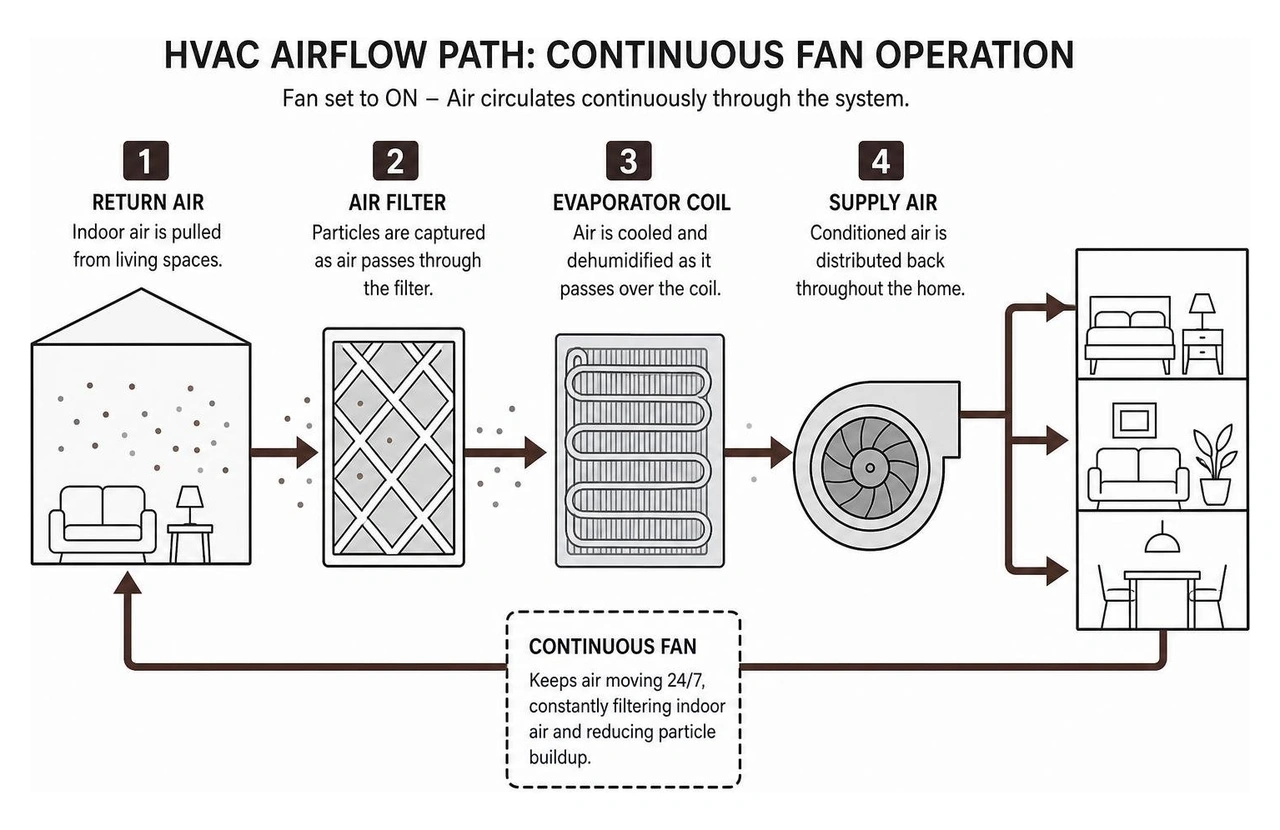
- Why AUTO Falls Short: In AUTO mode, the blower fan only spins when the thermostat actively calls for cooling. When the target temperature is reached, the blower shuts off, halting all air movement through your filter. Infiltrating smoke particles then linger in the living space.
- Why Continuous ON Works: Switching your thermostat fan to ON keeps the blower motor running 24/7, constantly pulling indoor air through your filtration setup. Research indicates that running the HVAC fan continuously can lower indoor particle concentrations by approximately 24%, even with standard filtration.
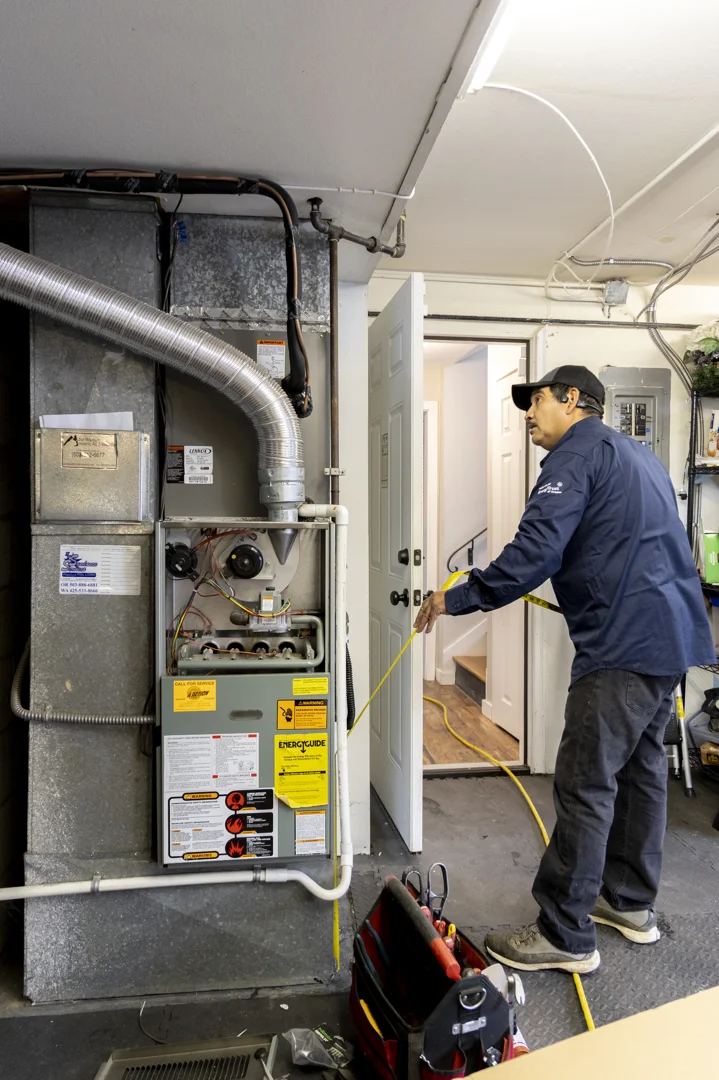
- Managing Fresh-Air Dampers: Modern homes in communities like Hillsboro, Beaverton, or Lake Oswego often feature fresh-air ventilation ducts connected directly to the return plenum. Locate the manual damper lever near your furnace or air handler and turn it to the CLOSED position. If your home uses an Energy Recovery Ventilator (ERV) or Heat Recovery Ventilator (HRV), consult the controller and turn off outdoor ventilation mode or switch it to recirculation until outdoor air quality improves.
If your system begins exhibiting signs of severe airflow resistance or fails to maintain temperature during a heat event, calling for AC repair near me ensures a licensed technician can safely inspect system pressure and motor load.
Using Window Units, Mini-Splits, and Portable Air Conditioners Safely
Not every home uses a central ducted split system. If you rely on localized cooling equipment, proper operation is crucial:
- Single-Hose Portable ACs: These units expel hot air out of a window through a single flexible duct. By blowing indoor air outside, they create significant negative pressure inside the room, actively sucking smoky outdoor air through door sweeps, window frames, and electrical outlets. Avoid using single-hose portables during severe smoke events if possible, or upgrade to a dual-hose unit that isolates intake and exhaust air loops.
- Window Air Conditioners: Most window units simply recirculate indoor room air over an evaporator coil. However, inspect the unit for a "fresh air" or "vent" lever and make sure it is set firmly to CLOSED. Ensure the accordion side panels are tightly sealed against the window frame using foam weather-stripping and painter's tape to block ambient smoke.
- Ductless Mini-Splits: Mini-split indoor wall heads operate entirely on recirculated room air and do not pull in outdoor atmosphere. Keep the washable mesh filters clean and supplement the room with standalone air cleaning.
Upgrading HVAC Filtration and Air Purification
Your air filter serves as the front line of defense against wildfire debris. However, standard 1-inch fiberglass filters provide virtually zero protection against $PM_{2.5}$ smoke particles.
Practical Solutions for Wildfire Smoke
To effectively trap wildfire smoke particles, the EPA and ASHRAE recommend using filters rated at MERV 13 or higher. A MERV 13 filter captures at least 50% of ultra-fine particles (0.3 to 1.0 microns) and up to 90% of particles in the 1.0 to 3.0-micron range.
Explore the best ac filter options for homes dealing with smoke and pollen to ensure your chosen media provides optimal capture efficiency without suffocating your system's blower motor.
During active wildfire conditions, follow these crucial inspection guidelines:
- Perform a Visual Light Test Every 3 to 7 Days: Do not rely on the standard 90-day replacement cadence. Ash and soot can fully saturate filter fibers within 48 to 72 hours of dense smoke exposure. Hold your filter up to a bright lightbulb. If light cannot penetrate the pleats, the filter is occluded and must be replaced immediately.
- Keep Replacement Filters on Hand: Always stock 2 to 3 spare filters before fire season begins in Oregon, as local hardware supply chains quickly run out during regional smoke events.
- Supplement With Freestanding Cleaners: To prevent overworking your central system, enhance the air quality in your home with air purifiers placed in primary living areas and bedrooms. Ensure these units utilize true HEPA filtration and carry an appropriate Clean Air Delivery Rate (CADR) for the room's square footage.
DIY Air Cleaners vs. Whole-Home Purification Systems
When commercial air purifiers sell out, a DIY air cleaner—such as a Corsi-Rosenthal box constructed by taping four MERV 13 filters to a standard 20-inch box fan—can provide emergency particle reduction.
Studies confirm these setups can reduce indoor $PM_{2.5}$ concentrations by 56% to 90%. However, caution is required: use only box fans manufactured after 2012 that include built-in thermal safety fuses to prevent the fan motor from overheating when pulling against resistance.
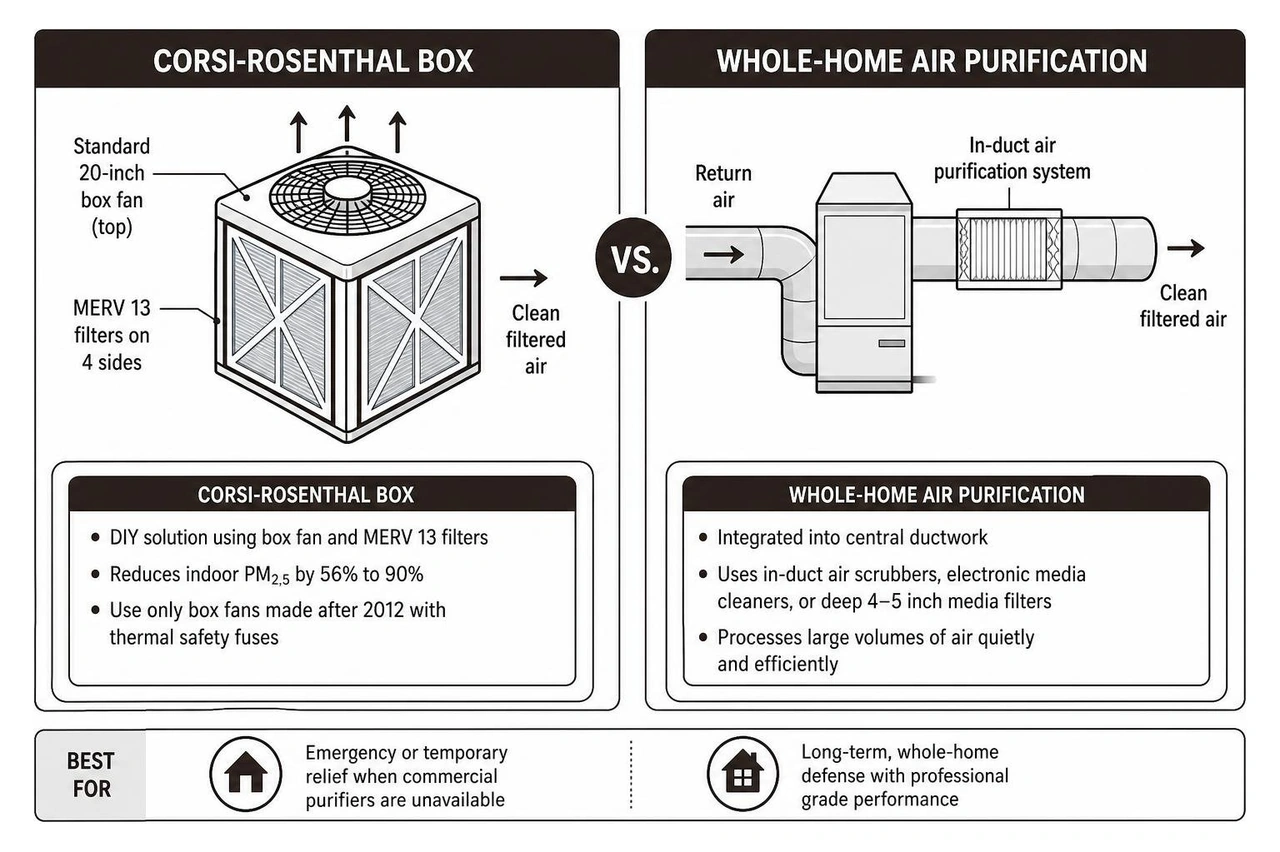
For durable, long-term defense, consider integrating whole house air purification directly into your central ductwork. Professional systems, such as in-duct air scrubbers, electronic media cleaners, and deep 4-to-5-inch media filter cabinets, process large volumes of air quietly and efficiently without creating static pressure hazards for your air handler.
Creating a Dedicated Clean Room and Protecting Occupants
If outdoor smoke levels reach hazardous categories (AQI > 200) or your home has significant envelope leakage, setting up a dedicated "clean room" provides a safe refuge for vulnerable family members, including children, elderly relatives, and individuals with asthma or cardiovascular conditions.
How to Set Up a Dedicated Clean Room
- Select the Ideal Room: Choose an interior bedroom or living space with minimal exterior doors and windows. A room with an attached bathroom is ideal to minimize foot traffic in and out.
- Seal the Envelope: Close all windows tightly. Apply temporary painter's tape along window sashes if drafts are felt. Place a damp rolled towel or draft stopper firmly at the base of the bedroom door.
- Deploy Dedicated Purification: Place a certified, non-ozone-generating HEPA air cleaner in the center of the room. Run the unit continuously on its highest fan speed.
- Keep Air Flowing Gently: If the home has central AC, keep supply registers open to maintain cooling, but ensure your central system is equipped with a clean MERV 13 filter and running in continuous circulation mode.
Indoor Activities to Avoid During Heavy Smoke Events
When a smoke event forces you to seal your house, internal pollution sources can quickly build up to dangerous levels. Avoid the following activities indoors until outdoor air clears:
- Do Not Burn Candles or Incense: These introduce fine carbon soot and volatile organic compounds directly into your breathing zone.
- Avoid Cooking With Gas Stoves or Frying/Broiling: Unvented combustion creates severe spikes in nitrogen dioxide ($NO_2$) and fine aerosols. If cooking is necessary, boil or microwave foods, or run range hoods strictly if they vent directly outside.
- Never Use Wood-Burning Fireplaces or Stoves: Keep chimney dampers tightly closed to prevent downdrafts from pulling external soot down the flue.
- Do Not Vacuum With a Non-HEPA Vacuum: Standard vacuum cleaners exhaust fine dust and settled smoke particles back into the room air.
- Avoid Using Aerosol Sprays and Harsh Chemical Cleaners: Fragrances, air fresheners, and chemical cleaning agents off-gas VOCs that compound respiratory irritation.
- Do Not Smoke or Vape Indoors: Tobacco and cannabis smoke dramatically increase fine particulate concentrations in sealed spaces.
Personal Mask Protection and Evacuation Thresholds
If you must step outside to commute, walk pets, or complete essential errands in Wilsonville, Tualatin, or Oregon City during a smoke inversion, cloth face masks, bandanas, and standard surgical masks provide virtually zero protection against $PM_{2.5}$.
- Wear NIOSH-Approved Respirators: Use properly fitted N95 or P100 filtering facepiece respirators. Ensure the mask forms a tight, leak-free seal around your nose and chin with both elastic straps positioned securely.
- Recognize Critical Evacuation Signs: When indoor air becomes heavily contaminated, eyes sting indoors, or vulnerable family members experience persistent coughing, wheezing, shortness of breath, or chest tightness, seek cleaner air immediately. Relocate to local public clean-air shelters, designated municipal cooling centers, or commercial spaces with large, high-efficiency commercial filtration systems.
Post-Smoke HVAC Maintenance and Air System Recovery
Once regional wildfires are contained and outdoor air quality returns to the "Good" (green) category on AirNow, your home and HVAC equipment require thorough post-smoke maintenance to recover full efficiency.
- Air Out the Living Space Safely: Wait until the local Air Quality Index drops sustainably below 50. Then, open windows and doors across the home for 1 to 2 hours to flush out accumulated carbon dioxide and trapped household odors.
- Discard Saturated Filters: Remove the smoke-loaded AC filter immediately and install a fresh, clean replacement. Continuing to run your system with an ash-saturated filter will restrict airflow, strain the blower motor, and cause your cooling bills to climb.
- Wash Down the Outdoor Condenser Unit: Turn off the electrical disconnect switch at your outdoor AC condenser. Inspect the exterior aluminum fins. Ash and fine debris carried by the wind often pack between the delicate condenser fins, severely impeding heat rejection. Gently rinse the coil fins using a garden hose with a standard spray nozzle directed downward at a 45-degree angle. Never use a high-pressure pressure washer, as this will bend the soft aluminum fins and restrict airflow.
- Schedule Professional Mechanical Care: Fine combustion ash that bypasses filters can settle deep inside your supply and return ductwork, blowing back into your living spaces during every heating and cooling cycle. Booking a comprehensive AC maintenance tune up and scheduling thorough duct cleaning eliminates lingering odors and restores pristine indoor airflow. For expert local service across Washington and Multnomah Counties, our team provides prompt, reliable AC service Hillsboro OR to keep your cooling system running at peak performance.
Frequently Asked Questions About Wildfire Smoke and HVAC Systems
Can wildfire smoke permanently damage an air conditioner?
Yes, wildfire smoke can cause mechanical failure if the system is neglected during heavy particulate events. Microscopic ash particles that bypass thin filters coat the damp indoor evaporator coil, transforming into an insulating sludge that prevents proper heat transfer. This can lead to frozen coils, liquid refrigerant floodback, and catastrophic compressor failure. Furthermore, operating a blower motor against a severely clogged filter creates excessive static pressure, causing motor windings to overheat and burn out prematurely.
How often should AC filters be replaced during a wildfire?
During an active wildfire smoke event, you should inspect your air filter visually every 3 to 7 days. While standard recommendations suggest changing filters every 60 to 90 days, dense smoke and airborne soot can completely saturate filter media in as little as 48 to 72 hours. Perform a simple light test: if light from a bright lamp or flashlight cannot pass through the pleats, replace the filter immediately.
What should I do if my home smells like smoke despite running the AC?
If you detect a persistent smoke or campfire odor indoors while running your air conditioner, check the following:
- Inspect Return Ductwork: Unsealed joints or tears in return ducts located in attics, crawlspaces, or garages can draw smoky air straight into your home's air distribution system.
- Close Fresh-Air Dampers: Ensure mechanical ventilation intakes, ERV/HRV outdoor lines, and window unit fresh-air vents are shut tight.
- Incorporate Activated Carbon: Standard mechanical filters trap particulate matter but do not absorb gaseous odors or volatile organic compounds. Install a carbon-infused pre-filter or run dedicated air purifiers equipped with thick activated carbon beds to neutralize smoke odors.
Conclusion
Wildfire smoke presents a dual threat to modern households: it compromises respiratory health and places immense mechanical stress on home cooling equipment. By understanding how wildfire smoke affects your ac and indoor air quality, you can proactively manage fresh-air intakes, upgrade to MERV 13 filtration, run your thermostat fan continuously, and create clean-room safe zones to protect your family throughout the fire season.
Best Owner Direct HVAC & Electrical is a family-owned HVAC, electrical, and water-heater services company based in Cornelius, OR, serving homeowners and businesses throughout the Portland metro and surrounding Oregon communities, including Beaverton, Hillsboro, Tigard, Tualatin, Lake Oswego, Oregon City, and Forest Grove. Our licensed, background-checked technicians deliver reliable same-day and emergency service, precision system maintenance, and customized indoor air quality installations designed to keep your home healthy, comfortable, and safe year-round.
Protect your home against seasonal smoke inversions. Contact our team today to schedule your comprehensive HVAC inspection and explore advanced indoor air quality solutions in Portland, OR.


How Cornelius Homes Handle Peak Summer AC Loads on Older Electrical PanelsModern AC units often overwhelm aging 1970s electrical panels during intense summer heat. Review the warning signs and specific upgrades needed to keep your home safely cooled.
Read more
The Electrical Toll of a Struggling HVAC System on Your Home's BreakersAn aging air conditioner does not just lose cooling power; it actively stresses your electrical panel. A tripping breaker during late summer heat is a warning sign requiring professional diagnosis.
Read more
End-of-Summer Electrical Inspections: Checking Outdoor Disconnect BoxesAfter months of intense Pacific Northwest sun, your outdoor AC disconnect box can become brittle and unsafe. Learn the visual warning signs of UV degradation.
Read more