Menu


The Unmistakable Odor of an Overworked AC
Your home is supposed to be a comfortable refuge from the summer heat, but if you are wondering why a dirty evaporator coil makes your AC smell like dirty socks, you are dealing with a distinct and jarring biological issue. A sudden, stale, locker-room odor blasting from your air vents the moment the thermostat clicks on is an incredibly frustrating experience for any homeowner. During the peak July cooling season, when your system is working its hardest, this phenomenon—commonly known in the HVAC industry as "Dirty Sock Syndrome"—frequently rears its head. At Best Owner Direct HVAC & Electrical, our team fields calls about this exact issue every summer from frustrated homeowners. It is important to understand that this is not a ductwork problem or a simple ventilation quirk. The root cause lies deep within the air conditioning system itself, specifically directly on the surface of your indoor evaporator coil.
If you are ready to address the root cause within your air conditioning system, scheduling routine AC maintenance is the most effective next step.
Many homeowners initially assume that something has died in their ductwork or that their house simply needs a deep cleaning. However, the reality is that the foul scent is an internal biological problem. The dark, damp environment inside your air handler has become a breeding ground for organic growth. Masking the scent with sprays or candles is entirely ineffective because the source of the odor is actively multiplying every time the system runs. Identifying the true source of the smell and understanding the science behind it is the only viable path to restoring clean, healthy air to your living space.
Understanding the Biological Mechanism Behind Dirty Sock Syndrome
To truly eliminate the odor, you have to understand the environment that creates it. The evaporator coil is a critical component of your cooling system, but its normal operation naturally creates the perfect storm for biological pollutants. When household dust bypasses your air filter, it does not just blow straight through the system. Instead, it collides with the wet coil, creating a nutrient-rich food source for microscopic organisms.
The Role of Condensation in Cooling
The primary job of the evaporator coil is to absorb heat from your indoor air. Inside the copper tubes of the coil, cold liquid refrigerant undergoes a phase change, evaporating into a gas as it absorbs thermal energy. As warm, unconditioned air blows across these freezing-cold tubes and aluminum fins, moisture is rapidly extracted from the air. This is the exact same physical process that causes a glass of ice water to sweat on a hot afternoon. Because of this continuous condensation, the coil remains permanently damp during long, continuous cooling cycles, creating a continuously wet surface inside a pitch-black metal cabinet.
Microbial Growth and Indoor Air Quality
When airborne particulates—such as pet dander, dead skin cells, and fabric fibers—land on this wet surface, they form a thick, organic sludge. The dark, damp environment inside the air handler allows bacteria and mold to thrive on this exact dust-sludge. As these microbial colonies multiply and feed on the organic matter, they undergo biological processes that release off-gasses. These specific off-gasses smell exactly like dirty gym socks or stale vinegar. The EPA recognizes these biological pollutants as a primary factor in poor indoor air quality, making it a serious concern for the health and comfort of your household.
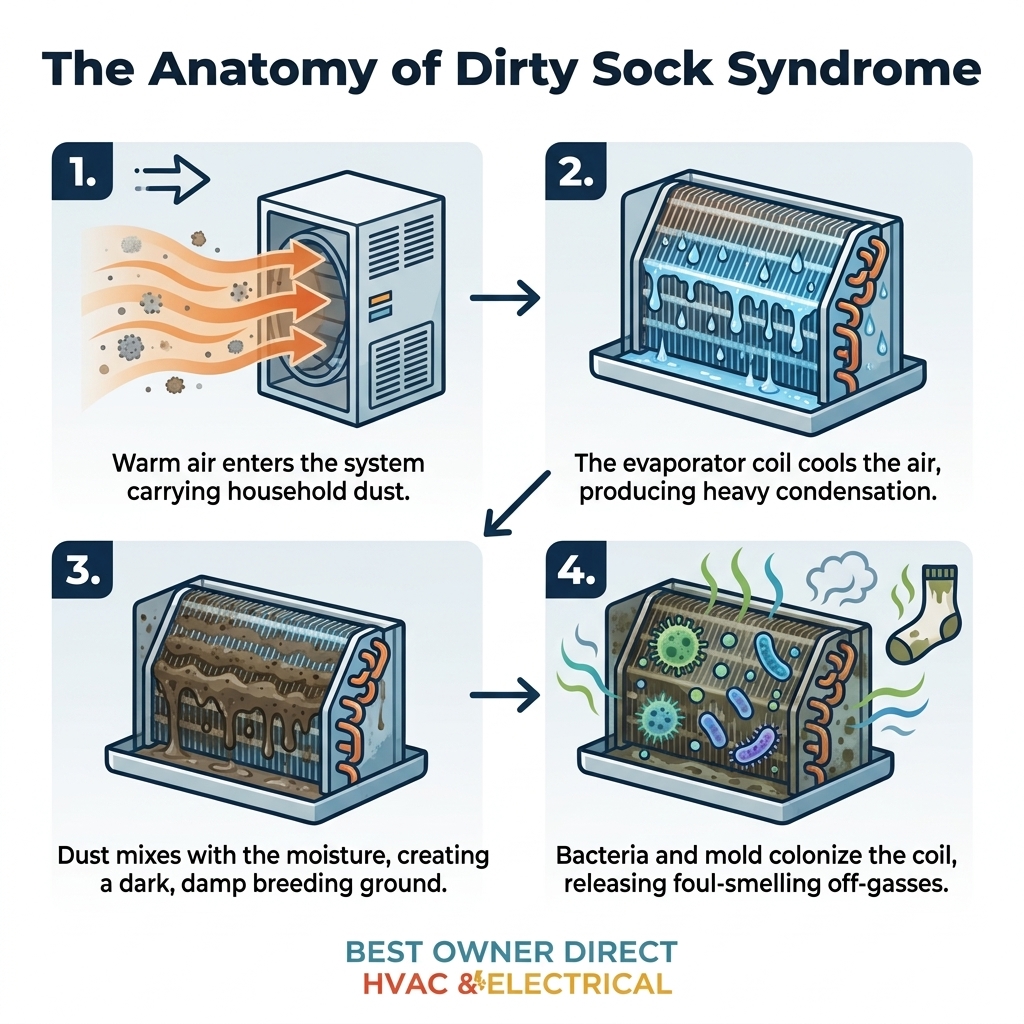
How Regional Humidity Amplifies Coil Condensation
The local climate plays a massive role in how quickly and severely Dirty Sock Syndrome develops. In our experience serving Cornelius OR, our team sees firsthand how the specific local weather patterns create an environment that pushes residential cooling equipment to its limits. The dampness of the Pacific Northwest climate significantly increases the latent heat—or humidity—load on your air conditioning system. While the region is known for its moisture, the summer months bring intense heat that demands heavy AC usage.
During warm summer days, your thermostat forces the system to run in much longer, sustained cycles to keep the indoor temperature comfortable. These extended cycles generate a massive and constant amount of moisture on the evaporator coil. Because the system is running so frequently to combat the afternoon heat, the coil never gets a chance to fully dry out between cycles.
This persistent wetness accelerates microbial growth rapidly. A minor dust buildup that might remain harmless in a dry, arid climate quickly transforms into a severe odor issue in a humid environment. The combination of regional humidity, high usage, and a dark air handler turns the coil into a highly active biological colony, pushing the foul smell through every vent in the house.
Recognizing the Common Symptoms of a Dirty Evaporator Coil
Diagnosing the issue early can save you from weeks of discomfort and potential system damage. While the smell is the most jarring indicator, a compromised coil presents several other red flags. By paying attention to how your system operates, you can identify dirty evaporator coil symptoms before the biological growth spreads further into your HVAC equipment.
• The signature odor: The most obvious symptom is the distinct locker-room, stale, or vinegar-like smell that hits you immediately after the blower motor kicks on.
• Reduced cooling capacity: A thick layer of biological sludge acts as an insulator on the aluminum fins. The coil loses its ability to transfer heat efficiently, leading to warmer air coming from the supply vents.
• Extended cooling cycles: Because the system struggles to absorb heat through the barrier of dirt and bacteria, it has to run much longer to reach the temperature set on your thermostat.
• Spikes in energy consumption: Those longer cycles directly translate to an unexplained increase in your monthly energy bills, as the compressor works overtime to compensate for the blocked coil.
• Aggravated allergy symptoms: Increased dust in the home or sudden respiratory irritation can indicate that the coil is fully saturated and is now blowing biological contaminants and spores directly into your living spaces.
Why Room Deodorizers and Standard Filters Fall Short
When faced with a terrible smell in the home, a homeowner's first instinct is usually to spray an air freshener or swap out the return air filter. While these actions make sense logically, they are entirely ineffective against Dirty Sock Syndrome. This leads to immense psychological frustration, as the homeowner spends time and effort trying to fix the smell with superficial solutions, only for the odor to return the moment the AC cycles on again.
Standard fiberglass filters are specifically designed to catch dry particulate matter—like hair, large dust particles, and lint. They are not capable of eliminating biological odors, microscopic bacteria, or off-gasses. Similarly, room deodorizers and aerosol sprays only mask the scent temporarily in the immediate room. They do not reach the internal housing of the air handler where the actual problem lives.
• Room Deodorizers — How It Works: Releases pleasant scents into the air to mask bad odors. — Why It Fails for Coil Odors: Does not reach the air handler; source bacteria continues to grow and off-gas.
• Standard Air Filters — How It Works: Traps large, dry particulates before they enter the ductwork. — Why It Fails for Coil Odors: Cannot trap microscopic biological off-gasses or kill existing mold on the coil.
• Duct Cleaning — How It Works: Removes settled dust from the sheet metal duct runs. — Why It Fails for Coil Odors: Misses the evaporator coil entirely, leaving the wet, active biological colony intact.
Because the source of the smell is wet and actively growing, the odor will persistently return until the biological colony is physically removed from the metal fins. Delaying proper treatment allows the growth to spread from the coil down into the condensate drain pan, and potentially out into the surrounding ductwork, turning a concentrated issue into a widespread contamination problem.
The Hidden Risks of DIY Evaporator Coil Cleaning
Once homeowners realize the coil is the culprit, the next dangerous temptation is to open the air handler and attempt to clean it themselves. Providing explicit warnings against DIY evaporator coil cleaning is essential, as this component is incredibly fragile and highly technical. Attempting to scrub the coil without professional training often results in catastrophic system damage.
1. Damaging delicate aluminum fins: Evaporator coils are constructed with incredibly thin, delicate aluminum fins designed to maximize surface area for heat transfer. These fins are paper-thin and bend easily under the slightest pressure. Scrubbing them with a brush will flatten the fins, severely restricting airflow and causing the system to freeze over entirely.
2. Corrosion from improper chemicals: Using the wrong household chemicals, like bleach or standard degreasers, can trigger a chemical reaction that corrodes the metal. This corrosion eats through the copper tubing, leading to massive, unrepairable refrigerant leaks.
3. Clogging the condensate system: Improper rinsing techniques can push the biological sludge deeper into the center of the coil, or flush large chunks of debris down into the condensate drain line. A clogged drain line will cause water to back up and overflow the drain pan, leading to severe water damage in your ceilings or floors.
4. High-voltage electrical hazards: Accessing the coil often requires partially dismantling the air handler. This exposes the homeowner to high-voltage electrical components, capacitors, and complex wiring that pose a serious risk of shock.
The value of expert intervention is clear when looking at our own service calls. For example, during a recent peak-summer heatwave, a Cornelius homeowner with a very old HVAC system that had stopped working completely reached out to us for help. Instead of attempting a risky DIY fix, they relied on a Best Owner Direct technician who found the underlying problem, swapped a faulty part, and properly cleaned the filter and condenser. The outcome was a system blowing cold air better than before, proving that professional care preserves the equipment while resolving the root issue safely.
Professional Diagnostics and Long-Term Air Quality Solutions
Resolving Dirty Sock Syndrome permanently requires a methodical, professional approach. A thorough professional diagnostic is required first to confirm whether the odor is actually originating from the coil, a clogged drain line, or a decaying animal in the ductwork. Leveraging the Best Owner Direct advantage means you receive transparent, honest diagnostics and owner-level accountability directly from our experienced team. You can trust that our recommendations for deep coil cleaning or air quality upgrades are based on hard facts and visual evidence, not generic upsells.
The Deep Cleaning Process
When our professionals tackle a heavily soiled coil, we use specialized, non-corrosive foaming cleaners designed specifically for HVAC equipment. These foaming agents expand deep into the tight spaces between the aluminum fins, safely dissolving the biological sludge without damaging the fragile metal. Once the foam breaks down the bacteria, it is safely extracted or rinsed down a cleared condensate line. Homeowners notice an immediate improvement in airflow, cooling performance, and indoor air quality the moment the system is turned back on.
Preventative UV Light Installation
Once the coil is restored to a pristine condition, preventing the bacteria from returning is the next priority. Installing a UV germicidal light inside the air handler is one of the most effective long-term solutions. The UV-C light shines directly on the evaporator coil 24/7. This specific wavelength of light permanently disrupts the DNA of bacteria, viruses, and mold spores, rendering them unable to reproduce. It acts as a continuous, proactive defense against microbial growth.
Routine maintenance ensures the coil remains clean, the drain line stays clear, and the system operates at peak efficiency year-round. In another instance during a hot summer, a local customer whose furnace-AC blower went out received prompt assistance from our technicians that quickly restored their system, resulting in a great experience. This level of dedicated, professional HVAC services is what keeps a home comfortable and smelling fresh, regardless of how hard the system has to work.
Frequently Asked Questions About AC Odors and Coil Maintenance
What does a dirty evaporator coil smell like?
A dirty evaporator coil typically smells like stale, unwashed gym socks, dirty feet, or sour vinegar. This distinct odor happens when bacteria and mold feed on the dust and moisture trapped on the indoor coil. As the biological growth multiplies in the dark air handler, it releases off-gasses that are immediately blown through your vents when the AC cycles on.
What are the symptoms of a dirty evaporator coil?
The most common symptoms include a foul locker-room odor, reduced cooling power, and warmer air coming from the vents. You may also notice your air conditioner running in longer cycles as it struggles to absorb heat through the layer of grime. Over time, this inefficiency leads to noticeable spikes in your monthly electricity usage and can aggravate indoor allergies.
How do you fix dirty sock syndrome in AC?
Fixing dirty sock syndrome requires a professional deep cleaning of the evaporator coil using specialized, non-corrosive foaming agents. Because the odor is caused by active biological growth on fragile aluminum fins, DIY scrubbing will damage the system. After cleaning, our team highly recommends installing a UV germicidal light inside the air handler as the best way to prevent the bacteria from returning.
Can a dirty AC coil make you sick?
Yes, a heavily soiled AC coil can contribute to respiratory issues and aggravate existing allergies or asthma. The biological growth on the coil releases mold spores and bacteria directly into the airstream that circulates throughout your home. The EPA classifies these biological pollutants as a significant factor in poor indoor air quality, making prompt cleaning essential for a healthy home.
How often should an evaporator coil be professionally cleaned?
An evaporator coil should generally be inspected and cleaned at least once a year during your annual preventative maintenance visit. If you live in a highly humid climate, have multiple shedding pets, or run your system continuously during long summers, our technicians might recommend more frequent cleanings to keep biological growth at bay.
Will changing my air filter fix a bad-smelling AC?
No, changing your air filter will not fix a bad-smelling AC if the odor is caused by dirty sock syndrome. Standard fiberglass filters are designed to catch dry dust and hair, not eliminate biological off-gasses or kill mold. While a clean filter improves airflow, it cannot remove the wet bacterial sludge that has already colonized your internal evaporator coil.
Restore Fresh Air to Your Home Today
Dirty sock syndrome is a highly common, entirely solvable biological issue, not a permanent defect in your cooling equipment. Understanding why a dirty evaporator coil makes your AC smell like dirty socks empowers you to stop wasting time on superficial room sprays and address the root cause directly. Breathing clean, fresh air is absolutely vital during the heavy summer cooling months when your system is running constantly. Do not let a contaminated air handler compromise your home's indoor air quality or your family's comfort. Take the proactive step to protect your system and your lungs by scheduling routine AC maintenance with Best Owner Direct HVAC & Electrical to keep your coil pristine and your home smelling perfectly fresh.


Why Forest Grove Basements Need Specific Ventilation Strategies in FallAs September rains raise local water tables, your subterranean spaces can quickly become damp and musty. Find out if your home needs dedicated HVAC return air.
Read more
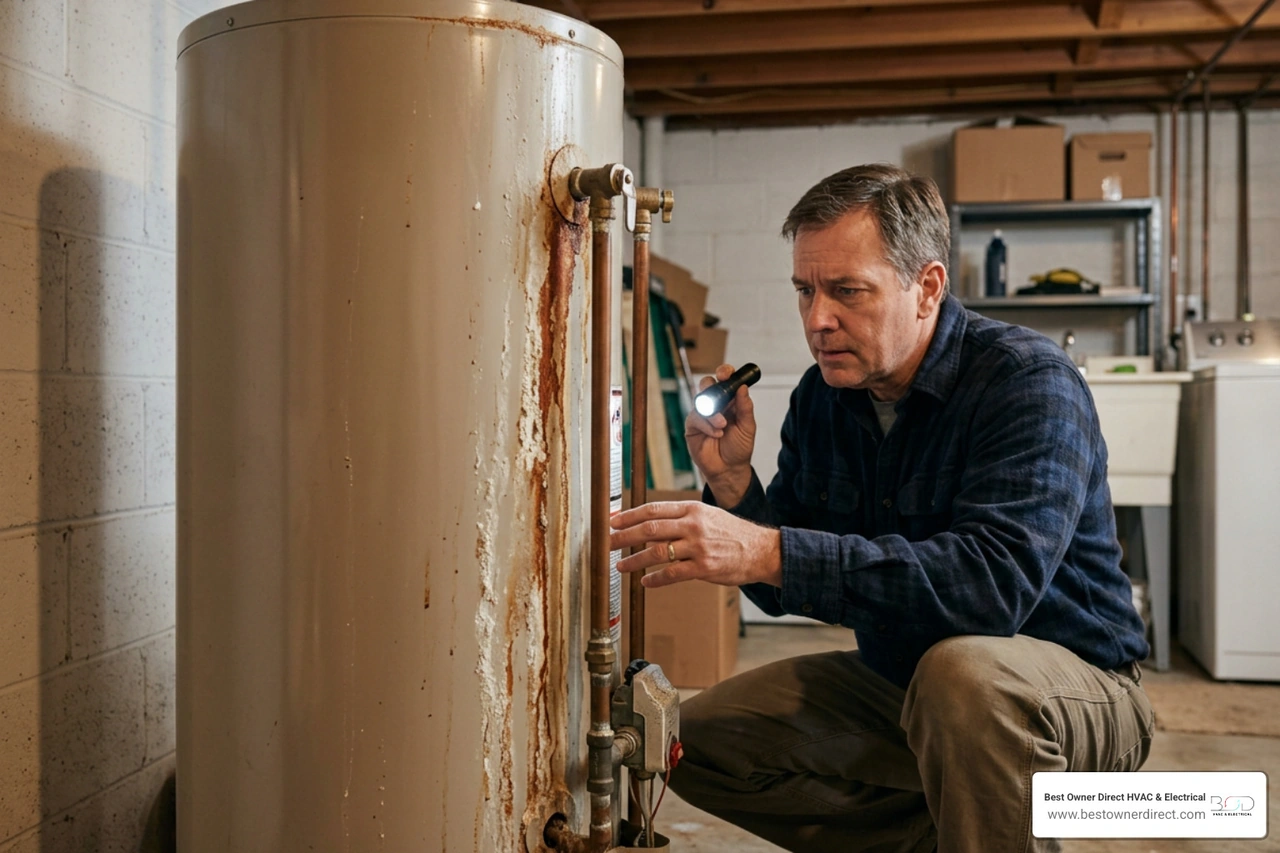
How to Identify Water Conditions Harming Your Water Heater in 5 Simple StepsLearn how water conditions affect your water heater faster. Discover 5 simple steps to identify damage from hard water, acidity, and scale buildup.
Read more
Preparing Your Home's Electrical System for Space Heaters and Heavy Winter LoadsA standard 1500W space heater consumes nearly 80% of an older bedroom circuit's capacity instantly. Find out why resetting that tripped breaker is a hidden fire hazard.
Read more