Menu


Staging describes how many output levels your heating or cooling equipment has: single-stage is all-or-nothing, two-stage adds a lower cruising gear, and variable-speed (modulating/inverter) equipment adjusts output continuously to match the house. Each step up costs more and delivers steadier temperatures, quieter operation, better humidity control, and gentler wear. The question is which step pays off for your house.
What does "staging" actually mean?
Think of it as gears. A single-stage system has one: full blast, then off, then full blast again. A two-stage system has a low gear it uses most of the time and a high gear for cold snaps and heat waves. Variable-speed equipment is a continuously variable transmission — it finds exactly the output the house needs and holds it, often running long, quiet, low-power cycles instead of stop-start bursts.
When is single-stage the right call?
When budget is the binding constraint, the equipment serves a smaller or well-insulated space, or it's a rental or short-ownership situation where lifetime comfort refinements won't be enjoyed. Single-stage is proven, simple, and less expensive to repair. Its trade-offs are honest ones: bigger temperature swings, more noticeable starts and stops, and less dehumidification — that last one matters in our damp climate.
What does two-stage buy you?
The lower gear. Most hours of a Pacific Northwest heating season need only a fraction of a system's full capacity, so a two-stage unit spends most of its life cruising quietly in low — longer, gentler cycles that hold temperature steadier and filter and dehumidify the air for more minutes per hour. It's the pragmatic middle: a real comfort upgrade at a moderate premium.
Who should pay for variable-speed?
Homes where comfort quality is a priority, rooms are uneven, someone is noise-sensitive, or the system is a heat pump — where inverter technology also unlocks the cold-climate performance our buying guide recommends. Variable-speed equipment holds temperature within a whisper, runs at conversation-friendly sound levels, and manages shoulder-season humidity better than anything below it.
Does higher staging save energy?
Generally yes — longer low-output cycles waste less than stop-start operation, and staging usually travels together with higher efficiency ratings. But payback depends on run hours: a small, tight home may never recover the top-tier premium in energy alone, while a larger or harder-working system often does. That's a calculation, not a slogan; it belongs on your quote in numbers. (More on reading quotes in what drives HVAC system cost.)
Our recommendation habit
Match the staging to the house and the owner: single-stage where simplicity and budget rule, two-stage as the value sweet spot for most family homes, variable-speed where comfort, noise, humidity, or heat pump performance justify it. Ask for options across tiers — we quote them side by side so the decision is yours, with the trade-offs visible.
What to read next
Higher tiers cost more upfront — see how financing can make the right tier affordable instead of settling for less than your house deserves.
Quick answers
Questions we hear about this
What is single-stage vs. two-stage vs. variable-speed HVAC?+It describes how many output levels the equipment has — single-stage is all-or-nothing, two-stage adds a lower cruising gear for milder days, and variable-speed continuously adjusts output to match the house. Each step up costs more and runs quieter and steadier.
Is variable-speed HVAC worth the extra cost?+For homes where comfort quality, noise, uneven rooms, or heat pump cold-climate performance matter — often yes. For a small, well-insulated home or a short-ownership situation, single- or two-stage equipment can be the smarter buy.
Does two-stage heating save money over single-stage?+Generally yes — a two-stage system spends most hours cruising in its lower gear instead of full-blast bursts, which uses less energy and dehumidifies better in our damp climate. Payback depends on run hours, which is a math question worth doing on your specific quote.
Is variable-speed equipment more likely to break down?+It has more sophisticated electronics, which is one reason consistent maintenance matters more as equipment gets smarter — but it isn't inherently less reliable when properly installed and maintained.
Which staging tier does Best Owner Direct recommend?+Whichever fits your house and how you use it — single-stage where simplicity and budget rule, two-stage as the value sweet spot for most family homes, variable-speed where comfort, noise, or heat pump performance justify it. We quote across tiers so the decision is yours.


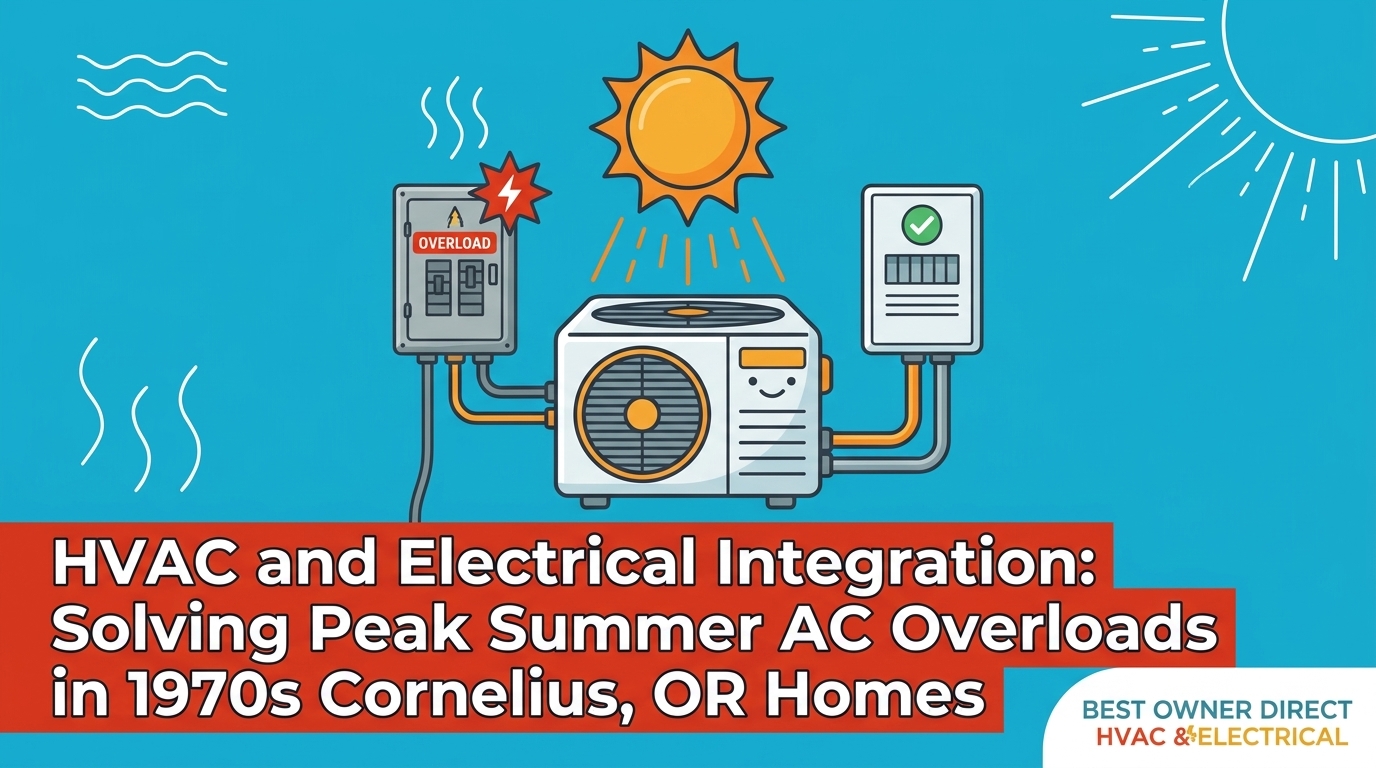
How Cornelius Homes Handle Peak Summer AC Loads on Older Electrical PanelsModern AC units often overwhelm aging 1970s electrical panels during intense summer heat. Review the warning signs and specific upgrades needed to keep your home safely cooled.
Read more

The Electrical Toll of a Struggling HVAC System on Your Home's BreakersAn aging air conditioner does not just lose cooling power; it actively stresses your electrical panel. A tripping breaker during late summer heat is a warning sign requiring professional diagnosis.
Read more
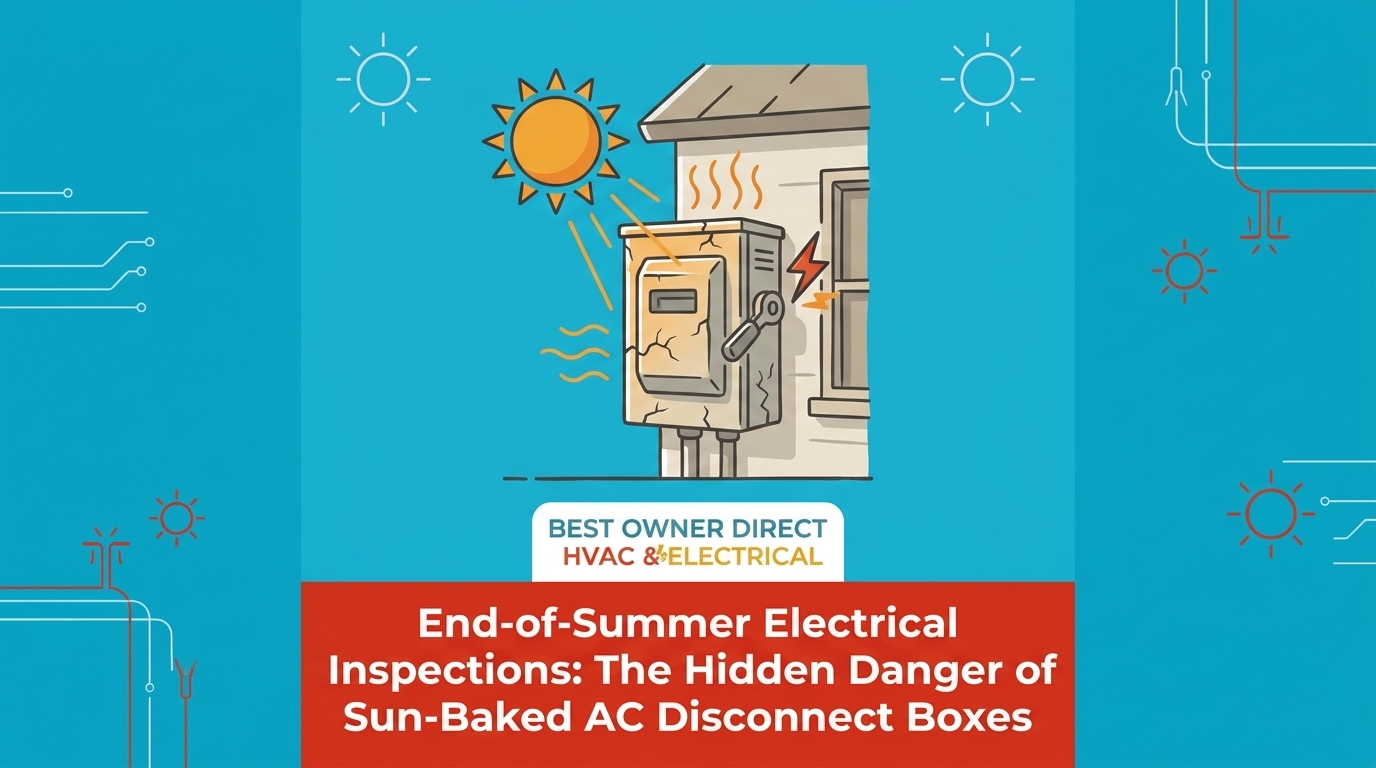
End-of-Summer Electrical Inspections: Checking Outdoor Disconnect BoxesAfter months of intense Pacific Northwest sun, your outdoor AC disconnect box can become brittle and unsafe. Learn the visual warning signs of UV degradation.
Read more