Menu


The installed price of a new HVAC system is driven by seven factors: equipment type and tier, system size, the condition of your ducts, electrical and venting work, installation complexity, permits, and who stands behind the job. We deliberately don't publish dollar figures — they drift with equipment markets and would be wrong within a season — but once you understand the factors, any quote becomes readable.
Why won't contractors just publish prices?
Honest ones can't, and it's worth understanding why: two identical houses on the same street can need different work. One has clean ducts, adequate electrical service, and a straightforward equipment location; the other needs duct sealing, a circuit added, and a crane to reach the old unit. Published flat prices either pad every job to cover the worst case or grow after signing. A real number requires seeing the house.
Factor 1: What type of system?
A like-for-like AC replacement costs less than converting to a heat pump; a ductless multi-zone system is priced per indoor head; a furnace swap depends heavily on venting. The system type sets the baseline before any other factor applies.
Factor 2: Equipment tier
Within any type there's an efficiency-and-comfort ladder — single-stage up through variable-speed. Higher tiers cost more and deliver quieter, steadier, lower-cost-to-run comfort. Whether the top tier is worth it for your house is a math question, not a sales question; our guide to staging walks the ladder honestly.
Factor 3: Size — and why bigger isn't better
Capacity must match the home's calculated load. Oversizing costs more upfront and performs worse (short cycles, poor dehumidification, uneven rooms). If a bid names a size without a load calculation, the number below it is a guess. Curious what range your home likely lands in? Our system size & estimate wizard frames an honest tonnage/BTU range in five questions — and tells you exactly why the final answer still needs the Manual-J.
Factors 4–5: Ducts, electrical, and venting
Leaky ducts waste a portion of every dollar the new equipment earns; correcting them is often the highest-value line on the quote. Heat pumps may need a circuit or panel work — if your panel is older, read our panel warning signs — and high-efficiency furnaces vent differently than the units they replace. These aren't padding; they're the parts a too-good bid skips.
Factor 6: Permits and inspection
Mechanical and electrical permits with inspections are required, mildly inconvenient, and absolutely worth it — they're your independent verification that the work is safe and to code. Licensed contractors include them; we're Oregon CCB# 199049.
Factor 7: Who stands behind it
Equipment warranties only pay off when the installer registers them, and workmanship warranties are only as good as the company's intention to be reachable. Our 1-year workmanship warranty exists because owner-direct accountability is the product — read why owner-direct pricing is different.
How to use this when comparing quotes
Line every bid up against the seven factors and ask what's missing from the cheap one. Then get a number you can trust: request an assessment and we'll walk your home, show our math, and put the trade-offs in writing. Incentives and financing get applied at quote time, when we know what your equipment qualifies for.
What to read next
Understanding the factors is step one — see the payment options homeowners actually use once you have a real number.
Sources
• Oregon Construction Contractors Board — verify a contractor license
• U.S. Department of Energy — home energy upgrades
Quick answers
Questions we hear about this
Why do HVAC quotes for the same house vary so much?+Because bids differ on what they include — duct correction, electrical work, venting updates, permits, and warranty accountability. The equipment is often the most similar line on competing quotes.
Is a higher-efficiency system always worth it?+Not always. Efficiency pays back through run hours — a well-insulated small home may never recoup a top-tier premium, while a larger or harder-working system often does. It's a math question we'll do with you, in writing.
Why won't a contractor give me a price over the phone?+Because an honest number requires seeing the house — ducts, electrical, venting, and equipment location all vary even between identical-looking homes on the same street. A phone quote either pads for the worst case or grows after signing.
Does the brand of equipment matter more than the installer?+Installation quality and correct sizing matter more than the badge on the unit — a correctly-sized, carefully-installed mid-tier system will outperform a top-tier system installed sloppily. Our Amana vs. Goodman comparison covers this in more depth.
What's included in a typical HVAC installation quote?+Equipment, materials, labor, permits, and — when applicable — duct, electrical, or venting corrections. A bid that's missing one of those isn't cheaper, it's incomplete, and the gap usually shows up as a change order later.


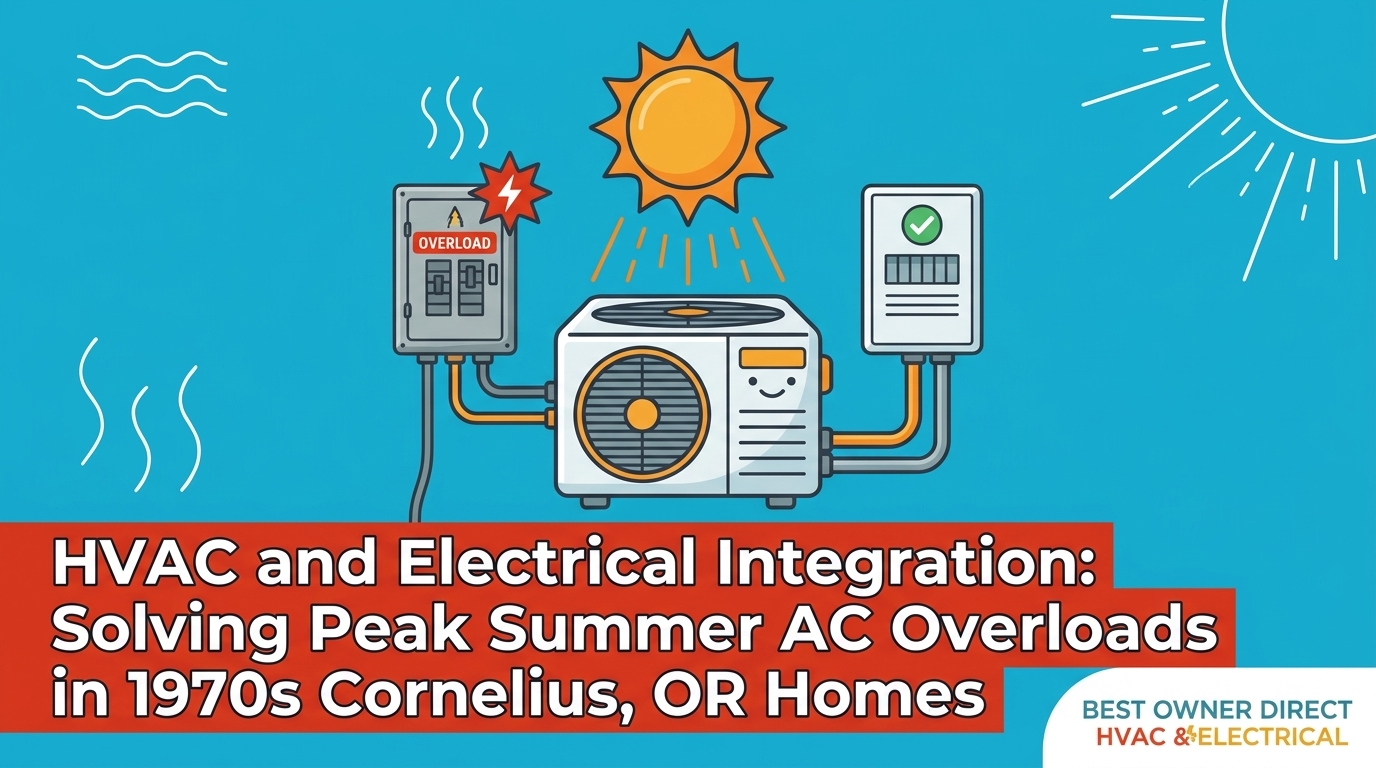
How Cornelius Homes Handle Peak Summer AC Loads on Older Electrical PanelsModern AC units often overwhelm aging 1970s electrical panels during intense summer heat. Review the warning signs and specific upgrades needed to keep your home safely cooled.
Read more
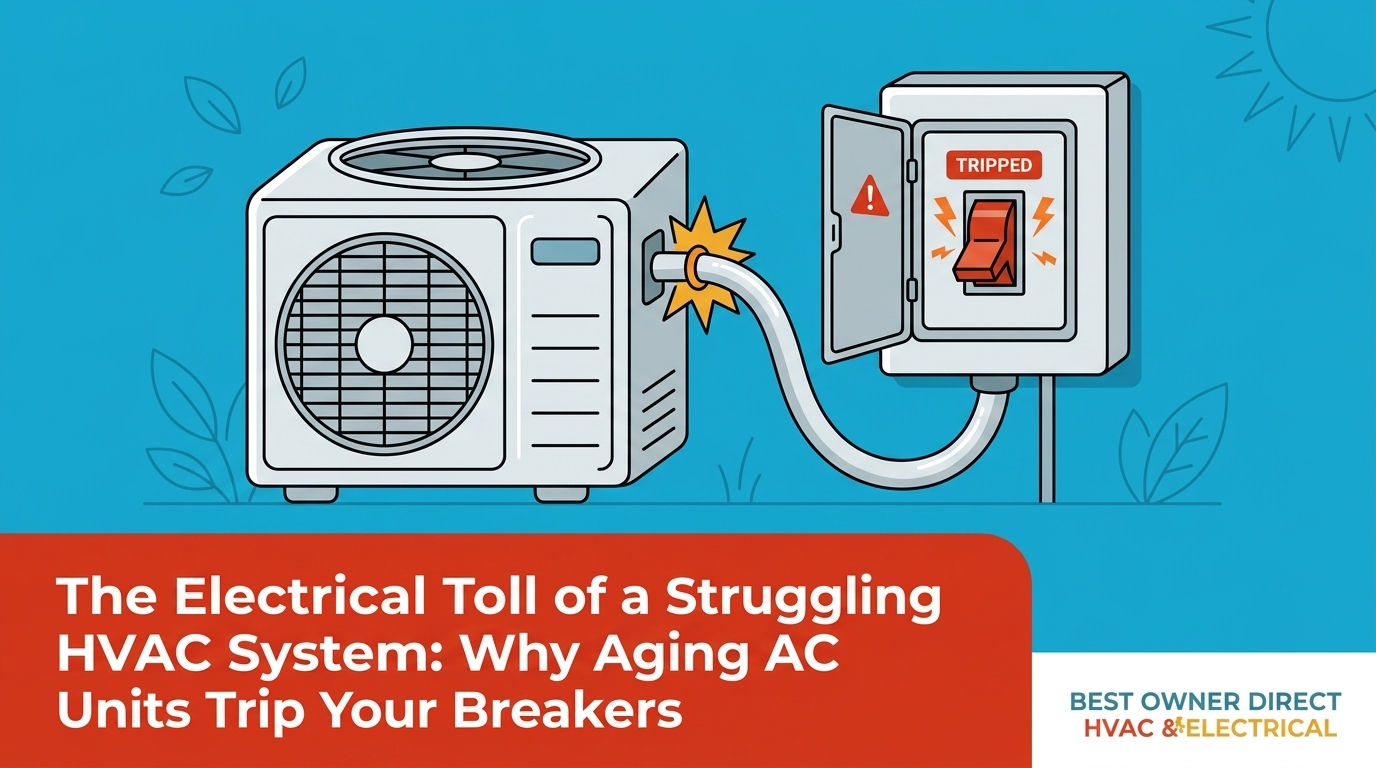
The Electrical Toll of a Struggling HVAC System on Your Home's BreakersAn aging air conditioner does not just lose cooling power; it actively stresses your electrical panel. A tripping breaker during late summer heat is a warning sign requiring professional diagnosis.
Read more
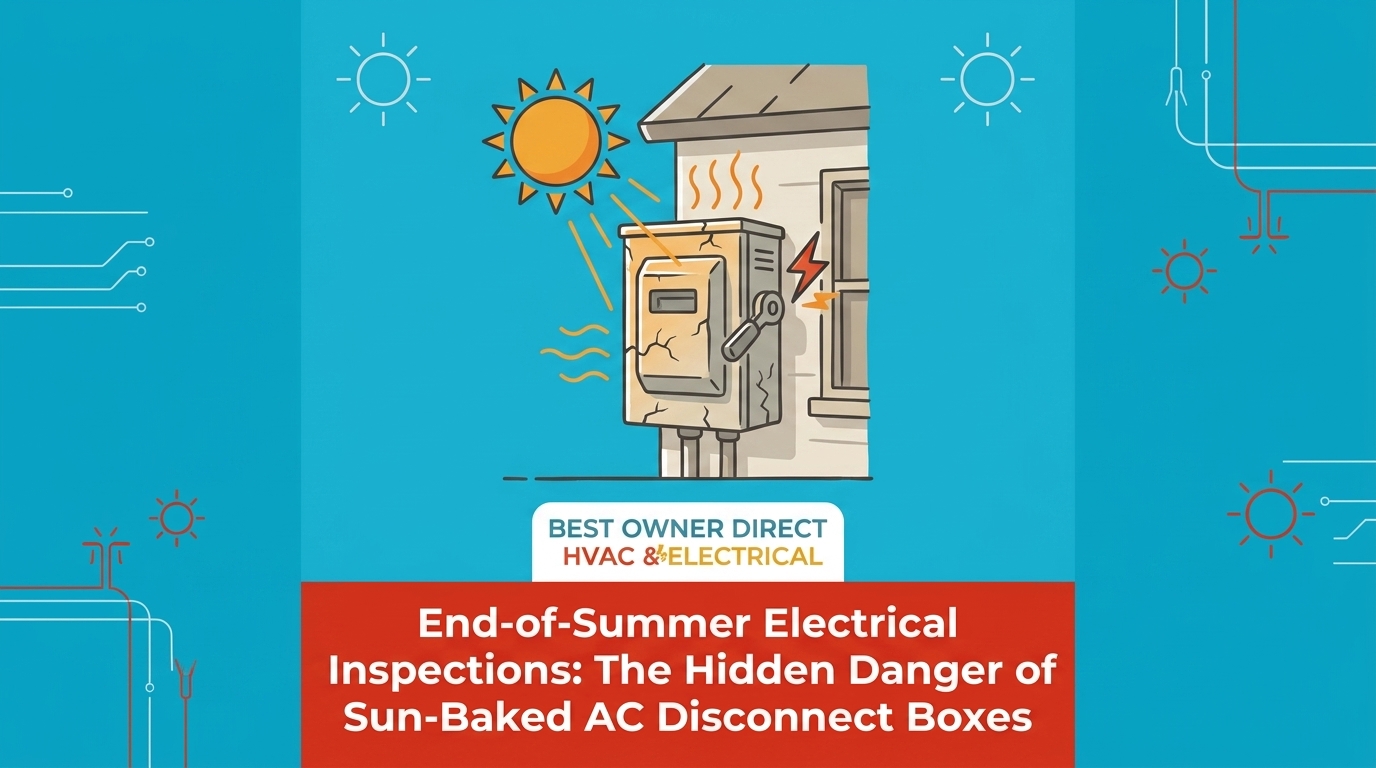
End-of-Summer Electrical Inspections: Checking Outdoor Disconnect BoxesAfter months of intense Pacific Northwest sun, your outdoor AC disconnect box can become brittle and unsafe. Learn the visual warning signs of UV degradation.
Read more