Menu


Oregon Mini Split Permit Requirements at a Glance
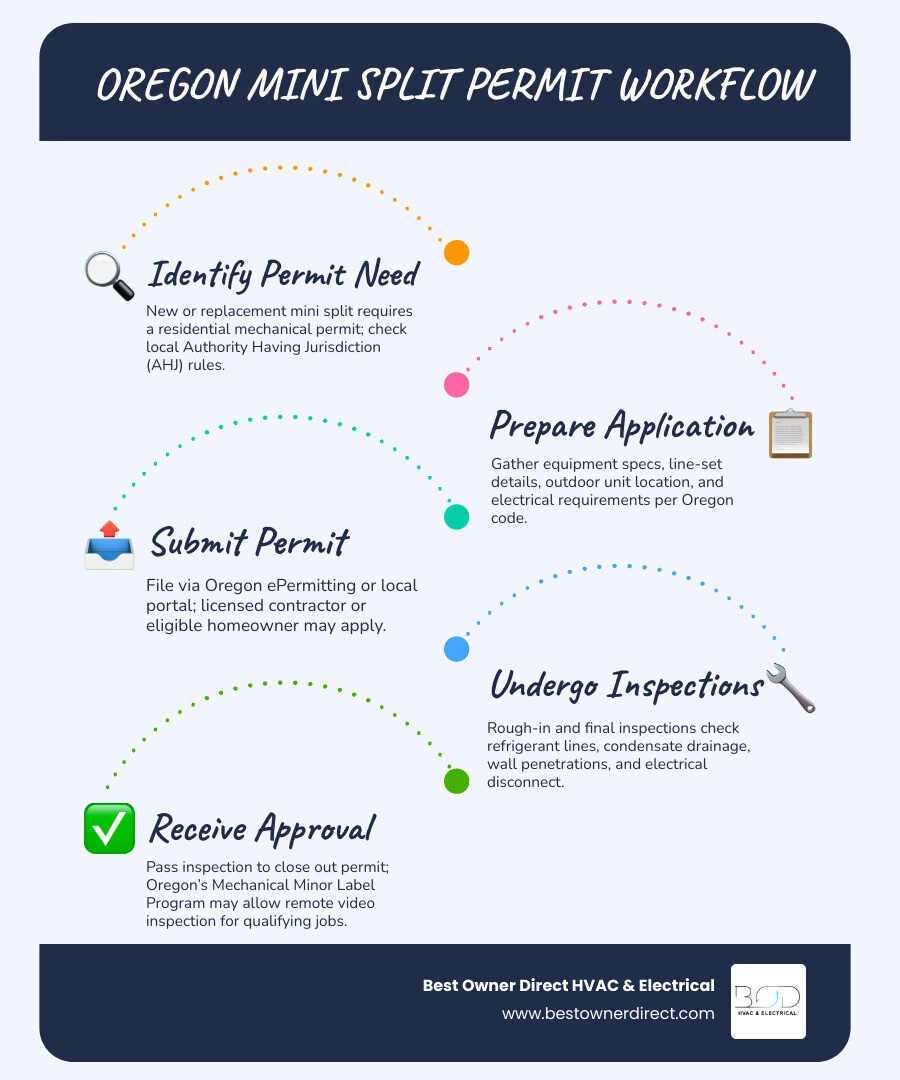
What permits are needed for mini split installation in Oregon? In most cases, a fixed ductless mini-split requires a residential mechanical permit before work begins. Oregon treats a mini-split as permanent heating and cooling equipment, not a plug-in appliance. The exact permit path can vary by city or county, and the outdoor unit location may also need to meet local zoning rules. Best Owner Direct HVAC & Electrical is a family-owned HVAC, electrical, and water-heater services company based in Cornelius, OR, serving homeowners and businesses throughout the Portland metro and surrounding Oregon communities.
Explore mini-split options | Schedule mini-split installation
For a quick answer:
- New mini-split installation: A residential mechanical permit is generally required.
- Replacement or alteration: A permit is commonly still required, even for equipment changes.
- Licensed contractor option: Eligible contractors may use Oregon's Mechanical Minor Label Program for qualifying mini-splits in one- and two-family homes.
- Local rules matter: Your city or county sets its own application process, inspections, and placement rules while enforcing Oregon's statewide code baseline.
Getting the permit right helps confirm that the equipment, refrigerant lines, condensate drainage, wall penetrations, and outdoor unit placement meet applicable safety rules before the project is closed out.
I am Chandrine Stepisnik, and this guide will walk you through the Oregon mini-split permit process in plain language.
Easy what permits are needed for mini split installation in oregon glossary:
- how a mini split installation works step by step
- how line sets are run through your walls
- how long does a mini split installation take
Understanding What Permits Are Needed for Mini Split Installation in Oregon
When planning a ductless heat pump project in Oregon, understanding state building regulations saves time and prevents unexpected compliance hurdles. Under Oregon Revised Statutes (ORS § 455.020) and Oregon Administrative Rules (OAR 918-440-0050), mechanical equipment installations are strictly regulated to protect property owners and ensure building safety.
Oregon establishes the Oregon Mechanical Specialty Code (OMSC) and Oregon Residential Specialty Code (ORSC) as uniform statewide minimum standards. Local jurisdictions—referred to in building code as the Authority Having Jurisdiction (AHJ)—enforce these rules across municipalities like Cornelius, Portland, and Oregon City. While local building departments cannot create standards less restrictive than the state floor, they manage their own permit issuance workflows and zoning overlays. Choosing a professional Mini Split Installation ensures all state and municipal requirements are addressed seamlessly from start to finish.
Mechanical Trade Permits Required by Oregon Law
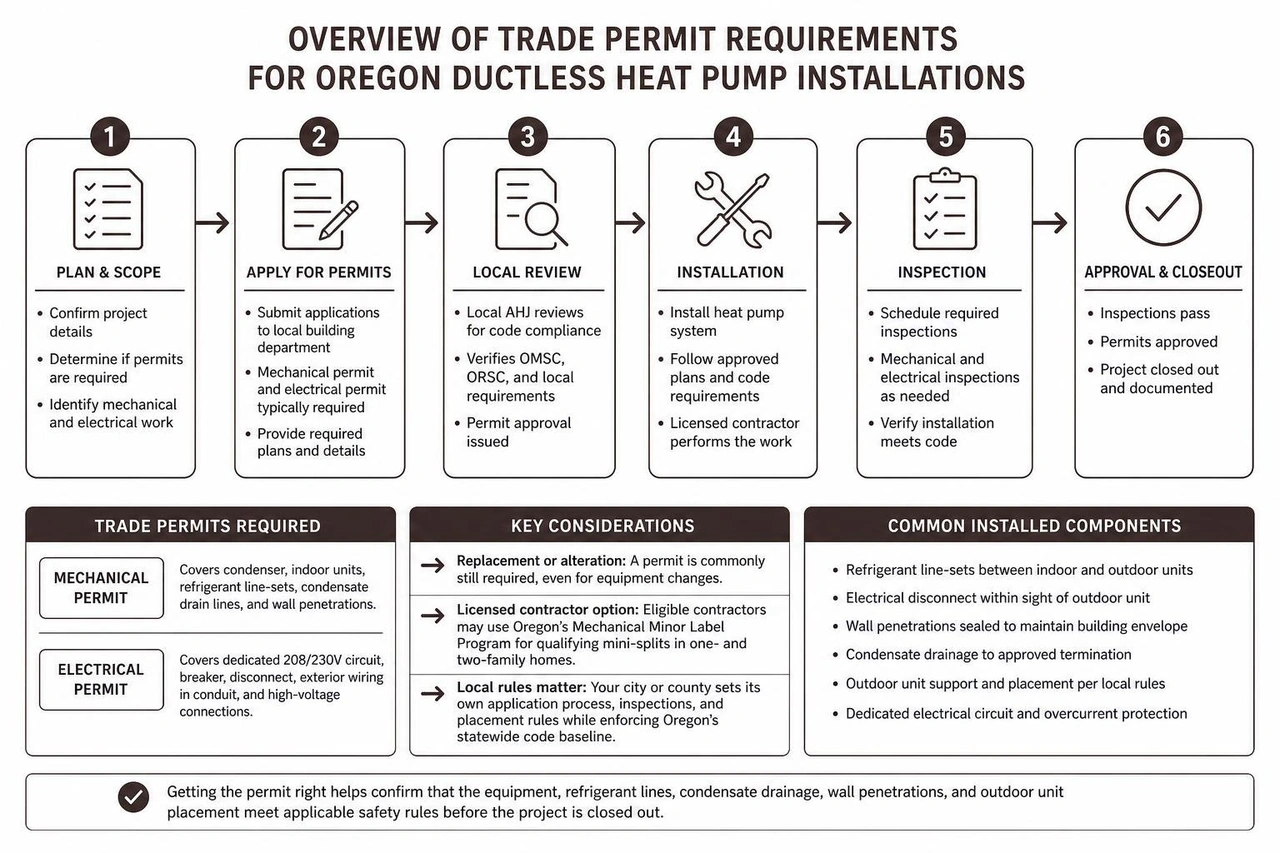
Installing a ductless mini-split is a mechanical trade process governed by Oregon HVAC standards. Understanding what permits are needed for mini split installation in oregon means recognizing how mechanical permits apply during an install:
- Residential Mechanical Permit: Covers the physical heat pump condenser, indoor air-handling heads, refrigerant line-sets, condensate drain lines, and wall penetrations through the thermal envelope.
When performing comprehensive HVAC Services, trade authorizations work to verify that heating and cooling connections satisfy Oregon code standards.
Specific Work Triggers That Determine What Permits Are Needed for Mini Split Installation in Oregon
Homeowners often ask what exact installation tasks trigger formal permit review. Oregon law requires code approval whenever permanent alterations are made to a home’s mechanical systems or structural shell. Specific triggers include:
- Refrigerant Line-Set Routing: Flaring, connecting, and running copper refrigerant tubing between the compressor and indoor heads under EPA Section 608 containment guidelines.
- Wall Penetrations: Drilling through exterior walls, siding, or framing members to pass line-sets and drainage tubing, which requires weatherproofing, sleeve protection, and air sealing to preserve the home's energy envelope.
- Condensate Drainage Systems: Routing gravity-fed or pump-assisted condensate disposal lines to prevent water intrusion or structural rot.
Permit Application Paths and Contractor Filing Rules
Navigating the permit process involves submitting detailed project specifications, equipment capacity details, and site location plans to the local building authority. In Oregon, licensed contractors handle these filings daily using standardized digital systems.
Homeowner vs. Licensed Contractor Permit Filing Options
In Oregon, there are two distinct paths for pulling residential trade permits:
- Licensed Contractor Filing: A contractor holding an active Oregon Construction Contractors Board (CCB) license and appropriate trade licenses can pull permits on behalf of the client. The contractor assumes legal responsibility for code compliance, worker safety, scheduling field inspections, and resolving any code corrections requested by local building inspectors.
- Homeowner Filing: Oregon law allows property owners to pull permits for work on their own single-family primary residence. However, strict restrictions apply: the home cannot be owned by an LLC or corporate entity, cannot be a rental unit, and must be occupied (or intended for immediate occupation) by the owner. Homeowners who pull their own permits take full legal responsibility for code compliance and safety.
Working with a licensed specialist in areas like Gaston or Carlton ensures that all application details are submitted accurately without putting compliance liabilities on the property owner.
Streamlining Installs via Oregon's Mechanical Minor Label Program
For one- and two-family dwelling installations, Oregon offers an expedited path for licensed professionals known as the Mechanical Minor Label Program. This streamlined process allows qualified contractors to purchase minor labels directly from the state or participating municipal jurisdictions, bypassing traditional plan reviews for eligible jobs.
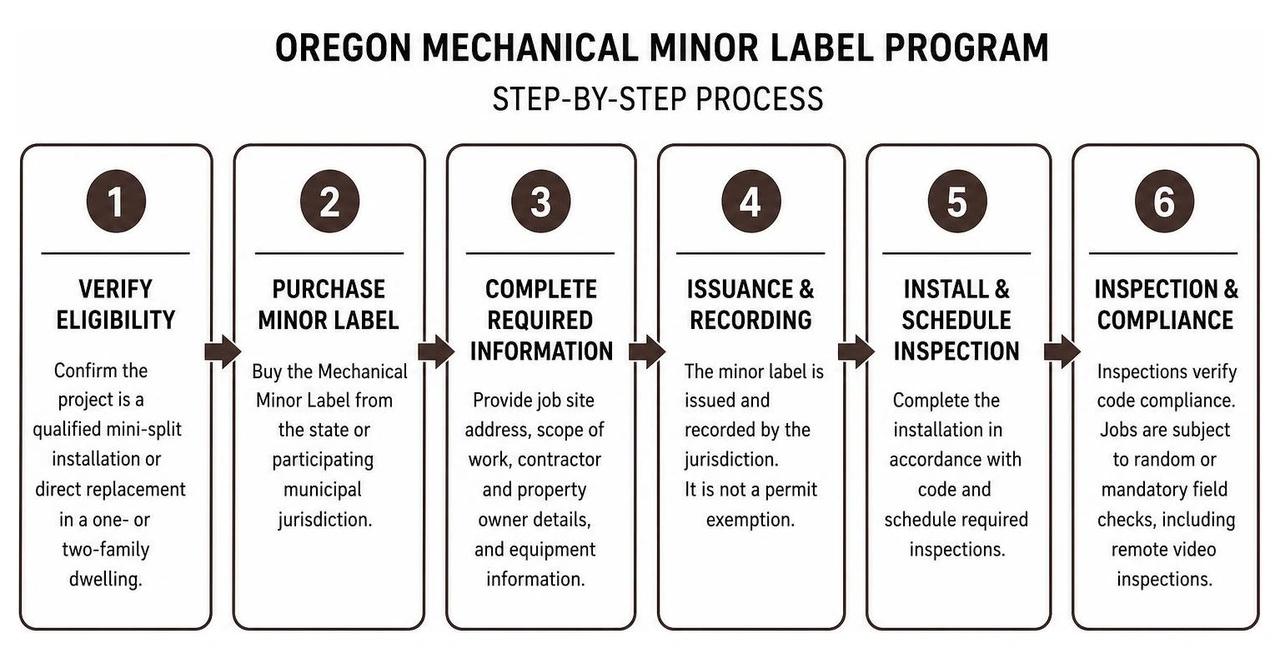
Key facts regarding the minor label program include:
- Eligible Scope: New ductless mini-split heat pump installations and direct equipment replacements in single-family homes qualify under state guidelines.
- Permit Lifespan: Work under a minor label or standard permit must be completed and inspected before the standard 180-day inactivity window elapses.
- Inspection Integrity: A minor label is not a permit exemption; every job is recorded and subject to random or mandatory field checks. Participating building departments frequently utilize modern remote video inspections to verify compliance efficiently.
Homeowners in cities such as Portland benefit significantly from this program, as it minimizes administrative delays and ensures fast, code-compliant equipment operation.
Local Jurisdiction Nuances, Setbacks, and Field Inspections
While state specialty codes set uniform construction guidelines across Oregon, local municipalities govern land use, environmental placement, and scheduling workflows.
Outdoor Unit Placement Rules and Zoning Setback Constraints
Before mounting an outdoor compressor unit on a pad or wall bracket, local municipal zoning setbacks must be consulted. Local departments, such as Portland's Bureau of Development Services or county planning boards in rural communities, set specific property-line rules to minimize noise and visual encroachment on adjoining parcels.
Common local zoning constraints include:
- Height Restrictions in Setbacks: In jurisdictions like Portland, outdoor mechanical equipment placed within side or rear property setbacks cannot exceed a maximum height of five feet.
- Visual Screening: Outdoor units located within setback zones must often be screened from neighboring properties using architectural fences, decorative walls, or dense evergreen vegetation.
- Property Line Distance: Condensers typically require clear distances—often 36 inches or more—from property lines, as well as clear access space from doors, windows, and electrical service meters.
- Front Yard Prohibitions: Permanent mechanical equipment is generally prohibited in required front yard setback areas in most Oregon residential zones.
Checking local rules in communities like Oregon City or Wilsonville ensures your outdoor condenser complies with neighborhood zoning ordinances before the mounting pad is poured or set.
What Inspectors Evaluate During Rough-In and Final Mechanical Inspections
Once permits are secured, field inspections confirm that physical construction matches state building codes. Inspections typically occur in two phases—rough-in (if wall cavities are opened) and final mechanical review.
| Inspection Phase | Required Checks & Checklist Items | Code Reference / Purpose |
|---|---|---|
| Rough-In Inspection | • Wall sleeve integrity & penetrations • Line-set routing behind drywall/siding • Condensate slope & drainage path • Framing protection plates | Oregon Residential Specialty Code (ORSC) Ensures structural integrity and proper concealed line protection. |
| Final Mechanical Inspection | • Refrigerant line-set UV/vapor insulation • Tamper-resistant locking access-port caps • Weatherproof outdoor wall seal • Condensate discharge clear of footings • Disconnect switch accessibility & labeling | Oregon Mechanical Specialty Code (OMSC) / EPA 608 Confirms system safety, environmental protection, and energy efficiency. |
When installing ductless heat pumps in communities like Milwaukie, our team prepares every component to meet inspector checklists on the first visit.
Frequently Asked Questions
What mechanical permits are required when adding a mini split?
In nearly all Oregon jurisdictions, adding a new ductless mini-split requires a residential mechanical permit. The mechanical permit covers installing the outdoor heat pump condenser, indoor air-handling units, refrigerant line-sets, wall penetrations, and condensate drainage systems under the Oregon Mechanical Specialty Code.
How long does it take to get a mini split permit issued in Oregon?
For licensed contractors using online portals like Oregon ePermitting or local portals like Portland’s DevHub, standard trade permits are auto-issued within 24 hours after payment. When utilizing Oregon's Mechanical Minor Label Program, qualified contractors can log the installation immediately without waiting for pre-install plan reviews, allowing projects to move forward without delay.
What permits are needed for mini split installation in Oregon replacement projects?
Replacing an existing mini-split or ductless head in Oregon generally still requires a residential mechanical permit. Oregon specialty codes do not fully exempt like-for-like mechanical equipment replacements because wall penetrations, line-set connections, condensate drainage, and energy efficiency compliance must still be verified by local inspectors in communities like Milwaukie.
Conclusion
Best Owner Direct HVAC & Electrical is a family-owned HVAC, electrical, and water-heater services company based in Cornelius, OR, serving homeowners and businesses throughout the Portland metro and surrounding Oregon communities. Understanding what permits are needed for mini split installation in oregon is an essential step in ensuring your home heating and cooling investment is safe, legally compliant, and built to last. From managing mechanical filings and zoning setback compliance to completing precise installations, our licensed team takes care of every detail so you can enjoy year-round comfort with total confidence.
Ready to upgrade your home's comfort with a fully permitted, energy-efficient ductless system? Contact us today to schedule your mini split consultation!


Why Checking Air Vents for Your House is the Most Crucial Fall Maintenance StepHeat pump blowing lukewarm air? See why checking your air vents is the first step on a seasonal home maintenance checklist and when to call a professional.
Read more
Mini Split vs Central Ductwork: A Quick Start GuideLearn when a mini split is better than adding central ductwork for your Oregon home. Compare efficiency, zoning, and installation with Best Owner Direct.
Read more

The Real Reason Your Heat Pump Blows Cooler Air Than a Gas FurnaceThat lukewarm breeze coming from your vents on a chilly fall morning doesn't mean your system is failing. Here is why efficient heat pump air feels cool compared to traditional furnaces.
Read more