Menu

Why Your Heat Pump May Blow Cold Air in Heating Mode
If your heat pump is blowing cold air in heating mode, first check that the thermostat is set to Heat, the fan is set to Auto, and the temperature setting is above the room temperature. Then replace a dirty filter and check the outdoor unit for snow, debris, or heavy ice. In Oregon City, heat pump repair may be needed when cold air continues after these checks. Common causes include a defrost cycle, low refrigerant, a stuck reversing valve, blocked airflow, or auxiliary heat that is not turning on.
Explore heat pump services | Schedule heat pump service in Oregon City
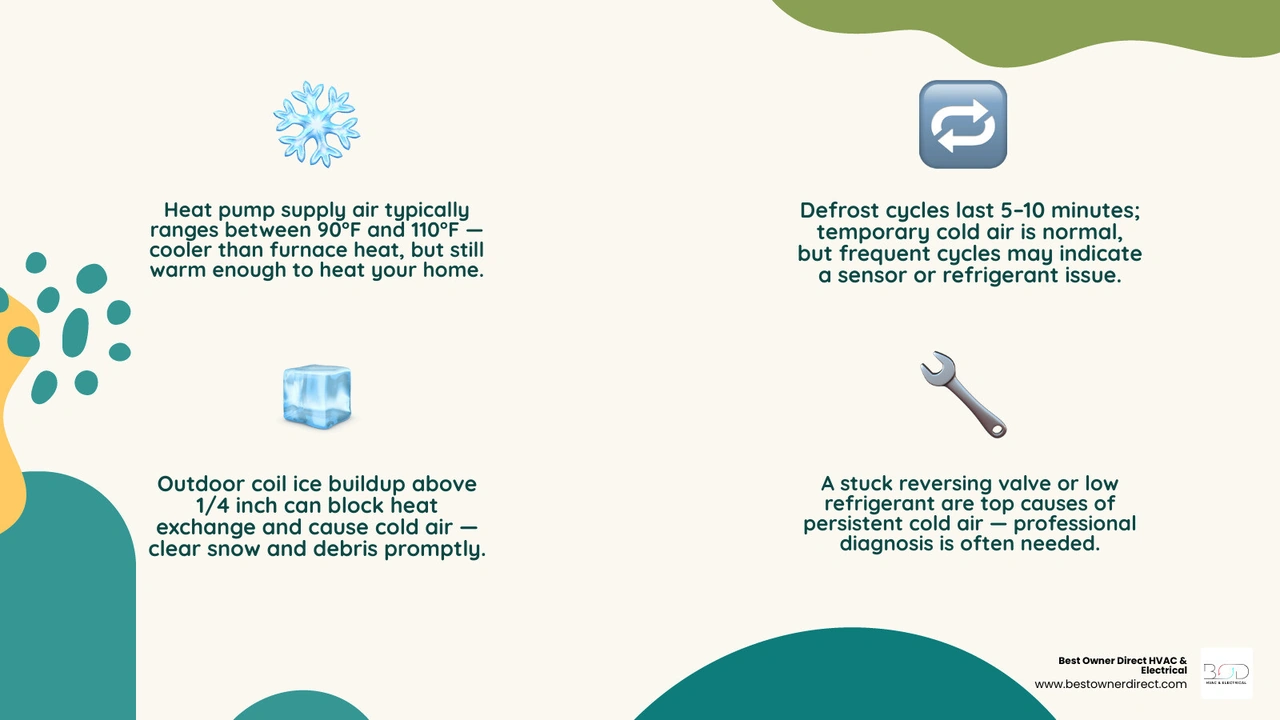
Heat pumps normally deliver gentler heat than furnaces, often around 90 to 110 degrees at the supply vents. But air that feels truly cold, lasts longer than a brief defrost cycle, or fails to warm the home needs attention. Chandrine Stepisnik will walk you through the safe checks to make and the signs it is time for a professional diagnosis.
Get help with your Oregon City heat pump.
Glossary for why is my heat pump blowing cold air in heating mode:
- Heat Pump Ice Buildup Causes and What to Do
- Heat Pump Not Turning On What to Check First
- Heat Pump Running But Not Heating or Cooling What It Means
Introduction
Nothing breaks the cozy sanctuary of a Pacific Northwest autumn or winter quite like walking past a supply register only to be greeted by a chilly draft when your thermostat calls for warmth. Here in Oregon City and the broader Willamette Valley, we rely heavily on electric heat pump systems to keep our living spaces comfortable year-round. Modern heat pumps are engineering marvels that transfer heat rather than generate it through combustion. However, when the equipment falters, diagnosing the difference between expected operating quirks and critical mechanical breakdowns can be challenging.
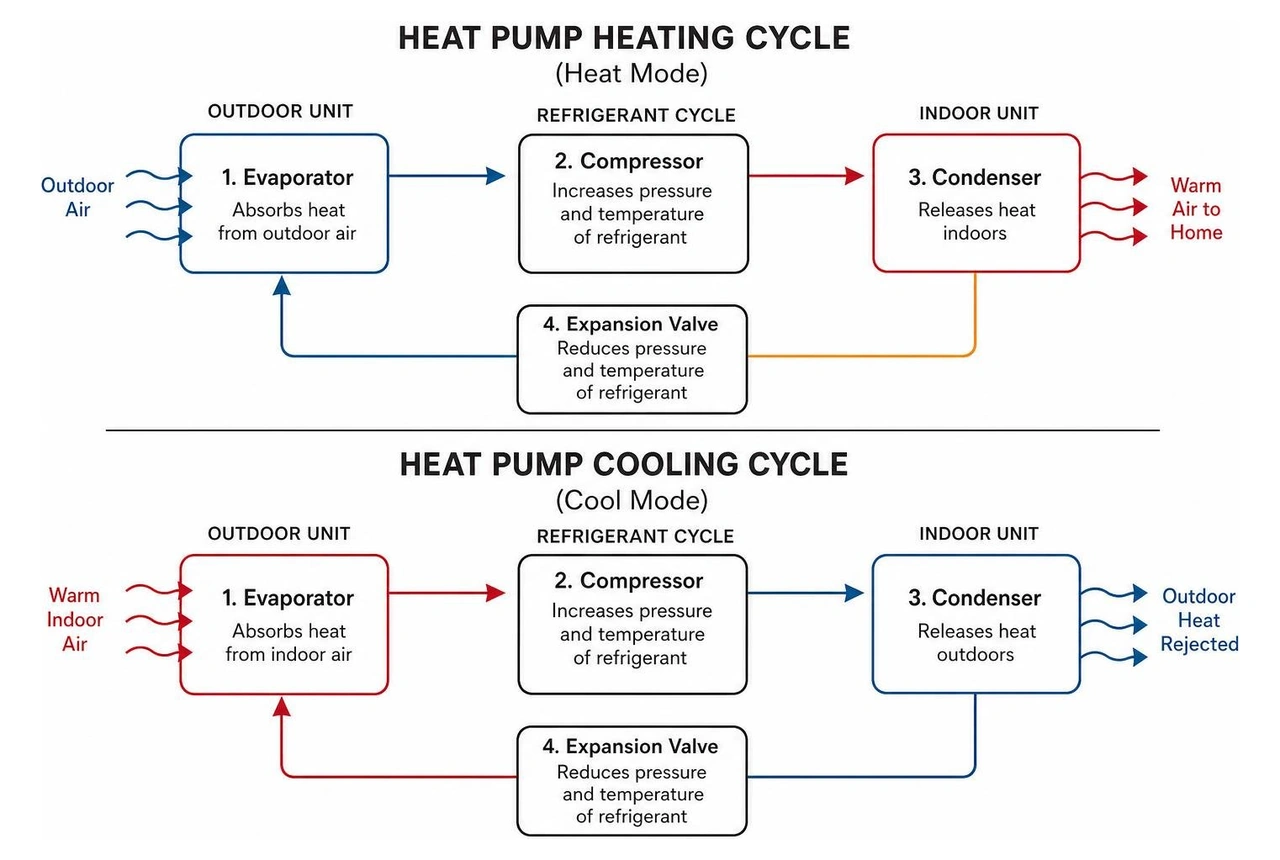
Understanding how a heat pump works for heating and cooling is the first step toward figuring out what went wrong. In this guide, we break down what separates normal heat pump behavior from true system failures, walk through practical troubleshooting steps you can perform safely, and show you when to call in a professional technician for fast, dependable repairs.
Normal Heat Pump Operation vs. True Heating Problems
Before assuming your unit is broken, it helps to understand how a heat pump heats a home compared to a conventional combustion furnace. A gas furnace burns fuel to create hot air, whereas a heat pump extracts ambient heat energy from outside air and moves it indoors through the refrigeration cycle.
| Heating System | Typical Supply Air Temperature | Normal Temperature Rise ($\Delta T$) | Air Delivery Sensation |
|---|---|---|---|
| Standard Heat Pump | 90°F to 110°F | 15°F to 25°F above room temp | Warm, gentle, continuous airflow |
| Gas Furnace | 125°F to 150°F | 40°F to 70°F above room temp | Very hot, intermittent bursts of air |
| Malfunctioning Heat Pump | 65°F to 75°F (Room Temp) | 0°F to 5°F above room temp | Cold, drafty, uncomfortable breeze |
Normal Supply Temperatures vs. Cold Blow Syndrome
Human skin sits at approximately 98.6°F, and our body's surface temperature is around 93°F. Because heat pump air enters your rooms between 90°F and 110°F, air blowing over your skin at high velocity can feel slightly cool or lukewarm—even though it is actively raising your home's temperature to 70°F. This phenomenon is known in the HVAC trade as "cold blow."
Several structural and installation factors can make this sensation worse:
- Unsealed or Poorly Insulated Ductwork: If your supply ducts run through unconditioned crawlspaces or attics, they can lose significant heat before reaching your living areas. Professional duct sealing stops heated air from leaking out and prevents cold air from being drawn into the airstream.
- Thermostat Fan Set to "ON": When your thermostat fan switch is set to "ON" instead of "AUTO," the indoor blower runs 24/7. When the heat pump compressor cycles off, the fan continues blowing unheated, ambient room air across your home.
- Direct Register Aim: Supply vents directed right toward couches, dining tables, or beds create drafty sensations for seated occupants.
Defrost Cycles: Why Is My Heat Pump Blowing Cold Air in Heating Mode During Winter?
During cold, damp weather—typical across Clackamas and Washington counties from late fall through early spring—moisture in the air freezes onto the outdoor condenser coil. To prevent thick ice sheets from choking off airflow, the system periodically enters a heat pump defrost mode in winter.
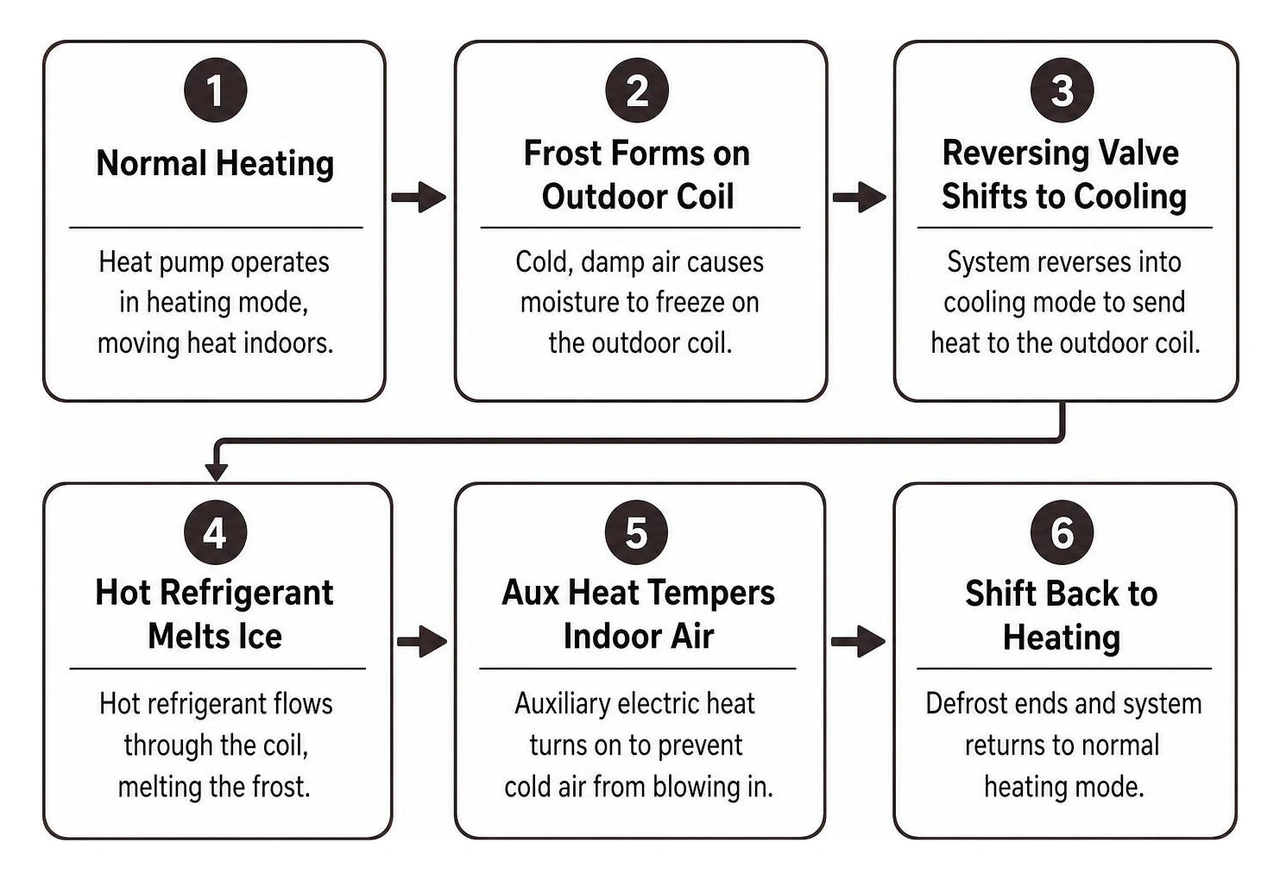
During defrost, the unit temporarily reverses its cycle back into cooling mode, routing heat outside to melt the frost on the coil. Homeowners often notice the outdoor unit puffing steam—which is completely normal, as detailed in our guide on why your heat pump is steaming during defrost. To prevent this cycle from chilling your house, electric auxiliary heat strips are designed to turn on simultaneously to temper the indoor air. If those auxiliary elements fail, or if the defrost cycle gets stuck, the indoor blower will blow chilly air inside for the duration of the cycle.
Why Is My Heat Pump Blowing Cold Air in Heating Mode? Top System Failures
When your heat pump is truly blowing cold air due to an internal component failure, swift diagnosis prevents unnecessary strain on the compressor. Below are the primary mechanical and electrical problems we find in the field, which are covered in detail in our complete heat pump repairs guide.
Stuck Reversing Valve or Faulty Solenoid Coil
The reversing valve is the single most critical component that distinguishes a heat pump from a standard air conditioner. It is a four-way valve that physically redirects the flow of refrigerant through the system depending on whether you demand heating or cooling.
If the internal brass slide within the valve gets stuck, or if the electrical solenoid coil that energizes it burns out, the system cannot change direction. When a reversing valve fails while resting in cooling mode, your indoor unit will blow chilled air regardless of your thermostat setting. To learn more about this mechanism, explore our guide on how a heat pump reverses the refrigeration cycle.
Low Refrigerant Levels and Undetected Leaks
Heat pumps do not consume refrigerant; the charge circulates in a sealed, closed loop. If a joint, service valve, or coil pinhole develops a leak, the system loses operating pressure.
When refrigerant drops below manufacturer specifications:
- The suction line pressure plummets.
- The system cannot absorb sufficient thermal energy from the outdoor air.
- The indoor temperature rise drops from a normal 15°F–25°F down to a negligible 5°F–10°F above ambient room temperature.
- The indoor evaporator coil and outdoor lines may freeze up solid.
Operating a heat pump with low refrigerant charge can lead to catastrophic compressor failure because the compressor relies on the returning cool refrigerant vapor to prevent internal overheating.
Clogged Air Filters and Severe Airflow Restrictions
A neglected air filter is one of the most common causes of heating output failure. When an air filter becomes matted with dust, pet hair, and debris, airflow drops drastically across the indoor coil.
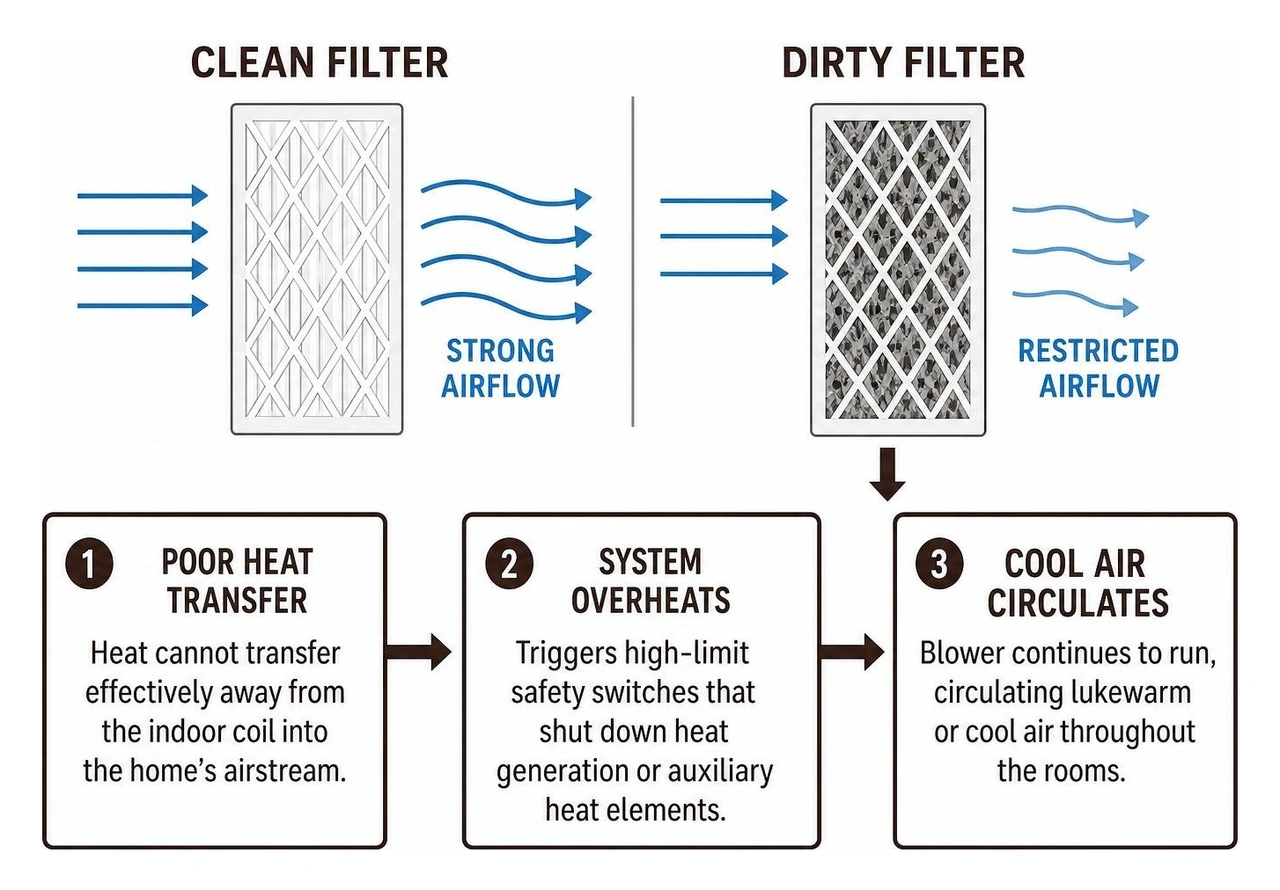
Restricted airflow creates a chain reaction:
- Heat cannot transfer effectively away from the indoor coil into the home's airstream.
- The system overheats internally, triggering high-limit safety switches that shut down the heat generation or auxiliary heat elements.
- The blower continues to run, circulating lukewarm or cool air throughout the rooms.
Maintaining proper filtration through regular checks or investing in whole house air filtration keeps airflow balanced, lowers energy consumption, and protects sensitive equipment.
DIY Troubleshooting Steps Before Calling a Professional
Before scheduling a service technician, run through these safe, straightforward troubleshooting checks:
Thermostat Settings: Why Is My Heat Pump Blowing Cold Air in Heating Mode?
- Check System Mode: Ensure the thermostat is set firmly to HEAT, not COOL or FAN ONLY.
- Examine the Fan Switch: Set the fan selector to AUTO. If it is set to ON, switch it to AUTO and wait 10 minutes to see if the draft disappears between heating cycles.
- Verify Temperature Setpoint: Ensure the target temperature is set at least 3°F to 5°F above the current room temperature to call for heating stages.
- Inspect Thermostat Batteries: Weak batteries in digital thermostats can cause erratic relay behavior, dropping communication with the outdoor condenser or failing to signal auxiliary heat.
- Check Emergency Heat Mode: Switch your thermostat to EMERGENCY HEAT (or AUX HEAT). If hot air begins flowing within a few minutes, your heat strips work, pointing to an issue with the outdoor heat pump unit, reversing valve, or refrigerant charge.
Inspecting the Outdoor Unit and Clearing Obstructions
Go outside and inspect the heat pump condenser:
- Clear Away Snow, Leaves, and Debris: Maintain a clean two-foot perimeter around all four sides of the outdoor cabinet, and ensure at least five feet of open clearance above the top fan discharge.
- Inspect for Solid Ice Buildup: A light glaze of frost before a defrost cycle is normal, but a thick block of ice encasing the coil indicates a defrost control failure or refrigerant leak. Never chip ice away with sharp metal tools or pour boiling water on the unit; turn the system off to prevent compressor damage.
- Check the Electrical Disconnect and Circuit Breakers: Look inside your main electrical panel to verify that the breakers dedicated to both the indoor air handler and outdoor heat pump have not tripped.
When to Call for Emergency Heat Pump Repair in Oregon City
While basic thermostat and filter checks are simple for homeowners, refrigerant handling, high-voltage electrical diagnostics, and mechanical valve replacements require licensed professionals.
We recommend calling for prompt repair services when you encounter:
- Continuous cold air output despite setting the thermostat correctly.
- Outdoor coils encased in heavy ice that will not clear on their own.
- Hissing, bubbling, or grinding noises coming from the outdoor cabinet or indoor plenum.
- Electrical burning smells near the indoor air handler.
- Frequent breaker trips whenever the heat pump turns on.
If your system is older—typical heat pumps have a lifespan of 10 to 15 years—and experiencing repeated component failures, our team can help you weigh the benefits of a repair against installing an upgraded, high-efficiency system. We provide thorough seasonal heat pump tune-ups in Oregon City as well as seamless heat pump replacement in Oregon City tailored to your home's layout.
Frequently Asked Questions About Heat Pumps Blowing Cold Air
At what outdoor temperature does a heat pump stop heating effectively?
Standard legacy heat pumps begin losing efficiency when outdoor temperatures drop below 40°F, and their heating capacity drops significantly between 25°F and 30°F. When temperatures fall below this thermal "balance point," your system relies on auxiliary electric heat strips or a dual-fuel backup furnace to maintain indoor comfort, as detailed in our guide on gas furnaces vs electric heat pumps balance points.
However, modern cold-climate inverter heat pumps operate efficiently down to -15°F, making them dependable choices for Pacific Northwest winters.
How long should a heat pump stay in defrost mode?
A normal defrost cycle should last between 5 and 10 minutes and will typically run every 30 to 90 minutes during freezing, damp conditions. The cycle terminates either when the outdoor coil temperature reaches a preset threshold (usually around 55°F to 65°F) or when an internal safety timer expires (typically 10 to 14 minutes maximum). If your heat pump stays in defrost mode indefinitely, a faulty defrost sensor, sticking control relay, or malfunctioning board is likely the cause.
How do I know if my reversing valve has failed?
You can test reversing valve operation with this straightforward diagnostic check:
- Turn your thermostat to COOL mode, lower the setpoint, and wait for the outdoor compressor to start.
- Walk outside to the condenser unit.
- Have someone switch the thermostat to HEAT mode.
- Listen closely near the outdoor unit. You should hear a distinct, momentary "whoosh" or metallic "click" as the solenoid energizes and shifts the slide valve.
If the valve makes no sound, if the lines do not change temperature, or if the unit continues blowing cold air inside while in heating mode, the reversing valve or its control solenoid has likely failed.
Conclusion: Fast, Reliable Heat Pump Services in Oregon City
A heat pump blowing cold air in heating mode does not have to leave your home shivering. Whether the cause is a simple thermostat setting, a dirty air filter, an extended defrost cycle, or an internal reversing valve failure, pinpointing the issue quickly restores warmth and protects your equipment from long-term wear.
At Best Owner Direct HVAC & Electrical, our family-owned team takes pride in providing prompt, dependable heating and cooling services to families throughout Oregon City, Beaverton, Hillsboro, Lake Oswego, Tigard, West Linn, and surrounding Willamette Valley communities. Whether you need a seasonal performance inspection, emergency diagnostics, or a modern system upgrade, our licensed technicians are ready to restore comfort and efficiency to your home.
Ready to restore cozy, reliable heat to your home? Explore our full range of heat pump services or contact our friendly team today to schedule your system diagnosis.


Tankless vs. Traditional Hot Water Heaters for Fall UpgradesChoosing a new water heater isn't a simple appliance swap. Before winter hits, find out how your home's existing electrical panel and gas lines dictate your best replacement option.
Read more
How to Prevent Rain Damage to Your Outdoor Mini Split Unit Fast by Using a CoverLearn how moisture and rain affect your outdoor mini split unit and protect it from damage with proper covers, drainage, and seasonal maintenance tips.
Read more
Sealing Leaky Ductwork Before the Winter Cold Sets InYour furnace is only as effective as the ducts delivering its warmth. If you're tired of drafty rooms, securing your system's thermal envelope is the first step to true winter comfort.
Read more