Menu


Why Is My AC Running But Not Cooling the House?
Why Is My AC Running but Not Lowering the Temperature Anymore? This is a question every homeowner dreads when the late August heat sets in. You can hear the compressor humming outside, the blower motor is pushing air through your vents, and the thermostat says the system is running. Yet, the indoor temperature stubbornly remains the same—or worse, continues to climb. When your cooling system operates continuously without actually removing heat from your home, it indicates a fundamental breakdown in the heat transfer process, even if the mechanical components are still turning on.
For comprehensive guidance on HVAC systems, or if you need immediate air conditioning repair services, our team is ready to help.
In our years serving the community, we often hear Cornelius, OR homeowners assume that a system running without cooling means the entire unit is permanently broken. At Best Owner Direct HVAC & Electrical, our team frequently finds that the reality is much less catastrophic. An air conditioner is designed to move heat from inside your house to the outside. When it runs constantly but blows tepid air, it usually means something is blocking that airflow or inhibiting the chemical reaction that absorbs heat. While some of these underlying issues require a licensed professional to diagnose and repair, several common culprits are simple airflow restrictions that you can check yourself before making a service call.
The Late-Summer Tipping Point for Cooling Systems
By the time late August arrives in the Pacific Northwest, your cooling equipment has already endured months of continuous operation. During the peak of summer in Cornelius, systems are pushed to their absolute limits, cycling on and off dozens of times a day to combat the afternoon sun. This heavy, sustained workload creates a cumulative effect on your equipment, leading to what we call the end-of-season cooling tipping point.
Sudden cooling failures are rarely overnight events. Instead, they are the result of progressive stress. A thin layer of dust on an internal component in June might not affect performance noticeably. However, by late August, that same layer has thickened, acting as a heavy blanket that traps heat and forces the compressor to work twice as hard. When an impending heat wave hits, the system finally crosses the threshold from slightly inefficient to completely unable to cool the space.
A pattern we see often at Best Owner Direct HVAC & Electrical happened just recently: a local Cornelius homeowner reached out to our team on short notice ahead of an impending back-to-school heat wave when their system started struggling to keep up. Because they caught the warning signs early—noticing the system running longer than usual without dropping the temperature—our technicians were able to fit the repair into the schedule quickly. The AC was fully restored and fixed right before the heat wave peaked, preventing a total system breakdown during the hottest days of the year. Addressing these end-of-season cooling performance drops immediately is critical to protecting the lifespan of your equipment.
Dirty Evaporator Coil Symptoms vs. Low Refrigerant
When an air conditioner runs non-stop but fails to cool the house, the two most common advanced culprits are a dirty evaporator coil and a refrigerant leak. Because both issues cause the system to blow warm air and run continuously, they are frequently confused by homeowners and sometimes misdiagnosed by inexperienced technicians. In our experience repairing HVAC systems across Washington County, understanding the difference is vital for getting the right repair the first time.
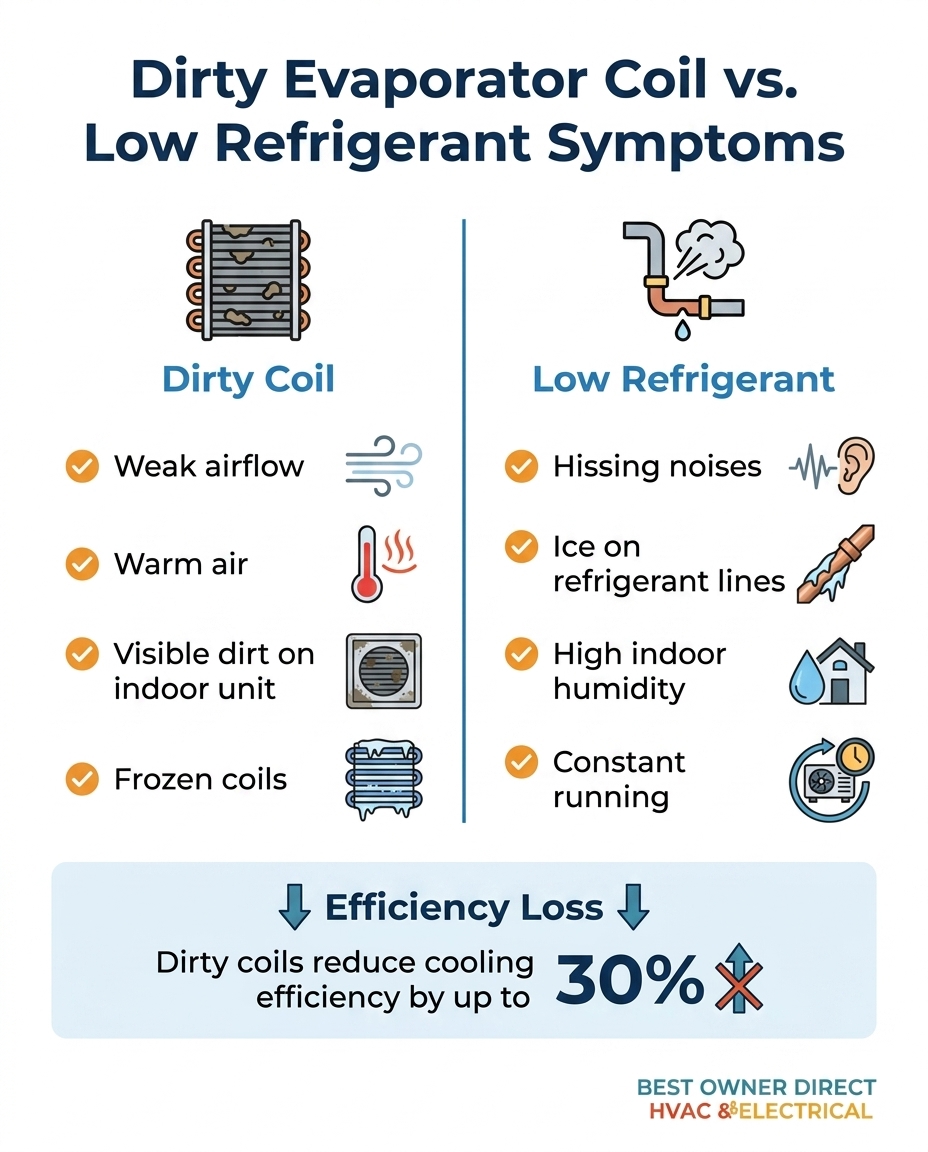
The evaporator coil is the indoor component responsible for extracting heat and humidity from your home's air. When it becomes caked in dust, pet hair, and debris, it can no longer do its job. On the other hand, refrigerant is the chemical compound that flows through the coil to absorb that heat. If there is a leak, the system lacks the necessary fluid to transport heat outside. If you are trying to figure out which issue you are facing, decoding dirty evaporator coil symptoms involves looking for physical dirt and airflow restrictions, whereas low refrigerant often presents with distinct auditory and moisture-related clues.
• Airflow Strength — Dirty Evaporator Coil: Noticeably weak airflow from vents due to physical blockage. — Low Refrigerant (Leak): Normal airflow strength, but the air feels warm or room temperature.
• System Noises — Dirty Evaporator Coil: Normal operational sounds, though the blower may sound strained. — Low Refrigerant (Leak): Hissing or bubbling noises near the indoor unit or refrigerant lines.
• Indoor Humidity — Dirty Evaporator Coil: Slightly elevated, but primarily feels stuffy. — Low Refrigerant (Leak): Noticeably high indoor humidity; the air feels sticky and uncomfortable.
• Visual Signs — Dirty Evaporator Coil: Visible dirt, grime, or a thick mat of dust on the indoor fins. — Low Refrigerant (Leak): Ice buildup directly on the copper refrigerant lines outside or inside.
How Dirt Sabotages Heat Transfer
To understand why a dirty coil is so destructive, you have to look at how air conditioning actually works. Your AC does not "create" cold air; it removes heat from the existing indoor air. The copper fins of the evaporator coil get incredibly cold, and as warm indoor air blows across them, the heat is absorbed into the refrigerant inside.
When a layer of dirt coats those fins, it acts as a powerful insulator. The warm air can no longer make contact with the cold metal. According to data from the U.S. Department of Energy, a dirty evaporator coil can reduce a system's cooling efficiency by up to 30 percent. This means your system runs 30 percent longer, consumes 30 percent more electricity, and still fails to lower the temperature by late August when the heat load is at its highest.
Diagnostic Steps to Take Before Calling a Professional
Before you assume the worst, there are several safe, basic checks you can perform. Often, a system that runs without cooling is simply starved for air. One local customer with a very old HVAC system assumed their unit had finally died and was beyond repair. However, once our lead technician at Best Owner Direct identified the issue, it turned out to be a combination of a minor part failure and a severely clogged filter and condenser. After replacing the part and thoroughly cleaning the filter and outdoor unit, the system started blowing cold air better than it had in years.
You can save time and frustration by checking these common airflow culprits yourself:
1. Verify your thermostat settings: Ensure the system is actually set to "Cool" and the fan is switched to "Auto" rather than "On." If the fan is set to "On," it will blow air constantly, even when the compressor isn't running, which feels like warm air coming from the vents.
2. Check for a clogged air filter: This is the single most common cause of restricted airflow. Turn off the system, remove the filter, and hold it up to a light. If you cannot see light passing through the material, it is entirely blocked and needs immediate replacement.
3. Inspect the outdoor condenser unit: Walk outside and look at the large metal cabinet. Ensure there are no leaves, tall grass, or debris blocking the metal fins. The system needs at least two feet of clear space around it to exhaust heat properly.
4. Look for signs of a dirty or frozen indoor evaporator coil: If you can safely access the indoor air handler, check the copper lines leading into it. If you see ice buildup or heavy frost, turn the system off immediately to let it thaw.
5. Contact a licensed professional: If you have changed the filter, cleared the outdoor unit, and verified the thermostat, but the system still won't cool, the issue requires professional diagnostic tools.
The Reality of Refrigerant Leaks
If your basic airflow checks don't resolve the issue, you may be dealing with a refrigerant problem. There is a persistent myth in the HVAC world that air conditioners naturally "use up" or "burn off" their refrigerant over time, similar to how a car uses gas or oil. This is completely false.
Your cooling system operates on a closed-loop circuit. The refrigerant travels back and forth between the indoor evaporator coil and the outdoor condenser coil, changing from a liquid to a gas and back again. Because it is a sealed system, the amount of refrigerant inside should remain exactly the same from the day the unit is installed to the day it is retired.
If a technician tells you that your system is low on refrigerant, it means only one thing: there is a physical hole, crack, or leak in the copper lines or coils. Simply adding more "freon" to top off the system is a temporary band-aid, not a repair. The new refrigerant will eventually leak out through the same hole, leaving you right back where you started by the end of the late August heat. Furthermore, handling, recovering, and charging refrigerant requires specialized gauges and EPA certification by law. It is never a DIY project, and locating the exact source of the leak is a critical step in properly restoring your end-of-season cooling power.
Honest Diagnostics: Avoiding the Quick Upsell
Because the symptoms of a dirty evaporator coil and a refrigerant leak are so similar, it creates an unfortunate opportunity for dishonest practices in the industry. A technician in a rush might feel the warm air, glance at the system, and immediately recommend an expensive refrigerant leak search or a complete system replacement, completely ignoring the fact that a thick mat of pet hair is choking the evaporator coil.
This is where working with an Owner Direct company makes a significant difference. In our years of providing air conditioning repair services across Cornelius, we've built our reputation by prioritizing honest, transparent diagnostics over quick upsells. A thorough diagnostic visit from our technicians will always include a visual inspection of the indoor coil, a check of the static air pressure, and a comprehensive reading of the system's subcooling and superheat levels. These measurements tell the true story of what is happening inside the closed loop.
As a Cornelius, OR homeowner, you should always feel empowered to ask questions. If a technician claims you have a leak, ask them to explain how they came to that conclusion. Ask if they have checked the condition of the evaporator coil first. If you want a second opinion or need a team that values long-term solutions over quick fixes, you can schedule a diagnostic visit with us to get the honest answers you deserve.
Frequently Asked Questions About AC Cooling Failures
Why is my AC running but not cooling the house?
The short answer is that your system is likely suffering from restricted airflow or a heat transfer failure. When the AC runs constantly but blows warm air, it usually means a clogged air filter, a dirty evaporator coil, or a refrigerant leak is preventing the system from absorbing indoor heat. Start by checking your air filter and thermostat settings before calling for a repair.
What are the symptoms of a dirty evaporator coil?
A dirty coil typically presents as weak airflow, warm air from the vents, and a system that runs non-stop. You may also notice a musty smell when the system turns on, or see visible dust and grime buildup if you open the indoor air handler cabinet. In severe cases, the dirt acts as an insulator and causes the condensation on the coil to freeze into a solid block of ice.
Can a dirty AC filter stop it from cooling?
Yes, a severely clogged air filter is the most common reason an AC stops cooling. The filter's job is to protect the internal components from dust. When it becomes completely blocked, the blower motor cannot pull enough warm indoor air across the cold coils, causing the system to run continuously without actually lowering the room's temperature.
How do you fix an air conditioner that is running but not cooling?
Start by replacing your air filter, checking your thermostat, and clearing debris away from the outdoor unit. If these basic DIY steps do not restore cold air, you must turn the system off to prevent compressor damage and call a licensed HVAC technician. They will need to check for mechanical failures, deep-clean the internal coils, or locate and repair a refrigerant leak.
How do I know if my AC needs freon or just a cleaning?
Only a licensed technician with specialized pressure gauges can definitively tell the difference. However, if you hear hissing sounds near the unit, see ice forming on the outdoor copper lines, and notice unusually high indoor humidity, it strongly points toward a refrigerant leak. If the airflow is just incredibly weak and the filter is filthy, a deep cleaning is more likely the solution.
Why does my AC stop blowing cold air in the late afternoon?
This usually happens because the system has reached its maximum cooling capacity during the hottest part of the day. By late afternoon, the sun is beating down on your home, and an undersized system, or one struggling with a dirty coil, simply cannot keep up with the peak heat load. It runs constantly but loses ground against the rising outdoor temperatures.
Restore Your Cooling Power Before the Next Heatwave
Dealing with an air conditioner that runs constantly without actually cooling your home is incredibly frustrating, especially as the late-summer heat peaks in Cornelius, OR. While a clogged air filter or a blocked outdoor unit is an easy fix you can handle yourself, persistent warm air usually points to a stubborn dirty evaporator coil or a hidden refrigerant leak. These advanced issues require expert care to resolve safely.
Don't let a struggling system drive up your energy bills while leaving you uncomfortable. Taking action now prevents minor inefficiencies from turning into complete compressor failures. Whether you need a deep coil cleaning, a leak repair, or routine AC maintenance, our team at Best Owner Direct HVAC & Electrical is here to restore your comfort with honest, transparent service. Reach out today so you can enjoy a cool, comfortable home no matter how hot it gets outside.


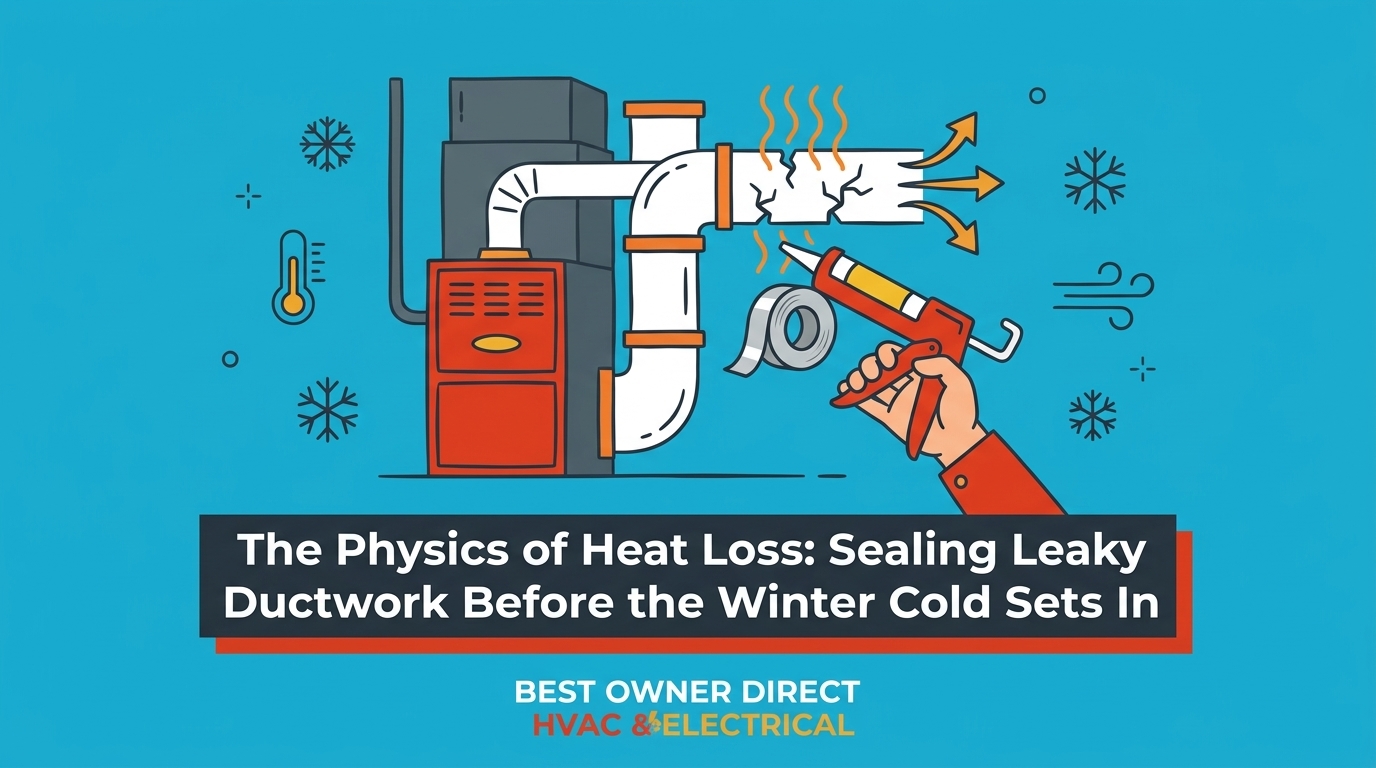
Sealing Leaky Ductwork Before the Winter Cold Sets InYour furnace is only as effective as the ducts delivering its warmth. If you're tired of drafty rooms, securing your system's thermal envelope is the first step to true winter comfort.
Read more
All About How a Mini Split Adds Value to Your HomeLearn how a mini split adds value to your home with energy savings, zoned comfort, and increased property valuation.
Read more
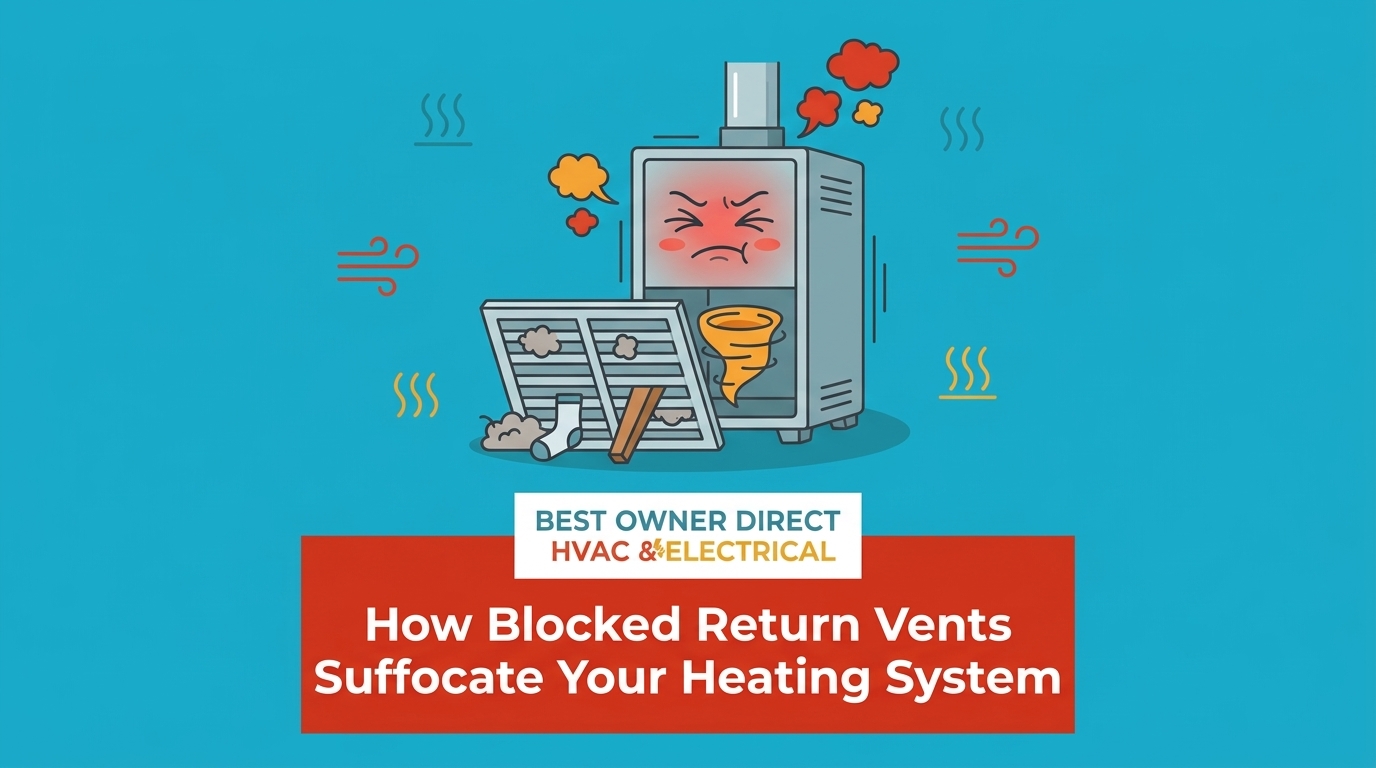
How Blocked Return Vents Suffocate Your Heating SystemMany homeowners accidentally cover large return grilles when rearranging furniture for the fall. Find out how this simple mistake starves your furnace of airflow and causes it to overheat.
Read more