Menu


Why How a Mini Split Adds Value to Your Home Matters More Than Ever
Understanding how a mini split adds value to your home is one of the smartest moves you can make as a homeowner — especially if you're thinking about resale, energy savings, or simply making your property more competitive in today's market.
Here's a quick snapshot of the value a mini split can add:
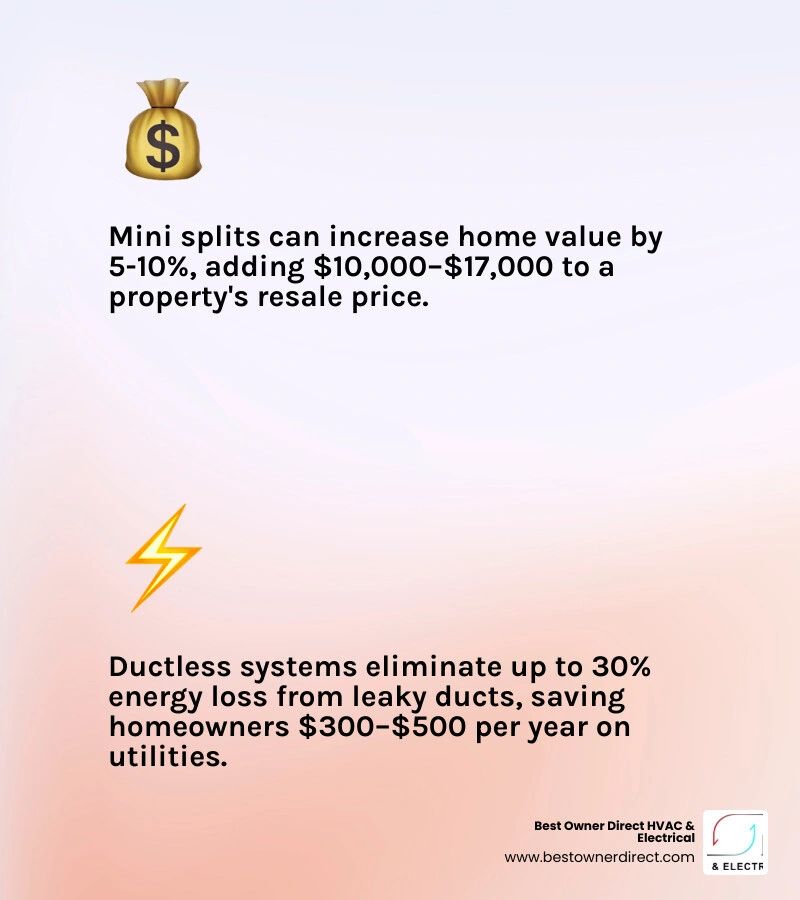
- Property value increase: Mini splits can boost home value by 5-10%
- Dollar value added: Energy-efficient HVAC upgrades like mini splits can add $10,000–$17,000 to a home's value
- ROI at resale: Homeowners typically recoup 60-80% of installation costs within the first 5 years
- Annual energy savings: Most households save $300–$500 per year on utility bills
- Buyer negotiation advantage: A documented HVAC upgrade history helps sellers negotiate roughly $3,800 more on average
- Appraisal protection: A failing or outdated HVAC system can trigger a $4,000–$12,000 downward appraiser adjustment — a mini split helps you avoid that
Mini splits — also called ductless systems — deliver both heating and cooling without the ductwork that traditional central HVAC requires. That means no energy lost through leaky ducts (which can account for more than 30% of energy waste in a standard system), and no invasive renovation needed to install one.
For homeowners in the Portland metro area and surrounding Oregon communities, this is especially relevant. Whether you have an older home without existing ductwork, a finished garage, a home addition, or just a room that never quite reaches the right temperature, a mini split can solve the problem while adding real, measurable value to your property.
In this guide, we'll walk you through exactly how that value is created — from energy savings and buyer appeal to appraisals and ROI — so you can make a confident, informed decision.
How a Mini Split Adds Value to Your Home

When real estate experts and appraisers assess a property, they look closely at its mechanics. Outdated heating systems or a complete lack of air conditioning are major red flags that can drag down a home's market value. Installing a ductless mini split is a modern, high-tech upgrade that directly addresses these issues, boosting your home equity and appealing to a wide range of buyers.
But how does this system actually translate into dollars and cents? Let’s break down the primary mechanisms behind how a mini split adds value to your home.
Energy Efficiency and Lower Utility Bills
In today's real estate market, homes with high energy costs are harder to sell. Buyers are increasingly savvy about monthly operating costs, and they actively look for properties that won’t break the bank when the utility bills arrive.
Unlike traditional central systems that cycle completely on and off—consuming massive amounts of energy in the process—mini splits utilize advanced inverter technology. This allows the system's variable-speed compressor to run continuously at lower, highly adjusted speeds. It scales up or down to meet the precise heating or cooling demands of the room.
Furthermore, traditional ducted heating and cooling systems lose an estimated 20% to 30% of their conditioned air through leaks, poor insulation, or gaps in the ductwork itself. Because ductless systems deliver air directly into your living spaces, they completely eliminate these duct-associated energy losses. To understand exactly how these components work together, you can read our guide on Ductless Mini Split Systems Explained.
When appraisers see a home equipped with high-efficiency heating and cooling, they note it as a major asset. Buyers love seeing low utility bills, making your home significantly more competitive when it’s time to list.
Zoned Climate Control for Personalized Comfort
Have you ever fought over the thermostat with someone in your household? Or maybe you have an upstairs bedroom that bakes in July while the downstairs family room feels like an icebox. Traditional HVAC systems struggle with these temperature imbalances because they rely on a single thermostat to regulate the entire house.
Ductless mini splits solve this by offering zoned comfort. A multi-zone outdoor unit can power several indoor air handlers, each controlled by its own thermostat. This means you can keep your home office cool during the workday, heat only the living room in the evening, and turn down the climate control entirely in unoccupied guest rooms.
This level of precision not only keeps everyone in the family happy but also slashes energy waste. To dive deeper into the mechanics of zoning, check out our article on How Ductless Systems Save Energy with Zone Control.
Real Estate Market Insights on How a Mini Split Adds Value to Your Home
From a real estate perspective, ductless systems are viewed as premium features. In the Pacific Northwest, where summer temperatures have become increasingly warm over the years, having reliable, high-efficiency air conditioning is no longer just a luxury—it’s a necessity.
Adding a mini split is one of the most effective ways to modernize a home's mechanical systems without undergoing invasive construction. Because of this, installing a mini split can increase a home's overall property value by an estimated 5% to 10%. If you are located in the metro area, you can learn more about local options by visiting our page on Mini Split AC Portland OR.
Strategic Installations That Maximize Property Valuation
While a whole-home mini split system is a fantastic investment, there are specific strategic scenarios where adding a ductless unit delivers an incredibly high return on investment. These are areas where extending traditional ductwork is either physically impossible or prohibitively expensive.
Architectural Scenarios: How a Mini Split Adds Value to Your Home
Home additions, accessory dwelling units (ADUs), finished basements, and bonus rooms over garages are prime candidates for ductless systems.
In 90% of cases, extending existing ductwork to cover a new home addition costs more than installing a single-zone mini split. Pushing your existing furnace or central air conditioner to heat and cool extra square footage can also overload the system, leading to premature equipment failure and uneven temperatures.
By installing a mini split in these spaces, you instantly convert unconditioned, underutilized areas into comfortable, fully livable square footage. This directly increases your home's usable footprint in the eyes of appraisers. If you are in Beaverton or the surrounding areas, we can help you design the perfect setup—explore our services at Mini Split Installation Beaverton OR.
Preserving the Character of Older Homes
The Portland metro area is famous for its beautiful, historic homes. From craftsman bungalows to mid-century modern classics, these properties offer unmatched charm and craftsmanship. However, they also present a massive challenge: they rarely have existing ductwork, and their plaster walls make installing central ducts a nightmare.
Tearing open historic plaster walls to install bulky ductwork destroys the architectural integrity of the home and costs a fortune. Baseboard heaters and window AC units are noisy, inefficient, and visually unappealing.
A ductless mini split is the perfect solution for preserving the character of these older properties. The installation requires only a small, non-invasive hole (about three inches in diameter) to connect the indoor unit to the outdoor compressor via a refrigerant line. This allows you to bring modern, whisper-quiet comfort to an older home without sacrificing its historic soul. For more on this, read our comprehensive guide on Ductless Heating and Cooling for Pacific Northwest Homes.
Key Factors Influencing Your HVAC Return on Investment
Not all HVAC upgrades are created equal. To ensure you get the absolute maximum return on your investment, it helps to understand how different systems stack up.
The table below outlines how ductless mini splits compare to traditional central HVAC systems across several key property value factors:
| Value Factor | Ductless Mini Split Systems | Traditional Central HVAC Systems |
|---|---|---|
| Duct Energy Losses | 0% (Delivered directly to the room) | 20% to 30% loss through leaky ducts |
| Zoning Capabilities | Built-in (Independent room control) | Requires complex, expensive damper systems |
| Aesthetics & Space | Small wall/ceiling units; saves floor space | Requires bulky ductwork and closet space |
| Installation Disruption | Minimal (Completed in 1-2 days) | High (Tearing open walls and ceilings) |
| Average Lifespan | 15 to 20 years | 10 to 15 years (for heat pumps) |
Professional Installation vs. DIY Pitfalls
It can be tempting to buy a cheap DIY mini split kit online to save a few bucks upfront. However, from a home valuation perspective, this is a major mistake.
Appraisers and home inspectors can easily spot sloppy, unpermitted DIY work. If a system looks poorly integrated, has messy conduit lines, or wasn't installed to local building codes, it won't receive the same respect during an appraisal. In fact, it could even be flagged as a liability.
Professional installation ensures that:
- The system is sized correctly using precise load calculations (oversized units cycle constantly and run inefficiently; undersized units run non-stop and burn out early).
- The manufacturer’s warranty remains fully intact (most manufacturers void the warranty if the system is not installed by a licensed professional).
- Refrigerant lines are safely charged, vacuumed, and sealed.
If you need professional support in Tigard or nearby communities, our team is here to help. Learn more about our replacement and installation services at Mini Split Replacement Tigard OR.
System Efficiency Ratings and Local Climate Relevance
In the Pacific Northwest, we experience a wide range of weather—from damp, chilly winters to hot, dry summers. To maximize how a mini split adds value to your home, you should select a system optimized for our specific climate.
Look for systems with high SEER2 (Seasonal Energy Efficiency Ratio) and HSPF2 (Heating Seasonal Performance Factor) ratings. Modern high-efficiency systems are built to perform beautifully in cold weather, with some cold-climate heat pumps maintaining their heating capacity even when outdoor temperatures drop below freezing.
To keep your system running at peak efficiency and protect its 15-to-20-year lifespan, regular maintenance is essential. If you are in the Forest Grove area, you can easily schedule professional maintenance through our Mini Split Service Forest Grove OR page.
Frequently Asked Questions About Ductless Systems and Home Value
Do mini splits increase home resale value?
Yes, they absolutely do. Energy-efficient HVAC upgrades like ductless mini splits typically return 60% to 80% of their project cost at resale within the first five years. Beyond the immediate financial return, they make your home much more attractive to buyers, which can lead to a faster sale and give you stronger negotiation leverage during the inspection process.
How do mini splits affect home appraisals?
Appraisers assess both the function and modernization of a home's mechanical systems. Replacing outdated baseboard heaters, oil furnaces, or clunky window AC units with a sleek, modern mini split signals to the appraiser that the home has been meticulously updated. Additionally, providing documented proof of your HVAC installation and maintenance history to the appraiser helps protect your home's valuation and prevents downward adjustments.
Are mini splits worth the investment compared to central AC?
In almost all scenarios involving older homes, additions, or homes without existing ductwork, mini splits are the superior investment. They eliminate the 20-30% energy loss associated with traditional ducts, offer personalized room-by-room zoning, and operate at whisper-quiet sound levels (often under 20 decibels, which is quieter than rustling leaves). To compare these options in detail, read our guide on Central AC vs Ductless Mini Split Comparison.
Conclusion
At the end of the day, understanding how a mini split adds value to your home comes down to balancing immediate comfort with long-term home equity. By investing in a ductless system, you aren't just buying a piece of heating and cooling equipment—you are investing in lower utility bills, personalized comfort, and a highly competitive, modern property that buyers will love.
At Best Owner Direct HVAC & Electrical, we are proud to offer reliable, high-quality ductless solutions to homeowners throughout Cornelius, Hillsboro, Beaverton, Tigard, Milwaukie, and the surrounding areas. Our family-owned business is dedicated to exceptional workmanship, transparent service, and helping you achieve the ultimate home comfort.
Ready to take the next step and boost your home's value? Explore our services and schedule a consultation today by visiting Best Owner Direct HVAC & Electrical. Let us help you make your home more comfortable, efficient, and valuable for years to come!


How Blocked Return Vents Suffocate Your Heating SystemMany homeowners accidentally cover large return grilles when rearranging furniture for the fall. Find out how this simple mistake starves your furnace of airflow and causes it to overheat.
Read more
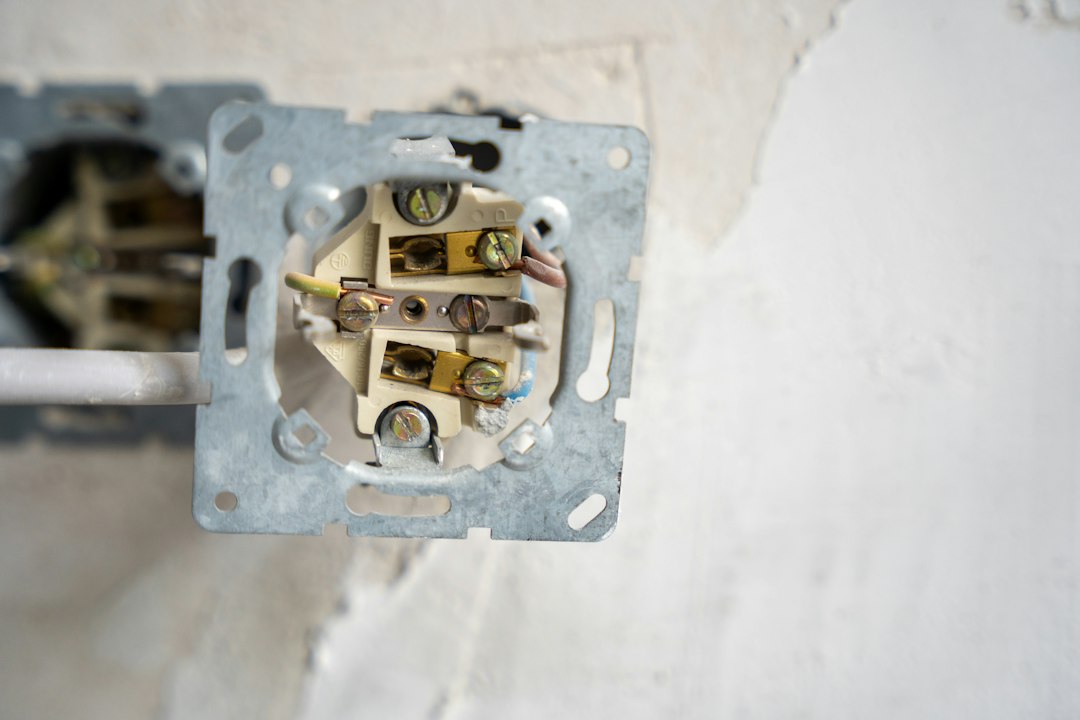
How to Diagnose Electrical AC Problems in 3 Easy-to-Follow StepsLearn how electrical connection problems cause AC breakdowns with 3 easy steps. Diagnose warning signs, prevent failures, and protect your system.
Read more

Why Does the Furnace Smell Like Burning Dust on the First Start?That sharp odor on the first chilly September night is alarming, but it rarely means your house is in danger. Learn how to tell harmless burning dust from a serious hazard.
Read more