Menu


Why an AC Tune Up Guide for Oregon Homeowners Is the Smartest Thing You Can Read This Spring
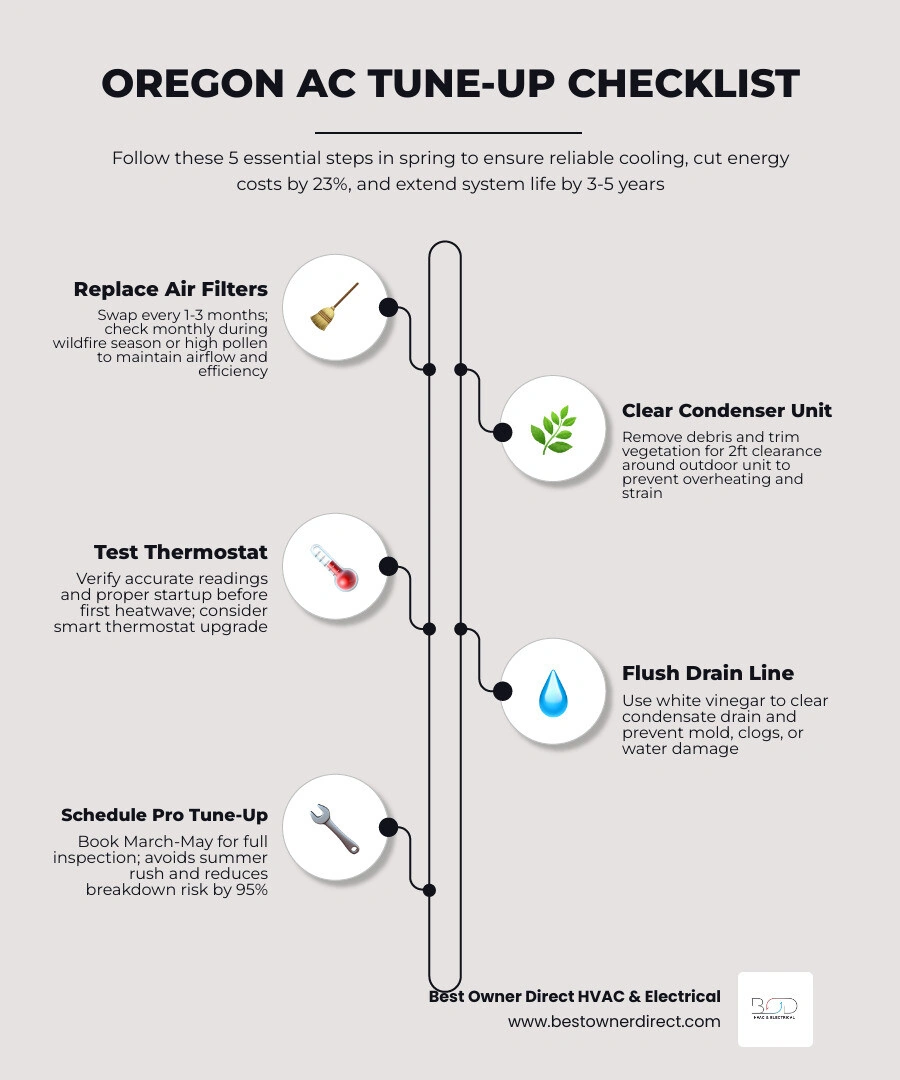
This ac tune up guide for oregon homeowners covers everything you need to keep your cooling system running reliably all summer long. Here's a quick overview of what good AC maintenance looks like in Oregon:
- Replace air filters every 1 to 3 months (more often during wildfire season or high pollen periods)
- Clear the outdoor condenser unit — remove debris and trim vegetation to at least 2 feet of clearance
- Test your thermostat before the first heat wave to confirm accurate readings and proper system startup
- Flush the condensate drain line with white vinegar to prevent mold and blockages
- Schedule a professional tune-up between March and May, before technicians are fully booked
- Keep vents and registers open and unobstructed throughout your home
- Know the warning signs — unusual noises, warm air, or frequent cycling mean call a pro now
Oregon summers can be deceptive. The Willamette Valley and Portland metro area often stay mild for months, then hit with sudden, intense heat waves that push AC systems to their limits. After sitting dormant through a long, damp Pacific Northwest winter, your cooling system may be dealing with clogged coils, weakened electrical components, dirty filters, and debris-packed condenser fins — all before you've even turned it on for the season.
The 2021 Portland heat dome, which pushed temperatures to a record 116°F, caught thousands of unprepared homeowners off guard. Systems that hadn't been serviced failed when they were needed most. That's not just uncomfortable — it's a real health and safety risk.
The good news is that most summer breakdowns are preventable. Proactive spring maintenance can cut cooling costs by up to 23%, reduce the risk of a mid-summer breakdown by up to 95%, and extend your system's lifespan by 3 to 5 years.
Why Every Resident Needs an AC Tune Up Guide for Oregon Homeowners
In the Pacific Northwest, we are famous for our "wait and see" approach to weather. However, when it comes to your home comfort, waiting until the first 90-degree day in July to test your air conditioner is a recipe for frustration. Our local climate presents a unique set of challenges. We experience long, damp winters where moisture can lead to "pitting" on electrical contactors and moss growth on outdoor units. When that dormancy is followed by a sudden heat wave, the mechanical strain is immense.
Following a comprehensive ac tune up guide for oregon homeowners ensures that your system doesn't just "turn on," but operates at peak efficiency. Neglecting this can lead to "slugging" in the compressor or frozen evaporator coils, both of which are expensive to fix. By reviewing 5 Reasons You Need an AC Tune-Up Every Year, you’ll see that maintenance isn't just a luxury—it’s a necessity for anyone living in the Portland metro area.
Protecting Your Investment and Warranty
Your air conditioner is one of the most expensive appliances in your home. Most manufacturers actually require proof of annual professional maintenance to keep your warranty valid. If a major component like the compressor fails and you cannot produce service records, you might be stuck paying the full bill yourself.
Regular service doesn't just satisfy the fine print; it physically extends the life of the machine. A well-maintained unit can last 15 to 20 years, whereas a neglected one might give out after just 10. Understanding the top reasons AC repair saves you money helps you see that a small investment in May prevents a massive replacement bill in August.
Addressing Oregon’s Unique Environmental Demands
Oregon homeowners deal with environmental factors that many other states don't. In the Willamette Valley, we face heavy loads of juniper and grass pollen that can mat across condenser fins like a blanket. Furthermore, wildfire smoke has become a recurring summer concern. Fine particulate matter from smoke can clog even high-quality filters in a matter of days, forcing your system to work significantly harder to pull in air.
In areas like Beaverton, the damp spring air also encourages moss and algae growth inside the outdoor unit. These biological blockages restrict airflow and trap heat, leading to higher energy bills and premature wear and tear.
Essential DIY Tasks for Spring Maintenance
While technical tasks should be left to the pros, there is plenty you can do to get a head start. The most impactful task is managing your air filters. A dirty filter is the leading cause of HVAC inefficiency, potentially increasing energy consumption by 5% to 15%. We recommend checking your filter every 30 days and replacing it at least every three months—or monthly if you have pets or suffer from allergies.
Maximizing Efficiency with Your AC Tune Up Guide for Oregon Homeowners
Efficiency starts at the thermostat. Replace the batteries in your thermostat every spring to prevent a mid-summer "blackout." If you haven't upgraded yet, consider a smart thermostat; they can save homeowners up to $100 a year by adjusting temperatures based on your schedule.
You should also walk through your home and ensure that no furniture, rugs, or curtains are blocking your vents. If your system is trying to push air through a blocked register, it builds up static pressure that can damage the blower motor. For more details on maintenance schedules, check out our guide on how often to replace your air filter and why replacing your air filter is the simplest way to save money in Hillsboro.
Preparing the Outdoor Condenser Unit
Before you do any work on the outdoor unit, ensure the power is off at the breaker. Use a garden hose (never a pressure washer, as it can crush the delicate aluminum fins) to gently rinse away the dust and pollen that accumulated over the winter.
Clear a two-foot "no-fly zone" around the unit. This means trimming back shrubs, raking away dead leaves, and removing any fir needles that have fallen into the top of the fan. Proper airflow around the condenser is critical; without it, the unit can't release the heat it's pulling from your home, causing it to overheat and shut down. This is a common issue we see in Sherwood homes with lush landscaping.
What a Professional AC Tune-Up Includes
While DIY tasks are great, a professional tune-up goes much deeper. When our technicians visit your home in Tigard, we perform a comprehensive 20+ point inspection that covers the mechanical, electrical, and chemical aspects of your system.
Technical Calibration and Safety Checks
We don't just look at the machine; we measure its "vitals." This includes testing the capacitor—the component that gives your AC the "kick" it needs to start. Capacitors weaken over time, and a failing one is the #1 cause of emergency "no-cool" calls. We also:
- Tighten electrical connections: Loose wires are a fire hazard and cause system inefficiency.
- Lubricate moving parts: This reduces friction and prevents motor burnouts.
- Flush the condensate drain: We clear out the "sludge" that builds up in the drain line to prevent water damage to your ceilings and floors.
- Check refrigerant levels: If your refrigerant is low, your system has a leak. Low levels can increase energy bills by 20% and eventually destroy the compressor.
These technical steps are why homeowners in Cornelius trust us to handle the heavy lifting.
Long-Term Benefits of an AC Tune Up Guide for Oregon Homeowners
The math on maintenance is simple. A spring tune-up can cut your cooling costs by nearly a quarter. When you consider that nearly half of your utility bill goes toward HVAC, those savings add up fast. Furthermore, you're buying peace of mind. Knowing that your system has a 95% lower chance of breaking down during a July heat wave is priceless.
| Feature | DIY Maintenance | Professional Tune-Up |
|---|---|---|
| Filter Replacement | Yes | Yes |
| Debris Clearing | Yes | Yes |
| Refrigerant Level Check | No (Requires EPA Cert) | Yes |
| Electrical Testing | No (Safety Risk) | Yes |
| Coil Deep Cleaning | Limited | Yes |
| Warranty Validation | No | Yes |
By keeping your system well-maintained and efficient, you are actively fighting against the rising costs of energy.
When to Schedule Your Oregon AC Service
Timing is everything. In Oregon, the "sweet spot" for scheduling is between March and May. During these months, the weather is mild enough that you don't need the AC yet, and our schedules are more flexible. Once the first 80-degree day hits, our phones start ringing off the hook with emergency repairs, and wait times for a simple tune-up can stretch into weeks.
If you have a heat pump—which is very common in the Wilsonville area—remember that these systems work year-round. Because they handle both heating and cooling, they actually need a check-up twice a year: once in the spring for the cooling side and once in the fall for the heating side.
Recognizing Signs Your System Needs Immediate Attention
Sometimes, a tune-up isn't enough, and you need a repair. Watch out for these "red flags":
- Unusual Noises: Grinding, squealing, or banging sounds often indicate a failing belt or motor bearing.
- Warm Air: If the air coming from the vents isn't icy cold, you likely have a refrigerant leak or a failed compressor component.
- Frequent Cycling: If the AC turns on and off every few minutes, it’s "short-cycling," which wastes massive amounts of energy.
- Frozen Coils: If you see ice on the copper lines or the indoor unit, turn the system off immediately and call us.
If you notice these in Forest Grove, don't wait for it to get worse. Small problems turn into big, expensive failures very quickly under the summer sun.
Improving Indoor Air Quality During Maintenance
Your AC system is essentially the "lungs" of your home. During a tune-up, we ensure that those lungs are clean. This is vital for managing indoor humidity and filtering out allergens like pollen and dust. We can also help you choose the right AC filter for your specific needs—whether you need high-MERV filtration for asthma or a standard pleated filter for general efficiency.
Maintaining your ductwork is also a huge part of the equation. Leaky ducts can waste up to 20% of your cooled air before it even reaches your living room. For our neighbors in Gladstone, ensuring your air is both cool and clean is our top priority.
Frequently Asked Questions About Oregon AC Maintenance
When is the best time to schedule an AC tune-up in Oregon?
Early spring, specifically between March and May, is ideal to ensure your system is ready before the first heatwave and to avoid peak-season scheduling delays. Booking in February or March is even better if you want to be the first on the list.
How often should I replace my air filters?
In Oregon, filters should be checked every 30 days and replaced every 1 to 3 months. If you live in a high-pollen area or during an active wildfire season, you may need to change them every 2 to 4 weeks to protect your system from clogging.
Can I perform my own refrigerant checks?
No, refrigerant handling is federally regulated and requires EPA certification. It is illegal and dangerous for an unlicensed person to handle refrigerant. This task must be performed by a licensed professional to ensure safety, proper system pressure, and environmental compliance.
Conclusion
At Best Owner Direct HVAC & Electrical, we are proud to be your local, Cornelius-based experts. We understand the specific needs of Oregon homes because we live here, too. From the vintage bungalows of Portland to the modern builds in Hillsboro and Beaverton, we provide the reliable, energy-efficient solutions you need to stay comfortable.
Don't wait for the next heat wave to find out your AC isn't up to the task. Take control of your home comfort today. Schedule your professional AC Tune-Up in Milwaukie OR today and enjoy a worry-free summer!



How Cornelius Homes Handle Peak Summer AC Loads on Older Electrical PanelsModern AC units often overwhelm aging 1970s electrical panels during intense summer heat. Review the warning signs and specific upgrades needed to keep your home safely cooled.
Read more

The Electrical Toll of a Struggling HVAC System on Your Home's BreakersAn aging air conditioner does not just lose cooling power; it actively stresses your electrical panel. A tripping breaker during late summer heat is a warning sign requiring professional diagnosis.
Read more

End-of-Summer Electrical Inspections: Checking Outdoor Disconnect BoxesAfter months of intense Pacific Northwest sun, your outdoor AC disconnect box can become brittle and unsafe. Learn the visual warning signs of UV degradation.
Read more