Menu


In western Oregon's mild, damp climate, a heat pump is the stronger fit for most homes: our winters sit squarely in the temperature range where heat pumps excel, and one system covers both heating and summer cooling. A gas furnace still wins in specific situations — existing gas infrastructure, a preference for hotter supply air, or as the backup half of a dual-fuel setup. Here's the honest breakdown.
Why does our climate favor heat pumps?
Heat pump efficiency depends on outdoor temperature — the milder the winter, the better they perform. Tualatin Valley winters spend most of their hours between 30°F and 50°F, which is comfortable territory for any modern heat pump, and cold-climate models hold useful capacity well below that for the occasional ice storm. Contrast that with, say, Bend or the Gorge, where the calculation gets more interesting. Where we live, the climate argument leans clearly toward the heat pump. It also matters that a heat pump air-conditions in summer — and as heat waves have become a real feature of Portland-metro summers, "heating system that also cools" has stopped being a bonus and started being the point.
Where does the gas furnace still win?
• Supply-air temperature. Furnaces deliver noticeably hotter air at the vents. Heat pump air is warm and steady rather than hot and blasting — most people acclimate quickly, but some never love it.
• Existing infrastructure. If your home has gas service, working venting, and a dead furnace, a straightforward furnace replacement is often the lowest-friction path back to heat.
• Grid-independence preference. A gas furnace still needs electricity for its blower and controls, so it isn't outage-proof either — but some homeowners simply prefer gas. That's a legitimate preference; see our power outage readiness guide for what an outage actually does to each system.
What about operating cost?
It depends on gas and electric rates, which move — so we won't pretend there's a permanent answer. The durable version: a heat pump delivers more heat energy per unit of energy purchased than any combustion appliance can (see ENERGY STAR's air-source heat pump overview), and incentives from utilities and Energy Trust of Oregon frequently reduce heat pump upfront cost — our current Oregon rebates & incentives guide keeps the live amounts, sourced and dated. Want to see the shape of the comparison with your own utility rates? Our heating cost calculator runs gas furnace vs. standard vs. cold-climate heat pump side by side, with every assumption shown. What it looks like for your home, at current rates, with your insulation — that's a quote-time calculation we'll do with you in writing.
What's dual-fuel, and who should consider it?
A dual-fuel (hybrid) system pairs a heat pump with a gas furnace as backup: the heat pump handles the mild majority of the season, and the furnace takes over on the coldest days. It's a pragmatic fit for homes that already have gas and want heat pump efficiency without giving up combustion backup. The control setup matters — done wrong, the furnace runs more than it should and eats the savings.
Failure modes to avoid in this decision
Replacing like-for-like out of pure urgency without pricing the alternative (replacement day is exactly when switching is least expensive); buying a heat pump but skipping the load calculation and duct check that make it work — our heat pump buying guide covers both; and letting supply-air temperature preference go unmentioned until after install. Tell your contractor you like hot vents; it changes the right answer.
The bottom line
Most Tualatin Valley homes replacing a heating system today should at least price a heat pump next to the furnace option. We install and service both — Amana partner, Daikin, Goodman, and Ruud — so we genuinely don't care which you pick; we care that it fits. Get both numbers from the owner and decide with the math in front of you.
What to read next
Whichever system wins the comparison for your house, see how financing can spread the cost without a cash crunch.
Sources
• ENERGY STAR — air-source heat pumps
• Energy Trust of Oregon — heat pump incentives
• U.S. Department of Energy — home energy upgrades
Quick answers
Questions we hear about this
Is a heat pump enough for an Oregon winter, or do I need a furnace too?+For most Tualatin Valley homes a properly-sized modern heat pump handles winter alone, with built-in electric backup for extremes. Dual-fuel setups pairing a heat pump with a gas furnace are a legitimate option for homes that already have gas service.
Why does heat pump air feel cooler than furnace air?+Heat pumps supply warm, steady air rather than the hot blasts a furnace produces; the house holds temperature just as well. Most people acclimate within a season — but if you know you love hot vents, say so before choosing equipment.
Is it more expensive to run a heat pump or a gas furnace in Oregon?+It depends on current gas and electric rates, which move — but a heat pump delivers more heat energy per unit of energy purchased than any combustion appliance can. Our heating cost calculator runs the comparison at your own utility rates.
Can I convert from a gas furnace to a heat pump?+Yes — it's one of the most common replacement decisions we quote, and replacement time is exactly when to consider it, since incentives can offset the price gap. We'll price both options side by side so you can compare with real numbers.
What is a dual-fuel HVAC system?+A dual-fuel (hybrid) system pairs a heat pump with a gas furnace as backup — the heat pump handles the mild majority of the season, and the furnace takes over on the coldest days. It's a pragmatic fit for homes that already have gas and want heat pump efficiency without giving up combustion backup.


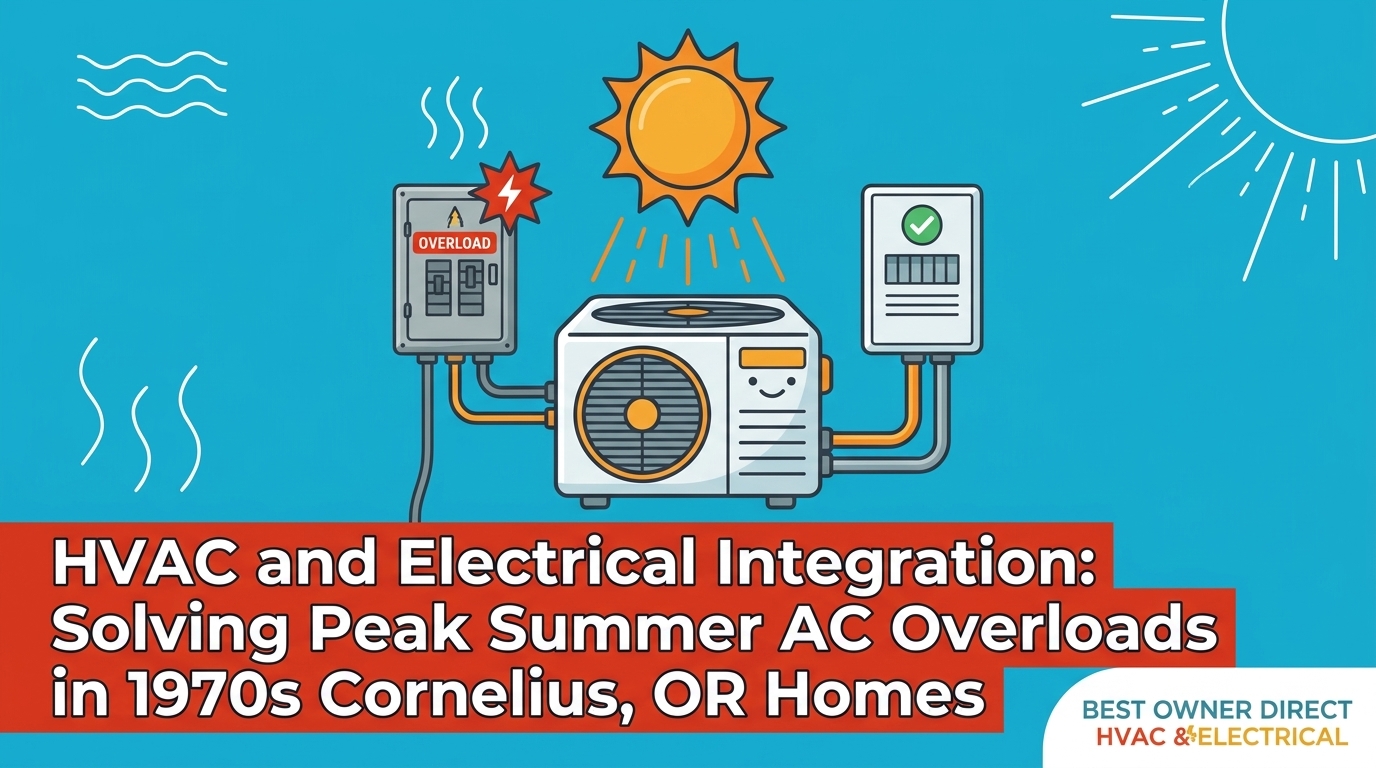
How Cornelius Homes Handle Peak Summer AC Loads on Older Electrical PanelsModern AC units often overwhelm aging 1970s electrical panels during intense summer heat. Review the warning signs and specific upgrades needed to keep your home safely cooled.
Read more

The Electrical Toll of a Struggling HVAC System on Your Home's BreakersAn aging air conditioner does not just lose cooling power; it actively stresses your electrical panel. A tripping breaker during late summer heat is a warning sign requiring professional diagnosis.
Read more
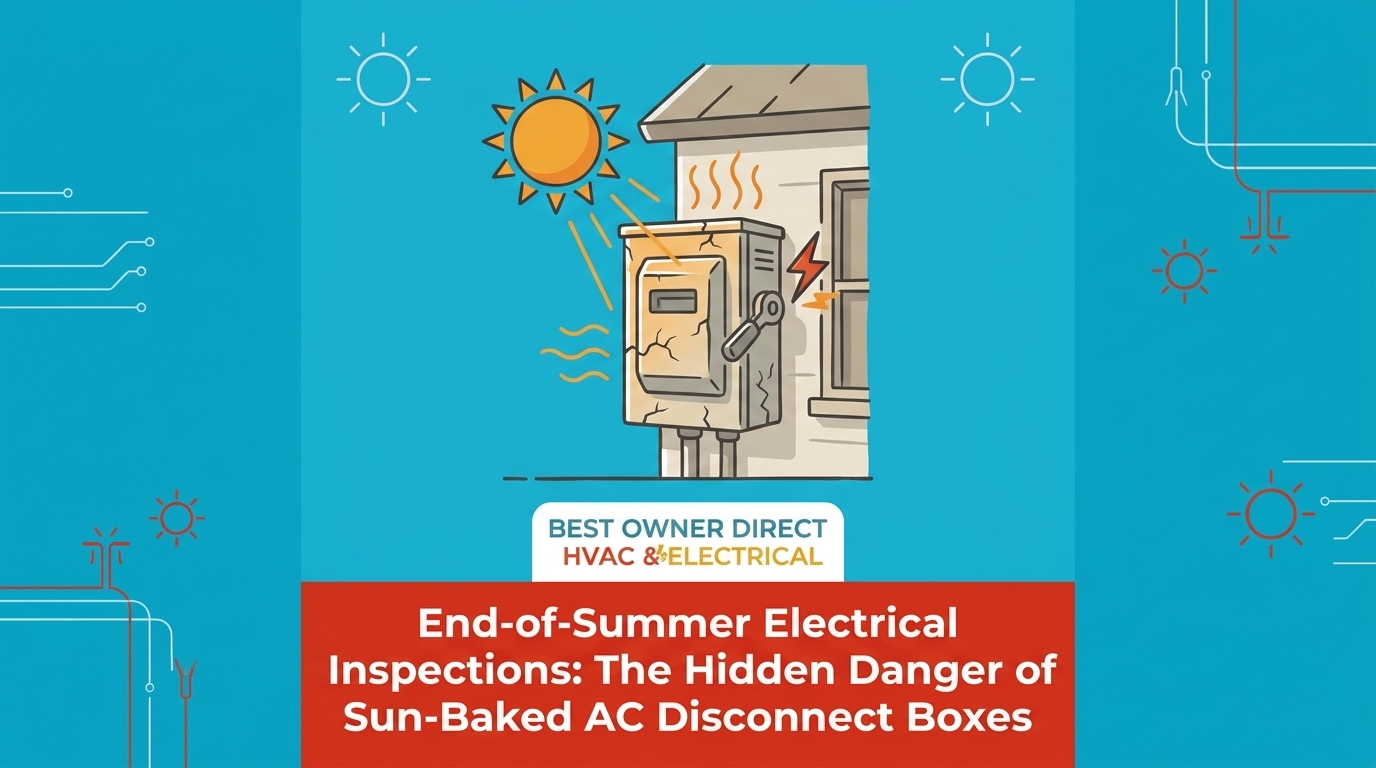
End-of-Summer Electrical Inspections: Checking Outdoor Disconnect BoxesAfter months of intense Pacific Northwest sun, your outdoor AC disconnect box can become brittle and unsafe. Learn the visual warning signs of UV degradation.
Read more