Menu


Why How Dirty Air Filters Affect Your AC and Air Quality Is Something Every Homeowner Should Understand
Understanding how dirty air filters affect your AC and air quality could be the single most important thing you do to protect your home's comfort, your family's health, and your HVAC system's lifespan. Here's a quick summary before we dive in:
How a dirty air filter affects your AC and air quality:
- Restricted airflow — a clogged filter blocks air from moving freely through your system
- Reduced cooling — your AC struggles to reach set temperatures and may blow warm air
- Frozen evaporator coils — low airflow causes moisture to freeze on the coil, shutting down cooling
- Short cycling — the system overheats and shuts off in under 5 minutes instead of the normal 15–20
- Higher energy bills — your system runs longer and works harder, using up to 15% more energy
- Poor indoor air quality — dust, pollen, pet dander, and mold spores recirculate through your home
- Health symptoms — headaches, eye irritation, allergy flare-ups, and worsened asthma are common signs
Most homeowners in Oregon know that spring pollen, fall dust, and summer wildfire smoke put extra strain on their HVAC systems. But the air filter — one of the cheapest and easiest parts of the system to maintain — is also one of the most overlooked. When it gets clogged, everything downstream suffers: your AC works harder, your air gets dirtier, and your monthly bills quietly climb.
This guide covers exactly what happens when filters go too long without attention, how to spot the warning signs, and what you can do about it.
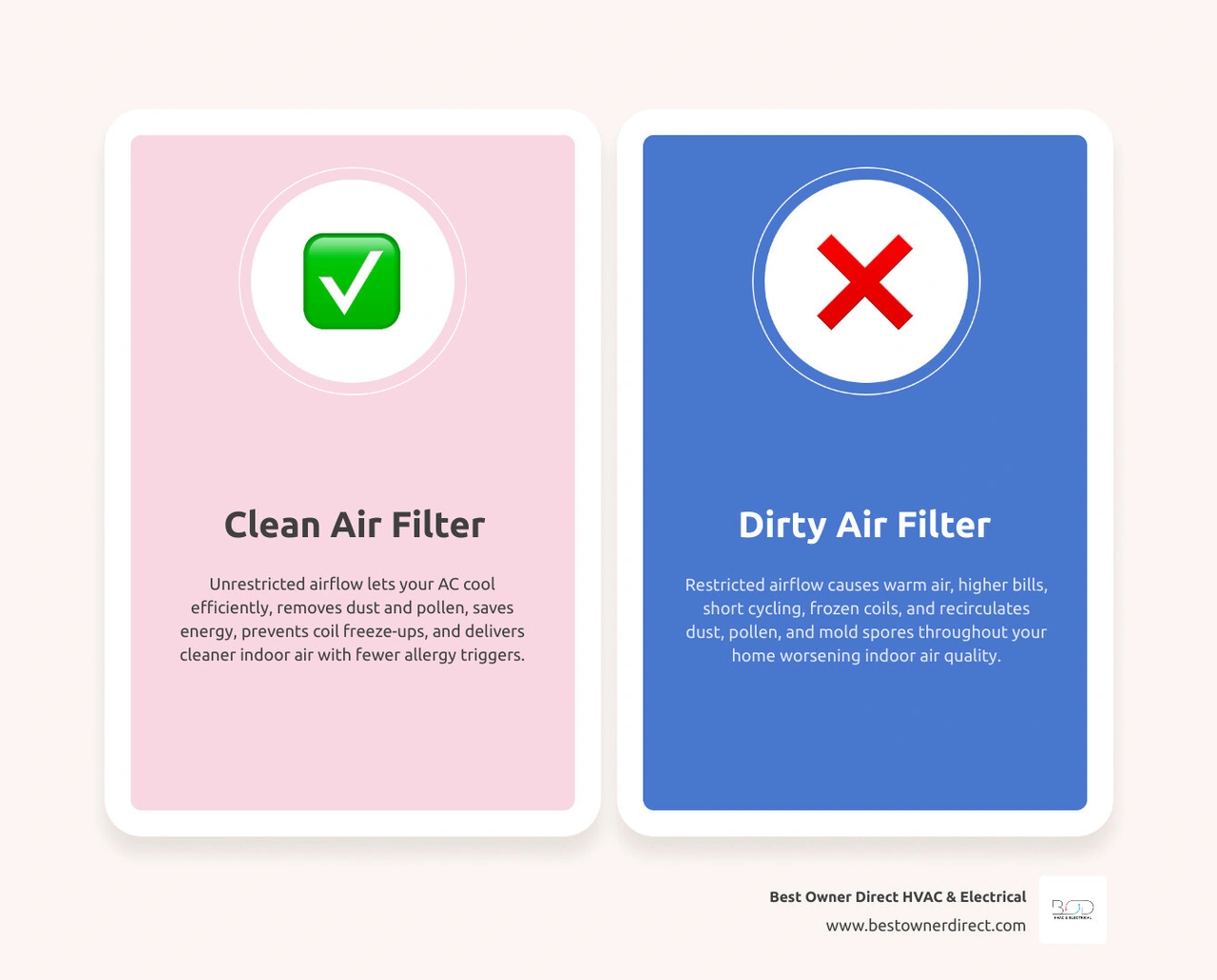
How Dirty Air Filters Affect Your AC and Air Quality
A dirty air filter causes two problems at the same time: it chokes your HVAC system and it stops filtering your indoor air the way it should. That is why such a small part can create such big comfort issues.
When the filter fills with dust, lint, pet dander, pollen, and smoke particles, less air can move through the system. Your AC then has to run longer to cool the house, and that extra strain can lead to weak airflow, uneven temperatures, frozen coils, short cycling, and unnecessary wear on important components.
At the same time, a loaded filter does a worse job trapping new contaminants. Instead of catching more particles, it can allow dust and irritants to circulate through your living spaces. In Oregon homes, that can be especially noticeable during pollen season and periods of wildfire smoke.

The airflow problem behind how dirty air filters affect your ac and air quality
Airflow is the foundation of AC performance. Your system is designed to move a specific amount of air across the evaporator coil and through the ductwork. When the filter becomes clogged, that airflow drops.
Here is what usually happens next:
- The blower motor has to work harder to pull air through the filter
- Air coming from vents feels weak
- Some rooms cool slowly while others stay warm
- The system runs longer to reach the thermostat setting
- Internal temperatures can rise and stress the equipment
Low airflow also affects the evaporator coil. That coil needs enough warm indoor air passing over it to operate properly. If not enough air reaches it, the coil can get too cold and moisture on it can freeze. Once that happens, cooling performance drops fast, and your AC may start blowing room-temperature or even warm air.
Four AC problems a dirty filter can cause first
If we had to narrow it down, these are the four most common AC problems homeowners notice first.
1. Overheating
Restricted airflow can cause the system to overheat. Safety controls may shut it down to protect internal parts. That is helpful in the short term, but not great for comfort on a hot day.
2. Frozen evaporator coil
A dirty filter can reduce airflow enough to cause the evaporator coil to ice over. Once the coil freezes, the system cannot absorb heat properly, so cooling drops off sharply.
3. Short cycling
A healthy cooling cycle often runs about 15 to 20 minutes. With overheating or airflow problems, the system may shut off in under 5 minutes. That rapid on-and-off behavior is called short cycling, and it is hard on the equipment.
4. Uncomfortable rooms
You may notice hot spots, sticky indoor air, or rooms that never seem to cool down. In many cases, the thermostat is not the villain. The neglected filter is.
A quick DIY check can sometimes reveal the issue immediately. If the filter looks packed with dust or the return grille is dirty, replacing the filter is a smart first step. If problems continue after that, it is time for a professional inspection.
Can a dirty filter raise energy bills and damage your system?
Yes, absolutely.
Research shows dirty air filters can increase HVAC energy use by up to 15%. That happens because the system has to run longer and work harder to move air. Even if the thermostat setting never changes, the AC may use more electricity just trying to keep up.
Over time, that extra strain can affect major parts such as:
- The blower motor
- The fan assembly
- The compressor
- Electrical controls
- The evaporator coil
This is where a dirty filter turns from a small maintenance issue into a bigger system problem. Longer runtimes mean more wear and tear. More wear and tear means a higher chance of breakdowns and a shorter system lifespan. The filter may be small, but neglecting it can create a surprisingly large domino effect.
Warning Signs Your Air Filter Is Clogged
A clogged filter often gives off clues before it creates a major AC problem. The trick is knowing what to look for.
Common dirty filter symptoms include:
- Weak airflow from vents
- More dust collecting around supply vents and furniture
- A gray or visibly dirty filter
- Black spots, which may suggest mold or heavy contamination
- Musty or stale odors when the system runs
- Warm or not-cool-enough air from vents
- Increased sneezing, coughing, or allergy symptoms indoors
- Noisier system operation
- Short cycling
- Uneven temperatures from room to room
Visual signs homeowners can spot in minutes
You do not need special tools to inspect most filters.
Look for:
- Dust caked across the filter surface
- Gray or brown discoloration
- Warped or bent filter frames
- Damp filter material
- Dark spotting that may indicate mold
- Dust buildup on the return grille
While you are checking it, confirm the airflow arrow points in the correct direction when installed. An incorrectly installed filter can reduce performance too.
We recommend a quick monthly inspection, especially during heavy cooling use, pollen season, or smoky periods. It takes only a minute, and it can save you from bigger trouble later.
Home comfort signs that point to a dirty filter
Sometimes the signs show up in your comfort before they show up in the filter itself.
Pay attention if your home has:
- Uneven cooling between rooms
- Poor humidity control or sticky air
- Frequent cycling on and off
- Stale indoor air
- More visible dust than usual
- Headaches, sneezing, or irritation that feels worse indoors
- Trouble sleeping because the air feels stuffy
If your home suddenly feels less comfortable and your AC seems busier than usual, the filter is one of the first things worth checking. It is not glamorous, but neither is sweating in your living room while your thermostat insists everything is fine.
How Dirty Air Filters Affect Indoor Air Quality and Health
Air filters are not just there to protect equipment. They also help reduce airborne particles in your home, including dust, pollen, pet dander, mold spores, and some smoke-related particles. When the filter is overloaded, that protection drops.
That can lead to more circulating irritants and more buildup inside the home. For many families, the result is not dramatic at first. It is subtle. The air feels stuffier. Dust shows up faster. Allergies seem worse indoors than outside, which feels rude, honestly.
Indoor air pollution linked to dirty filters has been associated with short-term symptoms like:
- Headaches
- Dizziness
- Eye irritation
- Nose and throat irritation
- Fatigue
- Allergy flare-ups
Longer-term exposure to poor indoor air quality can also contribute to more serious respiratory and cardiovascular concerns, especially for people who are already vulnerable.
If you want a deeper look at whether replacing a filter makes a noticeable difference, read Can You Really Tell the Difference in Air Quality When You Replace Your Air Filter.
Why how dirty air filters affect your ac and air quality matters for allergies and asthma
This topic matters even more if someone in your home has allergies or asthma.
In our Oregon service areas, homes can deal with:
- Spring and summer pollen
- Pet hair and dander
- Everyday dust
- Smoke particles during wildfire season
- Indoor moisture that can support mold growth
A dirty filter may not trap these pollutants effectively, allowing more of them to recirculate. That can be especially hard on children, older adults, and anyone with sensitive lungs.
For additional ways to reduce allergens inside the home, visit Easy Ways to Keep Allergens Out of Your Home.
When dirty filters can contribute to odors, mold, and stale air
Dirty filters are also connected to odor problems.
If a filter becomes damp, collects organic material, or stays in place too long, it can start contributing to musty smells. A blackened filter may point to mold contamination, especially if there is also excess humidity or poor airflow in the system.
That does not always mean the filter is the only problem. Sometimes stale air and odors are linked to duct contamination, moisture issues, or ventilation problems too. In those cases, changing the filter helps, but it may not solve everything on its own.
If odor or dust issues continue, duct inspection or cleaning may be worth considering. Learn more here: Duct Cleaning Portland OR.
How Often to Clean or Replace Your Air Filter
There is no perfect one-size-fits-all schedule, but there are solid rules of thumb.
For most homes, monthly checks are the best habit. Replacement timing depends on the filter type, the home environment, and how hard the system is working.
General guidelines:
- Average home: replace about every 90 days
- Homes with pets: every 60 days
- Homes with allergies, asthma, or multiple pets: every 30 to 45 days
- Heavy smoke, construction dust, or heavy AC use: inspect more often and replace sooner
- Washable filters: clean according to manufacturer instructions, often about every 30 days
A simple replacement schedule for most households
Here is a practical schedule many homeowners can follow:
| Household type | Recommended filter timing |
|---|---|
| Average occupied home | Check monthly, replace around every 90 days |
| Home with one pet | Check monthly, replace around every 60 days |
| Home with multiple pets or allergy concerns | Check monthly, replace every 30 to 45 days |
| Vacation or lightly used home | Check before each season and follow manufacturer guidance |
Two easy habits help a lot:
- Write the install date on the filter frame
- Set a phone reminder for monthly inspections
Choosing the right filter without hurting airflow
Not every filter is right for every system.
The goal is to balance filtration and airflow. A filter that is too weak may not catch enough particles. A filter that is too restrictive for your system can reduce airflow and create the very problems you are trying to avoid.
Common filter considerations include:
- MERV 8: a common choice for basic residential filtration
- MERV 11: better for capturing smaller particles while still working well in many homes
- MERV 13: stronger filtration, often helpful for households concerned about allergens and smoke, but not every HVAC system is designed for it
Pleated filters generally outperform basic fiberglass filters for particle capture. But higher-efficiency is not automatically better unless your equipment can handle it.
For help selecting a filter that fits your system and indoor air goals, see How to Choose the Right AC Filter.
Clean vs replace: what homeowners should do
The answer depends on the type of filter.
- Disposable filters should be replaced, not washed
- Washable filters can be cleaned, but only according to the manufacturer instructions
- If a washable filter is damaged, warped, or moldy, replace it
- If you rinse a reusable filter, let it dry completely before reinstalling it
That last point matters. Putting a wet filter back into the system can create moisture problems and may contribute to mold or icing issues.
For more on maintenance habits, visit Why You Should Regularly Clean Your HVAC Filter.
Simple Filter Maintenance Steps Homeowners Can Take
Good filter maintenance is simple, and it does not require a toolbox full of gadgets.
Quick DIY steps to prevent AC and air quality problems
Use this basic process:
- Turn off the HVAC system.
- Locate the filter at the return vent, return grille, or furnace/air handler slot.
- Remove the filter carefully and note the airflow arrow direction.
- Check the size printed on the filter frame.
- Inspect for dust, discoloration, damage, dampness, or mold-like spotting.
- If it is disposable and dirty, replace it.
- If it is washable, clean it as directed and let it dry completely.
- Vacuum any loose dust around the opening before reinstalling.
- Reinstall the filter in the correct direction.
- Set a reminder for the next monthly check.
Keeping a spare filter on hand is a smart move. So is keeping a simple maintenance log. Future you will appreciate it.
When to call for indoor air quality help in Oregon
Sometimes a filter change is not enough.
It is time to reach out if you have:
- Persistent dust even after replacing filters
- Repeated allergy or asthma symptoms indoors
- Ongoing musty or stale odors
- Frozen coils
- Weak airflow that does not improve after changing the filter
- Concerns about smoke, mold, or whole-home air cleaning
If you are looking for local indoor air quality support, explore Indoor Air Quality Beaverton OR, Indoor Air Quality Portland OR, or Whole House Air Purification Beaverton OR.
Frequently Asked Questions About How Dirty Air Filters Affect Your AC and Air Quality
Can a dirty air filter make your AC stop cooling properly?
Yes. A clogged filter restricts return airflow, which reduces cooling performance. In some cases, the evaporator coil can freeze, and then the system may blow warm air or barely cool at all.
How do I know if my air filter is too dirty to keep using?
If it looks gray, dusty, damp, warped, or has dark spotting, it is time to act. Reduced airflow, odors, and more dust in the house are also common clues. When in doubt, replace it. Filters are not collectibles.
Will changing the filter really improve air quality fast?
Often, yes. Homeowners commonly notice less dust, fresher-smelling air, improved airflow, and fewer irritation symptoms after replacing a clogged filter. The improvement may be especially noticeable during pollen season or smoky weather.
Conclusion
Clean filters support healthy airflow, cleaner indoor air, and longer HVAC system life. Dirty filters do the opposite: they waste energy, reduce comfort, stress your AC, and let more pollutants move through your home.
The good news is that this is one of the easiest HVAC problems to prevent. A quick monthly check and a consistent replacement schedule can make a real difference.
At Best Owner Direct HVAC & Electrical, we help homeowners across Cornelius, Portland, Beaverton, Hillsboro, Tigard, Tualatin, Lake Oswego, Oregon City, Wilsonville, and surrounding Oregon communities protect comfort, air quality, and system performance with reliable, energy-efficient service and thoughtful customer care. If your home still feels dusty, stuffy, or hard to cool after changing the filter, we can help you look deeper.
For more information about indoor air quality solutions, visit Indoor Air Quality Beaverton OR.


Navigating Fall HVAC Tune-Ups in Cornelius Before the Rain StartsThe Pacific Northwest's sudden shift to autumn rain creates a narrow window for outdoor maintenance. Booking your heating tune-up in September prevents dangerous delays once the storms hit.
Read more

How Pacific Northwest Heat Domes Made Heat Pumps a NecessityDiscover how Pacific Northwest heat domes changed the need for heat pumps for year-round resilience, cooling, and safety across Cascadia.
Read more
Understanding How Heat Pumps Defrost During Early Oregon FrostsWaking up to steam billowing from your outdoor unit is alarming, but it rarely means fire. Discover how this normal defrost cycle protects your equipment during the first fall freeze.
Read more