Menu


Heat Pump Ice Buildup Causes and What to Do: Normal Frost vs. Heavy Ice
To diagnose and address heat pump ice buildup, first determine if the unit has a normal thin frost layer or solid ice lasting more than four hours. If heavy ice encases the outdoor cabinet, switch your thermostat to Emergency Heat (AUX Heat) to protect the compressor, clear at least two feet of snow and debris around the perimeter, and safely melt the ice with lukewarm water. Heavy, continuous ice that fails to defrost typically points to restricted airflow, low refrigerant levels, or a failed defrost control sensor.
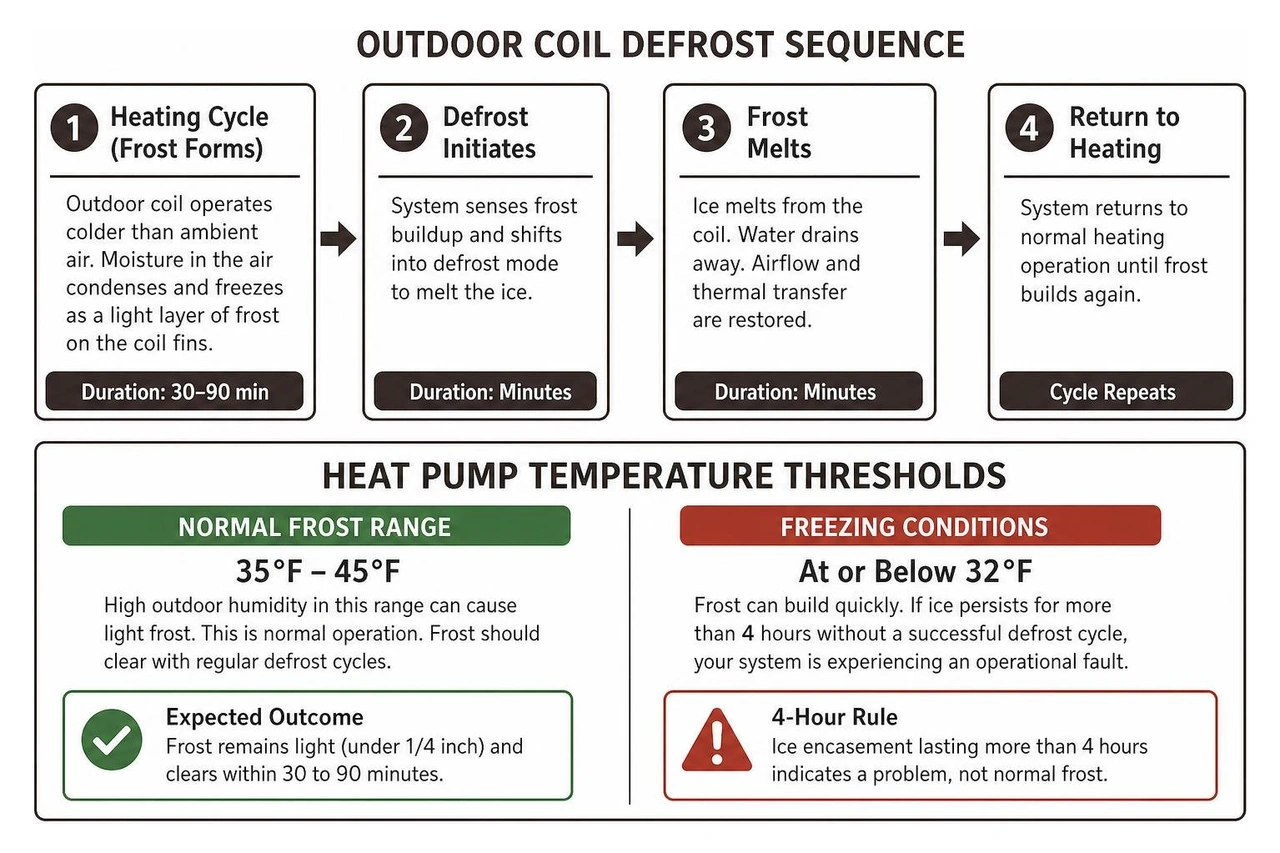
When winter temperatures drop across the Pacific Northwest, your heat pump extracts thermal energy from outdoor air. Because the outdoor coil operates at temperatures lower than the surrounding ambient air, moisture naturally condenses on the metal fins and freezes into light frost during sub-freezing weather. While normal frost cycles off automatically, solid ice creates an insulating barrier that blocks airflow, collapses thermal transfer efficiency, and strains the compressor under severe head pressure.
To evaluate your system accurately, apply the four-hour rule: if an outdoor heat pump remains encased in solid ice for longer than four hours without initiating a successful defrost cycle, your equipment is experiencing an operational fault rather than normal winter frost.
| Feature | Normal Frost Layer | Problem Ice Encasement |
|---|---|---|
| Appearance | Light, white, crystalline dusting across coil fins | Thick, solid, translucent or milky ice slab encasing the entire unit |
| Coverage | Evenly distributed over the metal coils | Dense buildup on the top grille, fan blades, or base pan |
| Duration | Lasts 30 to 90 minutes before disappearing | Persists for more than 4 hours continuously |
| Fan Operation | Outdoor fan spins freely without obstruction | Fan is slowed, stuck, or hitting ice with a loud grinding sound |
| Indoor Comfort | Home maintains set thermostat temperature steadily | Indoor air feels lukewarm or cold; system runs non-stop |
| System Action | Automated defrost engages and clears coils within minutes | Defrost cycle fails to trigger or ends before melting ice |
Recognizing Heat Pump Ice Buildup Causes and What to Do When Frost Appears
Understanding how a heat pump works for heating and cooling helps explain why frost appears in the first place. During the heating cycle, liquid refrigerant expands inside the outdoor coil, dropping its temperature below the outdoor air temperature. When outdoor humidity is high—even at temperatures between 35°F and 45°F—this cold metal surface pulls moisture out of the air.
As temperatures dip toward freezing, that captured condensation freezes into a light coating. This is a fundamental part of the heat extraction process. As long as the frost is thin (under 1/4 inch) and clears periodically, your heat pump is performing exactly as engineered.
How the Automated Defrost Cycle Protects Outdoor Coils
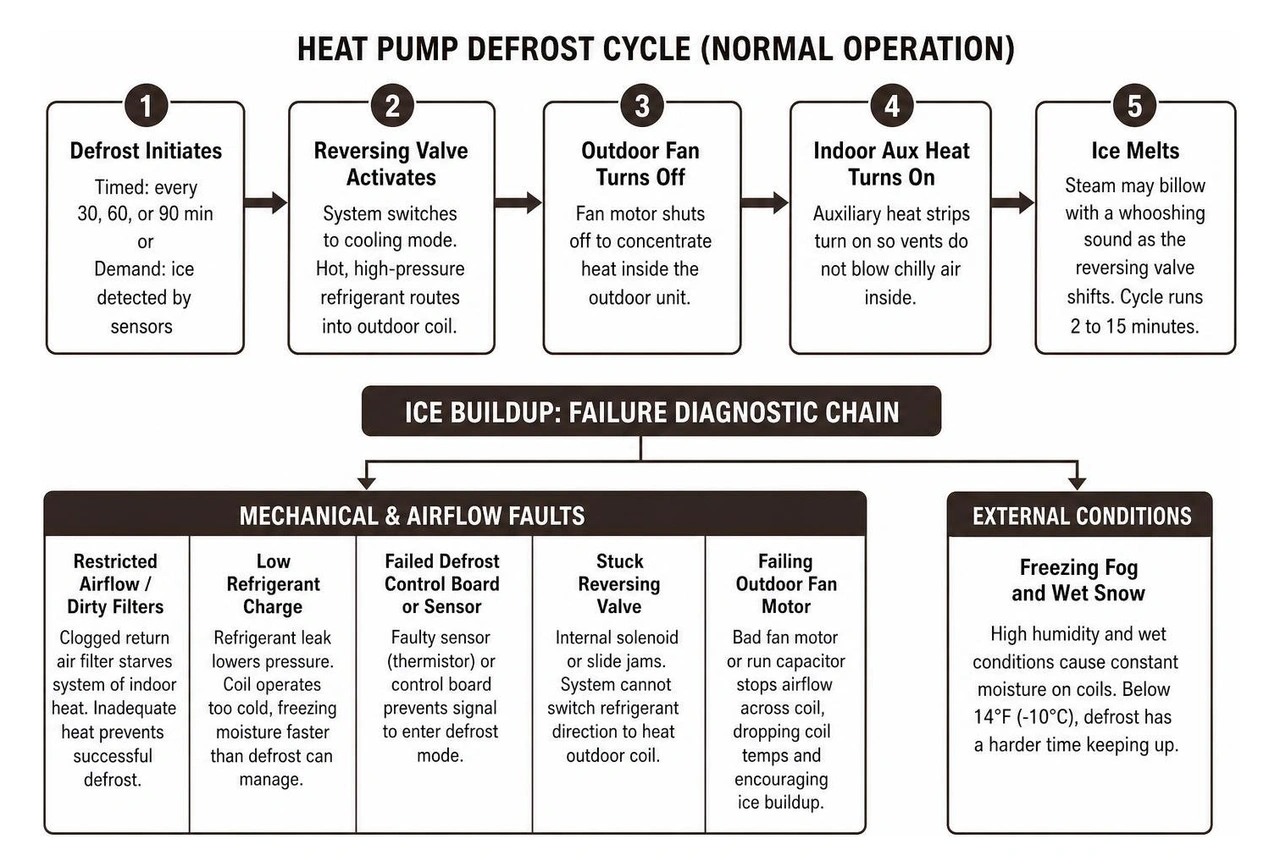
To keep frost from choking the outdoor unit, modern systems use an automated defrost cycle. When a defrost cycle initiates, the system activates a reversing valve. By seeing how a heat pump reverses the refrigeration cycle, you can picture the unit temporarily switching back into cooling mode.
During defrost:
- Hot, high-pressure refrigerant routes directly into the outdoor coil, heating the metal fins from within.
- The outdoor fan motor shuts off temporarily to concentrate that heat inside the cabinet.
- The indoor auxiliary heat strips turn on automatically so your vents do not blow chilly air inside the house.
- As the ice melts, steam billows from the unit—often accompanied by a distinct whooshing sound as the reversing valve shifts.
Timed systems check for defrost conditions every 30, 60, or 90 minutes, running for roughly 2 to 15 minutes until the frost melts. More modern demand-defrost systems monitor coil and air temperatures with dedicated sensors, running only when ice is physically detected to conserve energy.
Primary Causes of Heavy Ice Formation on Heat Pumps
When an outdoor unit looks like an igloo rather than an HVAC system, one or more underlying mechanical or environmental problems have broken the defrost balance. Running a severely iced heat pump forces the compressor to work against excessive head pressure, spiking your electricity usage and risking permanent component burnout.
Identifying Heat Pump Ice Buildup Causes and What to Do for Airflow and Mechanical Faults
Several internal mechanical breakdowns can trigger uncontrollable ice accumulation:
- Restricted Airflow and Dirty Filters: A clogged return air filter starves the system of indoor heat. Without adequate indoor heat, the refrigerant cannot carry enough thermal energy outside to complete a successful defrost cycle. Practicing simple DIY heat pump maintenance you can do between visits ensures clean filters and healthy airflow throughout the season.
- Low Refrigerant Charge: If a refrigerant leak develops in your copper lines, the reduced pressure forces the outdoor evaporator coil to operate at abnormally low temperatures. This flash-freezes moisture across the coil faster than any defrost cycle can manage.
- Failed Defrost Control Board or Sensor: If the defrost sensor (thermistor) goes out of calibration or the electronic control board fails, the heat pump never receives the signal to switch into defrost mode.
- Stuck Reversing Valve: If the internal solenoid or slide inside the four-way reversing valve jams, the heat pump cannot switch refrigerant direction to heat the outdoor coil.
- Failing Outdoor Fan Motor: A failing fan motor or bad run capacitor prevents ambient air from moving across the coil, dropping coil temperatures rapidly and encouraging thick ice sheets.
Weather Impacts, Freezing Fog, and Gutter Runoff
External conditions also create severe ice problems:
- Freezing Fog and Wet Snow: In high-humidity winter regions, moisture-saturated air condenses continuously on the coils. When outdoor temperatures plunge below 14°F (-10°C), the automated defrost cycle has a much harder time keeping up.
- Leaking Roof Gutters and Valley Runoff: If your outdoor condenser is installed beneath an undiverted roof valley or a leaking gutter, cold rainwater drips directly onto the top fan grille. On freezing nights, this water freezes layer upon layer, immobilizing the fan blades and encasing the top of the cabinet in solid ice.
- Blocked Base Pan Drainage: As normal frost melts during a defrost cycle, the water runs down through drainage slots in the base pan. If dead leaves, pine needles, or dirt clog these holes, the standing meltwater refreezes into a glacier-like sheet that creeps upward from the bottom of the unit.

Step-by-Step Guide: Safe DIY Actions to Thaw a Frozen Heat Pump
If you find your heat pump encased in thick ice, take safe, calculated action right away to protect your system from severe compressor damage.
Immediate Steps to Take When Coils Freeze
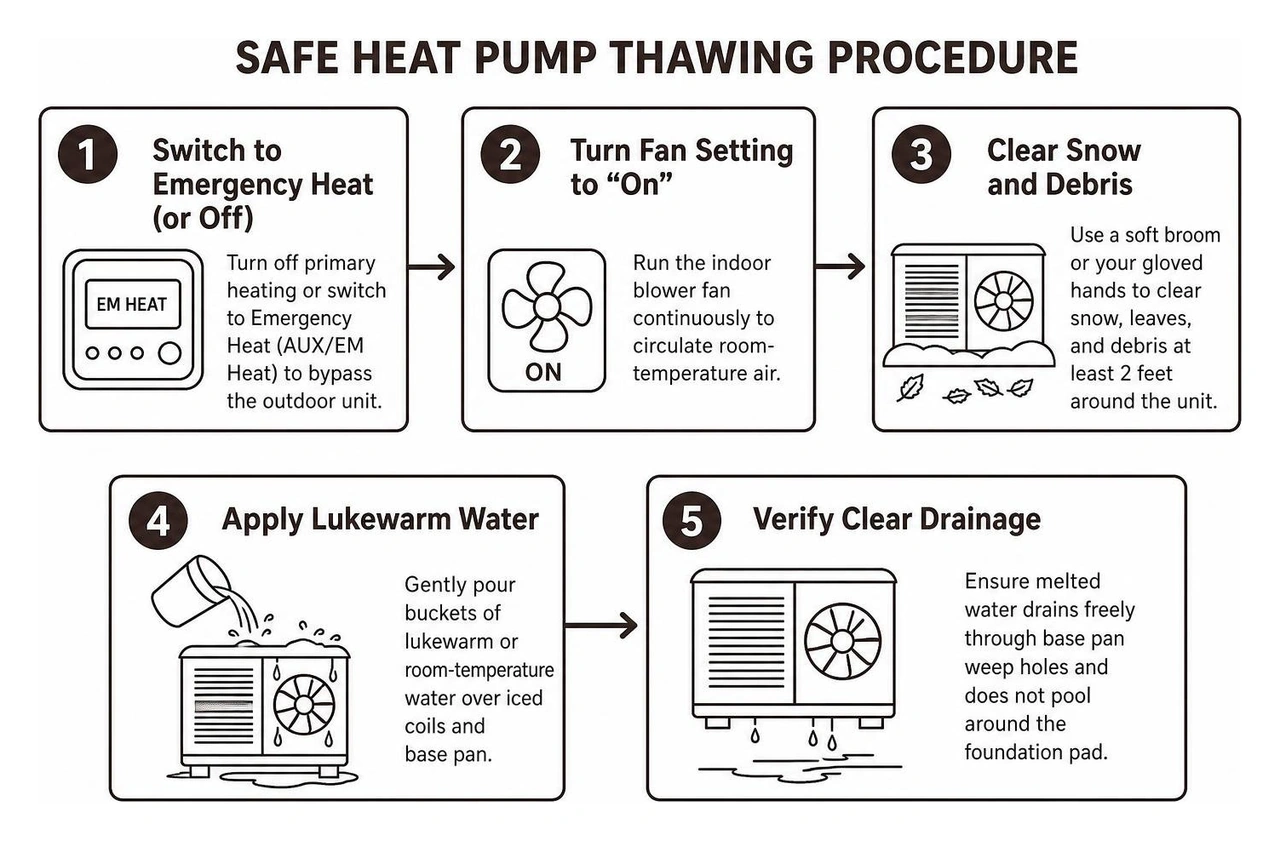
- Switch the Thermostat to Emergency Heat (or Off): Turn your primary heating setting off or switch to Emergency Heat (AUX/EM Heat). This bypasses the outdoor heat pump entirely and engages indoor supplemental heating, keeping your home warm while taking all mechanical strain off the outdoor compressor.
- Turn the Thermostat Fan Setting to "On": Running the indoor blower fan continuously circulates room-temperature air through the system, helping stabilize indoor and line temperatures.
- Clear Snow and Debris Around the Perimeter: Use a soft broom or your gloved hands to clear snow, leaves, and brush at least 2 feet away from all four sides of the outdoor cabinet.
- Apply Lukewarm Water: If you need to melt ice safely, gently pour buckets of lukewarm or room-temperature water over the iced coils and base pan. This accelerates melting without shocking the components.
- Verify Clear Drainage: Ensure that melted runoff escapes freely through the base pan weep holes and does not pool around the concrete foundation pad.
Critical Mistakes to Avoid During De-Icing
Taking the wrong approach when thawing a heat pump can destroy delicate coils and lead to extensive repairs. Always avoid these hazards:
- Never Use Sharp Tools or Ice Picks: Chipping, scraping, or hacking at ice with screwdrivers, hammers, chisels, or shovels will puncture soft copper refrigerant lines and crush aluminum coil fins.
- Never Pour Boiling Water on Frozen Coils: Boiling water creates violent thermal shock, which can crack frozen metal tubing, break soldered joints, and cause sudden refrigerant discharge.
- Never Use Chemical De-Icers or Rock Salt: Chemical sprays and salt are highly corrosive. They will eat through protective coil coatings and corrode electrical connections within weeks.
- Never Wrap the Unit in a Solid Tarp or Cover While Operating: Covering a heat pump while it is running suffocates the system, blocks air intake entirely, and forces the compressor into instant failure.
When to Call a Professional for Heat Pump Service
While routine filter changes and clearing snowdrifts are simple DIY tasks, internal mechanical and electrical failures require licensed professional attention. If you observe any of the following warning signs your heat pump needs repair or replacement, shut the unit off at the thermostat and call for service:
- Thick ice returns within hours of a manual thaw.
- The outdoor fan motor hums or buzzes but the fan blades refuse to spin.
- You hear hissing sounds or notice oily residue on the copper lines, indicating a refrigerant leak.
- The system blows cold air indoors while running continuously in heating mode.
- The unit is older than 10 to 12 years and struggles every winter season, which you can evaluate against our heat pump lifespan complete guide.
Professional diagnostic service includes electronic leak detection, refrigerant pressure verification, testing defrost control boards, checking thermistors with multimeters, and inspecting reversing valves. Scheduling an annual inspection outlined in our heat pump tune-up and maintenance guide before freezing weather arrives is the most effective way to prevent mid-winter breakdowns.
For prompt, dependable local diagnostics and care, our team provides trusted heat pump repair near me in Cornelius, OR as well as comprehensive heat pump service in Oregon City, OR. If your older unit has reached the end of its serviceable life, we also specialize in precision heat pump installation in Dayton, OR, helping you take full advantage of all the heat pump advantages over traditional HVAC systems.
Frequently Asked Questions About Heat Pump Icing
Is it normal to see steam rising from the heat pump in winter?
Yes, seeing steam rise from your outdoor unit during cold weather is completely normal. When the automated defrost cycle engages, the outdoor coils heat up rapidly to melt frost. As the melting ice touches the warm coil surface, water vapor evaporates into the cold air, creating a cloud of steam. This process usually lasts only a few minutes and is often accompanied by a soft whooshing sound as the reversing valve shifts. Once the cycle finishes, the outdoor fan restarts and the steam dissipates.
Can I cover my outdoor heat pump during snowstorms to stop ice buildup?
No, you should never put a standard cover, plastic tarp, or solid enclosure over an outdoor heat pump while it is running. Heat pumps require constant, unrestricted airflow across their coils to absorb heat from the outdoor atmosphere. Wrapping or covering the unit suffocates the fan, prevents heat exchange, spikes your energy usage, and causes the system to freeze up completely. If you want to protect your unit from heavy snowdrifts or falling ice from roof eaves, install an elevated snow canopy mounted well above the unit that remains completely open on all four sides.
Can a dirty air filter cause a heat pump to freeze solid?
Yes. A clogged, dirty indoor air filter severely restricts the volume of air flowing across your indoor evaporator/heat exchanger coil. When airflow is blocked, the refrigerant cannot absorb adequate heat from your home's indoor air. As this under-heated refrigerant travels back outside, it causes the outdoor coil temperature to drop much lower than normal, triggering rapid, heavy ice accumulation across the entire outdoor unit. Changing your indoor air filter every 30 to 60 days is one of the easiest ways to keep your system ice-free.
Conclusion
A frozen heat pump can be unsettling during a cold winter spell, but understanding the difference between normal frost and heavy ice buildup gives you the power to act quickly and protect your heating system. By maintaining clear airflow around your outdoor unit, replacing air filters regularly, and relying on safe thawing techniques, you can keep your home warm and energy-efficient throughout the coldest months of the year.
Best Owner Direct HVAC & Electrical is a family-owned HVAC, electrical, and water-heater services company based in Cornelius, OR, serving homeowners and businesses throughout the Portland metro and surrounding Oregon communities. When winter weather puts your heating system to the test, our licensed technicians are here to deliver prompt diagnostics, dependable maintenance, and comprehensive heat pump solutions designed to keep your home comfortable in every season.



How Mini Splits Solve Hot and Cold Spots in Your HomeLearn how mini splits solve hot and cold spots in your home with precise zone control and inverter technology for balanced, year-round comfort.
Read more

How to Troubleshoot AC Blowing Warm Air in X Simple StepsLearn why your AC is blowing warm air with these troubleshooting steps, and discover DIY fixes to restore cool airflow in your home.
Read more
Most Common Heat Pump Repairs and Their CausesDiscover the most common heat pump repairs and what causes them so you can keep your Pacific Northwest system running efficiently year-round.
Read more