Menu


That Sudden Cloud of Steam: Don't Panic During the First Fall Freeze
At Best Owner Direct HVAC & Electrical, one of the most common panicked phone calls we receive happens when a crisp September early fall frost settles over the neighborhood. We always tell our customers that understanding how heat pumps defrost during early Oregon frosts is the key to preventing a morning of unnecessary panic. You wake up, look out the window, and see what looks like a thick cloud of smoke billowing directly from your outdoor heating and cooling unit. Your immediate instinct is to shut the system down completely and call for an emergency repair. Before you reach for the thermostat, take a deep breath. That sudden cloud is rarely smoke—it is almost always steam. This is a completely normal, built-in function designed to protect your equipment and keep it running efficiently as temperatures drop. Before you worry that your system is failing or catching fire, it helps to explore exactly what you are seeing and why it happens.
For expert guidance on your home's system, explore your options for heating systems or reach out for professional heat pump services.
The Mechanics of the Melt: What Is a Defrost Cycle?
To understand why your system suddenly behaves differently on a cold morning in Cornelius, OR and surrounding Pacific Northwest areas, you have to look at how a heat pump gathers heat. Even when it feels freezing outside, there is ambient heat in the outdoor air. Your system uses cold liquid refrigerant to absorb that heat and carry it inside. Because the refrigerant is colder than the outside air, condensation naturally forms on the outdoor coils. When the outside temperature drops near freezing, that condensation turns into frost.
If that frost is allowed to build up into a solid block of ice, it blocks the airflow that the system desperately needs to function. To prevent this, your equipment initiates a defrost cycle. This cycle is a temporary mode where the system essentially reverses its operation to melt the frost off the outdoor coils.
1. The reversing valve shifts: The system temporarily switches into air conditioning mode. Instead of sending hot compressed refrigerant inside to warm your house, it routes that hot refrigerant back outdoors to the frosted coils.
2. The outdoor fan stops: You will notice the large fan blades on the top or side of the unit stop spinning. This is intentional. By stopping the fan, the system prevents cold outside air from blowing across the coils, allowing the heat to build up rapidly and melt the ice faster.
3. Backup heat activates: Because the system is technically in cooling mode, it would normally blow cold air into your home. To prevent you from feeling a sudden chill, the system automatically turns on its indoor auxiliary heat (usually electric heat strips) to keep your indoor air comfortable.
4. The system resets: Once the frost is melted, the reversing valve shifts back, the outdoor fan kicks on, and normal heating resumes.
How the Built-In Sensors Protect Your System
Your heat pump does not just guess when it is time to melt the ice. It relies on a combination of time and temperature sensors built into the defrost control board. When the sensors detect that the coil temperatures have dropped below freezing, a timer begins. Depending on the specific brand and how it was configured during installation, the system will typically initiate a defrost cycle every 30, 60, or 90 minutes of active compressor run time. This intelligent monitoring ensures that heating systems remain efficient without wasting energy on unnecessary melting cycles.
Sensory Clues: Visual and Auditory Signs of a Normal Defrost
The transition into a defrost cycle can be startling if you do not know what to expect. During a September early fall frost, the contrast between the cold outside air and the sudden heat of the coils creates very dramatic sensory clues. Knowing exactly what to look and listen for will help you confidently identify a normal cycle.
• The "smoke" is actually steam: When the hot refrigerant floods the outdoor coils, the frost melts and evaporates almost instantly. In cold weather, this rapid evaporation creates a thick, visible vapor. It looks exactly like white smoke, but it is entirely harmless water vapor rising from the unit.
• A loud whooshing sound: The shift from heating to cooling requires a sudden change in pressure inside the refrigerant lines. When the reversing valve clicks over, you will often hear a loud "whoosh" or a brief hissing noise. This is the sound of pressurized gas changing direction.
• A humming compressor with no fan noise: Once the fan stops spinning, the only sound you will hear is the low, steady hum of the compressor working to pump the hot refrigerant through the coils.
• A brief temperature shift indoors: Even with auxiliary heat activated, you might feel a few moments of cooler air coming from your indoor vents before the heat strips fully warm up. This is a normal part of the transition.
It is important to set expectations for the duration of this event. A healthy, fully functional defrost cycle usually lasts between 2 and 10 minutes. If you are wondering what is normal during heat pump defrost mode in winter, timing the cycle is the easiest way to check. Once the sensors detect that the coil is warm enough, the system will switch back to its standard heating mode.
Why the Pacific Northwest Climate Triggers Frequent Defrosting
Our customers often ask us why their system seems to go through this process so frequently, especially compared to homes in colder, snowier parts of the country. Our technicians at Best Owner Direct HVAC & Electrical know the answer lies in the unique environmental factors of Cornelius, OR and surrounding Pacific Northwest areas. Frost formation is not just about temperature; it is heavily dependent on moisture in the air.
In the Willamette Valley and surrounding regions, early fall and winter weather is characterized by a specific combination of high relative humidity—often exceeding 80%—and temperatures hovering right around the freezing mark (in the low to mid-30s). This creates the perfect storm for rapid condensation. There is an enormous amount of moisture suspended in the air. When that moisture-heavy air gets pulled across coils that are sitting below freezing, it condenses and freezes almost immediately.
Interestingly, a heat pump operating in a dry, bitter-cold climate (like a desert environment at 15°F) might actually defrost far less frequently. Even though it is colder outside, there is simply no moisture in the air to create frost. In the Pacific Northwest, your system is working exactly as designed, but it has to work a bit harder to manage the heavy moisture load of the local climate. Seeing frequent steam clouds during the morning hours is a testament to the system actively managing that heavy humidity.
Normal Frost vs. Problematic Ice Buildup: Spotting the Difference
While frost is a normal part of operation in Cornelius, OR and surrounding Pacific Northwest areas, our service team sees a distinct line between a healthy layer of frost and a problematic block of ice. Knowing the difference between the two can save your equipment from severe mechanical failure.
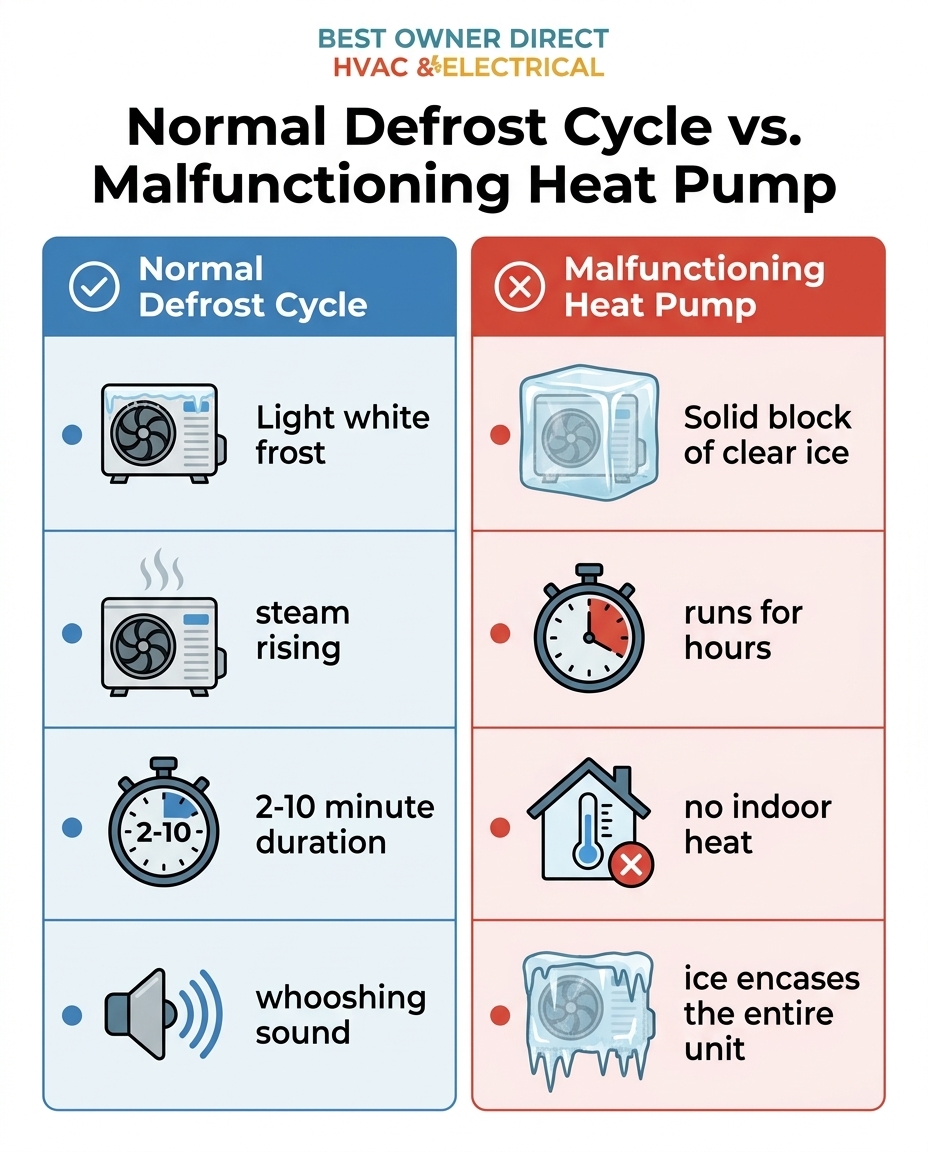
A normal coating of frost looks like the light, white fuzz you might see on the walls of an old chest freezer. It is generally uniform, and most importantly, it disappears completely after a 10-minute defrost cycle. On the other hand, if your outdoor unit looks like it is encased in a solid, clear glacier, and that ice is creeping down the sides or encasing the fan cage, you have an underlying issue. True ice buildup happens when the system fails to melt the frost fast enough, causing layer after layer to freeze solid over days or weeks.
• Visual Appearance — Normal Frost (Healthy): Light, white, fuzzy coating on the coils. — Problematic Ice (Malfunction): Solid, thick, clear or milky ice block encasing the unit.
• Duration — Normal Frost (Healthy): Melts completely within 2 to 10 minutes. — Problematic Ice (Malfunction): Remains for hours or days without fully melting away.
• Airflow — Normal Frost (Healthy): Air can still pull through the fins before the cycle starts. — Problematic Ice (Malfunction): Fins are completely choked; no air can pass through.
• Indoor Heat — Normal Frost (Healthy): Home remains warm and comfortable. — Problematic Ice (Malfunction): System blows lukewarm or cold air constantly.
Signs of a Normal Defrost
• Light white frost: A thin, even layer of white frost forms on the outdoor coils.
• Steam rising: Visible vapor rises from the unit as the ice melts rapidly.
• Quick resolution: The cycle ends within 10 minutes, leaving wet but ice-free coils.
Signs of a Malfunction
• Solid block of ice: The unit is heavily encased in thick ice that threatens to crush the inner components.
• Endless running: The system runs for hours without successfully melting the ice buildup.
• No heat indoors: The home's temperature drops because the system can no longer absorb outdoor heat.
When you notice a solid block of ice that refuses to melt, it is time to seek professional HVAC repair and maintenance. Common causes our technicians find for this severe freezing include restricted indoor airflow (like a heavily clogged filter), low refrigerant charge, or a failing defrost control board that is simply not telling the system to enter the melting cycle.
What to Do (and Never Do) While Your Heat Pump is Defrosting
When you spot the steam rising during a September early fall frost, the best action you can take is usually no action at all. At Best Owner Direct HVAC & Electrical, operating with true owner-direct accountability means prioritizing transparent education over unnecessary service fees. We want you to understand these normal operations so you do not spend money on an emergency call for a system that is working exactly as designed.
The right approach: Simply observe the unit. Check the time when you notice the steam and the stopped fan. Wait 10 to 15 minutes. If the fan kicks back on, the steam dissipates, and the coils look wet but free of ice, your system is perfectly healthy. You can go back to enjoying your warm home.
What you must never do:
• Never pick at the ice: It is incredibly tempting to grab a screwdriver, ice scraper, or hammer to chip away at the frost. Never do this. The aluminum fins and copper refrigerant lines inside your unit are delicate. A single slip of a tool can puncture a line, venting all your refrigerant and turning a normal process into a catastrophic, expensive repair.
• Never pour hot water on the unit: Pouring boiling or hot water over a freezing cold mechanical unit causes severe thermal shock, which can crack metal components. Furthermore, in freezing weather, that water will quickly cool and refreeze, adding a thicker layer of solid ice to the very coils you were trying to clear.
• Never bypass the cycle: Do not try to interrupt the cycle by turning the thermostat off and on repeatedly. Trying to shut off the system mid-cycle only stops the melting process, which ultimately makes the frost buildup worse when the system turns back on.
When It's Time to Call a Professional for Heat Pump Issues
While occasional steam and frost are normal, there are clear red flags that require a licensed technician. If you observe that the ice simply will not melt, or if the system seems stuck in defrost mode for over 15 to 20 minutes at a time without returning to normal heating, you need professional intervention. Additionally, if your indoor vents are blowing cold air continuously and the house is losing temperature, the auxiliary heat or the reversing valve may have failed.
When Cornelius, OR and surrounding Pacific Northwest areas residents encounter persistent heat pump issues, having our licensed technicians properly diagnose the system often yields results that exceed expectations by resolving underlying problems before they cause a total breakdown. A professional technician will check the precise refrigerant levels, test the thermistor sensors, and ensure the defrost control board is sending the correct electrical signals. These are complex, high-voltage diagnostics that are not safe for DIY troubleshooting.
To avoid waking up to a solid block of ice in the dead of winter, the best strategy is proactive care. Having a technician inspect the reversing valve and sensors before the deepest winter temperatures arrive ensures everything is calibrated correctly. Enrolling in a preventative maintenance plan ensures these vital components are checked, cleaned, and tested routinely, preventing them from failing when you need them most.
Frequently Asked Questions About Heat Pump Defrost Cycles
Is it normal for a heat pump to smoke in winter?
No, a heat pump should never produce actual smoke, but it is completely normal for it to produce thick steam that looks exactly like smoke. During a September early fall frost, the hot refrigerant rapidly melts the ice on the outdoor coils, creating a sudden cloud of water vapor. If the cloud dissipates quickly and leaves no burning smell, it is just harmless steam.
How often should a heat pump go into defrost mode?
The frequency depends entirely on the outdoor temperature and humidity levels. In damp, freezing conditions, a system might initiate a cycle every 30, 60, or 90 minutes of active running time. In drier conditions, it may run for days without needing to melt any frost.
Why is my heat pump making a loud whooshing sound?
That sudden whooshing or hissing sound is the reversing valve shifting the flow of pressurized refrigerant. Because the system is rapidly changing from heating mode to cooling mode to melt the ice, the sudden change in pressure creates a distinct, temporary noise that is completely normal.
How do I know if my heat pump is stuck in defrost?
A healthy cycle should finish within 10 minutes. If your outdoor fan remains off, the compressor keeps humming, and the system fails to return to normal heating after 15 to 20 minutes, it may be stuck. This usually indicates a failed sensor or a faulty control board.
Why is my heat pump blowing cold air during a defrost cycle?
Because the system temporarily switches to air conditioning mode to send heat outside, the indoor coils become cold. Most systems automatically activate electric backup heat strips to warm that air before it reaches your rooms, but you might feel a brief draft of cooler air before those strips fully heat up.
Can high humidity cause my heat pump to freeze faster?
Yes, absolutely. High relative humidity means there is more moisture suspended in the air. When this damp air hits the freezing outdoor coils, it condenses and turns to frost much faster than it would in a dry climate, leading to more frequent melting cycles.
Rest Easy Knowing Your Heat Pump is Just Doing Its Job
Seeing a sudden cloud of steam rising from your outdoor unit during a frosty morning can be startling, but it is usually the sign of a healthy, hard-working system. The steam, the stopped fan, and the loud whooshing noises are all part of a carefully engineered process designed to keep your equipment free of ice and running efficiently. Understanding this process saves you from unnecessary worry and helps you confidently distinguish between a normal morning melt and a true mechanical failure. If you live in Cornelius, OR and surrounding Pacific Northwest areas and notice that the ice refuses to melt, or if you simply want to ensure your system is fully prepared for the upcoming winter weather, reaching out to our team at Best Owner Direct HVAC & Electrical for professional heat pump services will give you the peace of mind you deserve.


Understanding How Heat Pumps Defrost During Early Oregon FrostsWaking up to steam billowing from your outdoor unit is alarming, but it rarely means fire. Discover how this normal defrost cycle protects your equipment during the first fall freeze.
Read more
Why Is My Furnace Blowing Warm Air But Not Hot?Feeling lukewarm air from your vents instead of a robust blast of heat can be frustrating. Discover whether your system is operating normally or needs repair before winter arrives.
Read more
Does Furniture Placement Over House Vents Really Ruin Compressors?Rearranging furniture over floor vents might seem harmless, but it severely chokes AC airflow. Understand the mechanical reality of this mistake before it triggers a catastrophic compressor failure.
Read more